- remove_red_eye 245 views

How to choose an illuminated LED mirror
The most important step is to match the lighting to the intended use of the mirror. A model designed mainly for decoration may create an attractive glow on the wall but may not provide enough light for applying make-up, shaving or skincare.
- Choose front or side lighting for precise everyday tasks.
- Treat backlighting primarily as decorative or ambient lighting.
- Check the colour temperature, CRI, luminous flux and dimming options.
- For bathrooms, choose a model with a suitable IP rating.
- Plan the power supply, cable position and installation method in advance.
- Select additional features according to your actual needs.
Front-lit, backlit or perimeter lighting?
The direction of the light is usually more important than the electrical power of the mirror.
Front and side lighting
LED zones positioned on the front of the mirror or along its sides direct light towards the user. They help reduce shadows beneath the eyes, nose and chin, making them suitable for washbasins, dressing tables and wardrobe areas.
Backlighting
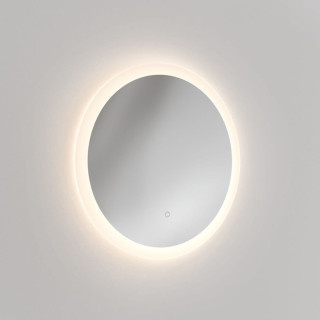
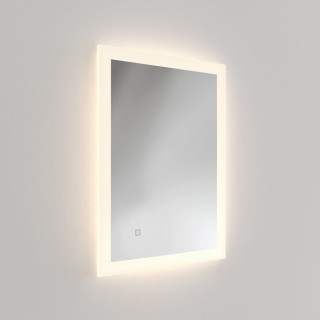
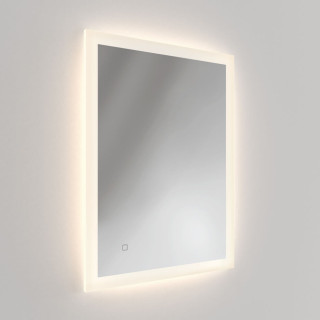
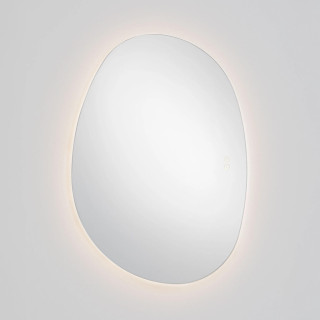
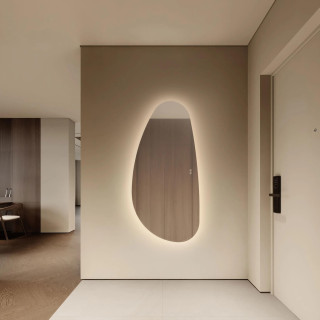
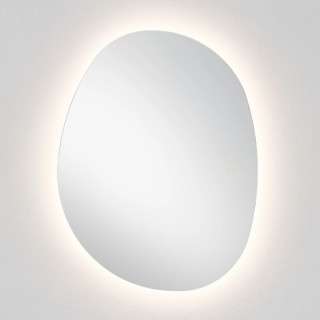
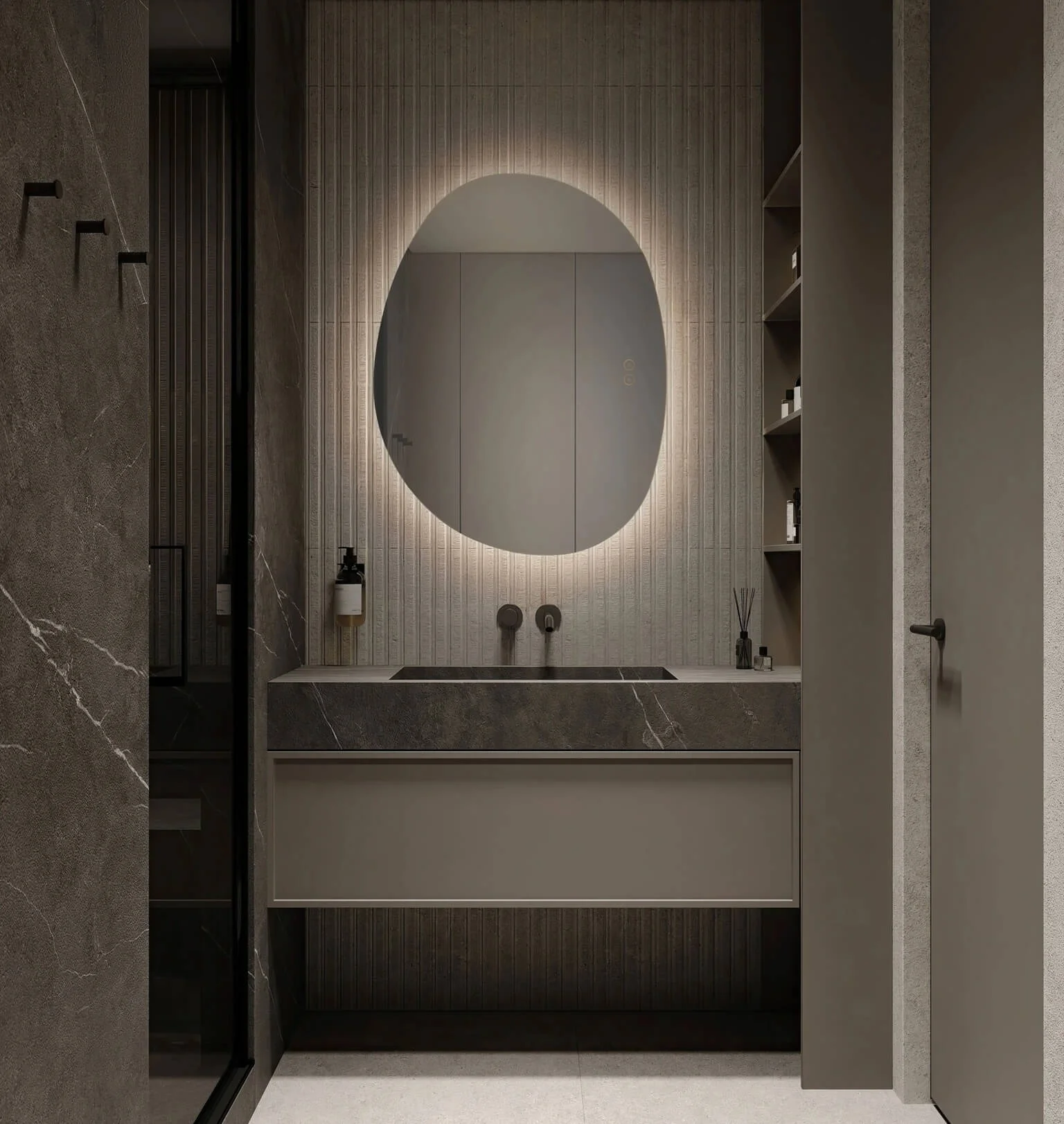
LEDs hidden behind the mirror illuminate the wall and create the impression that the glass is floating. This soft glow can highlight stone, tiles, microcement or decorative plaster. It creates an atmospheric effect but usually does not replace functional lighting directed towards the face.
Perimeter lighting
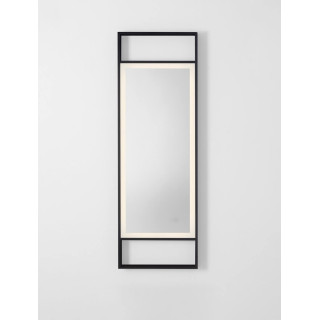
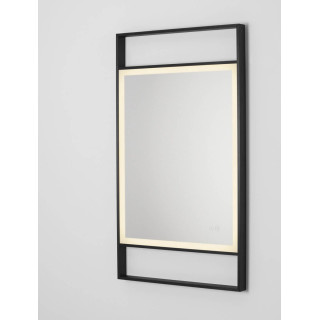
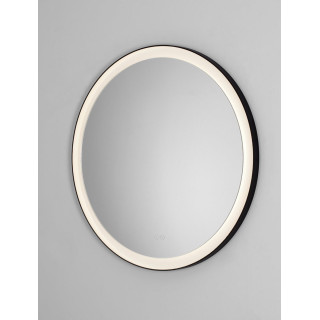
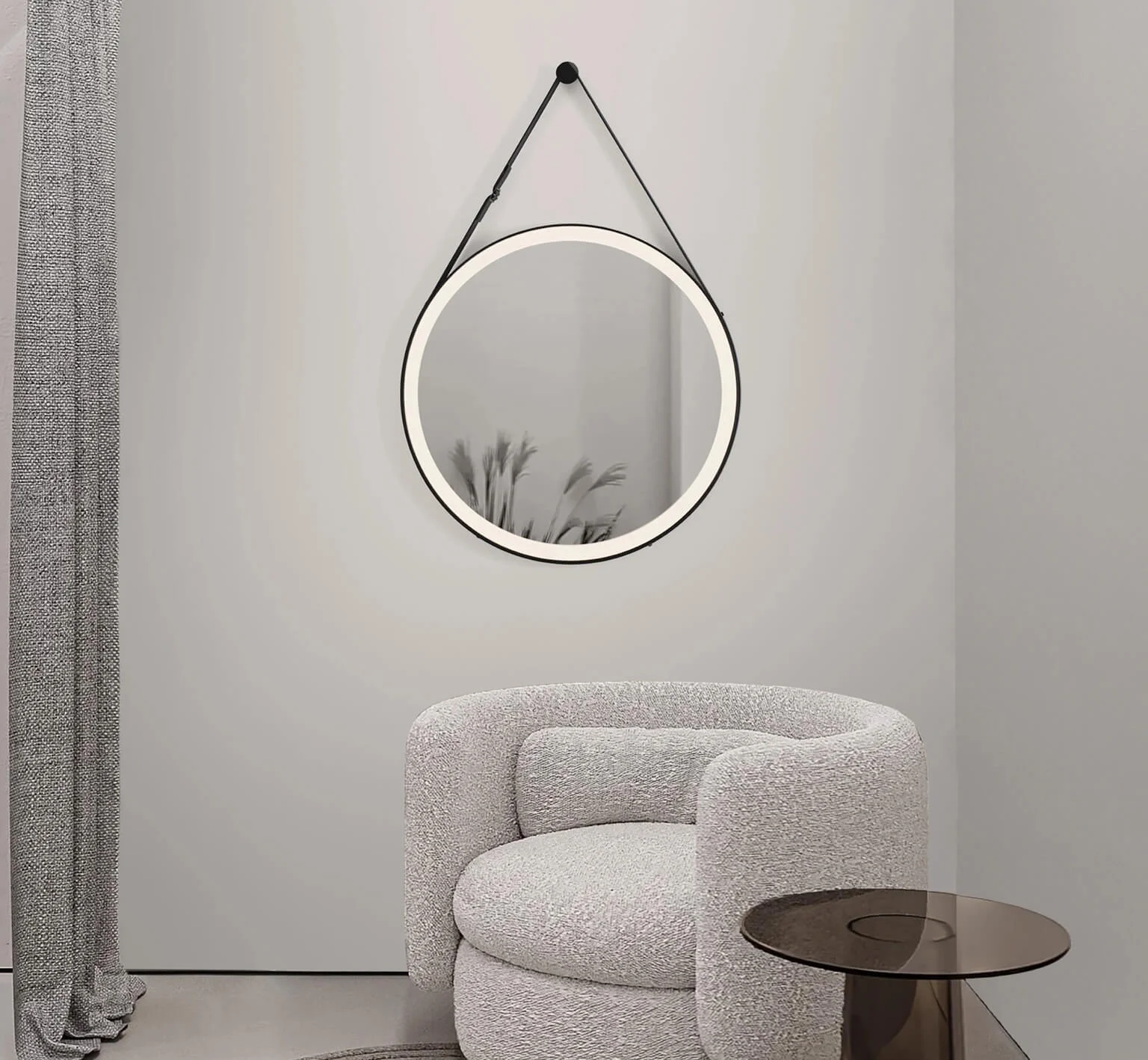
An LED line running around the mirror creates a clean, contemporary appearance. Before purchasing, check whether the light is projected forwards or only illuminates the wall behind the mirror.
| Lighting type | Best application | Main feature |
|---|---|---|
| Front or side lighting | Make-up, shaving and skincare | Effective facial illumination |
| Backlighting | Decoration and evening lighting | Ambient glow on the wall |
| Perimeter lighting | Modern and hotel-style bathrooms | Consistent visual effect |
Which light colour is best?
The colour temperature should suit both the function of the room and its interior design. Warm white light between 2700 K and 3000 K creates a relaxing atmosphere and complements wood, beige finishes and gold details. Neutral white light around 4000 K is more practical for morning skincare, shaving and applying make-up.
Mirrors with adjustable CCT are a versatile solution because they allow the user to change the colour temperature according to the time of day. A memory function that restores the previous settings can also improve everyday convenience.
Why is CRI important?
A high colour rendering index helps the user assess skin tone, make-up, hair colour and clothing more accurately. For a mirror used for detailed grooming tasks, it is worth looking for CRI 90 or higher, provided that the manufacturer specifies this parameter.
Lighting quality should not be assessed by wattage alone. Luminous flux, LED positioning, diffuser design and the direction of the emitted light are equally important.
Bathroom LED mirrors – IP rating and installation
In a humid room, electrical safety is more important than appearance. The IP rating must be suitable for the installation location and comply with the manufacturer’s instructions. An IP44 rating does not automatically mean that the mirror can be installed anywhere in the bathroom.
Before placing an order, check:
- the position of the power cable,
- the connection method and location of the power supply,
- the depth of the structure and distance from the wall,
- the required mounting points,
- whether vertical and horizontal installation are both permitted.
Electrical connections in a bathroom should be completed in accordance with the product instructions and applicable safety requirements.
Is an anti-fog function worth choosing?
An anti-fog heating pad reduces condensation on part of the mirror after a bath or shower. However, it is important to check the dimensions of the heated area, as the pad usually does not cover the entire glass surface.
An automatic timer that switches the heating function off after a set period can reduce unnecessary energy consumption.

How to assess the quality of an LED mirror
A well-made mirror should provide an even line of light, a natural reflection and stable wall mounting. Visible LED dots or uneven brightness may indicate an insufficient diffuser or poorly designed lighting system.
Before purchasing, verify:
- the quality of the mirror glass and the absence of image distortion,
- uniform illumination without clearly visible LED points,
- protection of the edges and rear surface against moisture,
- the stability and durability of the mounting brackets,
- access to replacement parts or servicing of the driver and power supply,
- the warranty period and warranty conditions.
Touch control, motion sensor or wall switch?
A touch panel can control the light, colour temperature and anti-fog function. A contactless sensor helps reduce fingerprints on the mirror, while connection to a standard wall switch may offer the simplest everyday operation.
Additional features such as a clock, speakers, USB port or temperature display are useful only when they will be used regularly. Every additional electronic module increases the complexity of the product.
How to choose the shape and size
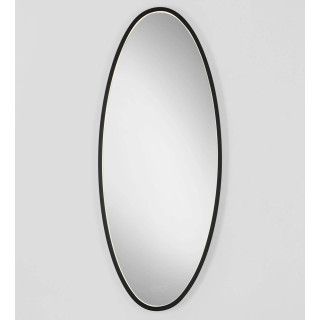
The dimensions of the mirror should correspond to the width of the washbasin, countertop and available wall space. Round mirrors soften geometric furniture and straight architectural lines. Rectangular models provide a larger reflective surface and work particularly well above wide countertops or double washbasins.
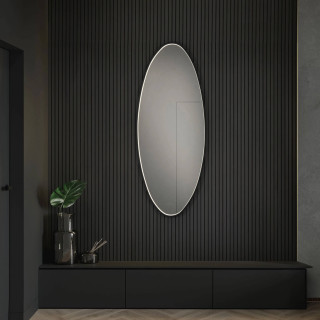
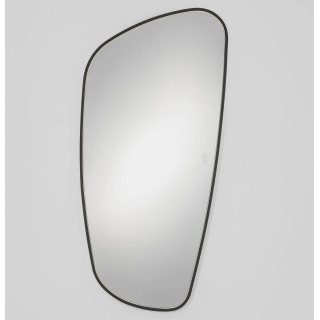
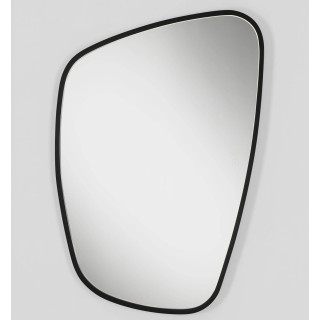
Organic and asymmetrical shapes have a stronger decorative character. Before purchasing, make sure that the position of the control panel, heating pad and LED zones allows the mirror to be installed in the required orientation.

Common mistakes when buying an LED mirror
- choosing a model solely on the basis of an interior photograph,
- treating backlighting as the only light source for applying make-up,
- failing to prepare the electrical connection before installation,
- overlooking the depth of the structure and its distance from the wall,
- assuming that every LED module is dimmable or replaceable,
- selecting numerous additional functions that will not be used.
FAQ – designer LED mirrors
Can an LED mirror provide the main bathroom lighting?
Usually not. Mirror lighting should work together with ceiling lighting and separate illumination for other functional areas of the bathroom.
Which light colour is best for applying make-up?
Neutral white light around 4000 K combined with a high CRI is generally the most practical option. Adjustable CCT can provide greater flexibility.
Is every LED mirror suitable for a bathroom?
No. Always check the IP rating, the manufacturer’s instructions and the permitted installation location.
Does the anti-fog function cover the entire mirror?
Not always. The heating pad usually covers only a defined area of the mirror, so its dimensions should be checked before purchase.
How should the mirror width be selected?
The mirror should be proportionate to the washbasin or countertop. A model that is too small may look accidental, while an excessively wide mirror can disrupt the visual balance of the wall.
Summary
A designer illuminated LED mirror should combine an attractive form with properly designed lighting. The most important factors are the direction of light, colour temperature, CRI, IP protection, mirror glass quality, uniform illumination and correctly planned installation. Shape, frame finish and additional functions should be considered only after these essential parameters have been verified.
See all our LED mirrors and vanity mirrors.
LED Mirrors & Makeup Mirrors – Bathroom & Vanity | Salon LED