How Far from the Wall Should Artwork Lighting Be?
09/26/2026 07:29:59
Filter By
Filter By
BLOG

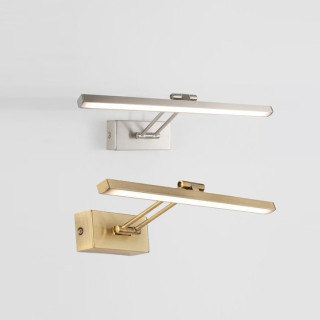
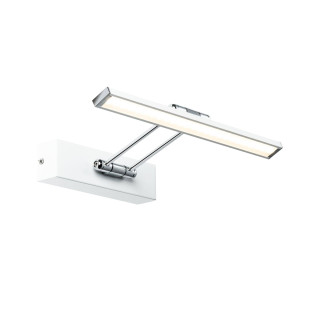
The right picture light acts like a “light frame”: it reveals true color, contrast, and fine detail, enhances canvas or paper texture, and turns an ordinary wall into a curated, gallery-like display. This is not generic wall lighting—art lighting is about control and comfort: even coverage without hotspots, reduced glare and reflections (especially on glass-framed pieces), and consistent light quality that doesn’t distort the artwork’s colors. In this category you’ll find solutions for homes, offices, and commercial interiors—from classic picture lights above frames, to slim linear LEDs, to adjustable and cordless options—so you can match the fixture to your artwork size, frame depth, and interior style.
Filter by finish, length, and light quality to find the best fit for your artwork.
There are 30 products.
sortSort by:
A painting, print or photograph can be the strongest statement in a room—if it’s properly lit. That is exactly what art lighting is for: controlled, directional illumination that reveals color accuracy, detail and texture, while creating a refined atmosphere. LED picture lights are a gallery classic, now widely used in homes and commercial interiors across Europe.
This category brings together fixtures designed specifically for artwork: classic picture lights above frames, slim linear LED options, adjustable wall spotlights, track-based solutions for multi-piece displays, and cordless models for locations without wiring. Below is a clear, practical guide to choosing the right one.

Dedicated picture lighting turns a wall into a curated display. The artwork reads clearly, feels more premium, and naturally becomes the visual anchor of the space.
Directional light reveals brush strokes, canvas structure, paper grain and subtle tonal transitions—details that general room lighting often flattens.
Well-designed picture lights help you aim the beam precisely and reduce glare, which is crucial for framed pieces behind glass or acrylic.
Quality LED solutions run cooler and typically emit minimal UV compared to traditional sources. Combined with dimming, they help you control intensity and reduce unnecessary exposure.
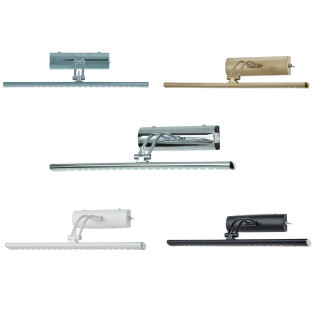
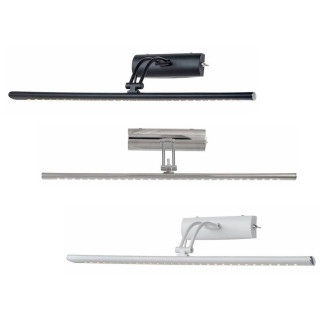
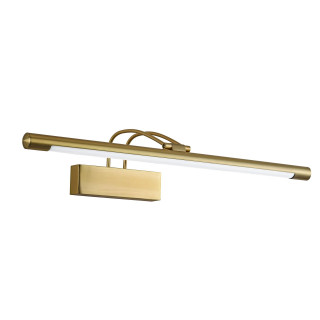
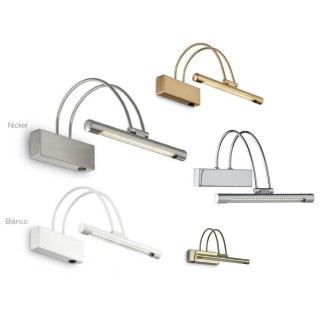
A dedicated, elegant solution that creates a timeless gallery effect for single pieces.
Best for: living rooms, bedrooms, hallways, home offices, statement walls.
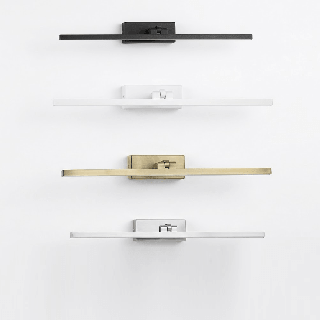
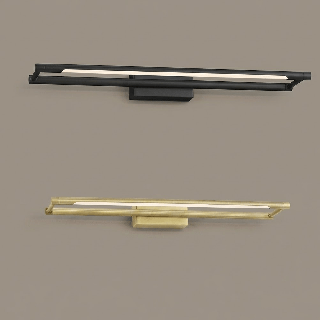
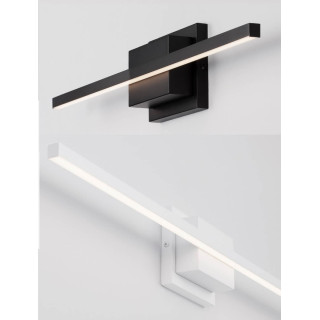
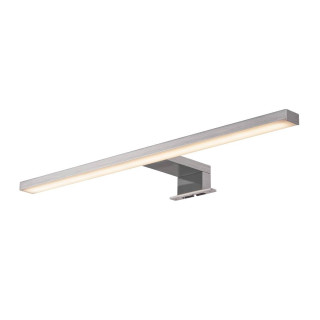
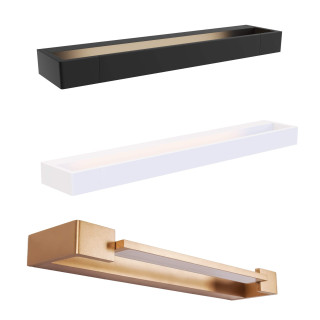
Minimal, modern forms that visually “disappear” and let the artwork speak.
Best for: contemporary interiors, prints, posters, photography.
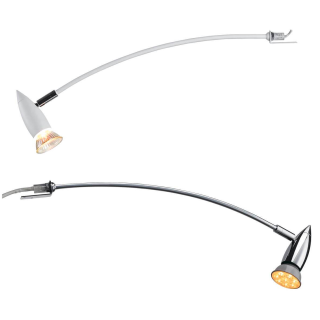
Flexible aiming when artworks change or when you need to cover multiple pieces.
Best for: rotating displays, unusual formats, multi-piece walls.
A professional option that lets you move and re-aim fixtures without drilling new holes.
Best for: galleries, offices, hospitality, or anyone who rehangs art often.
Quick installation with no wiring—ideal for rentals or hard-to-wire locations.
For artwork, color fidelity is non-negotiable:
Match the artwork light to the room’s general lighting for a cohesive look.
Lumens describe potential output, but the real goal is a balanced look on the artwork surface. Too little light makes the piece disappear; too much creates glare and discomfort. Dimming is the simplest way to get it right in any conditions.
Even coverage without a harsh hotspot depends on:
If you spend time in the room or view art up close, choose a solution with comfortable light behavior. Quality drivers and proper controls reduce flicker; good shielding and aiming reduce glare.

A reliable rule is about 1/2–2/3 of the artwork width:
In most cases, mount the fixture a few to several centimeters above the top of the frame, then fine-tune the angle:
The goal is even brightness from top to bottom.

Start by hanging the artwork so its center sits at typical eye level (often around 145–152 cm / 57–60 in from the floor), then adjust for real life. If the art is meant to be viewed mainly while seated (sofa, dining area), slightly lower usually feels better. If it’s in a hallway or standing-view area, the classic “gallery height” works well.
A practical starting point is about 15–18 cm (6–7 in) above the top of the frame, centered. From there, fine-tune based on the frame depth and the artwork size: deeper frames and larger pieces often benefit from a bit more height or projection so the lower part of the artwork is lit evenly.
Aim the light downward at roughly 30–35 degrees to start, then adjust by eye. You’re done when the artwork is evenly lit top-to-bottom and you don’t see a bright “hotspot” or a reflection from your main viewing position. Small angle changes can make a big difference, especially on glossy prints or glass.
In most cases, choose a fixture that’s about one-half to two-thirds the width of the artwork. This proportion usually looks balanced and helps distribute light across the piece without the fixture dominating the frame. Avoid selecting a light that extends past the frame edges.
Solve reflections by changing geometry, not by adding brightness. Adjust the mounting height slightly and re-aim the light so reflections don’t bounce toward where you typically stand or sit. If the room has strong downlights or exposed bulbs, those often create the worst reflections—reducing their intensity or repositioning them can help as much as adjusting the picture light.
For most homes, 3000K is the safest, most natural-looking choice. Pick 2700K if you want a warmer, cozy, classic mood, and choose 3500–4000K if you prefer a cleaner, more neutral “gallery-like” presentation—often flattering for photography and modern prints. The best choice is also the one that matches the rest of your room lighting so the display doesn’t look “off.”
Use CRI 90+ as a baseline for art lighting, and go to CRI 95+ when color accuracy is a priority (collectible pieces, detailed photography, subtle gradients, skin tones, and saturated reds). Higher CRI makes artwork look more natural and “alive,” especially in the evening when the picture light becomes the main source on the piece.
There isn’t one perfect lumen number because results depend on distance, beam control, frame depth, wall color, and ambient light. The practical target is simple: the artwork should stand out clearly without glare or harsh hotspots. A dimmable fixture is the easiest way to dial in the right brightness for both daytime and nighttime.
This is usually a compatibility issue between the dimmer type and the LED driver or bulb (or the LEDs are not truly dimmable). Use a dimmer designed for LEDs and confirmed compatible with your fixture/driver, and avoid mixing unknown components. If you want the most reliable outcome, choose a picture light with a built-in dimming system specifically designed for LEDs.
Use a picture light when you want a dedicated, refined look for one key piece. Choose adjustable spots or a track system when you have a gallery wall, multiple frames to light evenly, or you frequently rearrange your display—track is typically the most flexible solution because you can move and re-aim fixtures without drilling new holes.

Picture lighting is a detail that instantly elevates an interior. Filter by style, finish, length and light quality. If you want the most reliable result, focus on four essentials: size, CRI, color temperature and adjustability.
See also:
check_circle
check_circle