Top 7 Stone Wall Lights – 2026 Ranking
10/17/2026 18:33:51
Filter By
Filter By
BLOG

Well-designed bathroom lighting is essential for comfort, functionality, and the overall aesthetic of the interior. Light determines whether the bathroom is convenient for daily routines such as skincare, makeup, or shaving, while also supporting relaxation and a sense of calm. A thoughtful combination of main and supplementary lighting helps clearly define functional zones and highlights materials, colours, and design details.
Bathroom pendant lights are among the most striking and practical lighting solutions. They provide precise illumination exactly where it is needed most—above the washbasin, countertop, or mirror—while at the same time creating a warm, intimate atmosphere ideal for evening relaxation. Thanks to them, the bathroom takes on the character of a premium interior inspired by contemporary architectural design.
IP44-rated bathroom pendant lights are no longer just a trend, but a conscious choice that combines design with technology. Choose solutions adapted to humid conditions and enjoy comfortable, stylish lighting every day.
There are 17 products.
sortSort by:
Bathroom pendant lights are a solution that, until recently, was associated mainly with hotels and premium apartments. Today, they are increasingly used in modern homes and apartments, becoming one of the key elements in the design of the bathing area. A well-chosen pendant light can completely transform the perception of the space, improve everyday comfort, and introduce a refined, spa-like atmosphere.
In a bathroom, aesthetics should never be separated from technology. This is a space exposed to elevated humidity, water vapour and splashes, which means that lighting must combine visual appeal with appropriate technical performance.

Pendant lights allow for the creation of layered lighting schemes that are far more functional and visually engaging than a single ceiling fixture. They add depth, rhythm and clearly defined functional zones to the bathroom interior.
A well-designed pendant light provides precise illumination of the washbasin, countertop or mirror, which is essential for daily grooming routines. Unlike light that comes only from above, pendant fixtures help reduce unwanted facial shadows, significantly improving comfort during shaving and makeup application.
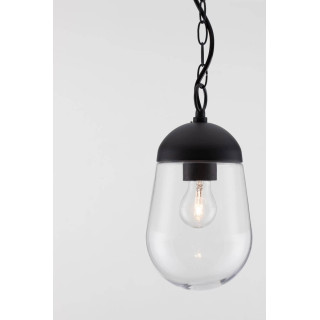
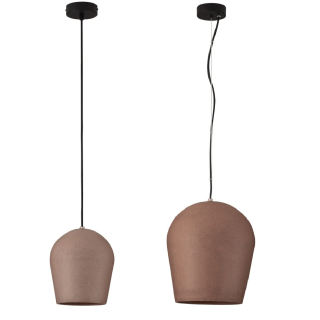
Aesthetic value is equally important. Pendant lights bring a sense of sophistication associated with hotel interiors and professional interior design projects. Glass shades, slim tubular forms, ceramic elements and subtle metallic finishes elevate the overall look of the bathroom, turning lighting into a decorative feature rather than a purely technical necessity.
Bathrooms require particular care when selecting lighting. Installation zones and the IP rating, which defines a fixture’s resistance to moisture and water, are of critical importance. It’s worth choosing dedicated bathroom lights and luminaires with a higher IP rating.
The IP rating consists of two digits, with the second indicating protection against water. The higher this value, the greater the resistance to splashes and water jets. In practice, this translates into improved safety and longer fixture lifespan in demanding bathroom conditions.
Bathroom Zones and Pendant Lights
A bathroom is divided into several zones based on the distance from the bathtub, shower tray or shower enclosure. These zones determine which types of lighting fixtures may be used in each area.
The zone of direct contact with water requires fixtures with very high levels of protection and is not, in practice, suitable for pendant lights. In areas above a bathtub or shower, up to a defined height, only fixtures with increased ingress protection designed for constant exposure to moisture and water spray should be used. In zones further away from direct water sources, luminaires with lower IP ratings may be installed, provided they are still designed for use in humid environments.
Installation should always follow the manufacturer’s specifications and applicable electrical safety regulations.
Pendant Lights Above the Bathtub and Shower
Although arrangements featuring a pendant light above a freestanding bathtub can look exceptionally striking, they require careful consideration. In many cases, it is safer and more practical to achieve a decorative effect using other types of fixtures with a higher degree of protection, while reserving pendant lights for washbasin areas and the drier parts of the bathroom.

Modern bathroom pendant lights most commonly use LED technology, which delivers high energy efficiency, long service life and stable lighting parameters over time.
Light Colour – Which One to Choose for the Bathroom
Warm light promotes relaxation and helps create a cosy, spa-like bathing atmosphere. Neutral light colour is the most versatile option and works best for everyday grooming tasks. Excessively cool or cold light can feel clinical and may negatively affect the perception of skin tones.
The most effective solution is to combine several light sources with different functions: neutral task lighting and warmer ambient lighting.
CRI and Colour Rendering
A high colour rendering index is crucial in the bathroom. The better the colour rendering, the more natural the skin appears in the mirror, and the more precise makeup application and personal care become. A minimum CRI of 90 is recommended.
Materials and Moisture Resistance
In bathrooms, glass and ceramic shades, as well as metals protected against corrosion, perform best. Smooth surfaces are easier to clean and less prone to limescale and condensation build-up. The choice of appropriate materials determines whether the light fixture will retain its aesthetic appearance for years.
Above the Washbasin and Mirror
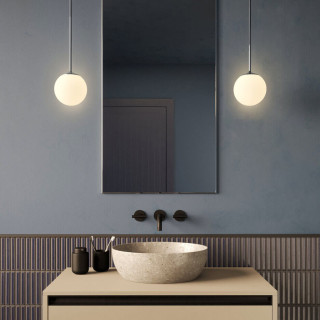
This is the most common and practical application of pendant lights in bathrooms. A single pendant positioned centrally or two symmetrical pendants on either side of the mirror provide effective facial illumination and significantly improve everyday comfort.
Above the Countertop or Vanity
In bathrooms with long countertops, sets of several smaller pendant lights work particularly well. They create a rhythmic, design-focused composition while delivering even, balanced illumination.
In a Small Bathroom
In compact spaces, slim forms and shorter suspensions are the best choice. A pendant light can serve as a decorative feature, provided it does not restrict movement or visually overwhelm the interior.
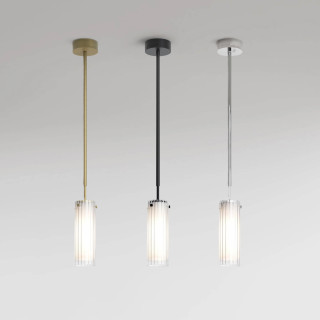
Bathroom pendant lights should harmonise with the overall interior concept. Modern bathrooms benefit from simple, geometric forms and opal glass. Loft and industrial styles favour expressive metals and ribbed glass shades. Nature-inspired and Japandi interiors pair well with ceramic fixtures and warm, subdued finishes. Classic and elegant bathrooms gain character through symmetry and details inspired by hotel-style design.
The most frequent mistakes include selecting decorative fixtures without adequate moisture protection, installing them in incorrect zones, and treating a pendant light as the sole source of illumination. Inappropriate light colour and overly complex designs that are difficult to keep clean can also reduce everyday comfort and long-term satisfaction.
Bathroom pendant lights combine functionality, safety and design. When chosen correctly, they can transform an ordinary bathroom into an elegant and comfortable space for everyday relaxation. The key to a successful choice lies in analysing installation zones, technical parameters and light quality first, and considering form and style only afterwards. This approach ensures that a pendant light becomes not just an eye-catching feature, but a well-considered investment in interior quality.

Yes. Choose a fixture designed specifically for bathroom use, match the IP rating to the installation location, and install it outside areas with direct water contact. The safest and most practical locations are above the washbasin, over the countertop, or in the drier zones of the bathroom.
Select the IP rating based on the risk of water exposure. IP44 is a sensible minimum for most bathrooms and areas exposed to occasional splashes. IP54 provides a higher safety margin in environments with increased humidity. IP65 should be chosen where there is frequent splashing, heavy steam, or in small bathrooms with poor ventilation.
In most cases, this is not recommended. Bathtub and shower zones are subject to the strictest safety requirements, and many “above the bathtub” arrangements are either risky or not compliant with local installation guidelines. In these areas, ceiling-mounted fixtures with high IP ratings and explicit approval for wet zones are safer, while pendant lights should be used above the washbasin or in drier parts of the bathroom.
Bathroom zones define how close fixtures can be installed to a bathtub or shower and what level of water protection is required. The closer the fixture is to a water source, the higher the IP rating and installation safety requirements must be. Pendant lights should be planned in areas not exposed to direct water spray and not constantly affected by steam.
Hang the light so that it does not cause glare at the mirror and does not interfere with head or hand movement. The pendant should illuminate the face and countertop without entering the functional zone of the washbasin. In practice, choose a height that allows comfortable use of the basin, easy cleaning of the fixture, and no visual discomfort when looking into the mirror.
Two pendant lights positioned on either side of the mirror are more functional, as they illuminate the face more evenly and reduce shadows. A single central pendant can work if it has a wide, diffused shade and is supported by additional ambient lighting. For makeup application and shaving, a two-point lighting arrangement is usually the better choice.
2700K creates the most relaxing, spa-like atmosphere. 3000K is a versatile compromise between warmth and visual clarity. 4000K works best for very precise tasks such as makeup and detailed grooming but can feel too technical in the evening. The best results come from combining neutral functional light at the mirror with warmer ambient lighting.
Choose a high CRI to ensure that skin tones and colours appear natural in the mirror. A low CRI can make the face look dull or unnatural and distort cosmetic colours. At the mirror, CRI is more important than sheer light output.
A replaceable bulb offers easier maintenance and greater flexibility, allowing you to change colour temperature, output or light source type. An integrated LED is a good choice if you value a slim design and uniform light distribution, but it must feature a high-quality driver and be rated for bathroom use. To minimise the risk of costly repairs, fixtures with replaceable light sources are often the safer option.
Glass (opal or ribbed), ceramic, and metals with durable protective coatings perform best in bathrooms. Choose fixtures with smooth surfaces and simple details, as they are easier to clean from limescale and condensation. Avoid unprotected metallic finishes, as corrosion tends to appear first at joints and edges in humid environments.
See also:
check_circle
check_circle