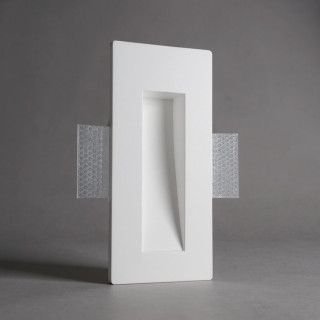
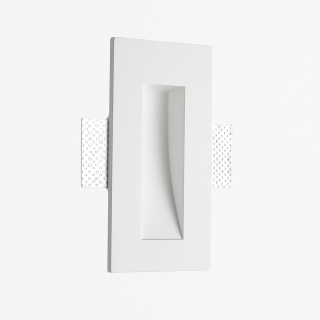
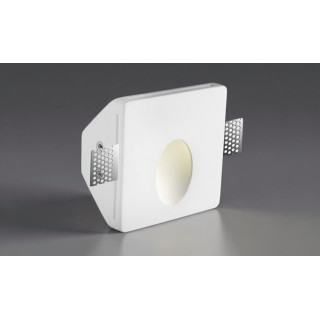
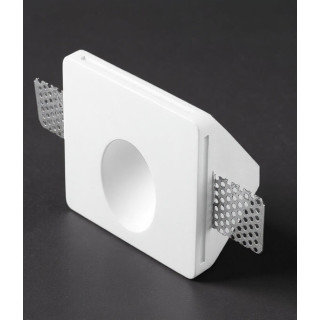
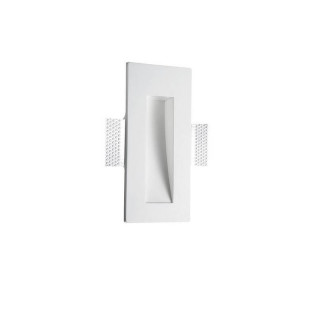
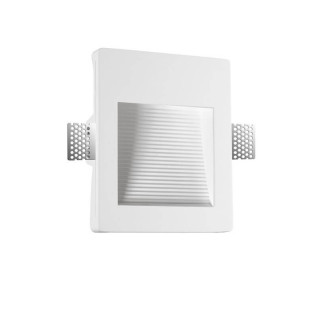
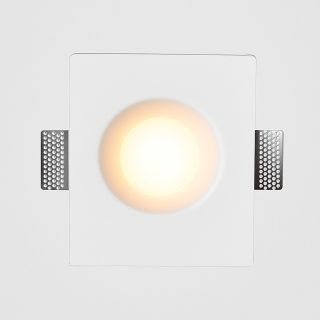
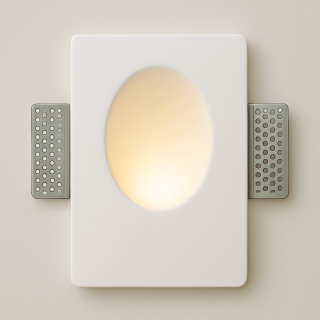
Why Choose Gypsum Stair Lights?
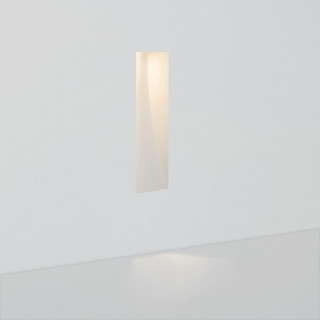
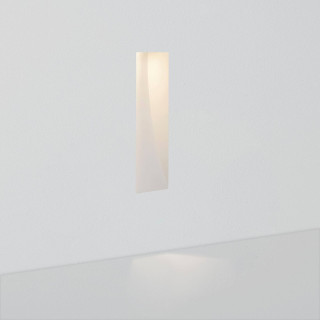
One of the biggest advantages of gypsum stair lights is visual integration. These fittings are not meant to dominate the interior with a bold fixture body. Their role is to sit quietly within the wall and support the overall design language of the space. When chosen well, they create a very subtle lighting feature during the day and a soft, elegant guidance light in the evening.
Another major benefit is that gypsum fittings are typically paintable. This makes it much easier to match them to the wall finish and achieve a more seamless final look. Instead of introducing a contrasting material or colour, the fitting can be finished as part of the surface itself. For architects, designers, and homeowners who care about visual consistency, this is a major advantage.
What Makes Gypsum Step Lights Different?
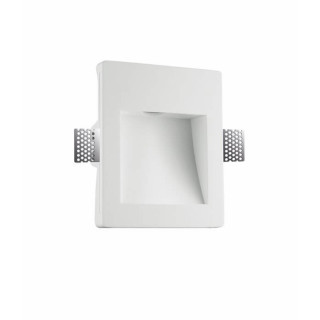
The key difference lies in the finish. Gypsum step lights are often associated with trimless or plaster-in installation, which means they are designed to blend into the wall rather than sit on top of it. This creates a much cleaner and more architectural result than a standard visible-frame fitting.
They are also especially well suited to low-level guidance lighting. On staircases and in circulation areas, the best lighting is often the least intrusive. A gypsum fitting can deliver that effect very effectively because the form remains discreet while the light itself stays practical and easy to live with.
How Do Gypsum Stair Lights Work?
From a functional point of view, gypsum stair lights are used in the same way as other recessed low-level wall lights. Their purpose is to mark the line of the staircase, improve orientation after dark, and make movement through the space safer and more intuitive. The difference is mainly in the construction and installation method, not in the basic lighting role.
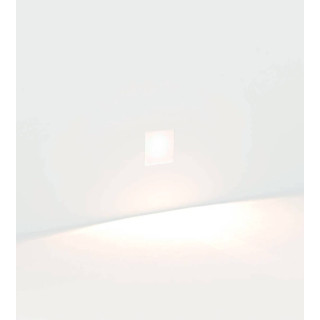
Most models are designed to project light downward or at a controlled angle so the steps are easier to read without creating glare. This is especially important on stairs, where lighting should support visibility without becoming visually harsh. The goal is not to flood the staircase with brightness, but to create calm, readable guidance light.
Why Is Low Glare So Important on Stairs?
Good staircase lighting should feel comfortable. If the light source is too exposed or too intense, it can reduce rather than improve usability. On steps, visual comfort matters just as much as brightness. This is why well-designed gypsum stair lights use controlled apertures and directional output to keep the beam useful and discreet.
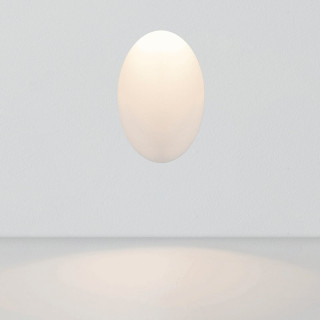
The best result is a soft wash of light that defines the steps clearly while keeping the surrounding wall calm and visually balanced.
Paintable Gypsum Stair Lights – Can They Really Blend into the Wall?
Yes, and this is one of the main reasons customers choose them. Paintable gypsum step lights are ideal for interiors where the wall finish plays an important role in the final design. Because the body can usually be finished in the same colour as the surrounding surface, the fitting becomes much less noticeable during the day.
This makes gypsum stair lights a very strong choice for minimalist interiors, modern family homes, Japandi spaces, soft contemporary schemes, and premium architectural projects. In these settings, reducing visual clutter is just as important as choosing the right type of light.
Where Do Gypsum Stair Lights Work Best?
They perform best in spaces where the lighting should feel integrated rather than decorative. Staircases are the most obvious application, but they also work extremely well in corridors, hallways, entrance routes, and wall details that need subtle low-level illumination.
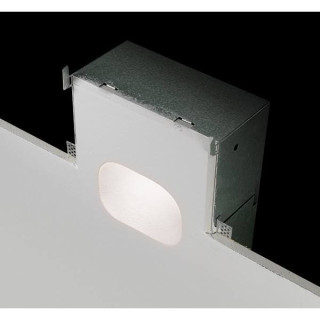
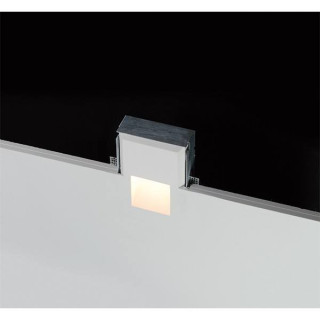
They are particularly effective in plasterboard constructions, wall recesses, and contemporary interiors where flush surfaces and clean lines are part of the design concept.
Recessed, Trimless, or Plaster-In – What Do These Terms Mean?
In this category, these terms are closely related. Gypsum stair lights are typically recessed fittings designed to be installed as part of the wall finish. “Trimless” generally refers to the absence of a visible frame. “Plaster-in” usually means the fitting is integrated into the plastered surface so the transition between wall and fitting becomes visually minimal.
For the buyer, the practical result is simple: a cleaner and more architectural appearance. Instead of seeing a standard wall light with a clear edge, you see an opening in the wall that delivers light in a much more discreet way.
Is Installation More Demanding?
Yes, in most cases it requires better planning and closer coordination with finishing work. That is not a drawback so much as part of what makes the result more premium. Because the fitting becomes part of the wall, the installation needs to be approached more carefully than a simple surface-mounted product.
For this reason, gypsum stair lights are often chosen earlier in the design process, especially in projects where detail quality and finish consistency matter.
Which Light Source and Colour Temperature Work Best?
Depending on the model, gypsum stair lights may come with an integrated LED module or with compatibility for a specific lamp type. From a practical user perspective, the most important thing is not the lamp technology alone, but the final light effect. On stairs, lighting should feel even, comfortable, and easy to read.
In most residential interiors, warm white or neutral white gives the best result. Warm white creates a softer, more welcoming atmosphere and works naturally with timber, stone, beige tones, and quiet wall finishes. Neutral white suits cleaner and more contemporary interiors, where the staircase is part of a sharper architectural composition.
Warm White or Neutral White?
If the staircase is part of a calm domestic setting and the goal is a more relaxed atmosphere, warm white is usually the better choice. If the project is more modern, minimal, or technical in character, neutral white can work very well. In both cases, the fitting should provide controlled light with good visual comfort rather than excessive brightness.
Are Gypsum Stair Lights Only Decorative?
No. Their appearance is refined, but their main role is still practical. When placed correctly, they help define the edges of the steps, improve nighttime visibility, and make the staircase easier to use without relying on strong overhead lighting.
This matters especially in evening conditions, when users want enough light to move safely but do not want to switch on a bright main fitting. Gypsum step lights are excellent in this role because they combine subtle form with effective wayfinding light.
What Should You Check Before Buying Gypsum Stair Lights?
Before choosing a product, it is worth checking the installation type, recess depth, light direction, whether the body is paintable, the overall build quality, and how well the fitting suits the planned wall construction. The stage of the project also matters. If the walls are already finished, adding trimless architectural fittings may require more work than choosing a surface-mounted alternative.
It is also important to look at scale and proportion. On staircases, a larger fitting is not always the better solution. In many cases, low glare, controlled light distribution, and visual integration with the wall are much more valuable than raw output.
Which Gypsum Stair Lights Suit Modern Interiors Best?
In contemporary interiors, the strongest options are usually simple recessed forms with clean geometry and downward-directed light. Buyers typically look for fittings that feel quiet, architectural, and easy to blend into the wall finish. A paintable body, a trimless appearance, and soft low-level output are often the key features that define the best models in this category.
Gypsum Stair Lights – Lighting That Becomes Part of the Interior
Well-chosen gypsum stair lights change the way a staircase is experienced. They improve safety, support everyday comfort, and add a more considered architectural quality to the space. Instead of reading as individual decorative fixtures, they become part of the wall itself and contribute to a calmer, more resolved interior.
If you are looking for staircase lighting that feels clean, integrated, and visually refined, gypsum step lights are one of the most effective solutions available. They do not just light the steps. They help shape the overall language of the interior with a finish that feels deliberate, modern, and professionally designed.