Designer LED Mirrors
08/01/2026 09:49:51
Filter By
Filter By

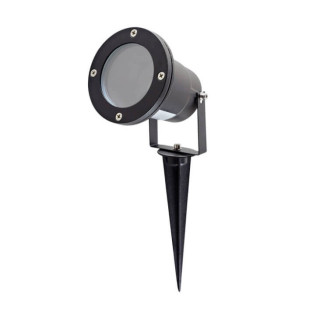
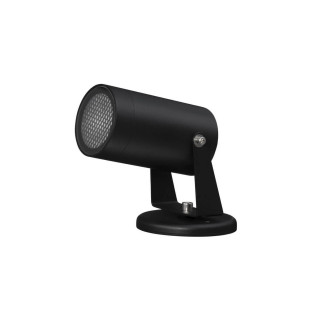
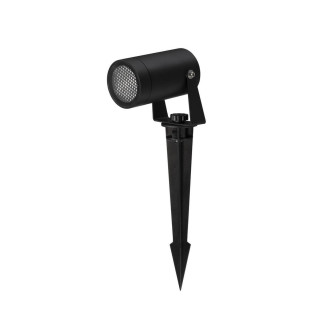
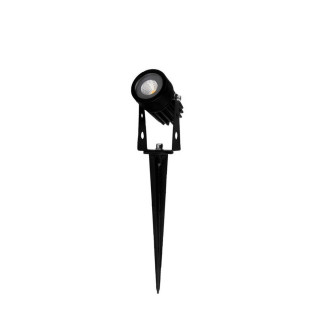
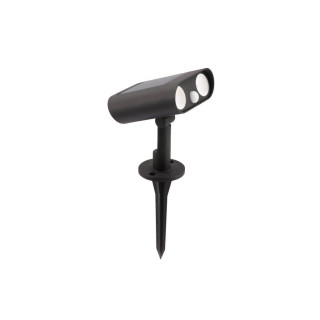
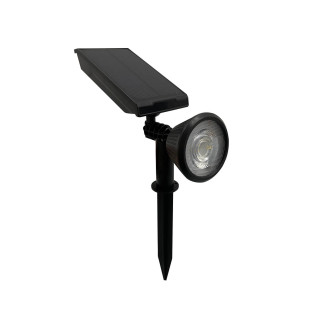
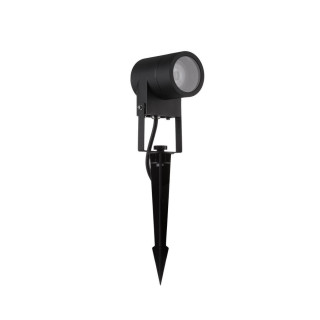
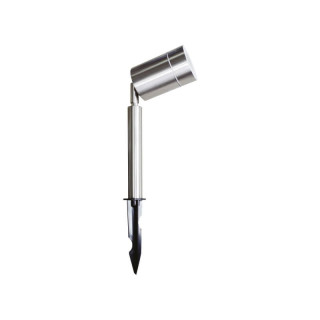
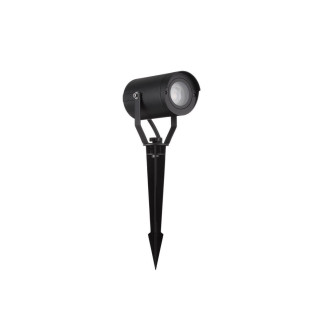
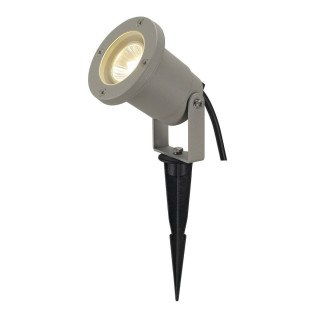
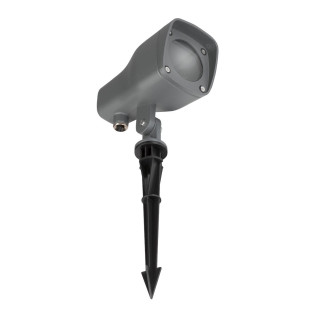
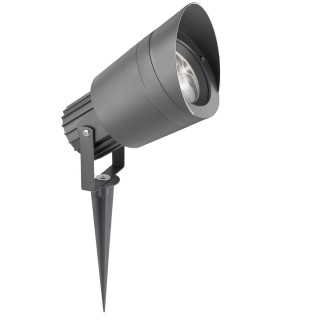
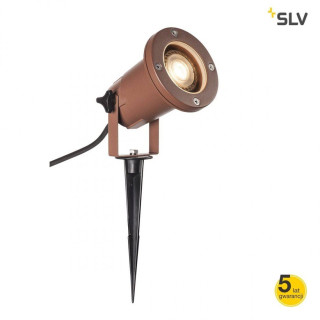
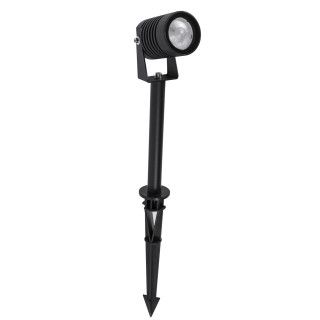
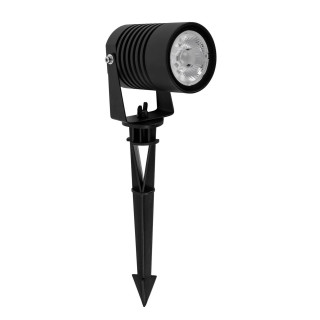
LED outdoor spotlights and ground spike fixtures for replaceable bulbs (e.g., GU10/E27) are heavy-duty lighting solutions for demanding applications around the home and in professional projects. They provide powerful, directional illumination for facades, driveways, patios, pathways, trees, and landscaping. In this category you’ll find, among others, spike garden spotlights, bracket-mounted models for wall installation, as well as solar versions and options with a PIR motion sensor.
How to choose? Focus on lumens (brightness), beam angle, and the IP rating—IP65 is the most common choice for gardens and facades. LED spotlights are energy-efficient and long-lasting, while fixtures with replaceable light sources make it easy to swap the bulb or change the effect (colour temperature/beam). If you want greater automation and improved security, choose a sensor spotlight—the light will turn on when motion is detected (PIR) or at dusk (dusk-to-dawn sensor).
There are 104 products.
sortSort by:
Outdoor LED spotlights are directional “spot” luminaires that let you place light exactly where it’s needed—on a plant, a facade detail, a house number, an entrance, a garden path, or a section of the driveway. In this category you will primarily find spike-mounted garden spotlights, bracket-mounted spotlights for permanent installation, fittings designed for replaceable light sources (most commonly GU10, sometimes E27), models with a PIR motion sensor, and solar spotlights for locations without an electrical supply. This mix of solutions makes it possible both to illuminate circulation areas and to create decorative lighting that highlights greenery and architecture.
Unlike floodlights (which are designed to wash large areas with a wide beam), a spotlight works with a controlled, focused beam. This makes it easier to avoid glare while achieving a “sculpting” effect that brings out shapes and textures—tree bark, brickwork, textured plaster, decorative stone finishes. Well-chosen outdoor spotlights create a cohesive, professional night-time result for both modern homes and classic gardens.

The outdoor spotlight category is designed as a complete toolkit for building lighting around the home. Instead of one “universal” solution, you have several luminaire formats selected according to the installation location and the desired effect. In practice, you will most often use outdoor spotlights in three ways: accent (detail/plant/facade), orientation (path/step/entrance), and security (gate/driveway/rear of the property).
Spike-mounted spotlights are the most common choice for gardens. Spike-mounted garden spotlights are also commonly called earth spike lights. Installation is straightforward: you place the fitting in the ground (lawn, flowerbed, gravel) and aim the head at the target. This solution has several practical advantages:
Bulb-based fittings are one of the most practical long-term choices. The luminaire itself determines the form factor, IP rating, and mounting method, while the light characteristics are set by the chosen lamp:
They are also convenient to service: after years of use, you replace the bulb rather than the entire fixture. In practice, it’s best to choose GU10 fittings with an IP rating suitable for the garden, then select light sources “per scene”: narrow beams for trees and architectural details, wider beams for beds and walls. If you are looking for a simple one-lamp solution, the most common option is typically a GU10 fitting for 230 V.
Browse compatible LED bulbs: GU10 LED bulbs and E27 LED bulbs.
This group includes luminaires with a built-in LED module that is factory-matched to the optical system. It’s a strong choice if you value:
In this category you will find LED outdoor spotlights and luminaires from various brands. These models are selected not only for function, but also for styling consistency and repeatability in larger projects.
Solar spotlights work well wherever you don’t want to run cables: by a gate, at the far end of the garden, along a path to a gazebo, or in a tool/storage zone. This category also includes models that combine a solar system with a PIR motion sensor—a practical option when you want light “on demand” rather than all night.

This is a common purchasing mistake. In everyday language, “spotlight” and “floodlight” are sometimes used interchangeably, but in practice they are different tools:
Spotlight (spot) – for accents, details, plants, facades, and “sculpting” the space. Typically features an adjustable head and a controlled beam.
LED Floodlight (flood) – for large areas when you need a wide, powerful working light.
If your goal is aesthetic illumination and precise accents, choose spotlights. If you need to light a large area from a single point (e.g., a car park, turning area, or a large driveway), a floodlight is usually the better choice.
Outdoor spotlights operate in rain, dust, frost, and heat. That is why the IP rating is one of the most important parameters. In practice, IP65 is most commonly chosen for gardens and facades—it’s a safe level for typical outdoor use. IP54 models can work well in more sheltered areas (e.g., under an overhang) or in some solar solutions, but for open spaces, lawns, and flowerbeds it’s worth aiming higher.
Pay attention to details: even the best fixture will lose its protection if the cable is routed incorrectly and the connections are not weatherproof. In garden installations, the “whole system” matters: the luminaire, the cable, the connectors, and the installation method.
Watts (W) describe power consumption, not how much light you will see on a wall or in the garden. That is why you should compare lumens (lm). For accent lighting, moderate brightness is often sufficient—direction and beam angle matter most. For circulation and security zones (entrance, stairs, gate), you typically need more lumens or several light points to achieve even illumination without harsh contrasts.
Beam angle determines whether the light is focused or spread:
With GU10 fittings you have an additional advantage: you can change the beam angle by selecting a different bulb, without replacing the fixture. This is convenient if you want to fine-tune the effect after the first season.
Light colour is not a detail; it’s part of the lighting “design”:
You will achieve the best result by planning colour temperature by zones: warmer near the terrace and leisure areas, neutral or cooler near the gate and entrance. This helps you avoid visual clutter.
A PIR motion sensor is practical where you want the light to turn on automatically:
It adds convenience (no need to find a switch), provides a deterrent effect (light turns on when someone approaches), and reduces unnecessary run time.

Spike-mounted spotlights are most common here. You place them low and aim at a plant or tree trunk. If you want to strongly highlight a single feature, choose a narrow spot beam. If you want subtle illumination over a bed, use a medium or wider beam. With GU10 fittings, you can fine-tune this using the bulb choice.
Stability, aiming adjustment, and glare control matter most. In practice, two or three lower-output points often look better than one very powerful spotlight, because it’s easier to achieve a refined gradient of light. Spotlights beautifully emphasise textured plaster, brick, stone, and details such as recesses or canopies.
Visibility and uniformity are the priorities in these zones. Fixtures with automation (PIR) or timed control work especially well. Aim the light so that it illuminates surfaces at an angle rather than shining into the eyes—this improves comfort and reduces glare.
Solar spotlights—ideally with a PIR sensor—make sense here. It’s a quick, non-invasive solution. Remember, however, that charging depends on sunlight exposure; treat solar lighting as supportive if you need maximum predictability.
In outdoor spotlights, the most important aspects are:
If the fitting uses a replaceable light source, pay attention to how it seals after a bulb change. In practice, proper re-sealing after servicing is what determines trouble-free operation in the long term.
Where will you mount it?
What effect do you need?
What environmental conditions?
Do you want long-term flexibility?

What IP rating is best for a garden?
IP65 is a common choice because it offers strong protection for typical outdoor conditions (rain and dust).
Is a spike-mounted spotlight stable?
Yes, provided it is properly seated in the ground. In gravel or soft soil, ensure firm support and sensible cable routing.
GU10 or integrated LED—which is better?
GU10 offers flexibility (change beam and colour by changing the bulb). Integrated LED is simplicity (install and you have a ready-made result). Choose based on whether you want to “tune” the light over time.
Does a GU10 fixture require a special outdoor bulb?
The key is matching the bulb to the fixture (wattage, size, colour temperature). Weather resistance is primarily determined by the fixture’s IP sealing and correct re-closure after servicing.
How do I choose a beam angle for trees and plants?
Narrow beams are better for single trees and details; medium beams suit beds and larger shrubs. With GU10, you can refine this by changing the bulb.
How many lumens do I need for an entrance or stairs?
It depends on layout and distance. In most cases, several moderate-output points work better than one very powerful spotlight—more even light and less glare.
Does a PIR sensor work in winter?
Yes, but it must be positioned correctly (direction, range, detection field). It typically performs best when a person moves across the detection field rather than straight toward the sensor.
Is a solar spotlight enough as the only driveway light?
Usually not if the driveway is used frequently and you need predictable all-night performance. Solar lighting is best as a supplement or for secondary zones.
What colour temperature for a terrace vs. a gate?
Terrace and relaxation: 2700–3000 K. Gate and technical zones: 4000–6500 K. Consistency within each zone is the most important.
How do I avoid glare from spotlights?
Aim fixtures at surfaces (ground, wall, plants), not at eye level. In entrance zones, distribute light across several points rather than relying on one intense beam.

Outdoor LED spotlights are one of the most versatile ways to build lighting around a home: they improve safety, make movement easier after dark, and allow you to create a striking illumination of the garden and facade. This category includes spike-mounted garden spotlights, bracket-mounted models, GU10/E27 fittings for flexible light tuning, as well as solar solutions and PIR motion-sensor variants. By selecting the right IP rating, lumens, beam angle, and colour temperature, you can create a coherent system tailored to your property—from subtle accents in greenery to confident, functional light at the entrance and driveway.
Explore our other outdoor lighting options:
check_circle
check_circle