Designer LED Mirrors
08/01/2026 09:49:51
Filter By
Filter By

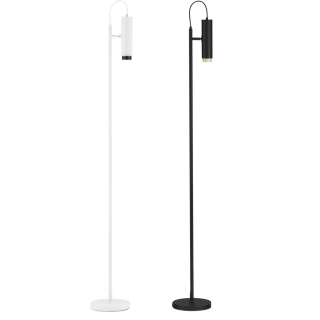
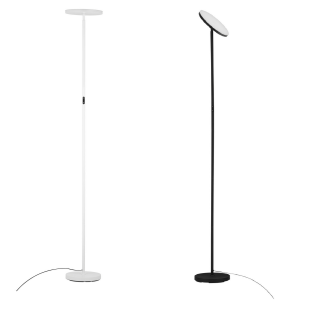
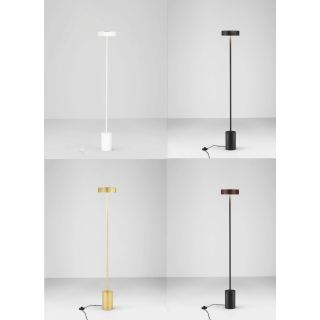
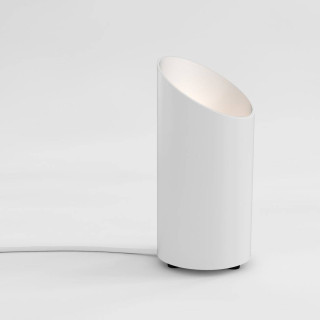
Modern floor lamps (standing lamps) are the quickest way to add a “second layer” of light to your living room or bedroom—without any renovation. You place them exactly where you spend time—next to the sofa, a reading chair, a desk, or by the bedside—and immediately gain greater comfort, better visibility, and a warmer, cosier atmosphere than with ceiling light alone.
In this category, we’ve gathered modern LED floor lamps as well as models with replaceable light sources (e.g., E27): from arc floor lamps that illuminate the lounge area above a corner sofa, through slim reading floor lamps with an adjustable head, to uplighters that direct light upward or onto walls and softly bounce it off the ceiling or wall—helping to reduce harsh shadows and create mood-setting ambient lighting.
How do you choose the right model for your needs? Focus on performance, not just looks: brightness in lumens, colour temperature in Kelvins, and colour quality (CRI—if you want materials to look natural, aim for CRI 90+). For relaxation, 2700–3000 K and dimming (ideally with warm dim) usually work best, while for reading the key is focused, directional light and a stable, well-balanced base.
There are 117 products.
sortSort by:
A modern floor lamp can change the way an entire interior feels in just a few minutes: it adds a “layer” of light in the living room, creates a comfortable reading corner, enhances wall texture, or simply saves the situation when the ceiling offers no sensible lighting point. This is lighting that works here and now—no drilling, no rewiring, and no stress.
In this category, we have curated modern floor lamps: minimalist, design-led, and technically refined. You choose them the same way you choose a good armchair—they should be beautiful, comfortable, and aligned with your lifestyle.

Modernity in lighting is not only about a “trendy” shape. It is the combination of design, function, and technology:
If you are looking for lighting that is both decoration and a tool for building atmosphere, a floor lamp is one of the most cost-effective choices.
In many homes (especially older buildings and rental apartments), the layout of ceiling lighting points is far from ideal. A floor lamp solves the problem of inadequate lighting without interfering with the installation: plugged into a socket, it can fill the lounge area—or the dining zone—with light.
It is particularly useful when:
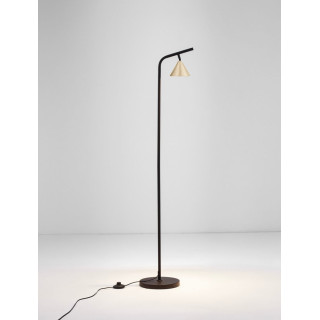
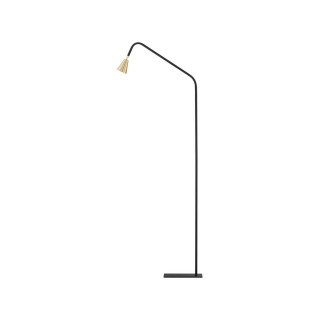
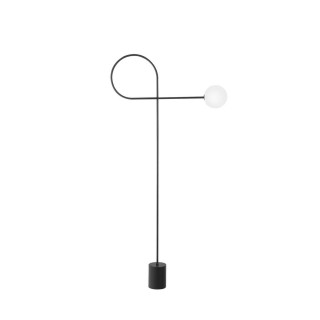
A long, curved arm allows the light source to extend over a tabletop or seating area. In practice, what matters is the arc reach, the shade height above the floor, and the stability of the base. This is an ideal type for the lounge zone, and sometimes also for dining areas when you do not want to install a pendant.
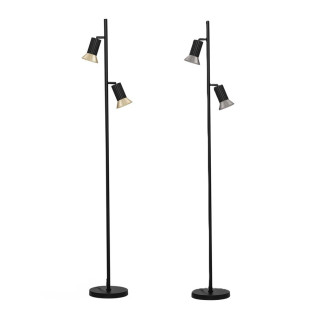
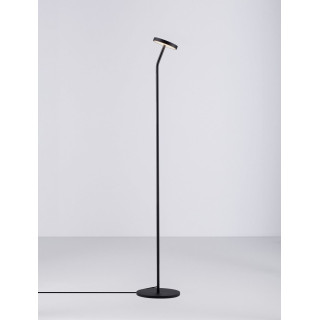
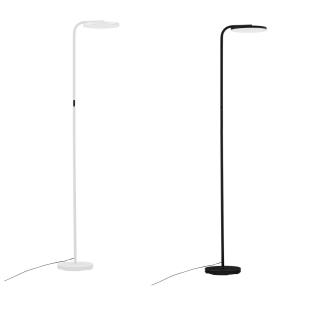
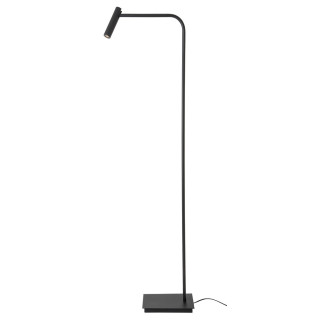
A narrow beam, an adjustable head, often a slim silhouette. A well-chosen reading lamp creates a bright pool of light on the book while avoiding glare for others in the room.
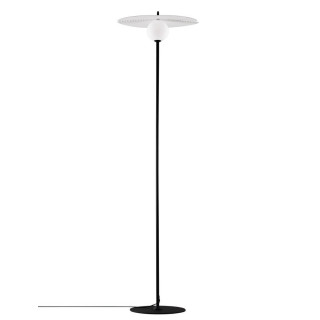
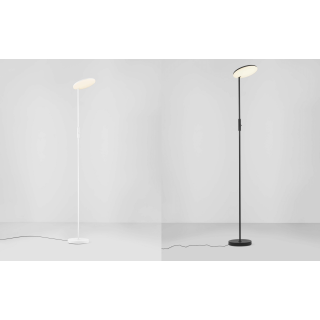
If you want to “fill” the living room with light without harsh shadows, choose a model that shines upward. Ceiling bounce acts like a large diffuser and creates a calm atmosphere. Uplights are often combined with an additional reading arm.
Three legs create a strong decorative rhythm, and the construction is usually very stable. This type works well in: Scandinavian, Japandi, modern classic, and loft interiors.
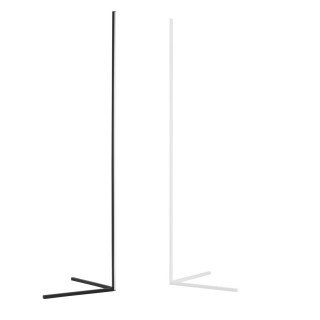
In narrow living rooms and bedrooms, slim-profile lamps designed to sit in a corner are an excellent choice. It is a simple way to add a “second layer” of light without taking up space.

Both solutions make sense.
If you prefer control and easy servicing—choose a fixture designed for a bulb. If you prioritise maximum aesthetics—integrated LED can be unmatched.
Colour temperature influences how materials look and how you feel. In simple terms:
Consider warm dim / dim-to-warm: as you dim, the colour temperature shifts warmer, creating a very “natural” evening atmosphere.
CRI (Ra) describes how accurately colours are rendered. For most home uses, a sensible minimum is CRI ≥ 80. If you care about quality (kitchen, makeup, art, beautiful wood) it is worth aiming for CRI ≥ 90.
“Dimmable” applies not only to the lamp, but also to the light source and the control method. In homes, phase-cut dimming (TRIAC) or ELV (trailing edge) is common; in more professional systems you will see 0–10 V or DALI. In practice, the best strategy is simple: if you want dimming, buy the lamp and the light source as a compatible “pair”.
A modern floor lamp can be part of home automation: “movie”, “dinner”, “reading”, “night”. The simplest way is a fixture with a replaceable bulb plus a smart light source (or a smart plug).
Product descriptions usually list lumens (lm)—the amount of light emitted by the source. Comfort in a room is described by lux (lx)—how much light reaches a surface. Day to day, you do not need to calculate lux precisely; you just need to define the lamp’s role.
1) The lamp as mood lighting (supplementary)
2) The lamp as a main light for a zone (e.g., by the sofa)
3) The lamp for reading/work
Pay attention to:
The safest rule: match the lamp to 2–3 elements in the room (table legs, handles, a mirror frame). The rest is handled by a well-chosen colour temperature and light quality.

Look for a lamp that performs in multiple scenes: relaxation, reading, socialising. Arc lamps, uplights, and dimmable models are the winners here.
If the lamp is meant to act as “night” lighting, choose 2700 K or warm dim, a diffusing shade, and a convenient switch (inline, touch, remote).
Control is key: an adjustable head, a more neutral colour temperature (e.g., 3000–4000 K) and high CRI. In many homes, a floor lamp is what “saves” a desk positioned away from the window.
When a pendant is missing, an arc lamp can deliver light over the tabletop without drilling or running wiring.
Slim lamps with diffused light or uplights can visually lift the ceiling and give the space more “air”.
In a small zone—often yes, especially when it has higher output and good diffusion. The best result, however, comes from several light sources at different heights.
Most commonly 2700–3000 K. If you want more mood variability, choose warm dim.
Typically about 400–800 lm in a well-aimed head. More important than the raw number is whether the light avoids glare and lands exactly where you read.
CRI/Ra indicates colour fidelity. At home, it is worth keeping at least 80, and for higher demands—90+.
No. It must be labelled “dimmable”, and it must match the dimmer/driver used.
For dry rooms, IP20 is typically sufficient. Higher IP is selected only when there is a risk of moisture or splashing.
Yes. The simplest approach: a fixture with E27 + a smart bulb, or a smart plug and app-based scenes.
Arm reach, base stability, and whether the shade enters a circulation path.

A modern floor lamp is one of those interior purchases that delivers an immediate effect: it improves evening comfort, creates atmosphere, and helps you “organise” light in the zones where you actually spend time.
See also:check_circle
check_circle