Round Stone Wall Lights – How to Choose the Right One?
09/06/2026 12:23:09
Filter By
Filter By
BLOG

Ceiling lights for hallways and entryways form the foundation of a well-designed entrance lighting scheme. This is the area where light works most intensively—it welcomes household members, guides guests, and ensures safety during everyday movement. Properly selected ceiling lighting should provide even illumination, visual comfort, and be adapted to the real conditions of the space, which is often narrow, elongated, or lacking natural daylight.
Modern ceiling lights for corridors—such as flush mounts, LED fixtures, spotlights, linear LED bars, and track lighting systems—combine aesthetics with advanced lighting technology. They deliver high luminous efficiency with low energy consumption while helping to visually organise and brighten the interior. Neutral light colour supports everyday functionality, while dimming capability allows the atmosphere to be adjusted to the time of day and the needs of the household.
A well-designed ceiling light for the entryway does not dominate the space but enhances it. It is a conscious choice that brings together functionality, contemporary design, and user comfort, creating a bright, cohesive, and representative entrance to the home.
There are 845 products.
sortSort by:
Ceiling lights for hallways and entryways are among the most important yet often underestimated elements of interior design. The entrance area serves as the home’s calling card – it is where the first impression is formed, where occupants move through the space after dark, and where everyday activities such as putting on shoes or outerwear take place. Properly selected ceiling lighting has a direct impact on comfort, safety, and the overall visual quality of the interior.
Modern ceiling lights for hallways must combine technology, design, and ergonomics. Their primary role is to provide even, well-balanced illumination that does not cause glare or visual fatigue, while remaining fully consistent with the style of the interior, regardless of its size or layout.
.webp)
Although the entryway is a transitional space, its appearance strongly influences the perception of the entire home. Ceiling lights often act as the visual focal point of this area and help define the stylistic direction for the remaining rooms. A well-chosen ceiling fixture visually organises the space, highlights its character, and ensures consistency with the rest of the interior.
Even ceiling lighting in a hallway significantly improves visibility, especially in the evening and at night. Bright, well-diffused light makes it easier to move through narrow circulation areas, reduces the risk of tripping, and increases the overall sense of safety for both household members and guests.
Many entryways are compact or lack access to natural daylight. Properly selected LED ceiling lights can visually widen the hallway, brighten dark zones, and eliminate the tunnel-like effect often found in long, narrow corridors.
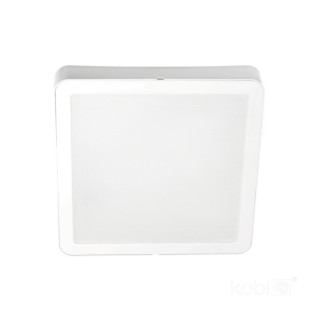
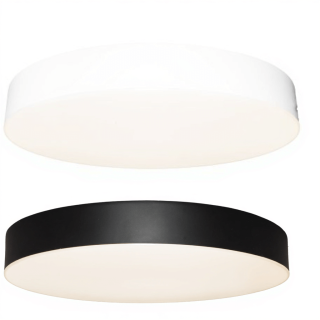
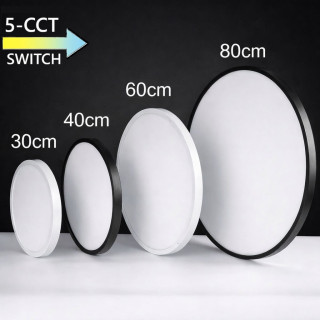
Flush-mount ceiling lights are the most popular choice for entryways. Their popularity stems from their compact form and high level of functionality. Thanks to their low profile, they do not visually lower the ceiling and are ideal for rooms with standard or reduced ceiling heights. Modern LED flush mounts provide even, diffused light that effectively illuminates the entire space while maintaining a clean, minimalist appearance.
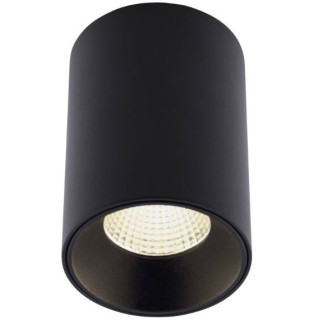
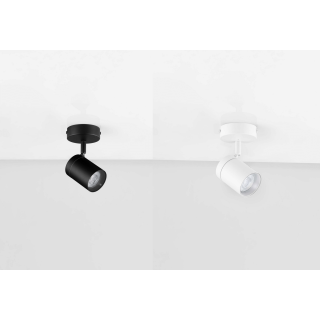
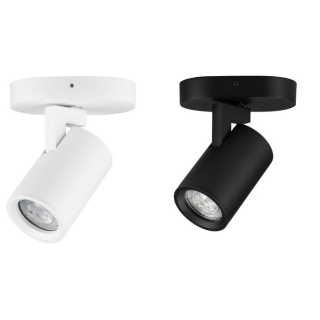
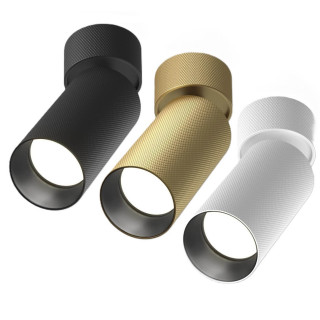
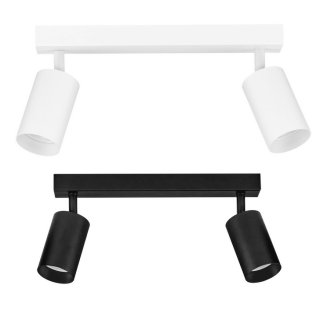
Ceiling spotlights are ideal for users who want more control over lighting in the entryway. They allow the light beam to be directed toward specific elements such as mirrors, built-in wardrobes, or wall décor. This type of ceiling lighting increases functionality, introduces a modern and dynamic character, and works particularly well in minimalist and industrial interiors.
Track lighting systems are increasingly used in modern homes and apartments. They allow light points to be freely positioned and adjusted, which is especially practical in long hallways or spaces with irregular layouts. Track lighting is an excellent choice for users who value flexibility without modifying the electrical installation, along with a distinctly modern, architectural aesthetic.

LED ceiling lights for hallways are now the dominant choice due to their energy efficiency and durability. LED technology delivers a high level of illumination with minimal power consumption, which is particularly important in areas where lights are switched on frequently. Additional benefits include long service life, a wide range of colour temperatures and outputs, and compatibility with dimmers and smart home systems.
One of the most frequently asked questions concerns the correct lumen output for a hallway. The generally recommended level is approximately 100–200 lumens per square metre. In narrow or windowless entryways, it is advisable to aim for the upper end of this range and combine it with adjustable light output.
The most universal option is neutral white light in the range of 3500–4000 K. It provides excellent visibility, renders colours accurately, and gives the space a clean, contemporary appearance. Warm light is typically chosen for more representative entryways where a welcoming and cosy atmosphere is desired.
In contemporary settings, simple flush mounts, geometric forms, and a restrained colour palette – white, black, and shades of grey – work best.
Ceiling lights made from light-toned materials, featuring frosted glass and wooden elements, introduce softness and a welcoming ambience that suits residential entry spaces perfectly.
Metal fixtures, black spotlights, and track lighting emphasise the raw aesthetic of the interior and give it a modern, loft-inspired look.
The choice of material affects both durability and appearance. Metal ensures robustness and a contemporary feel, glass adds lightness and elegance, while wood brings warmth to the space. Plastic fixtures are practical, easy to maintain, and often more cost-effective.
In most entryways, an IP20 rating is entirely sufficient, as these areas are not exposed to moisture. Far more important are build quality, reliability, and the performance of the light source itself.
When selecting a ceiling light for an entryway, proportions are crucial. The fixture should not dominate the space or visually lower the ceiling. In narrow corridors, low-profile designs or several smaller light points evenly distributed along the circulation axis tend to deliver the best visual and functional results.

Well-chosen ceiling lights for hallways and entryways combine functionality, aesthetics, and modern technology. The right amount of light, an appropriate colour temperature, a design aligned with the interior style, and high build quality ensure that the entrance area becomes bright, safe, and visually refined. It is lighting that genuinely enhances everyday comfort and creates a strong, positive impression from the very first step into the home.
In practice, a range of 100–200 lumens per square metre works best. In narrow, elongated, or windowless hallways, users typically opt for values closer to the upper end of this range, ideally combined with a dimmer that allows the light level to be adjusted according to the time of day.
The most versatile option is neutral white at 3500–4000K, as it provides good visibility, renders clothing colours accurately, and feels clean and balanced. Warm light at 2700–3000K is usually chosen when the entryway is also intended to have a more representative or welcoming character.
In long hallways, a single central fixture rarely provides even illumination. Users increasingly choose multiple light points spaced at regular intervals, which helps eliminate shadows and significantly improves visual comfort and safety when moving through the space.
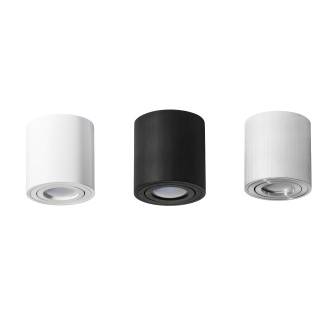
In homes with standard ceiling heights, flush-mounted and low-profile surface fixtures are the most common choice. They do not visually lower the ceiling and do not interfere with circulation areas. Recessed fixtures are popular where a minimalist ceiling appearance and uniform light distribution are priorities.
The best results are achieved with a regular, evenly spaced layout tailored to the length of the hallway. In practice, users prefer to plan several lower-output fixtures rather than one very powerful light source, and then fine-tune the final effect with a dimmer.
Many users initially worry that dimming is an unnecessary extra. In reality, it proves highly practical: full output for cleaning or leaving the house, and softer light in the evening or at night. For this reason, dimmers are among the most frequently recommended solutions in modern entryways.
A motion sensor works best in the primary entrance zone, provided that sensitivity and switch-off delay are properly adjusted. Incorrect settings can cause unnecessary switching, which may become irritating, so careful calibration is essential.
A ceiling light alone often creates unflattering shadows on the face. The ceiling fixture should provide general ambient lighting, while the mirror area requires additional, more directional light. This combination delivers a natural, functional, and visually comfortable result.
Fixtures with a frosted diffuser or a deeply recessed LED light source perform best. They soften the light output and reduce direct glare, which is particularly important in narrow spaces where occupants frequently look upward.
It is best to select compact, simple designs that do not dominate the space while still providing sufficient illumination. In small entryways, the size of the ceiling light should support the room’s proportions rather than become its main visual focal point.

In the context of ceiling lighting, our customers also choose:
check_circle
check_circle