48V Curved Tracks for Ceiling and Wall
09/22/2026 13:58:30
Filter By
Filter By
BLOG

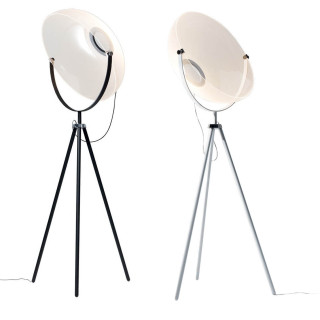
Tripod floor lamps combine what matters most at home after dark: comfortable light and a strong decorative statement. The three legs work like a camera tripod—stabilising the structure while keeping the lamp visually light. That’s why a tripod is a great fit in the living room next to the sofa, in the bedroom as an alternative to a classic bedside lamp, and as a stand-mounted floor lamp for reading in an armchair corner.
In this category, we’ve curated models for a wide range of interiors—from natural, light-toned designs to more industrial forms. Want to warm up the space? Choose a wooden tripod floor lamp. Prefer a bold detail for brick, concrete, and black steel? Go for a black loft-style tripod lamp. And if you’re after soft, diffused light and a “good-hotel” atmosphere, the best choice is a tripod floor lamp with a lampshade.
Most popular uses:
• next to an armchair/sofa – light for reading and relaxation,
• in a room corner – an easy way to “finish” the ambience without renovation,
• by a chest of drawers or console table – an elegant decorative accent.
Match your tripod by style (wood/metal), height, and shade type; compare the lampshade diameter; check the leg spread and cable length; and note the socket type (most commonly E27/E14, depending on the model). Dial in the final effect with the LED bulb: brightness (lumens), colour temperature (K) and—if you like an evening mood—dimming. If you read at night, choose models that also allow the shade angle to be adjusted.
There are 9 products.
sortSort by:
A tripod floor lamp is one of those solutions that can instantly “lift” an interior in a single evening. A tripod-inspired structure provides stability, while the slim silhouette keeps the lamp visually light—even in smaller apartments. In practice, a tripod works like a mobile light point: you place it wherever you need comfort (reading, relaxing, conversation) and then—without installation work and without touching the electrical system—you move it elsewhere.

A tripod is, first and foremost, three support points that distribute weight and increase stability. From an interior design perspective, geometry is just as important: the legs “draw” the space and add rhythm. That’s why tripod floor lamps work in both modern and more classic interiors—the material, colour, and shade type are what change.
In a well-designed tripod, the key factors are leg spread, joint quality, and cable routing. If you have children or pets at home, choose models with a noticeably wide stance and solid connections, and position the lamp outside the main walking route.
In many interiors, a tripod plays the role of a “functional sculpture.” The right lampshade can soften light and visually “calm” a room, while a metal shade can add contrast and energy.
In most homes, the problem isn’t “too few lamps,” but too few lighting layers. A single ceiling light often creates a flat effect and feels tiring after a long day. A tripod is a simple way to introduce layering:
• general light (ceiling) for moving around the room,
• task light (tripod) aimed where you read or work,
• ambient light (also tripod, but warmer and/or dimmed) to build atmosphere.
That’s why tripod floor lamps work so well in open-plan living spaces: you don’t need to rebuild the installation—at night you simply switch the interior into “relax mode.”
Although they all use a three-leg frame, they differ in light character and construction details.
The most universal home option. It delivers soft, diffused light and suits many styles—from classic to modern minimalism.
If you want stronger light for a specific zone (e.g., an armchair), look for models with a shade that “guides” the beam downward. This type is often chosen as a tripod floor lamp for reading.
Height adjustment or shade positioning increases functionality. In practice, it’s the difference between “looks nice” and “works every day,” especially if the lamp is meant to cover multiple scenarios (reading + ambience).
Start by answering three questions: where the lamp will stand, what light it should provide, and what mood it should create. Only then choose colour and details. This is the shortest path from need to the right purchase.
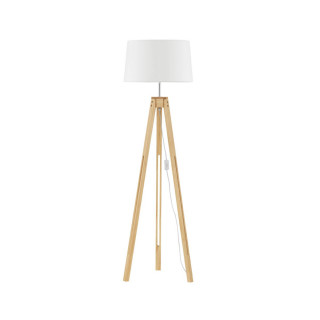
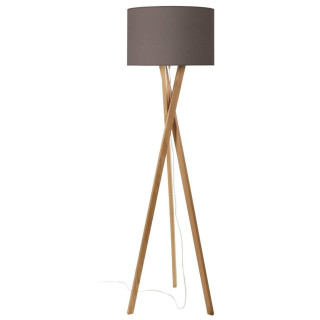
Choose wood if you want to warm up the interior and add softness. Wooden legs pair beautifully with light walls, beige tones, natural fabrics, and greenery. This type of tripod works well in Scandinavian, Japandi, and boho living rooms, as well as in modern interiors that need “breathing space” and a natural accent.
Practical tip: wood looks excellent with an ecru or light grey lampshade—the light becomes warm and friendly.
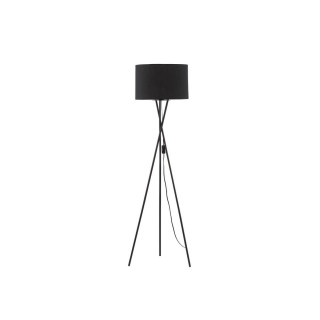
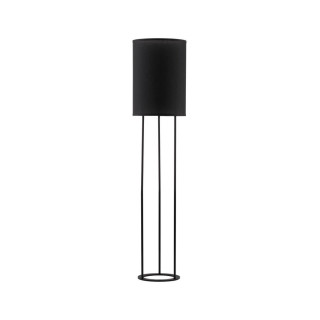
If your interior features concrete, brick, graphite tones, black joinery, or steel accents, a black tripod acts as a visual connector. It’s expressive without being loud—more of a strong line that brings order to the space. In loft and industrial settings, simple forms tend to work best: metal legs, a cylinder or cone shade, and minimal ornamentation.
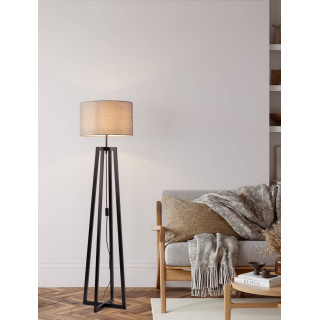
Practical tip: in a large living room, a black tripod looks great next to a light sofa—the contrast creates a “premium” effect without overdoing it.
A lampshade is the simplest way to achieve soft, diffused light. If you want cosiness, choose fabric—it smooths shadows and makes the room feel calmer. A tripod with a lampshade is also a safe choice for the bedroom: it doesn’t “hit” your eyes with light, but builds an atmosphere conducive to winding down.
Practical tip: the lighter the shade, the more light passes into the room; darker fabrics create a more intimate mood.
For reading, three things matter: light placement, brightness, and glare control. Ideally, the shade directs light downward and the light source is shielded (so it doesn’t dazzle when you look up). If the tripod stands by an armchair, position it slightly behind the backrest line—so light falls onto the book, not directly into your eyes.
Practical tip: for reading, choose LED bulbs with higher brightness than for “ambience,” and consider dimming—in practice, it’s one lamp and two scenarios.

When buying a lamp, it’s easy to focus on looks and forget that the result is driven primarily by the light source. The same tripod can feel “perfect” or “fatiguing” depending on the bulb.
Lumens (lm) indicate brightness. For ambience, less is enough; for reading, you need more. If your living room already has general lighting, the tripod typically works as layered lighting: it should illuminate a zone, not flood the entire room. The easiest approach is: first decide the function (reading vs ambience), then match bulb brightness to the shade type and the distance to where you sit.
Colour temperature (K) sets the mood. Warm light supports relaxation; neutral light feels more “task-oriented.” Warm tones are most often chosen for living rooms and bedrooms, while a home office may benefit from neutral or slightly cooler light. It’s worth keeping one logic throughout the home so the light doesn’t clash between rooms.
If natural colour appearance matters (wood, textiles, artwork), look for light sources with a good CRI. It’s a parameter you may not notice immediately, but you will feel it every day—especially in the evening.
If the tripod is meant to be your “lamp for everything,” dimming makes the biggest difference. You can drop down to a gentle background glow and, when needed, increase brightness for reading. Just remember: dimming requires compatibility between the bulb and the control gear (depending on the model).
In floor lamps, the most common disappointment is proportions: the lamp is too low, the shade too small, or the tripod intrudes into circulation space. Before buying, do a quick “tape test”: mark the shade height on the wall and check whether you’ll see the light source while sitting on the sofa.
• overall height (and adjustment range, if applicable),
• leg spread/stance diameter,
• lampshade or shade diameter,
• cable length and switch placement,
• socket type (e.g., E27/E14—depending on the model) and maximum wattage.
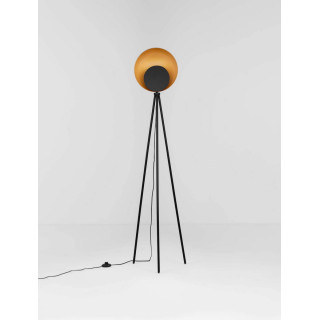
If you spend a lot of time seated, choose shades that shield the light source from above and from the side. Metal shades can deliver strong, directional light—excellent for tasks, but less “soft” for ambience.
In an online store, you’ll choose best by comparing a few parameters rather than relying on the photo alone:
When choosing a lamp, pay attention to joint solidity, stability, and a clear specification. In practice, it’s worth selecting luminaires with CE marking and transparent information about light sources, compatibility, and intended use (dry interiors, etc.). A well-designed tripod has even, stable support and doesn’t “work” at the joints when you gently touch the shade.
Rattan, fabrics, light wood, and beige tones. Here, the tripod feels “soft” and friendly—most often with a fabric shade or woven element that creates interesting light-and-shadow effects.
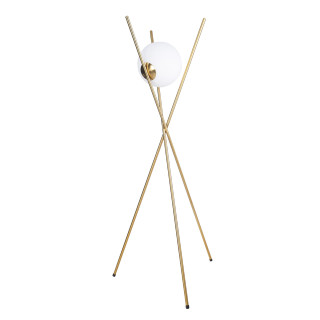
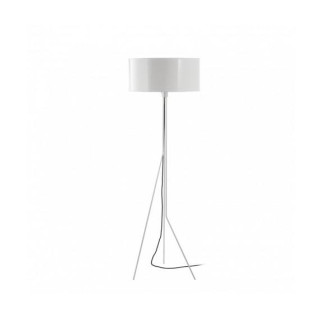
In these interiors, a tripod can be an elegant counterbalance to heavier furniture. Slim legs and a refined lampshade look best, and it’s worth tying the look together with details in the same finish (chrome/gold—depending on the scheme).
Form and detailing matter most here. A tripod can look very “classic” with a more rounded shade and warm light that enhances the colours of wood and textiles.

Most often: next to the sofa or armchair, so the light supports the side table and conversation zone. If you have a corner sofa, a tripod fills the “empty corner” and completes the composition.
A tripod can replace a bedside lamp—especially if the nightstand is too small for a classic table lamp. Choose a lampshade and warm light.
In an office, a tripod works well as additional side lighting that reduces contrast. Place it so it doesn’t reflect in the screen and doesn’t shine directly into your eyes.
• tripod with a directional shade or semi-transparent lampshade,
• lamp positioned slightly behind the armchair backrest,
• brighter LED bulb and (optionally) dimming, so you can move from “reading” to “relaxing” in one motion.
• tripod with a lampshade in a light fabric,
• warm colour temperature,
• tripod in the corner of the seating area, so the light “washes” the wall and textiles instead of acting as a hard point source.
• two light sources: ceiling + tripod,
• tripod positioned to light the sofa zone, not the kitchen worktop,
• this keeps the kitchen functionally bright while the living room remains calm and comfortable.
• choosing a “pretty” lamp without checking height and shade diameter,
• a bulb that’s too weak for reading (and disappointment that “the lamp doesn’t shine”),
• placing the tripod in a walkway—tripping over the legs,
• no plan for the cable (socket too far away, cable visible).

Yes, because the structure is visually slim. The key is matching the leg spread and positioning the lamp outside the main walking route.
For cosiness—choose a fabric lampshade. A metal shade works better when you want directional task lighting.
One where the light source doesn’t glare and the shade directs light downward. Ideally, it also allows shade adjustment and the use of a higher-output LED bulb.
Wood adds warmth and is stylistically “safe.” Metal delivers a stronger, more modern character. Choose based on your interior style and accessories.
Yes—if you choose a calm form and a fabric lampshade. In classic schemes, a tripod works best as an elegant background rather than an “industrial sculpture.”
Not necessarily—black frames can feel visually light. The key is slim legs, a lighter lampshade, and placement that doesn’t interrupt circulation.
Mobility, cable management, and no need for installation. A tripod is ideal here: you change the atmosphere without drilling or interfering with the electrical system.
It can, but it usually performs best as layered lighting: it complements ceiling lighting and improves evening comfort.
See also:check_circle
check_circle