-
Gold LED Pendant Light as a Premium Accent — How Lighting Creates Elegance in High-End Interiors 01/30/2026 13:38:51Modern floor lamps: lighting scenes and a mistake-free choice 01/28/2026 22:15:27LED Recessed Spotlights — the Invisible Heroes of Harmonious Lighting Architecture 01/16/2026 09:05:44
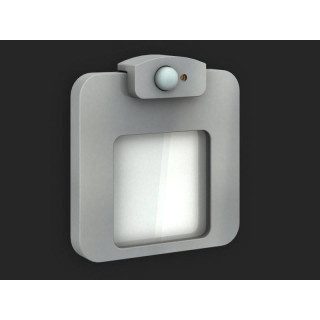
Motion sensor stair lights
Motion Sensor Stair Lights – smarter step lighting for safer, more comfortable spaces
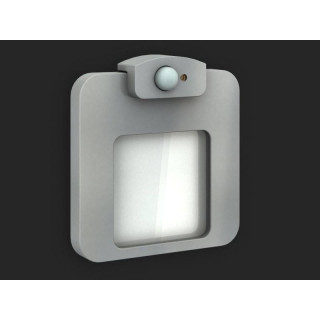
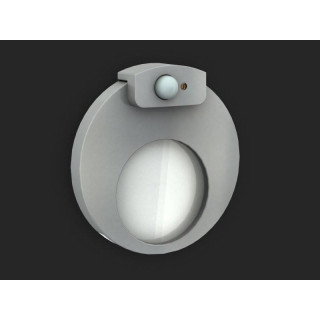
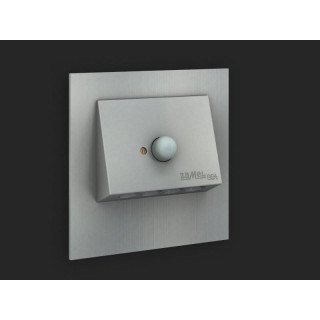
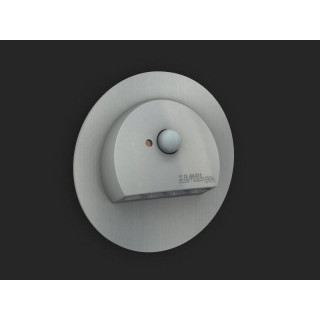
Motion sensor stair lights are one of the most practical ways to improve both safety and day-to-day comfort on staircases, corridors and other transition zones. Instead of relying on a manual switch every time someone approaches the stairs, the light comes on automatically when movement is detected. That simple change makes a big difference in real life, especially in homes used after dark, multi-level apartments, office circulation areas and entrance routes where lighting needs to be available instantly but not permanently.
What makes this category so appealing is that it combines several benefits in one solution. You gain better visibility on the stairs, a more convenient user experience, lower unnecessary energy use and a far more refined lighting effect than with one general overhead fixture alone. Properly selected stair lights do not flood the whole staircase with harsh light. Their job is to create soft, targeted illumination that helps people read the route clearly while maintaining a calm, architectural look.
In modern interiors and contemporary building projects, motion sensor stair lighting is no longer treated as a niche add-on. It has become a functional design feature. It supports safe movement at night, enhances the rhythm of steps and walls, and introduces a sense of order into the lighting scheme. In many projects, it is exactly the detail that makes the staircase feel complete.
Why motion sensor stair lights are such a popular choice
The first reason is convenience. Motion sensor stair lights switch on when someone enters the detection zone, so there is no need to search for a wall switch in the dark or leave lights running longer than necessary. This is particularly valuable at night, early in the morning and in all circulation areas where lighting is needed briefly but regularly.
The second reason is safety. Staircases are one of the most important areas to light correctly because even a small lack of visibility can affect comfort and confidence when moving between levels. Good step lighting does not need to be overpowering. It simply needs to reveal the edges of the route clearly and consistently. A well-positioned luminaire with a properly working sensor helps reduce visual uncertainty and supports safer movement without creating glare.
The third reason is efficiency. Because the light is activated only when movement is detected, the installation works more intelligently than a permanently switched-on system. This is especially useful in private homes, hallways, entrance zones, stairwells and shared-use buildings where the lighting should respond to real usage rather than remain on as a habit.
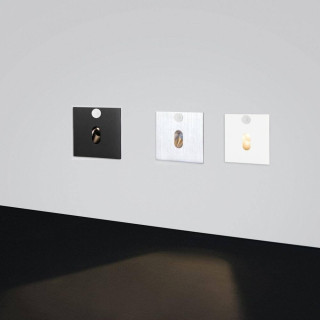
There is also a strong visual advantage. Motion sensor stair lights are often selected in recessed or low-profile formats, which means they can blend neatly into the wall or riser and support the architecture rather than compete with it. By day, they remain subtle. In the evening, they create a clean and elegant line of light that adds depth and atmosphere to the space.
How motion sensor stair lights work
Automatic light exactly when it is needed
The principle is simple: a built-in or connected sensor detects movement and activates the light for a pre-set period of time. Once the space is no longer in use, the light switches off automatically. For the user, the experience is effortless. For the installer or designer, the real value lies in matching the sensor logic to the staircase layout and the way the space is used.
The best systems do more than react randomly to any nearby movement. They are selected and positioned so the staircase feels intuitive in use. The light should come on at the right moment, remain on long enough to support movement comfortably, and switch off without feeling abrupt or wasteful.
Motion sensor and dusk sensor – a better combination
In many high-quality solutions, motion activation is paired with dusk control. This means the fitting will not switch on unnecessarily during the day or when there is already enough ambient light. Instead, it responds only when the space is dark enough for the extra light to be useful.
That combination is one of the most practical upgrades in staircase lighting. It improves usability, reduces pointless activations and makes the whole system feel more intelligent without making it more complicated for the end user.
Detection range, angle and hold time
These are some of the most important buying criteria in this category. Detection range determines how far away movement can be picked up. The detection angle affects how wide the monitored zone is. Hold time defines how long the light remains on after activation.
On stairs, these details matter more than many buyers initially expect. A sensor with the wrong range or angle can trigger too often, react too late or activate because of unrelated movement nearby. A well-matched sensor creates the opposite effect: smooth, natural lighting that feels almost invisible in operation because it simply works when needed.
How to choose the right motion sensor stair lights
Recessed or surface-mounted
This is usually the first technical and visual decision. Recessed stair lights are ideal when you want a clean, integrated finish and a more architectural appearance. They are especially suitable for new-build projects and carefully planned renovations where wiring, recess depth and wall preparation can be handled at the right stage.
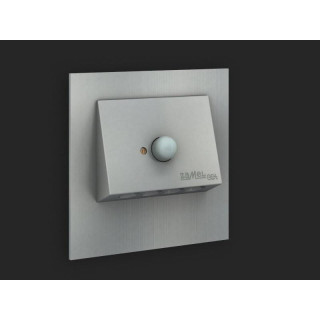
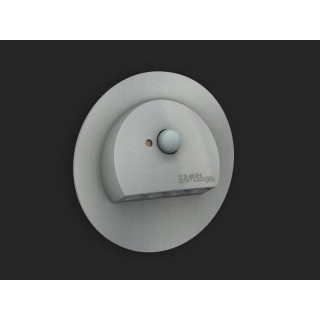
Surface-mounted fittings are often the better option for retrofit work or upgrades to an existing staircase. They reduce the amount of structural intervention required and can still deliver a very modern, controlled lighting effect when selected well. In many refurbishment projects, they offer the best balance between practicality and appearance.
Indoor or outdoor use
Not all motion sensor stair lights are built for the same environment. Indoor fittings are typically designed for dry zones where visual comfort and design integration are the main priorities. Outdoor staircases, entrance steps and semi-exposed circulation areas require greater resistance to moisture, dust and temperature changes.
For exterior use, protection rating becomes a key specification. The right IP level helps ensure reliable performance in real weather conditions and not just in showroom environments. That matters just as much as style, especially in projects where the staircase is part of the exterior entrance sequence.
Light colour and visual effect
In residential projects, warm white is usually the preferred option because it produces a softer and more welcoming atmosphere. It works particularly well with timber stairs, stone finishes, plaster, microcement and other materials commonly used in high-end interiors. Neutral white can also perform very well in more contemporary or technical-looking spaces where a cleaner, crisper effect is desired.
Whichever colour temperature is chosen, consistency is essential. Stair lighting should feel connected to the rest of the home, not visually separate from it. When the staircase, hallway and adjoining rooms follow a coherent lighting language, the whole interior appears more balanced and professionally resolved.
Built-in sensor or a larger staircase control system
In this category, buyers will typically encounter two main approaches. The first is a stair light with an integrated motion sensor. This is a straightforward and highly practical option for users who want automatic activation without building a more advanced control scheme around the staircase.
The second approach involves a broader staircase lighting system in which separate sensors work with a controller and multiple light points. This allows for more sophisticated behaviour, including full-route activation or sequential step-by-step effects. It is especially attractive in premium residential projects and designer staircases, but it requires more planning and a more structured installation approach.
Where motion sensor stair lights work best
These luminaires are particularly effective in houses, duplex apartments, apartment staircases, corridors, hotel interiors, office stairwells, entrance areas and circulation zones used after dark. They are most valuable wherever people need immediate orientation lighting but do not want to rely on permanent full-power illumination.
They are also an excellent choice for night-time use. Instead of switching on a bright main ceiling fitting, the user gets low-level guidance light that supports movement without disturbing the whole space. For many households, that single advantage is enough to make motion sensor step lighting one of the most useful lighting upgrades in the property.
What to check before buying
Before choosing a specific model, it helps to clarify a few practical points. Should the fitting be recessed or surface-mounted? Is it for indoor or outdoor use? Do you want a unit with an integrated sensor or part of a wider staircase system? What beam direction will best illuminate the step? What colour temperature matches the rest of the interior? How wide should the detection zone be, and how long should the light stay on?
Once those functional decisions are clear, it becomes much easier to compare finish, shape, colour, housing style and visual design. That is usually the most effective route to a purchase that performs well in daily use rather than just looking appealing on a product page.
Frequently asked questions about motion sensor stair lights
Do motion sensor stair lights stay on all the time?
No. Their main advantage is that they activate automatically when motion is detected and switch off after a set time. That makes them far more practical than permanently operated guidance lighting in many everyday spaces.
Is a dusk sensor worth having as well?
Yes, especially in staircases and corridors that receive daylight during part of the day. Dusk control prevents unnecessary daytime activation and makes the lighting system more efficient and more intuitive.
Are motion sensor stair lights suitable for outdoor stairs?
Yes, provided the fitting is designed for external use and has the correct level of environmental protection. For outdoor installations, build quality, sealing and IP rating are critical selection criteria.
What matters more: the appearance or the sensor performance?
In this category, function should come first. Detection quality, timing, positioning and suitability for the space have the biggest impact on user satisfaction. Design still matters, but only after the product is technically right for the staircase.
Motion Sensor Stair Lights – lighting that responds to the way people really live
Well-chosen motion sensor stair lights combine comfort, safety and refined design in a way that few other lighting categories do. They remove friction from daily use, improve visibility on stairs and make circulation areas feel more considered, more modern and easier to navigate.
If you want staircase lighting that works only when needed, supports movement after dark and complements the architecture of the space, motion sensor stair lights are one of the most effective choices available. The best results come from selecting the fitting not only by style, but also by mounting type, sensor logic, light direction and the actual conditions in which the system will operate.
Menu
- +Outdoor lighting
- +Indoor lighting
- +LED wall lights
- Line light LED
- LED profiles ALU
- +Track system
- Multiline - magnetic track system 22mm 48V
- FIVETRACK 5 mm 48V Magnetic Tracks & Luminaires
- AQFORM Multitrack 48V - Premium magnetic Stucchi track
- 3-phase track systems
- 1-Phase Track Systems
- MINILINE magnetic track lighting
- AQFORM FLATTRACK magnetic track 48V
- +Magnetic system 11mm Micro, Core11
- Black track lighting
- White track lighting
- +LED ceiling lamps, hanging and surface-mounted
- +Ceiling covers
- +LED plafonds
- LED recessed downlights
- +Hanging lamps LED
- Ceiling spotlights and spots
- Ceiling fans LED
- LED lights for paintings
- Starry Sky
- +LED floor lamps
- LED table and desk lamps
- Living room
- Bedroom
- Dining room
- LED bathroom lighting
- LED kitchen lighting
- +LED stairs lighting
- +LED bulbs
- All manufacturers
- Prices drop
- New Products
- Bestseller
- LED Lamps
-
- Indoor lighting
- LED wall lights
- Line light LED
- LED profiles ALU
- Track system
- Multiline - magnetic track system 22mm 48V
- FIVETRACK 5 mm 48V Magnetic Tracks & Luminaires
- AQFORM Multitrack 48V - Premium magnetic Stucchi track
- 3-phase track systems
- 1-Phase Track Systems
- MINILINE magnetic track lighting
- AQFORM FLATTRACK magnetic track 48V
- Magnetic system 11mm Micro, Core11
- Black track lighting
- White track lighting
- LED ceiling lamps, hanging and surface-mounted
- Ceiling covers
- LED plafonds
- LED recessed downlights
- Hanging lamps LED
- Ceiling spotlights and spots
- Ceiling fans LED
- LED lights for paintings
- Starry Sky
- LED floor lamps
- LED table and desk lamps
- Sources of light
- LED Strip Lights
- Outdoor lighting
- LED profiles
- LED stairs lighting
- LED accessories
- Equipping interiors
- Sale
- The FIBARO system
- Bestsellers
- LED bathroom lighting
- Decorative LED lighting
- LED lighting furniture
- LED kitchen lighting
- Technical and information LED lighting
- Lighting with LED for children
- Other lamps
- Living room
- Bedroom
- Dining room
- Indoor lighting