Round Stone Wall Lights – How to Choose the Right One?
09/06/2026 12:23:09
BLOG

Floor lamps (freestanding lamps) are the fastest way to add functional light and atmosphere—without renovation work or rewiring. You place them exactly where you spend time: by the sofa, next to a reading chair, in a living-room corner, beside a desk, or near the bed—and you instantly gain a second layer of light (task or ambient) that’s often missing when you rely solely on ceiling lighting. In well-designed interiors, lighting works in layers: general + task + accent—and a floor lamp is the simplest way to “fine-tune” those layers in real life.
Quick picks
Start with: the intended use (reading/living room/office), the type (arc/uplighter/tripod/shaded), dimming, the light source (replaceable vs integrated LED), colour temperature (Kelvin), CRI, height, and the reach/adjustability of the arm.
There are 159 products.
sortSort by:
In theory, “a chandelier is enough.” In practice, it’s the floor lamp that makes the day-to-day difference: it lights a reading spot without glaring into other people’s eyes, helps you avoid harsh facial shadows during a conversation on the sofa, and creates soft, lateral modelling of the space (often more pleasant than overhead light). A well-chosen standing lamp can improve a room’s functionality in minutes—while also “finishing” the interior through its form, materials, and proportions.
If you’re furnishing a home in Poland or elsewhere in the EU, you’ll also appreciate the simplicity: a floor lamp is mobile, requires no intervention in the electrical installation, and if you change the furniture layout you simply move it wherever you want.

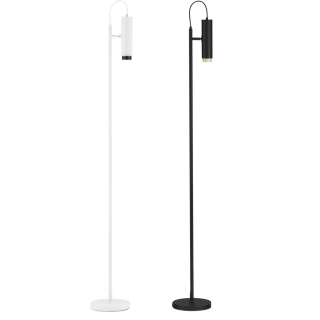
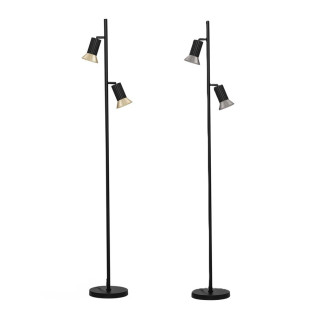
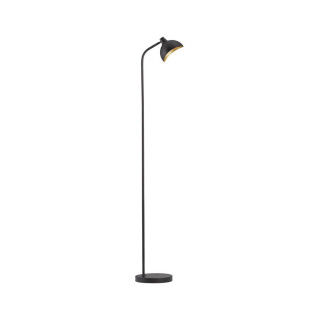
These are working tools: an adjustable arm, joint, movable spotlight, or a precise shade. Their advantage is directional control and a lower risk of glare. For reading, directional light usually performs better than diffuse light.
What to check in practice:
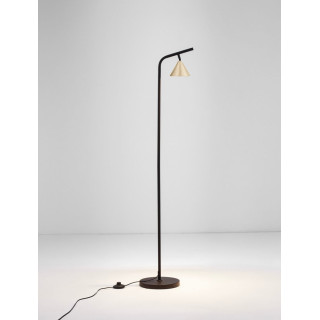
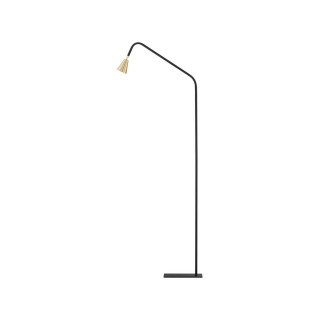
The base stands to the side, and the arc “reaches” with the shade and light over a coffee table or sectional. Ideal when you don’t want (or can’t) modify the ceiling anymore, but you need light in the lounge zone. Just remember: an arc needs space—reach and base counterweight both matter.
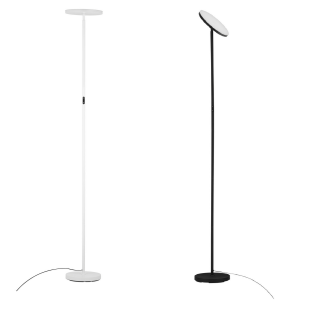
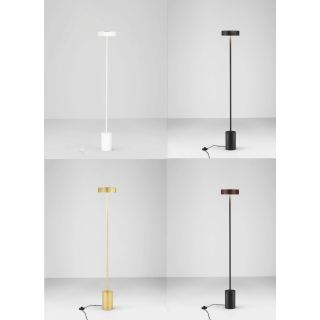
An uplighter throws light upward and bounces it off the ceiling. The effect is a broad, diffuse glow that often feels “bright, but not harsh.” It’s an excellent choice for living rooms and interiors where you don’t want to look into point light sources.
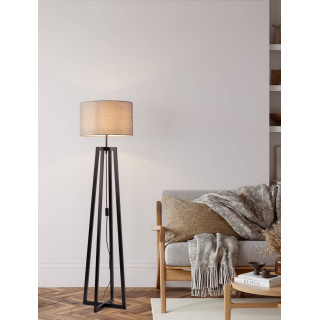
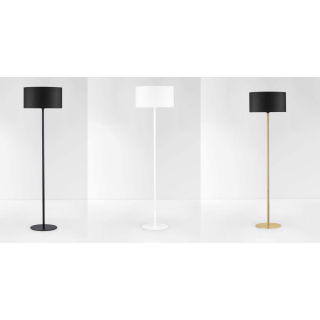
A textile shade acts as a diffuser: it warms the light, reduces glare, and adds a soft layer to the interior. If you want a cosy feel, this is one of the safest decisions—especially for the living room and bedroom.
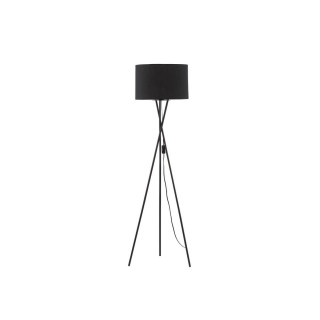
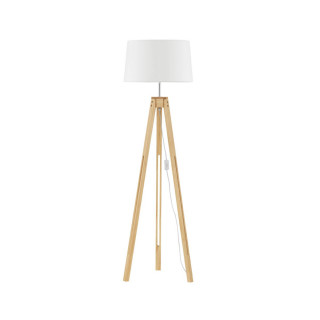
Tripods work particularly well in Scandinavian, Japandi, and modern classic interiors. These are lamps that often “complete” a composition next to a sofa, sideboard, or armchair—even when switched off.
An integrated LED enables slim, modern forms and often convenient dimming. Pay close attention to light quality (CCT, CRI) and control ergonomics. If you plan to use it for years, check whether the manufacturer offers sensible service options or replacement of wear components.
If you want lighting scenes, app/voice control, and automations, choose solutions compatible with your ecosystem. The most practical rule is straightforward:

Lumens (lm) describe how much light a source emits. For reading lamps, a practical starting range is often around 450–750 lm—treat this as useful guidance, not a rigid “standard.” The same lumen output can feel excellent with a well-aimed spotlight, and mediocre with a diffuse shade.
In practice, what matters is what lands on the page—i.e., the light on the surface. That’s why beam control, distance from the reading position, and adjustability are so important. If you squint or keep “looking for” a brighter spot, you usually lack task light—not another powerful ceiling fixture.
The most important rule within a single room: keep consistency. Extreme differences in colour temperature can disrupt how the interior reads.
CRI indicates how naturally colours appear. If you’re investing in wood, textiles, art—or you simply don’t want beige to look “grey”—choose a higher CRI. In practice, CRI 90 is often considered a premium level for living rooms and bedrooms, while lower values are better reserved for areas where function is the only priority.
A dimmer (or smart control) lets one lamp handle multiple scenes: work, reading, conversation, film, evening ambience. If you choose one feature that genuinely increases usefulness in a living room—it’s dimming.
Practical note: if you plan to dim, make sure the light source is designed for it (applies to both bulbs and integrated LEDs).
If you like full control over colour temperature and the “character” of the light—choose a replaceable source. If the priority is form and minimalism—integrated LED can be unbeatable.
In homes with children and pets, prioritise a stable base and route the cord outside main walkways. The taller the lamp and the longer the arm, the more base weight matters.

Don’t buy everything that looks “nice in photos.” From a usability standpoint, practical criteria matter:
If you’re torn between two models, use a simple scenario: where the lamp will stand, what it will be used for, and what lighting you already have in the room. That usually leads to a better choice than product aesthetics alone.
Aim for a lamp that delivers clear light onto the page rather than “across the whole room”—for reading, a directional beam and adjustability work best. As a practical starting point, many people are comfortable with levels roughly equivalent to 450–750 lm in a task lamp, but results depend on the lamp’s distance from the book, beam angle, and whether the light is focused (spotlight) or diffuse (shade).
For living rooms and bedrooms, 2700–3000 K warm white typically wins because it feels “soft” and supports relaxation. For work, desks, and tasks requiring concentration, 4000 K is chosen more often because it reads as more neutral and “technical.” Most importantly: keep the room consistent—mixing very warm and very cool light usually harms the overall feel.
Ideally, the light source should not sit in the seated person’s direct line of sight—the lamp should illuminate the space and the book, not shine into your eyes. In practice, the lower edge of the shade or the emission point should be positioned so that, when seated, you do not directly see the bulb/LED. For reading, adjustability and the ability to aim the beam over your shoulder onto the book matter more than one “perfect height.”
Yes—but only if you choose the right construction and placement. The easiest solutions are an uplighter (indirect light to the ceiling) or a stronger lamp with a diffusing shade. If a room has no ceiling lighting, a “two lamps instead of one” layout often works best: one for ambient/general light (uplighter/shade) and one for task lighting (reading/desk).
Most often it’s an exposed light source or a poor aiming angle—classic glare. The fix is simple: choose a shade that shields the bulb (fabric shade, opal diffuser) or position the lamp so the source is outside your field of view (e.g., slightly behind the backrest line). If you need brightness without a “blinding point,” use indirect light (uplighter) or dimming and increase output only when necessary.
This is almost always a compatibility issue: the LED or smart bulb doesn’t work with that dimmer type or with the lamp’s internal driver. Fast diagnosis: set the dimmer to 100% and see if the flicker disappears—if it does, dimming is the culprit. Solutions: use a bulb explicitly rated as dimmable.
Don’t follow the “equivalent” claim—follow the actual power draw and the fixture’s limits. The max W label relates to thermal safety of the fitting and wiring. If the lamp specifies a maximum wattage, do not exceed it, even if an LED runs cooler than an incandescent. In practice: choose an LED with wattage within the manufacturer’s limit, and select brightness by lumens (lm), not watts.
Place it where the activity happens: by a reading chair, next to the sofa, in a corner as background light, or near a sideboard as accent lighting. The safest rule: the lamp should support the zone but not block circulation—leave a clear walkway and avoid positioning where the source shines directly into your eyes. If you have a TV, ensure the lamp doesn’t create reflections on the screen.
Yes—if you care about how materials and colours look: wood, textiles, beiges, greens, artwork, and décor. CRI 90+ typically provides more natural colour rendering and a “cleaner” perception of the space, especially in the evening when floor lamps often become the primary light source in the lounge zone.
Choose a model with a heavy, stable base and a low centre of gravity—this is the simplest protection against accidental tipping. Route the cable along the wall, under a skirting channel, in a cable cover, or under a rug with appropriate protection; avoid a loose loop across a walkway, as that’s the most common trip hazard. Also aim for a shade/light source that doesn’t overheat and is shielded—safety and comfort go hand in hand.

The best floor lamp doesn’t only “look good.” It:
check_circle
check_circle