Top 7 Stone Wall Lights – 2026 Ranking
10/17/2026 18:33:51
Filter By
Filter By
BLOG

Ceiling spotlights and spots are the easiest way to place light exactly where you need it—above a countertop, dining table, artwork, in a hallway, or in a relaxation zone. At Salon LED you’ll find LED ceiling spotlights in surface-mounted, recessed, and track versions, in styles ranging from minimalist to loft and glamour. An adjustable beam angle makes it easy to illuminate specific areas and create striking accents in any interior.
Pay attention to colour temperature (warm for relaxation, neutral for work), beam angle (narrow for accents, wider for general illumination), and the number of light points you need. If you’re unsure, opt for adjustable spotlights—they offer the greatest design flexibility. Many models are straightforward to install, and for electrical connections we recommend using a qualified electrician.
There are 207 products.
sortSort by:
Ceiling spotlights come in several configurations, allowing you to tailor the lighting to your specific needs:
Single ceiling spotlights are ideal for precise illumination of selected areas and often complement the existing lighting scheme. Double spotlights deliver more even, general lighting throughout the room, while extended sets mounted on rails or track systems allow you to build a more comprehensive, customizable lighting layout. Each type has its own purpose—the choice depends on the character of the interior and the visual effect you want to achieve. With a wide range of options available, it is easy to match ceiling spotlights to both the style and the functional needs of any space.

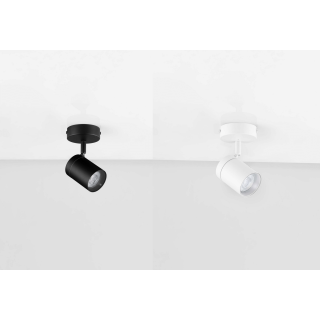
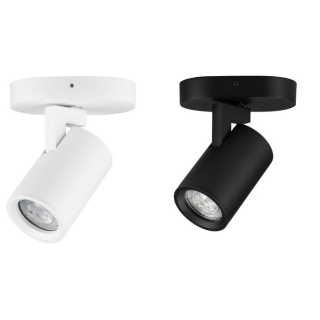
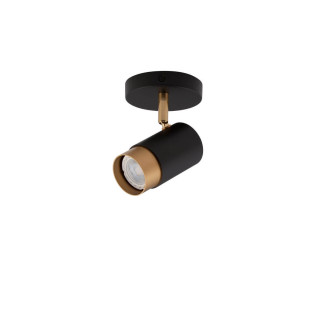
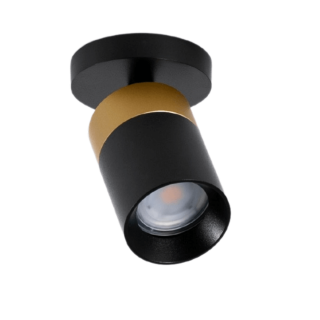
A single ceiling spotlight is a versatile solution that can be easily adapted to individual requirements. Its adjustable beam angle lets you highlight selected areas or create subtle lighting accents. In smaller rooms, one spotlight provides adequate illumination, while in larger interiors it works perfectly as a supplementary light source, enhancing architectural details or décor elements. Easy installation and a broad selection of models make ceiling spotlights a popular choice for both residential and commercial environments. Adjustable brightness and colour temperature further allow you to create an ambience suited to the mood and function of the room.
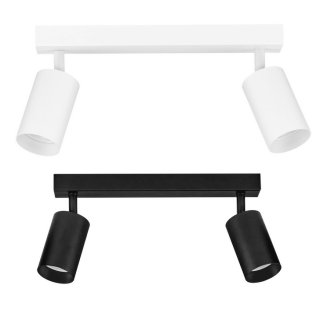
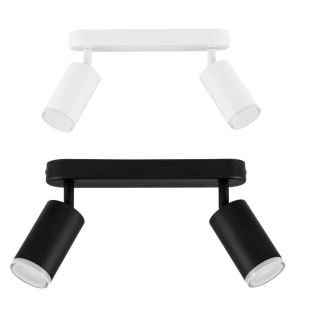
Double ceiling spotlights perform exceptionally well in larger spaces such as living rooms or offices. They offer uniform light distribution, which makes them suitable as a source of general lighting. Their design works equally well in modern and classic interiors. One of their major advantages is functionality—the independent adjustment of each head allows you to direct the light exactly where it’s needed. Installation is straightforward and does not require specialised equipment, making this type of ceiling light a popular choice across various interior styles.
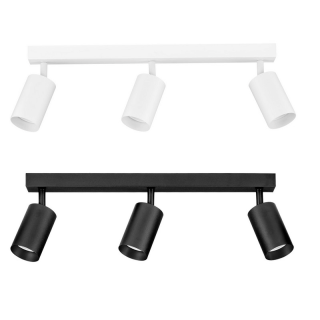
Ceiling-mounted track spotlights magnetic 48V offer extensive design and functional possibilities. They allow flexible configuration of both general and accent lighting, making it easy to adapt the system to individual needs. With track systems, you can achieve diverse lighting effects—from subtle illumination to more dramatic, dynamic accents. This makes track spotlights an excellent choice for those seeking modern, inventive solutions. Another significant advantage is the ability to reconfigure the setup quickly without altering the electrical installation.

LED ceiling spotlights offer a range of practical features suitable for many interior types. One of the most important is the adjustable beam angle, which enables precise highlighting of selected objects or creates the desired atmosphere. As a result, ceiling spotlights can serve as both task lighting and general lighting, adapting to user preferences.
Dimming capabilities are another asset, allowing full control over light intensity. This feature is perfect for living rooms or bedrooms, where both bright task lighting and soft ambient lighting may be required.
Flexibility in interior design is also a key benefit. With countless models available—from minimalist to classic—ceiling spotlights provide both functionality and decorative value, enhancing the overall character of the room.
Ceiling spotlights play an important role in creating both accent lighting and general illumination. Task lighting allows you to highlight specific areas, emphasising artwork, sculptures, and architectural details—LED models are especially effective thanks to their precise beam control.
Conversely, general lighting—achieved using various types of fixtures, including spotlights or magnetic lighting — ensures uniform light distribution throughout the room, improving visual comfort for daily activities.
Modern solutions make it easy to combine both lighting types within one space. Adjustable beam angles and dimming functions make track lighting systems a universal choice for homes and offices, providing ample freedom in shaping the atmosphere.
Ceiling spotlights offer features that significantly enhance their practicality. Adjustable brightness allows you to tailor the lighting to different scenarios—from bright task lighting to soft, cosy evening illumination. Dimming also contributes to energy savings, making it especially valuable in living rooms and bedrooms.
Equally important is beam angle adjustment, which lets you direct the light precisely where needed. This increases lighting efficiency and enables creative visual effects, whether for emphasising décor or shaping the room’s mood. Directional spotlights and modern ceiling spotlight designs are particularly effective in this regard.
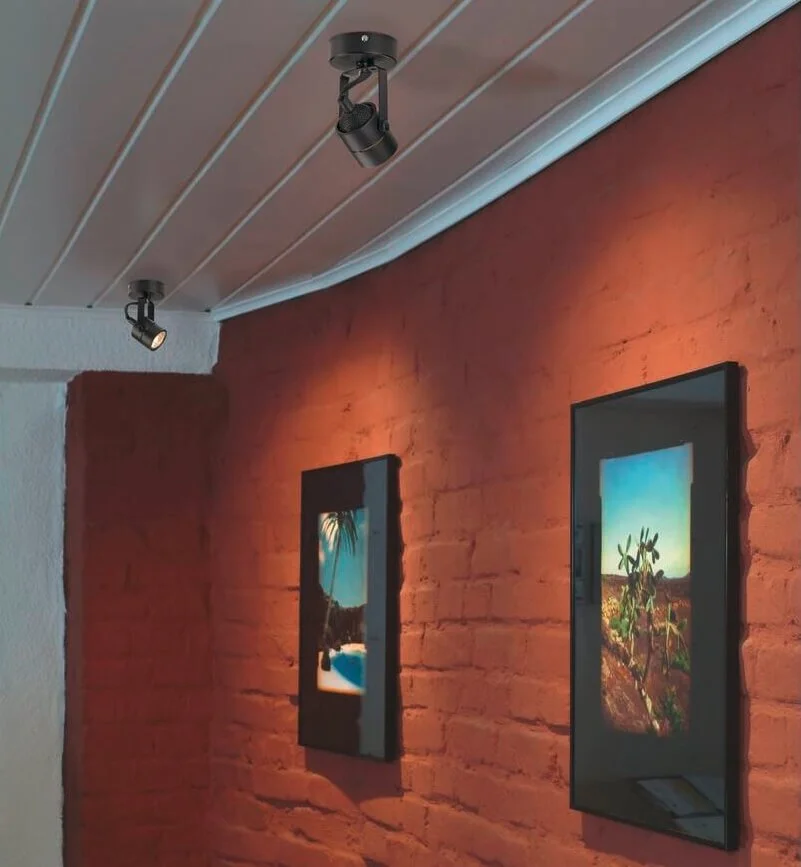
Technical parameters are crucial to the performance and energy efficiency of ceiling spotlights. The IP rating determines resistance to dust and moisture—an essential factor in bathrooms, kitchens, and other demanding environments.
Brightness, measured in lumens, defines light intensity—the higher the value, the stronger the illumination. Colour temperature, measured in kelvins, also plays a significant role: warm white light (2700–3000 K) promotes relaxation, while cooler tones (4000–5000 K) support focus and productivity.
Energy efficiency is another consideration. LED ceiling spotlights consume minimal power while offering high brightness and long service life, significantly reducing operating costs. Choosing the right parameters ensures both practical and aesthetic benefits in everyday use.
The IP rating is an important technical parameter that defines a spotlight’s resistance to dust and moisture. Higher ratings, such as IP44 or IP54, offer enhanced protection and ensure safe operation in challenging environments.
Such ceiling spotlights are ideal for bathrooms and other moisture-prone areas, as well as certain outdoor applications. Selecting the appropriate IP rating ensures durability and reliability across different settings.
The design of ceiling spotlights significantly shapes the ambience of an interior. Well-chosen fixtures not only provide illumination but also reinforce the room’s aesthetic identity.
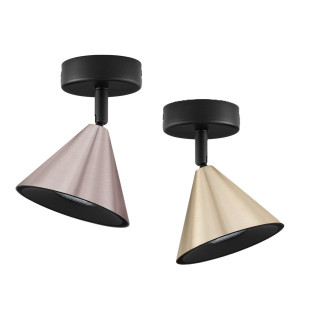
The market offers countless options—ranging from minimalist designs to glamorous, decorative pieces. Spotlights with clean lines and neutral colours blend seamlessly into modern interiors focused on simplicity and functionality. Glamour-style fixtures, featuring shimmering materials and ornamental finishes, introduce elegance and a luxurious atmosphere.
Thanks to the variety of colours and finishes available, it is easy to match ceiling spotlights to any décor—from a cosy living room to a sophisticated office. For those seeking stylish lighting solutions, the Aqform collection is particularly worth exploring.
Ceiling spotlights come in numerous stylistic and colour variations, making them suitable for virtually any interior. Choosing the right design helps emphasise the room’s aesthetic character, while a diverse colour palette ensures a harmonious fit.
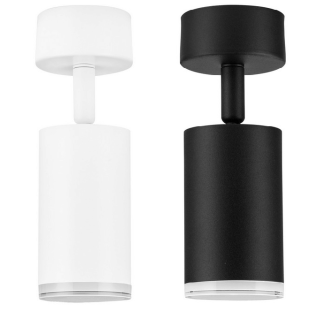
Modern models often feature clean geometry and muted tones—such as black ceiling spotlights, which are excellent in minimalist spaces. More ornate versions in bold colours are ideal for glamorous interiors. With such a broad range, it is easy to create a cohesive lighting concept tailored to your aesthetic preferences.
Modern, minimalist interiors are increasingly popular thanks to their simplicity and practicality. Ceiling spotlights align perfectly with these trends, combining clean silhouettes with understated forms. Neutral colours—such as black spotlights—integrate effortlessly into the interior while providing effective illumination.
Minimalism values a reduced number of details without compromising usability, making these fixtures both functional and visually unobtrusive. They create bright, orderly spaces that work well in both residential and commercial environments.
In contemporary design, ceiling spotlights enhance the space’s elegance and visual balance, contributing to a pleasant atmosphere and cohesive overall look.

Ceiling spotlights are a universal lighting solution suitable for both residential and commercial spaces. In homes, they illuminate living rooms, bedrooms, or home offices, creating a cosy atmosphere or highlighting decorative elements.
In public spaces such as shops or restaurants, they direct light onto products or designated zones, improving presentation and attracting customer attention. They are also widely used for accent lighting in galleries and museums, where carefully positioned beams bring out the finest details of exhibits.
With adjustable beam angle and light intensity, ceiling spotlights can be tailored to the specific requirements of any interior. They also perform well in bathrooms, providing both functionality and safety.
Ceiling spotlights are highly versatile and perform well throughout the home. In offices, they create optimal working conditions by evenly illuminating workstations, enhancing comfort and productivity. In living rooms, they serve as either the main light source or a subtle decorative accent, shaping a warm and inviting atmosphere.
In children’s rooms, models with adjustable beam angles and brightness levels are particularly practical—easily adapting to play, study, or relaxation. Thanks to modern LED technology, ceiling spotlights combine excellent energy efficiency with high-quality light output, making them suitable for both residential and commercial spaces.
Ceiling spotlights play an essential role in commercial environments, influencing both work comfort and interior aesthetics. In retail or office settings, well-designed task lighting boosts efficiency and helps create a welcoming atmosphere.
Spotlights enable precise highlighting of specific areas or displays, which is vital for effective product presentation. LED spotlights offer long service life and low energy consumption, contributing to significant cost savings. Adjustable beam angles and light intensity allow the lighting to be tailored to the specific function of the space.
Thoughtfully selected ceiling spotlights combine practicality with visual appeal, greatly enhancing the user experience and overall impression of the interior.
Track spotlights stand out for their simple and flexible installation. The system is based on rails mounted to the ceiling, onto which the individual spotlights are attached. This setup requires no major construction work or structural modifications, and the layout can be adjusted at any time.
Tracks make it easy to move or add fixtures without altering the electrical wiring. This makes track systems an excellent choice for those who value flexibility and want lighting that adapts to evolving needs.
Proper mounting accessories, such as connectors and brackets, ensure stability and safety. Track-mounted ceiling spotlights allow you to create both accent and general lighting with ease, making them a practical and modern solution for residential and commercial interiors.
The number of spotlights should be calculated based on the required luminous flux (lumens) rather than floor area alone. Recommended reference values are: living room 200–300 lm/m², kitchen 300–500 lm/m², bathroom 300–400 lm/m², hallway 150–200 lm/m².
Example: a 20 m² living room × 250 lm = 5,000 lumens. With spotlights delivering approx. 600 lm each, you will need 8–9 light points.
Layout should allow for a 40–60 cm distance from walls and 80–120 cm spacing between spotlights. In kitchens and task areas, a denser and more precise arrangement is recommended.
There is no single universal rule. Proven design guidelines include 90–110 cm for standard spotlights (400–600 lm), 70–80 cm for higher ceilings or task areas, and wider spacing for wide-beam spotlights (90–100°). Spacing that is too tight can cause over-illumination, while spacing that is too wide results in dark patches and unattractive contrasts.
Not all LED spotlights are dimmable. Dimming is possible only when the light source or LED module is marked as dimmable and a LED-compatible dimmer is used (most commonly DALI or phase-cut dimmers). Issues such as flickering or buzzing usually result from incorrect dimmer selection, insufficient minimum load, or low-quality power supplies. For premium installations, DALI, 1–10V, or PUSH DIM systems are recommended.
Light colour has a direct impact on the perception of an interior. 2700K is very warm and atmospheric, ideal for bedrooms and relaxation areas. 3000K is warm white and the most versatile choice for living rooms, dining areas, and kitchens. 4000K is a neutral, technical white suitable for bathrooms, offices, and dressing rooms. In residential interiors, 3000K is widely regarded as the safest and most comfortable standard.
The beam angle depends on the lighting function. 24–36° is suitable for accent lighting, artwork, and wall features. 40–60° is the optimal choice for general lighting. 90° and above provides even illumination, particularly in rooms with low ceilings. A beam that is too narrow in general lighting creates visible light “spots,” while an excessively wide beam reduces efficiency.
Yes. The key parameter is the IP rating. In zone 1 (above a shower or bathtub), a minimum of IP65 is required; in zone 2, IP44; and outside the zones, IP20–IP44. Bathroom spotlights should be resistant to moisture and corrosion, preferably made of aluminium or stainless steel.
The minimum depth depends on the fixture design. Adjustable spotlights typically require 90–120 mm, although this should always be verified individually for each model. Surface-mounted spotlights do not require recessed space, as they are installed directly onto the ceiling.
Spotlights with integrated LED offer superior optics, higher efficiency, longer lifespan, and reduced glare. Models with replaceable GU10 bulbs provide easy replacement and greater flexibility in choosing wattage and colour temperature. Integrated LED solutions are recommended for modern and design-led interiors, while GU10 fixtures are suitable for budget-conscious or retrofit installations.
The most common causes are an excessive number of light points, overly high lumen output, a beam angle that is too narrow, or the absence of dimming. The solution is to reduce the number of spotlights, select lower lumen values, install a dimmer, and complement the setup with indirect lighting such as wall lights or LED strips.
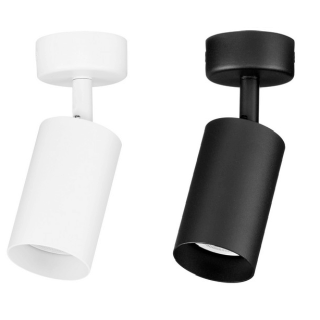
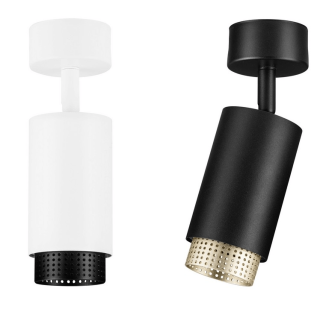
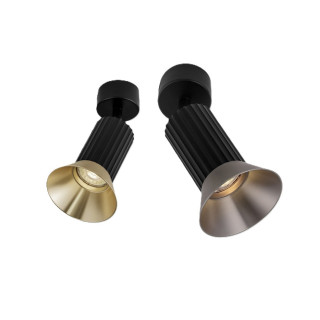
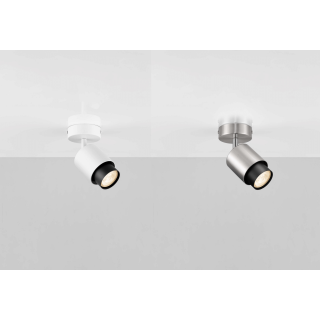
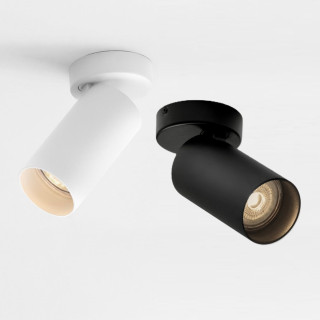
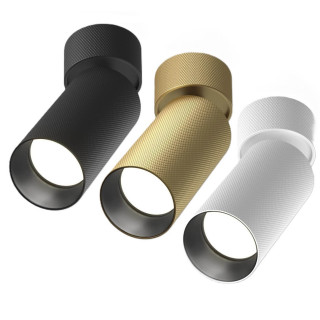
White spotlights visually blend into the ceiling and are the most universal choice. Black spotlights create a strong contrast and emphasise a modern, designer aesthetic. Chrome or gold finishes work best in premium, glamour, or modern classic interiors. The fixture colour should be consistent with electrical accessories, door hardware, and other interior finishing details.
Our customers also appreciate the following ceiling lighting solutions:
check_circle
check_circle