Round Stone Wall Lights – How to Choose the Right One?
09/06/2026 12:23:09
Filter By
Filter By
BLOG

Solar LED lights with a motion sensor are outdoor fixtures that charge during the day and, after dark, switch on automatically when motion is detected—most commonly via a PIR (passive infrared) sensor.
It’s a fast, wireless way to illuminate key areas around the property—your front entrance, driveway, pathways and access zones—without cutting into surfaces, running cables or paying for continuous mains power.
In this category you’ll find, among others, solar wall lights with a motion sensor, solar lights for balcony, solar garden spike lights, as well as practical solutions for the garden and patio. Choose the fixture based on its purpose: security lighting (brighter output) or a more comfortable “welcome” light for everyday wayfinding.
There are 70 products.
sortSort by:

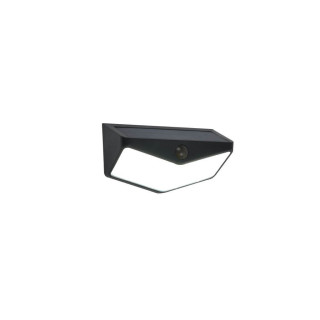
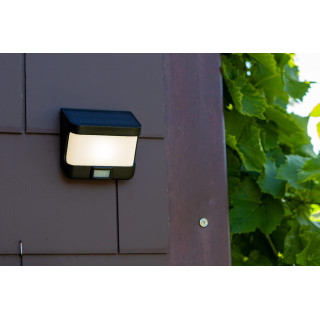
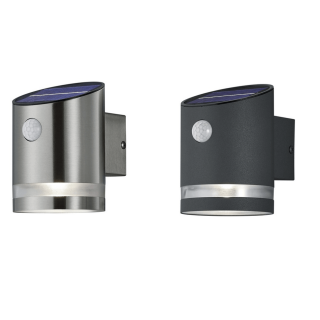
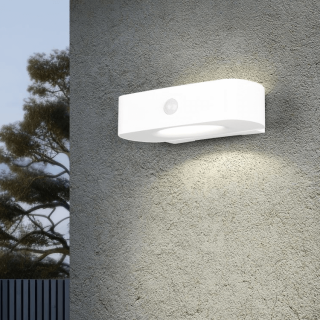
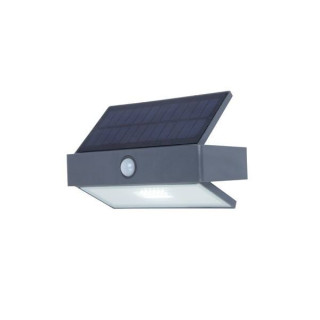
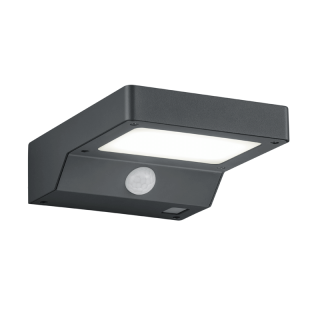
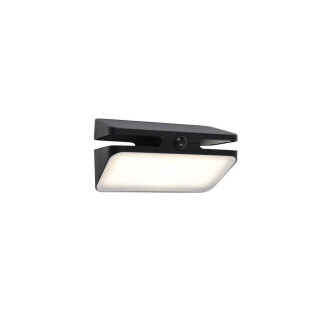
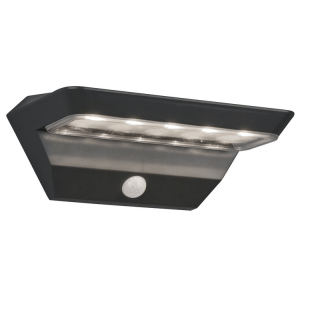
A solar wall sconce with a motion sensor will work well on any facade.
With solar lights, daylight is everything. If your façade or garden area is shaded, choose models with an adjustable panel or a separate solar module that can be installed in a better sunlit spot (e.g. “around the corner”, but in direct sun). In Polish conditions—especially with shorter winter days—every extra hour of sun is a measurable advantage.
For entrances and pathways, comfortable guidance lighting is usually enough, while driveways and garages benefit from higher output. Check the operating modes: some lights run in a low “background” mode and switch to full brightness when motion is detected. Always verify the exact values in the product specification—performance varies significantly between models.
The larger the area (driveway, gate), the more important a wide detection angle and a sensibly chosen range become. It’s a strong advantage when the fixture lets you set the time delay—so the light doesn’t turn off too quickly, but also doesn’t stay on unnecessarily. If there’s nearby street traffic or plants moving in the wind, avoid overly “sensitive” settings to reduce false triggers.
This is year-round outdoor lighting, so sealing and a solid housing matter. For more exposed locations (rain, snow, wind), choose a higher IP rating and durable materials such as aluminium, stainless steel, or impact-resistant outdoor polymers. The product sheet makes it easy to compare IP class and construction materials across models.
A solar wall light for the façade can provide downlight (safe entrance illumination), diffused light (patio ambience), or directional light (task-focused). Match the form to your home’s architecture—modern, classic or minimalist.

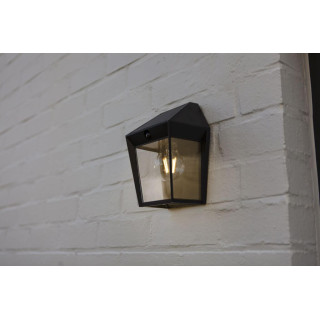
Classic style, modern technology. A solar LED wall light with a sensor.
Solar wall lights with a motion sensor: best near the front door, garage, side passages and patio.
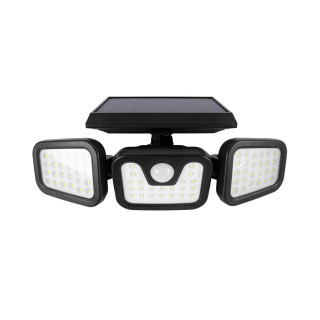
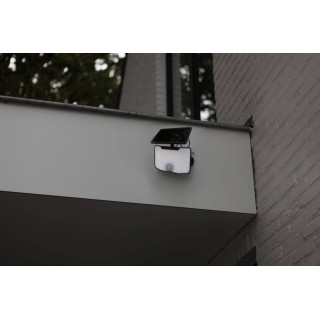
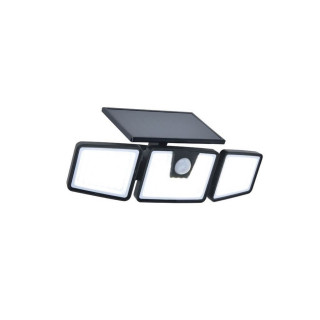
Solar spotlights / solar floodlights with a motion sensor: when you need stronger light and wider coverage.
Solar lights for the garden and patio: practical for leisure zones and as quick wayfinding illumination.
Models with both motion and dusk sensors: if you want the light to respond only after nightfall.
Worth adding: if you’re looking for purely decorative all-night lighting, consider classic solar lights without a motion sensor; and if you need high-output work lighting, check mains-powered LED floodlights.

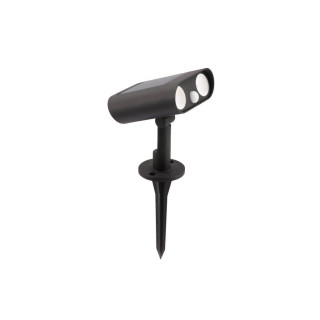
Solar LED spotlights with a portable panel.
In most models, the motion sensor works together with a dusk sensor, so the light triggers only after dark. Details depend on the specific fixture.
Yes—but remember: less sun = less energy. In winter, good panel positioning, keeping the charging surface clean, and choosing a model with sensible energy storage make the biggest difference.
Typically at a height where the sensor “sees” the approach zone (door, path, driveway). A practical rule: match mounting height to the detection angle and range specified by the manufacturer.
A wall light is usually better for entrances and patios (comfort and aesthetics). A floodlight/spotlight is better for larger areas (driveway, gate, garage).
Avoid locations where the sensor may pick up false motion (busy street traffic, branches moving in the wind). If possible, position the panel/charging surface to capture as much direct sunlight as you can.
It depends on the model and the application. For entrances and wayfinding, they’re usually excellent. For intensive, work-style illumination of a large driveway, stronger floodlights or mains-powered solutions are often better—so compare lumen output (lm) and operating modes.

Solar garden bollard lights with a sensor work perfectly for pathways and driveways.
If you’re looking for a simple way to add wireless outdoor lighting around your property, solar lights with a motion sensor are an excellent choice. Pick the right type for the location—a solar wall light for the entrance, a solar floodlight for the driveway, or a practical light for the garden or patio—and pay close attention to sun exposure, lighting modes and sensor settings. You’ll get light exactly when it’s needed. Browse the models below and choose the fixture that best matches your space and expectations.
See also:
check_circle
check_circle