How Far from the Wall Should Artwork Lighting Be?
09/26/2026 07:29:59
Filter By
Filter By
BLOG

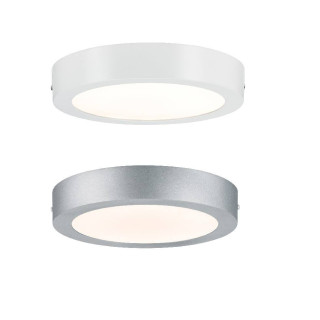
Kitchen flush-mount ceiling lights (flush mounts, surface-mounted ceiling fixtures) are a practical option when you want bright, even illumination without pendants—and without visually lowering the space. Choose an LED flush mount matched to your room size: in a small kitchen or open-plan kitchenette, a wide beam angle and a shade/diffuser that distributes light evenly and reduces glare make the biggest difference. The most versatile colour temperature is 4000K for task-oriented lighting, while 3000K works best when you prefer a warmer, cosier feel. For natural-looking food and countertop colours, aim for CRI/Ra ≥90 (minimum 80). If you cook frequently or deal with higher humidity, opt for a higher ingress protection rating, e.g. IP44.
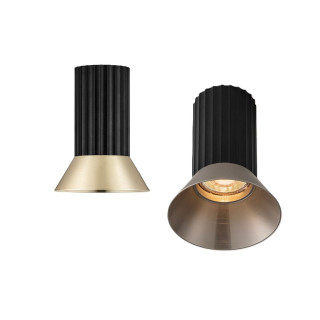
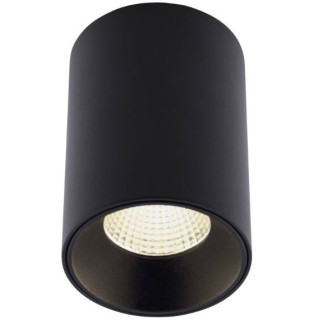
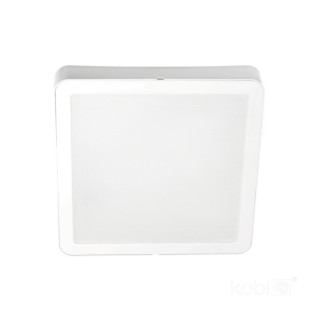
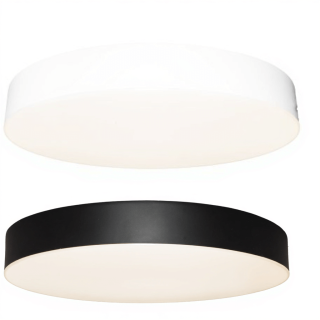
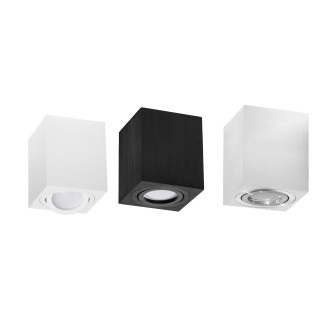
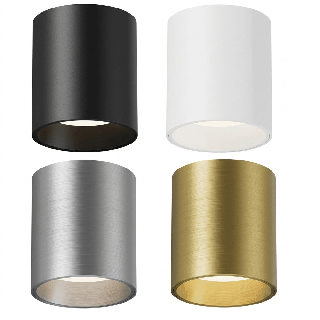
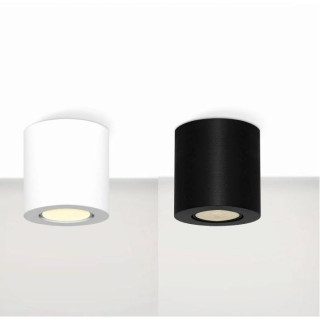
In this category you’ll find round, square and linear kitchen flush mounts—from minimalist white fittings to black and metallic decorative designs. In larger kitchens or kitchens with an island, add a task-lighting layer: an island pendant and/or under-cabinet LED lighting to prevent shadows on the worktop.
There are 417 products.
sortSort by:
A kitchen ceiling light (flush-mount) is one of the most practical lighting solutions: it provides evenly distributed ambient light, doesn’t steal valuable headroom, works well with cabinetry that runs to the ceiling, and is easy to clean. In a kitchen—where steam, fluctuating humidity, and cooking residue are everyday realities—it’s not just about design. Sealing, light quality, the right colour temperature, and technical parameters that genuinely affect working comfort matter just as much.
This guide will help you choose a kitchen ceiling light professionally: from your needs and layout, through key parameters (lumens, Kelvin, CRI, IP), to a confident buying decision. This approach works equally well in a small apartment kitchen and in a large open-plan kitchen connected to the living area.

Choose performance first, aesthetics second. This sequence eliminates most disappointing purchases:
Yes—if you want maximum functionality and even illumination without sacrificing space. A ceiling light spreads light wider and sits closer to the ceiling, so it fills the room without obstructing circulation routes. A pendant lamp can be excellent over a table or island, but as the only light source in a kitchen it often creates shadows on worktops.
In practice, a layered lighting plan works best:
A kitchen needs stronger light in work zones than across the whole room. That’s why you select the ceiling light as the base layer, and “boost” the worktop with separate task lighting.
These ranges are safe for typical homes and apartments (they account for losses caused by colours and kitchen layout):
Practical tip: if the kitchen is open to the living room, has dark fronts, or a high ceiling—choose the upper end of the range or a dimmable ceiling light (you get headroom for demanding tasks, then set a comfortable everyday level).
The most universal choice for everyday cooking is neutral white 3500–4000K. It delivers “clean,” legible light without a yellow cast and without an overly cool effect, which improves worktop visibility and colour perception.
If the kitchen is part of the living area, CCT or dimming lets you switch from “task mode” to atmosphere in one step. If you’re not sure which colour temperature is best, check out our guide!
What does 2700K, 3000K, 4000K mean – which color temperature should I choose?
CRI (Ra) describes how accurately light renders colours. In the kitchen, that translates directly into real-world use: you can better assess the freshness of vegetables, the degree of browning, and the true colour of dishes. That’s why the recommendation is straightforward: choose luminaires with CRI 90.

A good kitchen ceiling light should provide even light without harsh hotspots or glare. This depends mainly on the shade/diffuser design and the optics.
Look for fixtures that:
Tip: if you often work “under the cabinets” and the ceiling light is the only source, shadows will naturally increase. The solution is worktop task lighting—it’s not an “extra,” it’s the baseline for a comfortable kitchen.
IP is a code describing a housing’s resistance to dust and water. In kitchens, moisture and steam resistance are the key concerns.
This isn’t about bathroom-level waterproofing—rather, about better resistance to conditions that, in practice, shorten the lifespan of weaker fixtures.
Fixture size affects both light uniformity and the visual balance of the room. A ceiling light that’s too small can read like a “point” source and often needs higher output (which can increase glare). Too large can dominate visually.
Additional rule of thumb: the higher the ceiling and the more “matte” the interior (dark fronts, fewer reflective surfaces), the more it makes sense to use a larger fixture or split into two.
Choose an integrated LED ceiling light if you want the slimmest profile, a continuous light line, and high efficiency. Choose replaceable lamps if you value easy bulb changes, flexible colour temperature choices, or smart bulb integration.
Ceiling light with integrated LED module:
Ceiling light with replaceable lamps (e.g., E27/GU10):
If you don’t want to analyse details: for most modern kitchens, an integrated LED ceiling light is an excellent default; for kitchens where you prioritise full replaceability and experimentation, choose a lamp-based model.

Yes—if the kitchen also functions as a living zone or if you spend time there in the evening. Dimming gives full power for cooking and cleaning, and softer light for dinner later. It’s one of the parameters that most improves comfort without changing the interior style.
Important: dimming requires compatibility between the fixture and the control method. Choose models with clearly specified dimming support to avoid flicker and instability.
Flicker can be invisible yet still affect comfort and eye fatigue. Most often, it comes from a low-quality driver or poor compatibility with a dimmer. In the kitchen—where you frequently switch lighting on briefly and perform precision tasks—stable LED operation truly matters.
To minimise the risk of discomfort: choose ceiling lights from reputable manufacturers with quality components, verified dimmer compatibility, and—in smart setups—control gear designed for LED.
One well-chosen ceiling light plus worktop task lighting is usually enough. Prioritise wide distribution and sensible output. In a small area, ambient light “carries” easily, but the worktop still needs a dedicated source if you cook often.
A larger ceiling light or two fixtures positioned to avoid dark work zones is often more effective. In L- or U-shaped layouts, splitting into two luminaires is frequently the most practical approach.
The ceiling light provides the base layer, but the island requires task lighting. The most functional setup is: ceiling light (ambient) + dedicated island light + task lighting for other worktops.
Flexibility is key. Dimming or CCT usually wins here, because it adapts to the rhythm of the day: work, cleaning, socialising, evening.
Modern kitchens favour flat, simple ceiling lights in white, black, or steel. Scandinavian and Japandi styles work well with an opal diffuser, a light palette, and a wood accent. Loft and industrial interiors lean toward metal, graphite, black, and glass—while still prioritising even light distribution. Classic and glamour schemes can handle more decorative forms, but in a kitchen it’s best to choose designs that are easy to clean.
Material matters in practical terms: glass and quality polymers are easy to wipe down; metal is durable and resistant; and the fewer details and crevices, the less cooking residue builds up.

To choose without guesswork, filter in this order:
In most kitchens, aim for roughly 2,500–4,500 lm as general ambient lighting (depending on floor area, surface colours, and ceiling height). In a small, bright kitchen, 1,200–1,800 lm may be sufficient only as part of a layered plan (e.g., combined with strong under-cabinet lighting). A kitchen is a task-oriented space, so a ceiling light alone often won’t feel comfortable—shadows appear in the prep zone when the worktop isn’t properly lit.
4,000 lm is often perfectly fine if you choose the right colour temperature and control glare. The “clinical” feel usually comes not from lumens, but from overly cool light and harsh, point-source glare (no diffuser). In practice, it’s better to have headroom and dimming than a “just enough” fixture that becomes too dark when you’re cooking.
4000K is the safest neutral white for task work, while 3000K creates a warmer ambience and can look slightly “yellowish,” especially with white cabinetry and cool materials like steel, grey stone, or concrete. In open-plan kitchens connected to a living area, 3000K is great for evening mood—then it’s worth adding more neutral task lighting on the worktop or choosing a CCT-tunable fixture.
In a small kitchen, one flush mount with wide light distribution is usually enough. In long layouts and larger kitchens (including L- or U-shaped plans), two fixtures often work better: they deliver more even coverage and reduce dark zones along the work runs. If your kitchen is clearly elongated or has multiple separated work areas, two fittings are typically the safer choice.
A flush mount provides good general lighting, but in most kitchens you still need task lighting on the worktop to prevent shadows. Ceiling light often falls from behind you, so your body blocks light where you’re working. Under-cabinet LED improves comfort and safety (cutting, cooking, cleaning) and is usually the most noticeable lighting upgrade. If budget is limited, prioritise worktop lighting.
Integrated LED wins on slim profile and uniform light output, while replaceable bulbs win on serviceability and flexibility. With integrated LED, the weak point can be the driver (power supply) or the LED module—quality and warranty matter. E27/GU10 fixtures make it easy to change brightness and colour temperature, and to replace the light source quickly if it fails.
Most commonly it’s an incompatible dimmer, poor connections, or a driver issue. Start with the basics: confirm the fixture is dimmable and that the dimmer (if used) is rated for LED. Check wiring connections in the junction box and the stability of the supply. If flicker appears mainly at low dimming levels, it’s usually a control/compatibility problem.
Consider IP44 if you cook frequently, generate a lot of steam, have a small kitchen, or limited ventilation. In calmer conditions, IP20 is usually sufficient. A higher IP rating provides better resistance to moisture and splashes and can be a sensible long-term choice in demanding kitchens.
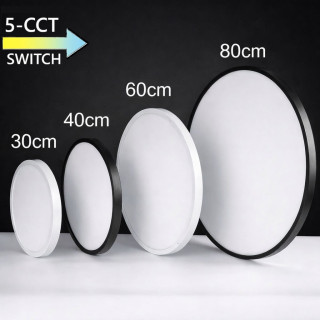
Match the size to the scale of the kitchen and the zoning: small kitchens typically suit compact fittings, while larger spaces benefit from a bigger diameter or two light points. As a practical guideline, small kitchens often look right with about 25–40 cm, medium kitchens 35–55 cm, and large kitchens may work best with a larger fitting or two smaller ones instead of a single central piece. In long kitchens, two fixtures usually look and perform better.
It will be equally bright or brighter if you compare lumens and light distribution, not wattage. The most common mistake is choosing a fixture with too little output or too narrow a beam, which creates harsh, uneven lighting. Match lumens to the room size, choose 3000–4000K for comfort and functionality, and if you want flexibility, opt for dimming or CCT control.

If you want to buy a kitchen ceiling light with minimal risk, follow this order: lumens, Kelvin, and CRI first—then size and style—and features last. This way, the lighting doesn’t only look good; it performs: it makes cooking and meal prep easier, builds atmosphere, improves safety, and supports a cohesive kitchen aesthetic for years.
See also:
check_circle
check_circle