-
Gold LED Pendant Light as a Premium Accent — How Lighting Creates Elegance in High-End Interiors 01/30/2026 13:38:51Modern floor lamps: lighting scenes and a mistake-free choice 01/28/2026 22:15:27LED Recessed Spotlights — the Invisible Heroes of Harmonious Lighting Architecture 01/16/2026 09:05:44Modern floor lamps: lighting scenes and a mistake-free choice01/28/2026 22:15:27
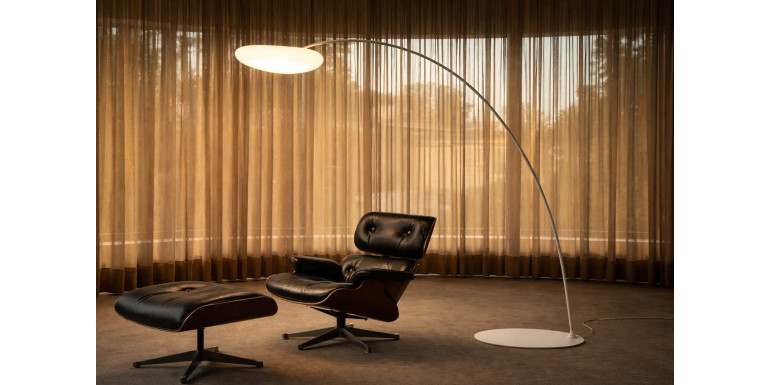
Instead of buying new furniture, change the light
There’s a moment—around 7:30 pm—when a home suddenly stops being photogenic. During the day everything looks “catalog-perfect”: bright walls, a soft rug, a nice sofa. But after dark—one ceiling light, hard shadows under the eyes, a dead corner in the room, and the feeling that the living room has shrunk.
This is exactly where a modern floor lamp makes a difference. Not as another “pretty object,” but as the director of the scene. It introduces a second light source at a different height than the ceiling—closer to people, closer to details, closer to everyday rituals. And suddenly the living room starts to look like a designed space, not just a furnished one.
This won’t be an article about product features but about 5 scenes you can play out in your interior with one floor-standing lamp.
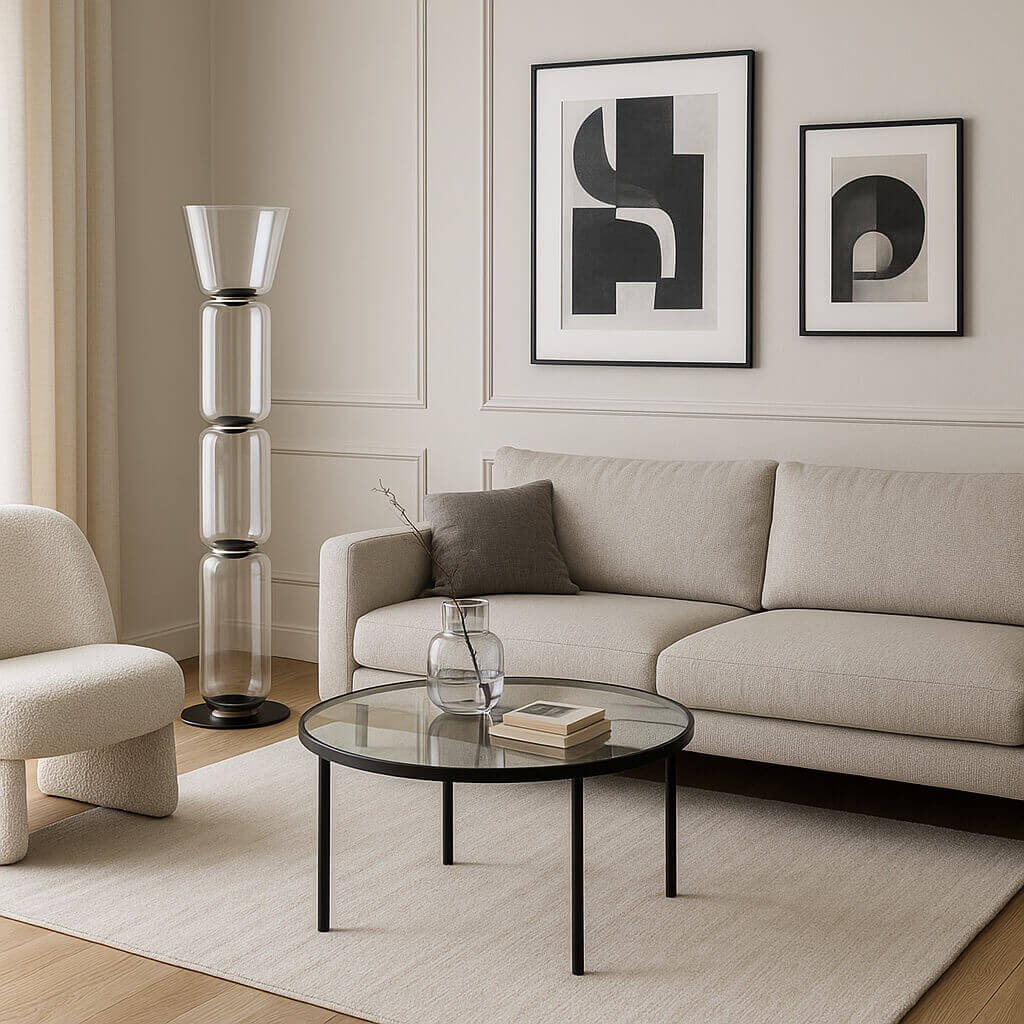
Scene 1: “I’m coming home” — light that calms you down
The first scene is the simplest: you walk in, put down your keys, and you want the apartment to be bright enough to feel comfortable—but not so bright that your body gets the signal: “wake up.”
In this scene, the floor lamp should glow softly and widely, ideally through a fabric shade or a milky diffuser. You’re aiming for a gentle halo, not a strong beam in your eyes. Place it so it doesn’t dominate: by the sofa, near a sideboard, or close to the curtains. In practice, the more the light lands on a wall or fabric, the more relaxed the living room feels.
A small trick: if you have a darker corner, put the lamp right there. Not to “flood it” with light, but to stop it from being a black hole. Sometimes that makes a bigger difference than adding another decoration.
Scene 2: “Conversation” — when light should feel social
There are interiors where people unconsciously squint while talking. Almost always, it comes down to one thing: a ceiling light that’s too strong and too central.
In the conversation scene, the floor lamp should provide side light. It “models” the face more gently, brings out features, and makes the room feel warmer and more inviting. Place the lamp behind the sofa (a delicate aura in the background) or to the side of the seating area (light spilling onto the rug and coffee table).
If you feel like the lamp is “shining into nothing,” move it by 20–30 cm. In lighting, small distances make a big difference—this isn’t a piece of furniture that can sit “more or less” anywhere.
Scene 3: “Home cinema” — how not to fight the screen
The most common mistake in a living room with a TV? A lamp placed opposite the screen—or shining in a way that creates reflections, while your eyes get tired from contrast: a bright screen against a dark room.
In the cinema scene, the floor lamp should do the opposite of what your intuition suggests: not light the screen, but soften the background.
Place it next to the TV, but so it shines onto the wall beside it or slightly behind the television. Or set it in the corner diagonally across the room, so the living room gains “depth” instead of turning into a black void.
Scene 4: “I’m reading” — light that has to work
In this scene, the floor lamp stops being decoration and becomes a tool. If after 10 minutes of reading you notice you’re shifting position and searching for a “better angle,” the light is set up wrong.
Direction
Light should fall on the book—not into your eyes. The most comfortable setup is a lamp placed to the side of the chair (on the left if you’re right-handed—so your hand doesn’t cast a shadow; the other way around if you’re left-handed).
Height
If you’re seated and you can see the bare light source, your body will protest. For reading, a shade that hides the light point—or a design with a precise head—wins.
Control
The difference between a lamp that’s “fine” and a lamp you “love” is the ability to make small adjustments: angle, height, and sometimes brightness.
Scene 5: “Night” — light that doesn’t wake the household
The last scene is the most underrated: a night light to cross the living room or get to the kitchen when you don’t want to illuminate the whole home.
Here, the floor lamp should work like a lantern: a small amount of light, but in the right place. The best setup is near a circulation path (for example, by the passage to the hallway), so the light falls onto the floor and guides your steps rather than washing the walls.
If you like a home that “breathes” with light after dark, this is the scene that makes the biggest difference in everyday life.
Why it works: light at two heights
When you only have ceiling lighting, the whole scene is flat. A floor lamp introduces a second height: closer to people, closer to materials, closer to what you see from the sofa. Contemporary interiors increasingly move toward layered light and “sculptural” accents—because people want spaces that feel soft, not laboratory-clean.
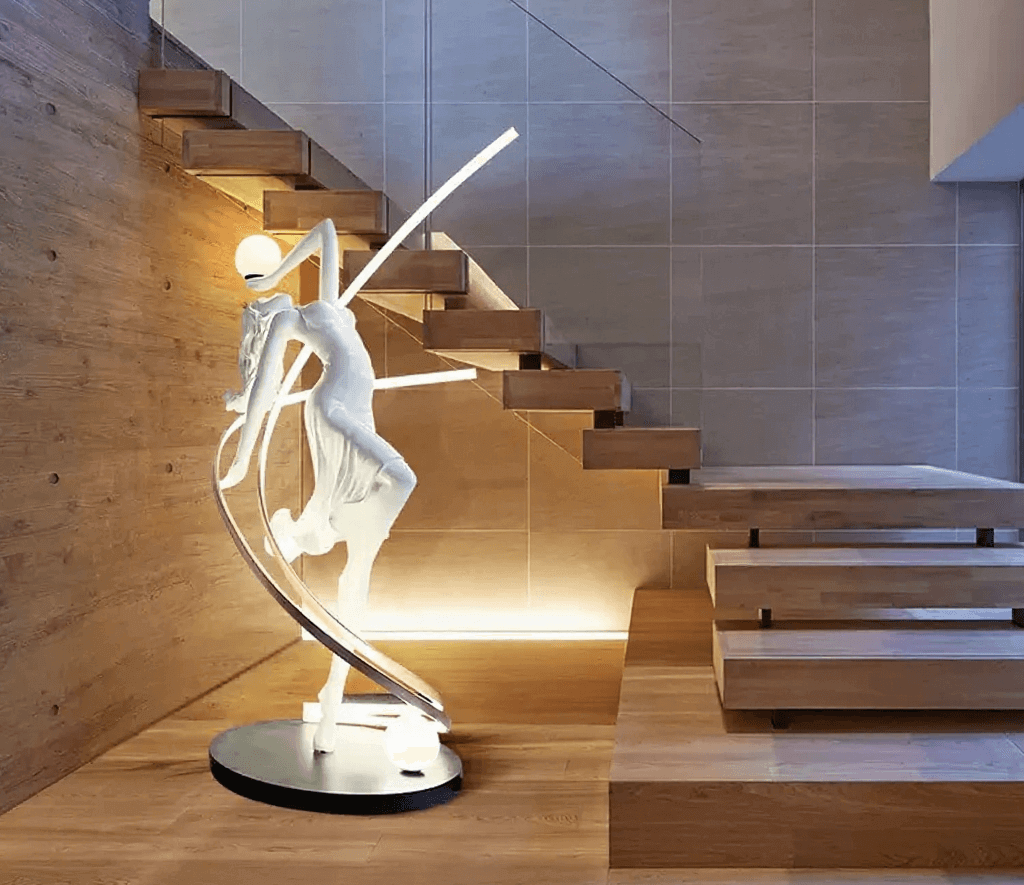
A modern floor lamp can be minimalist and “invisible,” but it can also be a strong gesture (a sculptural form). Both directions work—the key is that the choice should come from the scene you want to play.
Three quick rules that save you from disappointment
-
If the lamp will stand by the sofa—think about what you see while seated
Sit down. If you can see the light source, there’s a good chance you’ll start avoiding it with your eyes after a week. -
If it’s meant to build atmosphere—let it shine “onto something”
A wall, curtains, a bookshelf, a plant. Light that has somewhere to land looks better than light floating in a vacuum. -
If it’s for reading—don’t buy blindly without a scenario
Reading needs direction and control. Style matters, but ergonomics will beat aesthetics on the very first evening.
The most common reason for dissatisfaction: “It’s beautiful, but… I don’t use it”
Everyone who advises on lighting hears this sentence. And almost always it’s because the lamp was chosen as an object—not as part of a lighting scene.
That’s why thinking in scenes is safer than thinking only in looks. First, answer this: which scene are you missing most? Relaxation? Reading? Cinema? Night? Only then choose the shape, material and colour that fit visually—so the lamp isn’t just “pretty in a photo,” but actually used.
The most searched questions about modern floor lamps
Where should you place a floor lamp in the living room?
Most often, three spots win: by an armchair (reading), behind the sofa (soft background light), and in a corner (to eliminate the “black hole”). If you’re unsure, start with the corner—the effect can be immediate.
A modern floor lamp for reading: which one is best?
One that doesn’t shine into your eyes, but onto the book. That usually means a design with adjustable direction or a shade that hides the light source. Placement matters as much as the lamp itself: to the side, not directly in front of your face.
An arched floor lamp: when does it make sense?
When you want light “from above,” but you don’t have a ceiling point above the coffee table or sofa. An arc creates a restaurant-like mood and lights the meeting area without rewiring the installation.
Black, white, or gold modern floor lamp?
Black adds graphic contrast (great for loft and modern spaces), white “disappears” in bright interiors, and gold/brass warms things up and adds elegance. In practice, choose based on whether the lamp should be background—or an accent.
Modern LED floor lamps: what matters?
Comfort and control: the ability to adjust the scene (even simple dimming), a pleasant character of light, and visual comfort. LED makes the most sense when the lamp is used daily—then you appreciate stable, predictable light.
A tall floor lamp for a small living room: does it work?
Yes—as long as it isn’t bulky. A slim, tall lamp can visually “lift” the space, especially when it glows softly and doesn’t create harsh contrasts.
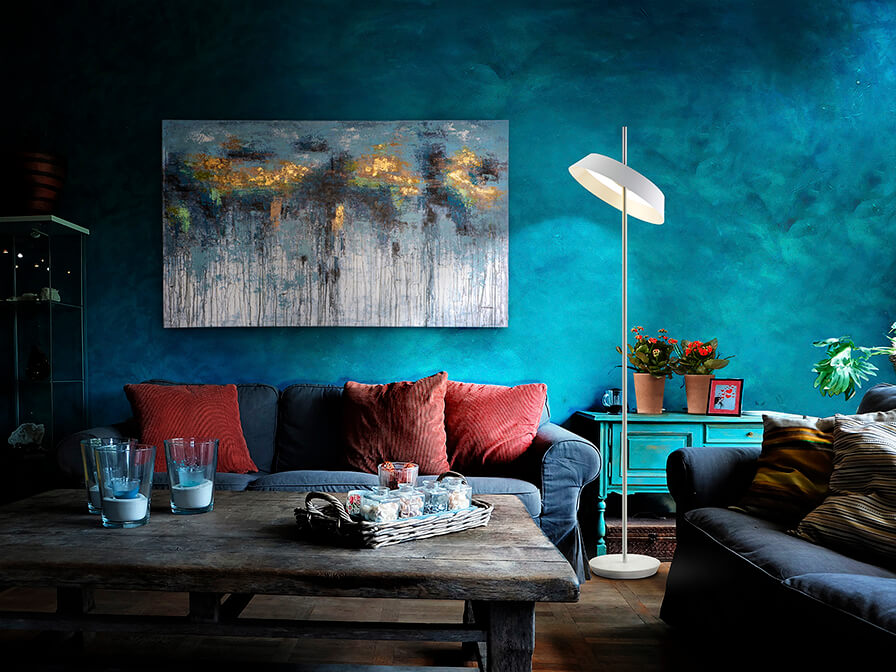
See also our other floor lamps:
- Floor and freestanding lamps LED – for the living room and reading
- Floor Lamps for Living Room – Standing, Modern & LED | Salon LED
- Ball floor lamps – for living rooms and bedrooms | LED, E27 | SalonLED
- Tripod floor lamps – stylish tripods for interiors | Salon LED
- Glass Floor Lamps – Opal & Smoked Shades for Living & Reading

shopping_cart
0
Menu
- +Outdoor lighting
- +Indoor lighting
- +LED wall lights
- Line light LED
- LED profiles ALU
- +Track system
- Multiline - magnetic track system 22mm 48V
- FIVETRACK 5 mm 48V Magnetic Tracks & Luminaires
- AQFORM Multitrack 48V - Premium magnetic Stucchi track
- 3-phase track systems
- 1-Phase Track Systems
- MINILINE magnetic track lighting
- AQFORM FLATTRACK magnetic track 48V
- +Magnetic system 11mm Micro, Core11
- Black track lighting
- White track lighting
- +LED ceiling lamps, hanging and surface-mounted
- +Ceiling covers
- +LED plafonds
- LED recessed downlights
- +Hanging lamps LED
- Ceiling spotlights and spots
- Ceiling fans LED
- LED lights for paintings
- Starry Sky
- +LED floor lamps
- +LED table and desk lamps
- Living room
- Bedroom
- Dining room
- LED bathroom lighting
- LED kitchen lighting
- +LED stairs lighting
- +LED bulbs
- All manufacturers
- Prices drop
- New Products
- Bestseller


