How Far from the Wall Should Artwork Lighting Be?
09/26/2026 07:29:59
Filter By
Filter By
BLOG

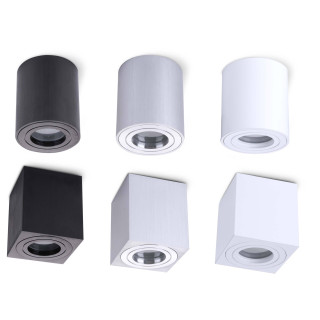
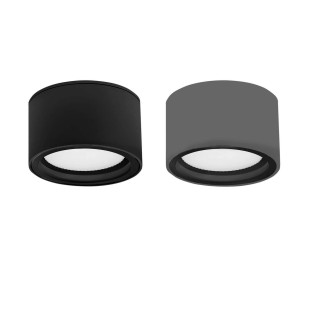
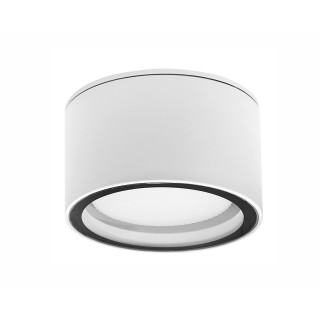
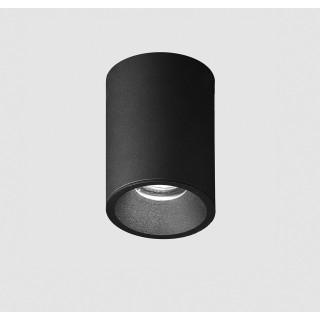
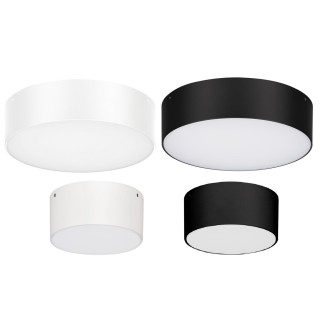
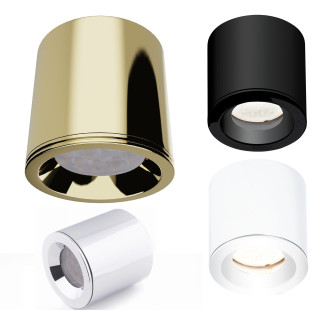
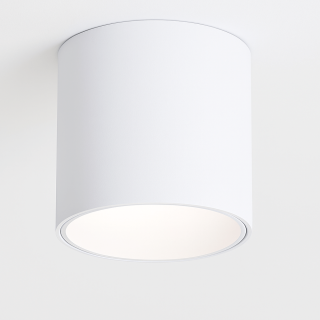
Bathroom flush-mount ceiling lights are among the safest and most practical solutions for wet areas: installed close to the ceiling, they don’t visually “steal” space and deliver even illumination across the entire bathroom. In this category you’ll find bathroom ceiling lights (including LED bathroom flush mounts) engineered for humidity, steam, and splashes—so the light remains comfortable for everyday routines and the fitting performs reliably for years
A bathroom ceiling light provides general illumination, so choose it deliberately — pay attention to the IP rating, lumens, colour temperature, dimming, and the fixture finish, and select a model that best suits your bathroom.
The safest all-round choice for most bathrooms: IP44 + 4000K + CRI 90+ + lumens matched to the room size.
There are 112 products.
sortSort by:
Bathroom ceiling lights (flush mounts) are the most practical form of overhead lighting in a space where humidity, steam and splashes are part of everyday life. A well-chosen bathroom ceiling light provides even illumination without harsh shadows, improves safety (better visibility on wet flooring), and, as general lighting, increases comfort for daily routines—from a morning shower, through shaving, to makeup.
In this category we’ve selected bathroom ceiling lights that combine three key features: moisture resistance (IP44–IP65), the right light parameters (lm, K, CRI), and refined optics that reduce glare on glossy tiles and mirrors. You’ll find LED bathroom ceiling lights, sealed (water-tight) models, dimmable versions, and IP-rated fixtures in minimalist, classic and decorative designs.

If you want to make a good decision without diving into technical details, use the rules below. These are the “most common choices” that work in most bathrooms.
Practical targets for general (ceiling) lighting:
If your bathroom has dark tiles and low reflectance, choose output closer to the upper end—or higher.
The simplest safe pick: IP44 + 4000K + CRI 90 + lumens matched to the room size
A bathroom ceiling light sits close to the ceiling, which means it:
A well-chosen flush ceiling light creates a stable lighting base. Only on that base do you build task lighting (mirror) and mood lighting (e.g., the bath zone).
In a bathroom there’s no room for random fixture choices. Moisture and water droplets accelerate wear of electronics and, in extreme cases, can lead to failures. That’s why matching the IP rating to real operating conditions is critical.
IP (Ingress Protection) is two digits:
In bathrooms, the second digit matters most. For example:
Electrical design commonly uses zones based on proximity to water:
In many real projects, a walk-in shower and rainfall showerhead “raise the bar” for fixtures: droplets and steam spread wider than in a classic enclosure, choose dedicated bathroom lighting rated IP44–IP65.

Choose IP44 if:
Choose IP65 if:
Sealing is determined not only by an “IP” label, but also by details such as:
If you use stronger cleaning chemicals in the bathroom, choose fixtures with a sturdier finish and simpler geometry (easier cleaning, fewer places for deposits to build up).
In bathrooms it’s not only “how much light,” but also “what kind.” Two ceiling lights with similar brightness can feel completely different: one comfortable, the other tiring. Optics, colour temperature and colour rendering make the difference.
Practical targets for bathrooms:
If you’re after a “hotel effect,” dimming and scenes usually work better than pushing a very cool colour temperature.
In practice, if you want one ceiling light “for everything,” neutral is the best compromise.
If you ever do makeup, shape facial hair, or simply want to look “like in daylight,” choose fixtures/light sources with high CRI. Standard CRI 80 can be enough for circulation, but in the mirror zone the difference between CRI 80 and CRI 90+ is noticeable: skin looks more natural, cosmetic colours are more predictable, and the bathroom feels visually “cleaner.”
A ceiling light alone rarely gives ideal face lighting, because it shines from above and creates shadows under brows and chin. The best effect comes when:
If you plan only one light source in the bathroom, choose a ceiling light with good diffusion and higher lumens—while being aware of the makeup-zone compromise. Bathroom wall lights help illuminate the face more effectively and provide significantly greater everyday comfort.
In this category you’ll see two design approaches. Both can be excellent if matched to your needs.
This is the most common choice for modern bathrooms because it offers:
In practice, durability depends on electronics quality (power supply/driver) and heat dissipation.
This is for those who want maximum flexibility:
Important: in bathrooms choose light sources suitable for enclosed fixtures (better thermal performance) and pay attention to CRI.
Flicker (even if you don’t consciously see it) can strain the eyes, especially at the mirror. It usually results from driver quality or incompatible dimming. If you plan dimming, choose the fixture and control method as a system—not “by chance.”

Most-used scenes:
Dimming is especially useful in bathrooms that are also used at night.
A motion sensor works well in:
Best results come from a sensor with a sensible hold time and a calm, non-jarring start.
Smart makes sense if you want to:
Match size to the scale of the room. A fixture that’s too small in a large bathroom looks accidental and usually won’t provide enough light.
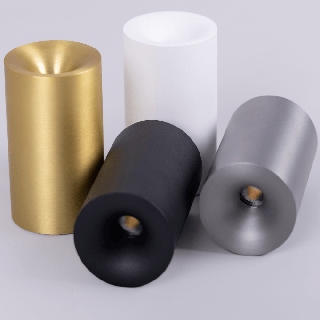
White is the safest (it blends into the ceiling). If you want character, choose a finish that matches your tapware and accessories: black, chrome, brushed steel, gold. Consistent details raise the “premium feel” even in a simple bathroom.
In bathrooms with low ceilings, best choices are:

Below are ready-made “selection baskets.” They shorten the path from need to the right model.
Look for:
This is the choice for bathrooms with walk-in showers, rainfall showerheads and high humidity.
Priorities:
In small rooms, what matters is instant switch-on, even illumination and no glare.
Priorities:
Look for:
This is for when the ceiling light should be not only “lighting,” but also a design element.
Priorities:
In projects, predictability, serviceability and safety matter.
Most often a ceiling light works best when it:
In larger bathrooms, two smaller points can work better than one very powerful light.
If you’re interfering with wiring in wet zones or you’re not sure about zones and protections, use a qualified electrician. In bathrooms it’s not worth the risk.
Before adding a product to your cart, check:

In most bathrooms, a safe minimum is IP44 (splash protection). If the ceiling light will operate near the shower, above the shower area, or in a bathroom with weaker ventilation and high humidity, choose IP65 for a larger safety margin and durability.
If the ceiling light is outside the direct water-jet zone, IP44 is usually sufficient. IP65 makes sense when you expect regular splashes, steam and a “strong” shower, or when installing under/over the shower area—higher sealing reduces the risk of issues.
Yes—provided the manufacturer allows installation in the appropriate bathroom zone and the fixture has the required water protection level. In splash/jet-exposed areas, fixtures with higher sealing (often IP65) are typically used along with proper circuit protection. If you’re unsure about zones and installation requirements, consult an electrician.
Choose brightness by lumens (lm) and room size: small bathrooms typically need 1200–1800 lm, medium 1800–3000 lm, and large often 3000 lm+ or two light points. If you have dark tiles and low reflectance, aim for the upper ranges or split lighting into two sources for a more even effect.
If you want an “all-in-one” solution, neutral 4000K usually wins—it’s clear for daily tasks and more predictable in the mirror. Choose 3000K if you want a more relaxing, “spa-like” mood, especially in the evening. The best comfort comes from dimming or colour control, which lets you match light to the time of day.
Yes—especially in the mirror zone. CRI 90+ gives better colour fidelity for skin and cosmetics, making makeup and shaving easier; with lower CRI, colours may look less natural. If the bathroom is mainly for circulation, CRI 80 can be enough, but for the mirror a higher standard is worth it.
Most often it’s condensation: warm, humid air after bathing meets a cooler shade and water droplets form. Sometimes moisture comes from above (a damp ceiling) or the issue is an imperfect seal during installation. The most effective measures are better ventilation (efficient fan running longer after bathing), reducing humidity spikes, choosing the right IP rating, and correct installation.
In many fixtures the driver (power supply) is replaceable, and sometimes the LED module is too, but in the cheapest designs repair can be uneconomical and end with replacing the whole lamp. If serviceability matters, choose models with declared spare-part availability, a sensible warranty and a design that allows safe servicing.
Yes—flicker usually comes from driver quality or incompatibility with a dimmer. If you plan dimming, choose a fixture explicitly described as dimmable and match controls to the manufacturer’s requirements. In practice, the best result comes from a complete set: fixture + recommended dimmer/controller, not random mixing.
Often yes, because many outdoor fixtures have higher IP ratings and tolerate moisture well. The condition is simple: the fixture must have the right sealing for the installation zone and light parameters suitable for bathrooms (lumens, colour temperature, CRI). This can be especially sensible near showers, where high water resistance is the priority.
The recommendations in this description are based on practice and parameters used in professional lighting: IP classification according to IEC/EN 60529, the bathroom-zone approach (wet zones and fixture requirements), and standard lighting targets for circulation areas and mirror zones. Instead of promising “the brightest light,” we focus on what actually improves comfort: the right lumens, a neutral colour temperature, high CRI and safe sealing.
See also:
check_circle
check_circle