How Far from the Wall Should Artwork Lighting Be?
09/26/2026 07:29:59
BLOG

LED pendant lights (also referred to as suspended pendants and hanging ceiling lights) are among the most striking solutions for contemporary interiors—combining a decorative presence with practical, everyday illumination. They work perfectly as a dining-table pendant, over a kitchen island, in the living room as a strong design statement, and in the bedroom as atmospheric, zone-based lighting. In this category, you’ll find both minimalist pendants (rings, linear light elements, tubes, and globes) as well as more decorative designs in glamour, loft, boho, or Scandinavian styles—also available in black, white, and gold finishes.
Choose a model suited to your ceiling height, the room’s function, and the ambience you want to achieve: bright, comfortable light for work and socialising, or a subtle accent that enhances the interior in the evening. Below, we explain how to select an LED pendant light with confidence—from style and construction to colour temperature and suspension height.
There are 1379 products.
sortSort by:
A well-chosen LED pendant can completely transform a space: it helps structure functional zones (e.g., a dining area within an open-plan living room), sets the mood, and gives the interior a refined, considered finish. Modern suspended luminaires are designed to balance day-to-day usability with aesthetics—the light should be visually pleasing, evenly distributed, and comfortable.
Styling tip: if the room is calm and understated, the pendant can act as the “jewellery” of the interior. If you already have a lot of textures and decorative elements, it’s better to choose a clean form and focus on high-quality, well-engineered light.

The living room is a multifunctional space, so LED pendant lights should support different lighting scenes: socialising, relaxing, and watching films. In contemporary interiors, ring and geometric forms work particularly well (they feel visually lightweight), as do multi-light pendants (ideal when you want to clearly define a zone in a larger living room) and models with an opal diffuser or shade that provide soft, glare-free light.
In the dining area, a pendant above the table has two jobs: to illuminate the tabletop and to emphasise the social hub of the room. The table shape and light distribution are key. Over a rectangular table, a linear LED pendant (bar-style) looks excellent, as do 2–3 pendants arranged along the table axis. Over a round table, a globe, ring, or centrally suspended composition tends to work best. Pay attention to diffusion: the more “family-focused” the dining space, the more important comfortable, eye-friendly light becomes.
In the kitchen, LED pendants are most often installed above an island or worktop. Here, the light must be practical, yet still decorative. Over an island, tubular pendants, linear forms, and rings perform very well, delivering clear, task-oriented illumination. In bright kitchens, black hanging ceiling lights create a modern, high-contrast look, while alongside wood and beige tones, gold, brass, or warm-tinted glass finishes present beautifully.
In the bedroom, LED pendants work best when they create ambience without feeling too harsh. A popular solution is to hang pendants on either side of the bed instead of traditional bedside lamps—this delivers a more design-led effect and helps keep the space visually organised. For maximum cosiness, choose opal glass or fabric shades and a warm colour temperature.
Pendant lights in the bathroom can look exceptionally striking, especially near a mirror or in a “dry” zone where they help create a home-spa feel. The key is to match the fixture to the installation location and bathroom conditions, ensuring it combines refined aesthetics with safe, practical use.

LED ring pendants suit modern and minimalist interiors. They deliver uniform illumination and maintain a visually lightweight presence—even in larger diameters. It’s an excellent choice for living rooms, dining areas, and open-plan spaces where the luminaire is intended to double as a decorative feature.
Linear pendants (light bars / beams) are one of the best options when you need a pendant over a dining table or island. Light is distributed along the work surface, while the form reads as architectural and distinctly design-led.
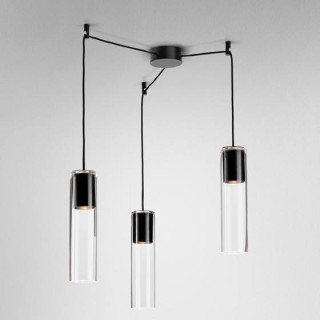
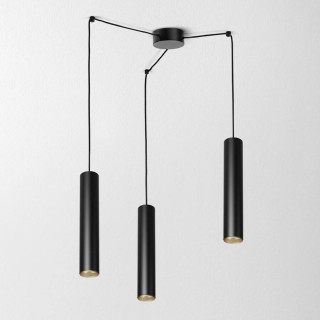
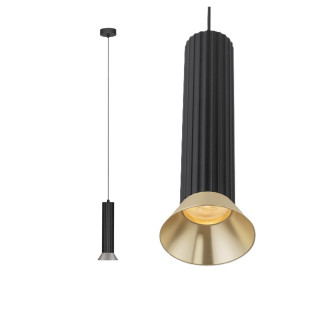
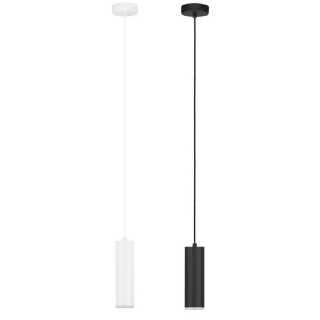
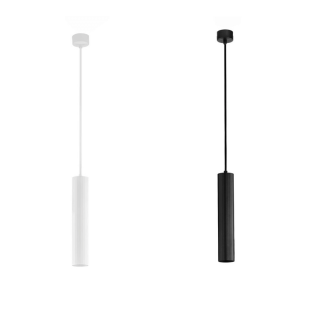
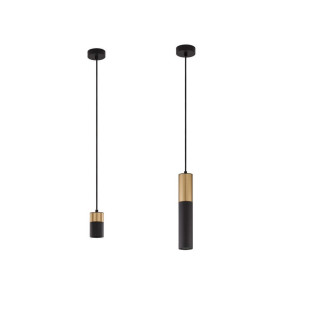
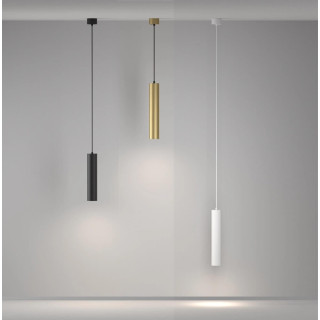
Tube pendants work particularly well in kitchens, over islands, above breakfast bars, and anywhere you want to highlight a specific zone. They look great as a single statement, but even better as a pair or a set of three aligned in a row.
Globe pendants (glass or metal) are a safe, versatile choice for dining rooms, living rooms, and bedrooms. A single globe creates a subtle accent; arranged as a multi-pendant composition at varied drop heights, they can produce a truly striking result.
LED glass pendants add visual lightness and a premium feel. Glass diffuses light beautifully, making it a strong option when you want comfortable illumination without harsh shadows.
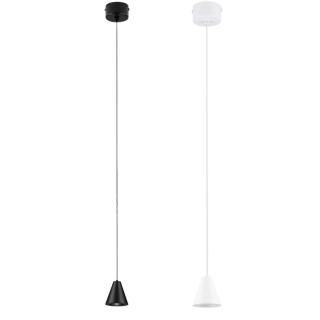
A single pendant is ideal for smaller rooms, a reading corner, a bedroom, or as a subtle accent in the living room. It’s also a great base for building your own multi-pendant arrangement.
If you prefer expressive interiors, choose a more decorative model—featuring a more complex silhouette, glass elements, sheen, or a distinctive detail. LED chandeliers can replace wall décor, because they are a powerful design feature in their own right.

When selecting an LED pendant, it’s worth starting with style—it determines whether the lighting will feel cohesive with the rest of the space.
Modern and minimalist interiors suit LED rings, linear light forms, and simple tube pendants in black, white, or metallic finishes. Loft and industrial schemes pair well with metal, graphite tones, and black, technically styled suspended luminaires. In glamour interiors, gold pendants, glass, and glossy finishes look particularly striking, while boho and Scandinavian spaces favour lighter colours, natural accents, and soft, comfortable light.
Material shapes the overall feel of the room:
With LED pendants, the key is ensuring the light matches the function of the room. A beautiful fixture is one thing, but lighting comfort is what ultimately determines whether you’ll truly be happy with it.
Not sure which light color temperature to choose? Check out our guide.
What does 2700K, 3000K, 4000K mean – which color temperature should I choose?
Over a dining table or kitchen island, you typically need more focused, functional light than in a relaxation zone. Choose output that feels comfortable — not excessively bright.
How to check lumens and how many you need? Check out our guide.
What are the units of light intensity lux and lumen?
If you want natural-looking interior colours and food presentation, opt for fixtures with strong lighting parameters—especially in the kitchen and dining area.
If possible, choose a dimmable model. One LED pendant can then work as both functional lighting and softer, evening ambience.
Which dimming system should you choose for an LED pendant light? Check out our guide.
How to Dim LED Lamps? An Expert's Guide
Above a dining table or kitchen island, the most common guideline is to hang the fixture so that the bottom edge sits approximately 70–90 cm above the work surface. In a living room, pendants are usually installed higher to avoid obstructing circulation and to provide more even, ambient distribution.
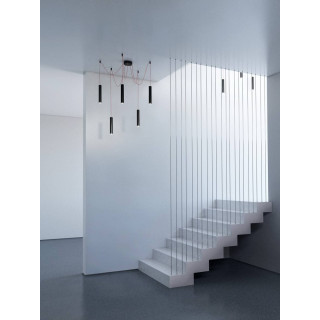
If you’re planning multiple pendants, introduce variations in drop height while maintaining a consistent rhythm—this looks the most design-led. With high ceilings, you can use longer drops and scale up the fixture size for a more balanced proportion.
A single LED pendant works well in smaller interiors and wherever you want a clear, focused accent. Two or three pendants are ideal above an island or a long table—they create rhythm and feel premium. Multi-light structures are perfect for open-plan living spaces, where the fixture is meant to be decorative and to “organise” the space visually.

Typically, pendant lights are installed 70–90 cm above the surface. For larger tables or low shades, 90–100 cm is safer to avoid glare and ensure clear sightlines.
Dining tables usually require 1000–2000 lm, kitchen islands 1500–3000 lm, and living rooms 1500–4000 lm combined. Pendant lights should complement other light sources.
Warm light (2700–3000 K) suits dining rooms and living rooms, while neutral light (3000–4000 K) is preferred in kitchens for better color rendering and visibility.
CRI indicates how accurately colors appear under a light source. CRI ≥ 80 is acceptable, but CRI ≥ 90 is recommended for dining and living spaces.
Rarely. Pendant lights work best as zonal lighting and should be supplemented with general and accent lighting for comfort.
Yes, if properly designed with diffusers, stable light output, appropriate color temperature, and high CRI.
Replaceable bulbs offer flexibility, while integrated LEDs provide sleeker design and higher efficiency but require attention to quality and warranty.
Most often, the power driver fails rather than the LEDs. In many cases, it can be replaced if properly specified.
Yes. LED technology supports long suspensions, multi-point compositions, and high light output with low energy use.
Choose fixtures with diffused light, appropriate beam angles, and consider multiple pendants or linear lights for long tables. Adjustable height and dimming improve comfort.
See also:
check_circle
check_circle