ALABASTRO – Lighting made from Genuine Spanish Alabaster
10/09/2026 17:59:26
BLOG

A track lighting system is a powered rail that lets you attach compatible luminaires (spotlights, linear modules, pendants) and move them whenever your layout changes. It’s a designer look — and a practical way to light exactly the areas you use every day.
Compatibility rule (important): do not mix single-circuit and three-circuit components, and never mix 230V systems with 48V magnetic parts within the same run.
Choosing between single-phase, three-phase, and magnetic systems determines how the lighting is controlled and how easily it can be expanded. In short:
There are 469 products.
sortSort by:
Track lighting (a track system, power track, lighting track) is one of the most flexible ways to distribute light within an interior. Instead of a single, “fixed” ceiling point, you get a continuous route along which you position luminaires exactly where they’re needed. In practice, this means convenience at home and full control in commercial spaces: track spotlights can be slid, rotated, swapped out, or expanded with additional fittings—without a major overhaul of the layout.

A track lighting system is a rail with integrated power conductors that you attach compatible luminaires to. The track is the base, and the luminaires are modular elements you can configure freely. This means you don’t have to “guess” during a renovation where the light will be perfect forever. If you move the table, change the kitchen layout, or add shelving—you simply reposition the track lights too.
That’s exactly why track lighting moved from commercial spaces into homes: it delivers a designer look while, above all, solving everyday problems with lighting specific areas properly.
Your choice affects both how you control the lighting and how easily you can create separate lighting zones. In practice, you’ll most often come across three solutions.
With a 1-circuit system, all luminaires on the track operate as one group—you switch them on together. It’s a clear, practical choice for homes and smaller spaces where a clean look and the ability to reposition spotlights matter most.
Best for: kitchen, hallway, bedroom, a smaller living room, rental apartments.
With 3-circuit, you can create several independent groups of luminaires on a single run, making it easy to build zones (e.g., table separately, sofa separately, shelving separately). This is ideal if you want to adapt the lighting to different situations—from everyday use to a more atmospheric evening scene.
Best for: living room with dining area, open-plan spaces, office, retail, restaurant, showroom.
A 48V magnetic system is the most “design-led” option: luminaires connect quickly and cleanly, and the system lets you create minimalist lines of light and modern ceiling layouts (and in many solutions, wall layouts as well). In this category you’ll find system families in different widths and aesthetics—from solutions like Multiline 22 mm, through Micro 11 mm, to ultra-slim 5 mm (FIVETRACK). It’s the right direction if you want an architectural effect, easy reconfiguration, and a cohesive look along the entire run—especially as the interior evolves over time.
Best for: modern apartments, architect-led projects, premium interiors, and displays with frequent changes.
Decide whether you need lighting zones (if yes, consider 3-circuit or 48V).
Choose the style: a discreet track (white / low-profile) or a bold ceiling line (black / loft).
Match luminaires to tasks: a base layer (linear modules or wider-spread light) + accents (spotlights) + optionally a pendant above the table.
If you want to pick the right option quickly, the comparison below summarises the differences between 1-circuit, 3-circuit, and 48V magnetic systems in terms of applications, control, and flexibility.
In the living room, a track system lets you build layers: soft background light for relaxation, stronger light for gatherings, and accents for a TV wall, artwork, or shelves. You can aim a track spotlight to bring out wall texture and add depth—so the lighting doesn’t just “shine,” it also structures the space.
Kitchens benefit from precise lighting. A track rail above the worktop and island helps illuminate work areas while keeping a cohesive look with the living space. If you change the position of the table or island, you simply move the luminaires and adjust the beam direction.

Track lighting over a kitchen worktop and island: flexible spotlights for task lighting, plus optional ambient modules.
At work, visual comfort is key. A ceiling-mounted track system lets you illuminate the desk, shelving, and meeting area, while also making it easy to adjust the light direction when you change the position of your monitor or furniture.
In commercial spaces, a track system is an exhibition tool. Change the product layout? Change the light. Add a new shelf? Clip in another luminaire. That’s why track lighting is the standard wherever light needs to guide the eye and highlight what matters most.
The biggest advantage of track systems is the ability to combine luminaires with different functions into one cohesive layout.
Choose track spotlights when you want to:
Track-mounted linear modules provide more uniform illumination. They work especially well as the main layer in open-plan interiors, while spotlights add accents. This combination looks professional and gives an excellent balance between function and ambience.

If you like pendant lights but don’t want to be tied to a single ceiling point, track pendants give you freedom: you can move the pendant along with the table or kitchen island, while the entire lighting layout remains consistent.
Modern LED track lights combine aesthetics with everyday convenience. You get steady, reliable light for daily tasks, plus the ability to “shape” the interior: aim accents, highlight zones, and create atmosphere. When choosing luminaires, focus on what matters in a finished space: natural colour rendering, beam spread, and consistent light colour across zones. These are the details that most often separate “good enough” lighting from a truly premium effect.

Track systems use a set of core components that let you build a layout tailored to your room plan:
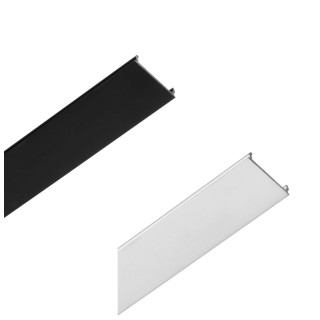
Tracks (sections) – the base the luminaires mount to; you choose the length, mounting method, and the route of the track.
Power feed / starting point – the component where the layout begins.
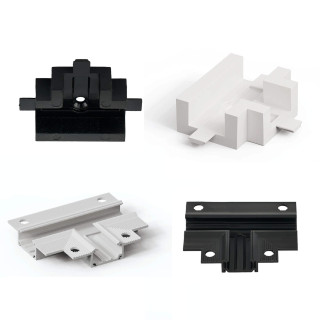
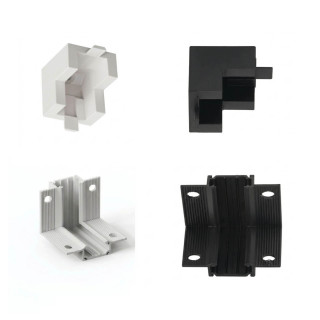
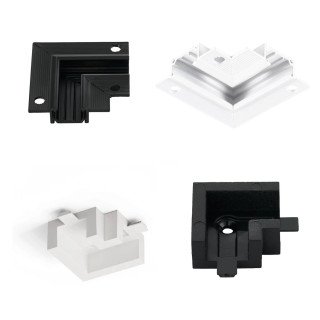
Connectors and corners – allow you to create L-, U-, and T-shapes and extend the run without visible “breaks.”
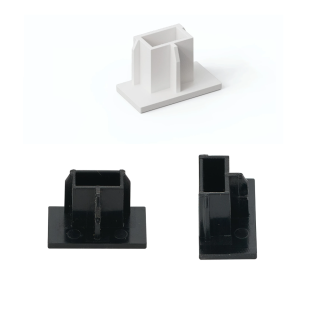
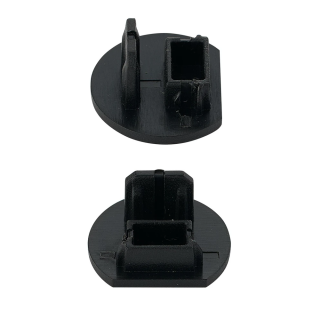
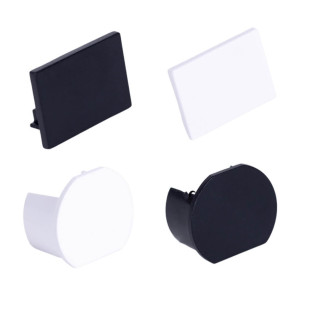
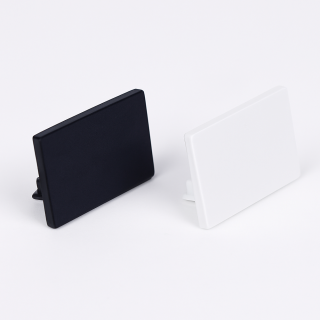
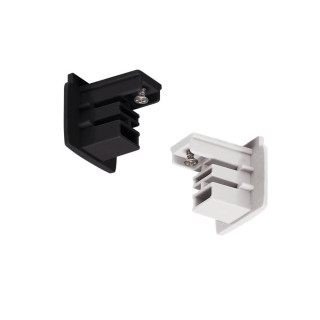
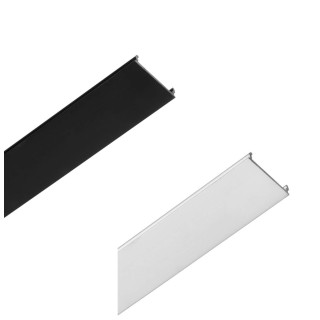
End caps and end pieces – close the run and improve the overall finish.
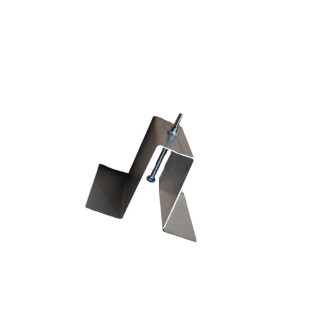
Mounting brackets and accessories – help you match the installation to the desired effect (surface-mounted, suspended, recessed).
48V magnetic system components – depending on the system family: power elements, mounting accessories, and recessed/surface-mounted modules.
It’s the details (connectors, end pieces, consistent finishing) that determine whether the installation looks like a well-designed project or just a random line on the ceiling. If you’re aiming for a premium effect, plan the route together with the connectors and end caps—not as an afterthought.
To assemble a complete, working track system, you typically need:
Track / track rail (one section or several sections)
Power supply (end feed; optionally a central feed or plug-in power supply—depending on the layout)
Connectors (if you’re creating an “L”, “T”, or “X” shape, or joining sections into a straight run)
End cap (closing the end of the track—for aesthetics and safety)
Luminaires: spotlights, linear modules, pendant adapters/pendants
(Optional) mounting option: surface-mounted / recessed / suspended—depending on the track type

From an interior-design perspective, it’s worth thinking about it like this:
Surface-mounted: the track remains visible and becomes part of the design (loft, modern, industrial).
Recessed: the most minimalist look—the track “blends” into the ceiling and creates the impression of a clean, continuous line.
Suspended: ideal for high ceilings and above a table or island when you want to bring the light closer to the functional zone.
With 48V magnetic systems, low-profile solutions are often chosen to achieve a discreet, architectural line of light.

Track mounting options: surface-mounted for a bold line, recessed for minimalism, suspended to bring light closer to the zone.
The track colour changes how the space is perceived.
If you’re designing a calm, light space, white is the safe choice. If you want rhythm and character, black creates a bolder effect.
Most often, a single track line runs parallel to the worktop: several spotlights for task lighting + optionally a short linear module for a calm ambient background. If the kitchen connects to the living area, a single cohesive layout usually looks best—and you can easily adapt it later if the island layout changes.
Zoning matters here: the table, the sofa, and an accent on a wall or shelving should be lit separately. A winning combination is linear modules as the base + spotlights for accents. If you want independent control of zones, choose a 3-circuit system or a 48V magnetic system (depending on the aesthetics and how you’ll use the space).
In commercial spaces, track lighting is an exhibition tool. Change the product layout? Change the light. Add a new shelf? Clip in another luminaire. Track systems make it easy to reposition spotlights and highlight the “product of the day” without reworking the entire ceiling — perfect for dynamic layouts.
Below are the most popular track system families — pick the one that matches your space and aesthetic:
Multiline 22 mm 48V magnetic track lighting – when you want comfortable modular fixtures and “architectural” linear light.
FIVETRACK – 5 mm 48V track system – an ultra-slim line for minimalist premium projects.
AQFORM Multitrack Stucchi – a specification-grade solution for extensive installations and cohesive lighting schemes.
Three-circuit track systems (230V) – when you want independent lighting zones on one run.
Single-circuit track systems (230V) – a simple, straightforward choice for homes.
MINILINE magnetic track lighting – when an ultra-slim modern form is the priority.
AQFORM FLATTRACK – flat 48V tracks – when you want the lowest profile and the most discreet effect.
11 mm magnetic tracks: Microtrack / Microline / Micro11 – when you’re looking for minimal dimensions and a lightweight ceiling line.
Black track lighting – a quick selection for loft interiors and high-contrast schemes.
White track lighting – a quick selection for bright, calm interiors.
Mixing standards (1-circuit with 3-circuit, or 48V with 230V) – the components won’t be compatible.
Buying only the luminaires without accessories – you’ll be missing the power feed/supply, connectors, and end caps.
Too little task lighting (e.g., a kitchen without proper worktop illumination).
Poorly planned track layout (it doesn’t cover the areas you actually want to light).
No expansion plan – even though easy expansion is one of the biggest advantages of track systems.

No. The luminaire must match the track standard: single-circuit (1-phase, 230V), three-circuit (3-phase, 230V), or 48V magnetic. Always choose fixtures and accessories within the same system family.
No—never mix 230V and 48V within one run. They are different standards with different power and components.
Usually not fully. For a clean fit and hassle-free installation, stick to one system family (the same track + accessories line), then choose compatible luminaires within that family.
Choose single-circuit if you want simple control (everything switches on together). Choose three-circuit if you want independent zones (e.g., dining table and sofa controlled separately).
When you want a minimalist look, fast reconfiguration, and a clean architectural line. It’s a popular choice for premium interiors and layouts that change over time.
Yes. In lower rooms, surface-mounted tracks or low-profile 48V solutions work especially well and keep the setup visually light.
In many systems—yes, especially 48V magnetic families (depending on the specific product line). Wall runs are great for accenting artwork, shelving, or textured walls.
Start with zones (worktop, table, sofa, artwork), then assign lighting roles: base + accent. It’s better to use fewer well-aimed spotlights than many unfocused ones.
Spotlights are best for accents and directional lighting. Linear modules create a calm, even base layer. In most interiors, a mix delivers the best balance.
Yes—spotlights, linear modules, and pendants can work together as long as they’re compatible with the system standard. This is one of the biggest advantages of track lighting.
Often yes, depending on the luminaires and control method. If you want scenes, choose fixtures designed for dimming/smart control within the same system family.
It’s mainly an aesthetic choice. Black highlights the ceiling line; white blends into bright ceilings. Functionally, both perform the same.
Look for adjustable heads, the right beam angle for the task, good colour rendering, and consistent colour temperature across fixtures. Details like connectors and end caps also make the run look clean and intentional.
Yes—expansion is one of the key benefits. As long as you stay within the same system family, adding luminaires or extending the run is straightforward.
Connectors, end caps, and finishing pieces. They’re what make the installation look cohesive and properly finished.
If you want lighting that is both functional and visually refined, a track system is one of the most versatile options. In this category, you can put together the complete solution: tracks, connectors and finishing components for the run, as well as luminaires (spotlights, linear modules, and pendants) — available in single-circuit, three-circuit, and 48V magnetic versions.
We’ll advise on the best system type (1-circuit/3-circuit/48V magnetic), plan the track layout, and select the right components and luminaires for your space (kitchen, living room, office, retail). Call or email us!
check_circle
check_circle