Round Stone Wall Lights – How to Choose the Right One?
09/06/2026 12:23:09
Filter By
Filter By
BLOG

Modern flush-mount ceiling lights (surface-mounted ceiling fixtures) are installed close to the ceiling, delivering even, comfortable illumination without visually “stealing” headroom. It’s the kind of light that brings order to a space and highlights materials. An ideal choice for apartments and homes—living rooms, kitchens, bedrooms, hallways, and bathrooms—anywhere a clean ceiling line and effortless mood control matter.
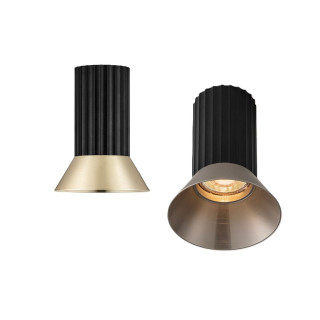
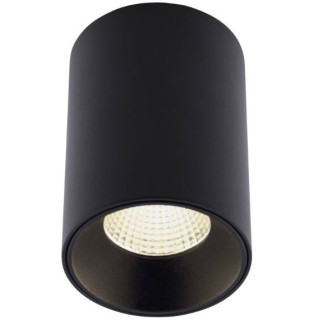
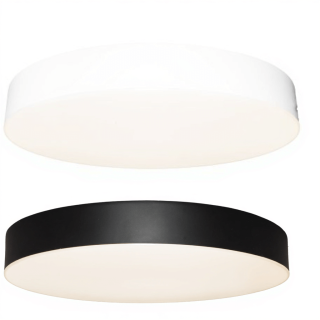
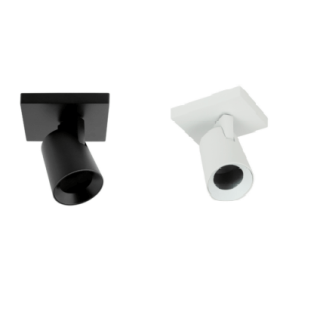
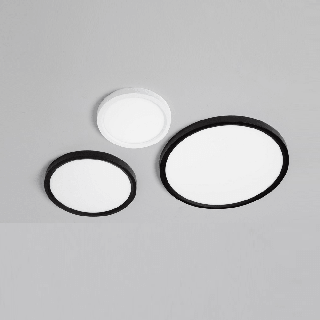
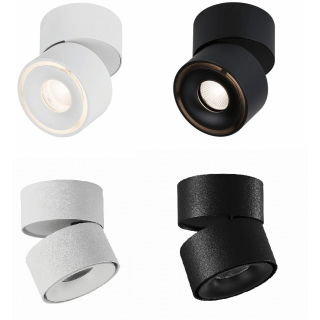
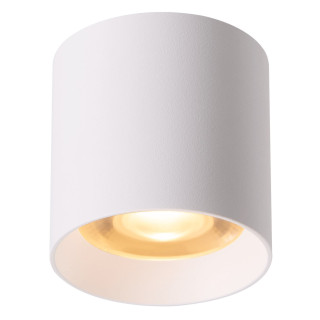
In this category, you’ll find LED flush mounts with integrated modules as well as fixtures designed for replaceable light sources (E27, GU10, G9). Choose from round and square designs, slim discs, ring styles, and multi-point models—in white, black, gold, and steel—often with an opal diffuser to reduce glare. Select with intention: lumens (brightness), Kelvin/CCT (2700–3000K for relaxation, 4000K for tasks), CRI/Ra (natural color rendering), an IP rating suited to damp zones, plus dimming and control options (switch, wall dimmer, remote, smart). Browse our range and choose a flush mount tailored to you and your interior.
There are 378 products.
sortSort by:
Modern ceiling flush mounts are surface-mounted luminaires installed close to the ceiling, engineered to deliver even, comfortable illumination without the visual “weight” of pendant lights. They are one of the most practical lighting categories for apartments and homes: ideal for rooms with lower ceilings, circulation areas, as well as living rooms and kitchens—where a clean ceiling line, strong ambient light, and easy mood control matter most.
In this category you will find both LED flush mounts with an integrated module and ceiling fixtures designed for replaceable light sources (e.g., E27, GU10, G9). Below is a buying guide that combines distinctive design with lighting performance—starting from your needs, through key technical parameters (lumens, Kelvin/CCT, CRI, IP rating, dimming), and ending with a clear decision on which flush mount to choose for a specific room.
A flush mount (ceiling flush-mount luminaire) is a ceiling light that sits directly against the ceiling or is mounted with a minimal gap. In practice, it serves as general (ambient) lighting: it distributes light evenly across the room and creates a foundation for additional layers (floor lamps, wall sconces, under-cabinet lighting, accents, LED strips, etc.).

This is the most common choice for modern interiors. An integrated LED makes it easier to achieve a slim profile, high efficiency, and very uniform light distribution. Typically, you get a “complete luminaire”: LED modules, optics, and a driver selected to operate as a single system.
Choose these if you want full control over the type of lamp (color temperature, output), you value easy replacement after years of use, or you want to use bulbs you already own. This solution offers a high level of flexibility.
A lumen (lm) indicates how much light a fixture emits. A lux (lx) indicates how much light reaches a surface—1 lux equals 1 lumen per 1 m². A simple and effective rule of thumb for selecting a flush mount is: lumens ≈ target lx × room area (m²). Then add a safety margin if you have dark walls, a higher ceiling, or you want a particularly bright effect.
Approximate ambient lighting levels at home:
In practice, the winning combination is often: “a brighter flush mount + dimming”, because it provides ample output during the day and a pleasant atmosphere in the evening.
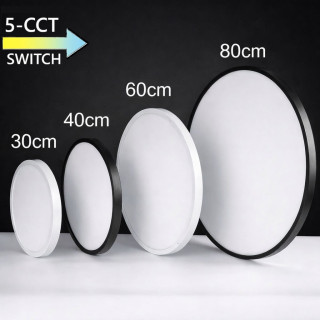
Flush mounts with adjustable color temperature (tunable white), e.g., 2700–6500K, are becoming increasingly popular—an especially convenient option when one room serves different purposes throughout the day.
CRI/Ra describes how faithfully a light source renders colors. In residential settings, Ra ≥ 80 is often the baseline, but for kitchens, wardrobes/dressing areas, and bathrooms near a mirror, it’s worth considering Ra ≥ 90—colors appear richer, and skin tones look healthier and more natural.
A modern flush mount should feel comfortable—without a “blinding hotspot” in your field of view. Opal diffusers, well-dispersed LED modules, and glare-control optics help achieve this (often described using the UGR parameter). The softer and more uniform the light, the higher the comfort in living rooms and bedrooms.
Not every LED flush mount is dimmable—and even when it is, it must be compatible with the dimming method. The most common options include:
The IP rating indicates resistance to dust and water (two digits). Practical minimums for the home include:

Should it be the primary light source in the room, or simply a circulation light for moving through the space? In many interiors, layered lighting delivers the best results: the flush mount as the ambient base, complemented by task and accent lighting.
Use a lux-to-area calculation to determine the required output. If the room is larger or includes an open-plan annex (e.g., a living area with a kitchenette), consider two lighting points instead of one extremely powerful fixture—this typically improves uniformity and visual comfort.
Relaxation: 2700–3000K. Work: 4000K. Color quality: Ra ≥ 80 as a solid baseline, and Ra ≥ 90 in demanding areas where accurate color rendering matters.
For bathrooms and kitchens, select an IP rating appropriate to the specific zone. Make sure there is sufficient space for mounting and that the electrical connection can be made correctly and safely.
If you want to shape the atmosphere, choose dimming and/or adjustable CCT. If you are building a smart home, verify whether control is integrated into the fixture or relies on a smart bulb.
Flexibility is key in the living room. Larger diameters, multi-point versions, and ring-style models perform particularly well. Dimming is the most practical feature—bright and crisp during the day, warm and atmospheric in the evening.
In the kitchen, the flush mount provides ambient light, but countertops require additional task lighting. In the dining area, a flush mount is an excellent alternative to a pendant when ceiling height is limited—choose fixtures with soft diffusion so the light is comfortable at the table.
Warm white and low glare work best: an opal diffuser, gentle light distribution, and dimming capability. This combination delivers comfort without “aggressive” light.
Prioritize the IP rating and light quality. Neutral white and strong color rendering (Ra ≥ 90) support grooming routines. It’s also worth supplementing a bathroom flush mount with mirror lighting to reduce facial shadows.
Flush mounts are hard to beat here: they stay out of the way and guide light evenly through circulation zones. In long hallways, a series of smaller flush mounts often looks better (and lights more evenly) than a single oversized fixture.

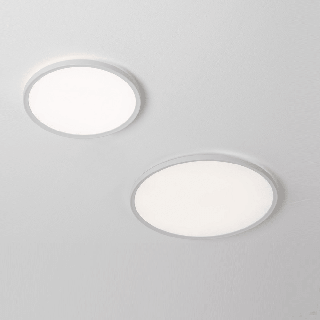
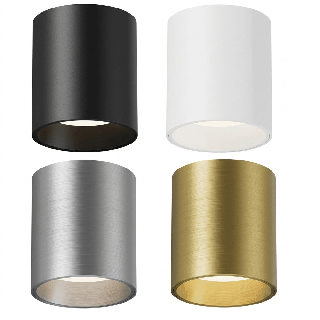
Modern ceiling flush mounts come in a wide range of finishes: white, black, gold, chrome, brushed steel; with opal, glass, or polymer diffusers. In minimalist interiors, slim discs and clean geometric forms work best; in contemporary spaces, softer curves and warm metals are a natural fit; and in loft-style interiors, a more pronounced technical detail often looks most at home.
Pay attention to scale. A flush mount that’s too small in a large room can look accidental, while an oversized fixture in a small space may feel overpowering. Flat flush mounts use different light-distribution constructions (e.g., designs inspired by indirect illumination). Regardless of the technology, the end result is what matters: uniformity, stable color temperature, and the absence of “patchy” light.
A well-described modern ceiling flush mount includes parameters that let you predict the lighting effect before installation. Below is a shortlist of the most important product-card fields—and what they mean in practice.
If you are comparing several models, also consider the EU energy label (A–G scale) and the overall reliability of the declared data—this makes it easier to choose a fixture that is simultaneously bright, efficient, and comfortable.
If you want to control lighting via scenes and schedules, consider a flush mount with built-in control (dimming, adjustable CCT) or a fixture designed for replaceable sources paired with a compatible smart bulb. In more advanced systems, dedicated installation control is also used (e.g., DALI). The most important factor is matching the technology to what you actually have at home: a standard switch, a wall dimmer, or an intelligent control system.
A flush mount is typically installed on a stable mounting surface. The fundamentals are: power off, secure fixing, and correct electrical connections. With heavier fixtures (e.g., glass), the quality of mounting is especially important. If you don’t have experience with electrical work, have the installation carried out by a qualified professional.

Modern ceiling flush mounts are a fast, effective way to enhance both the functionality and the aesthetics of an interior: clean lines, ample light output, visual comfort, and the ability to shape the atmosphere. Filter models by diameter, color temperature, lumen output, CRI, IP rating, and control method. We ship orders throughout EU, and you can make your selection using filters and side-by-side parameter comparisons—from lumens and IP rating to control options and the finish that best completes your design concept. If you need a recommendation tailored to your room size, or you want to combine aesthetics with specific requirements (dimming, bathroom use, smart home), choose your parameters deliberately—your flush mount will reward you with everyday convenience.
Choose a flush mount by lumens (lm), not watts. The simplest method is: lumens = floor area (m²) × target lux. For general home lighting, 100–150 lm/m² can be treated as a minimum, but in practice 200–500 lm/m² is more common, with kitchens and task areas typically requiring higher output. Example: 12 m² × 300 lm/m² = about 3,600 lm as a solid baseline from the ceiling; if you prefer brighter light or have dark walls, increase the output or choose a dimmable model.
Match colour temperature to the room’s function. 2700–3000K (warm white) creates the most “home-like” ambience and usually suits living rooms and bedrooms best. 4000K (neutral white) is the most universal choice for everyday tasks and is often selected for kitchens, hallways, and home offices. 5000–6500K (cool white) is best treated as a technical tone: it can make spaces feel “crisper,” but it may be perceived as too cold in relaxation zones. If you do not want to commit to one tone, choose a model with CCT adjustment.
Yes—CRI matters because it affects how accurately you see colours such as skin tones, food, wood, and fabrics. For most home applications, choose CRI ≥ 80 as a safe standard. If colour quality is important (kitchen, wardrobe, bathroom mirror, makeup, hobbies), aim for CRI ≥ 90. If you are deciding between “more lumens” and “better CRI,” prioritise comfortable brightness first, then choose the highest CRI your budget allows.
If you want easy servicing, choose a fixture with replaceable bulbs (for example, E27 or GU10), because you can swap the bulb in minutes. Integrated LED is best when low profile, even light distribution, and pre-defined parameters (lm/K/CRI) matter most. However, if it fails, the issue is often the driver or LED module, and with lower-cost models it may be more practical to replace the entire fixture.
Choose IP based on real exposure to water, not just the fact that the room is a bathroom. If the fixture may be exposed to splashes, IP44 is commonly treated as the minimum. If it can be exposed to direct water spray (for example, near a shower) or conditions are more demanding, IP65 is often preferred. The closer to water and the harsher the conditions (steam, frequent condensation, cleaning), the more justified a higher IP rating becomes.
You can dim it only if the fixture is clearly specified as dimmable or includes its own control system (remote, app, or smart platform). The most common cause of problems is using an older dimmer designed for incandescent or halogen bulbs, which can result in flicker, buzzing, or poor dimming performance. If you want wall-switch dimming, choose an LED-compatible dimmer, match it to the load type and wattage, and follow the fixture or driver manufacturer’s recommendations.
The usual causes are: incompatible control (dimmer, sensor, electronic switch), loose wiring connections (especially neutral), or a worn driver that performs worse as it warms up. A simple first diagnostic step is to connect the fixture to a standard on/off switch without dimming; if the flicker disappears, the issue is control compatibility. If flicker increases after a few minutes, suspect driver issues or overheating.
This is typically caused by leakage currents and electronics in the circuit—an illuminated switch, some dimmers, sensors, or the capacitance of long wiring runs can supply a tiny current that makes LEDs glow. If the effect is constant and bothersome, the usual fix is switching to LED-compatible controls or having an electrician adjust the installation, because safety and proper component selection matter at 230V.
Switch off power and always support the diffuser with one hand. With spring clips or snap clips, the diffuser typically comes off by pulling evenly and releasing one attachment point; with bayonet designs, you often need a gentle twist before lowering it. If you feel hard resistance, do not force it—there is usually a hidden latch or lock, and excessive force can crack the diffuser.
Start with the basics: a fresh remote battery, distance, interference, and—if it is app-based—connectivity and permissions. The most effective approach is a “power cycle”: switch power off for several to a few dozen seconds, turn it back on, and immediately follow the pairing sequence for that specific model (often within a short time window after power-up). If the fixture repeatedly loses pairing or works only at very close range, suspect interference, a weak receiver, or unstable driver performance.
See also:
check_circle
check_circle