How Far from the Wall Should Artwork Lighting Be?
09/26/2026 07:29:59
Filter By
Filter By
BLOG

Want to illuminate the front entrance, garage, patio or a walkway along the façade without running cables through insulation and without ongoing mains electricity costs? Solar lights for the home solve this in a simple way: they charge during the day using solar energy, then after dark they provide light automatically.
In this category you’ll find primarily solar wall lights (solar sconces)—often equipped with a motion sensor and a dusk sensor—as well as solar LED floodlights/spotlights when you need stronger, wider-reaching illumination for the gate or driveway.
There are 61 products.
sortSort by:

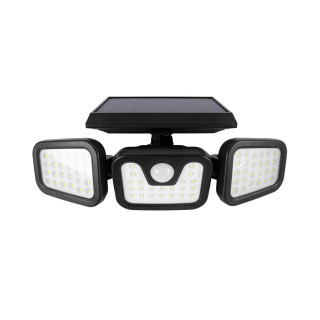
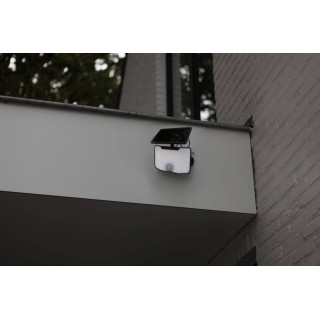
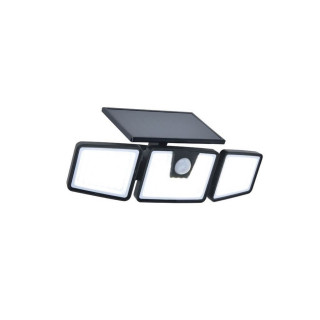
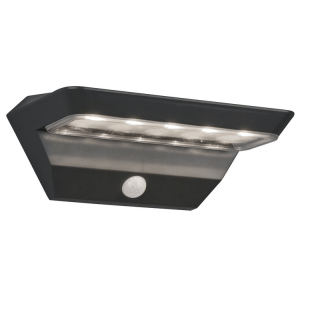
Solar LED floodlight with PIR motion sensor — wide coverage for the driveway, gate, or garage with zero wiring
Solar lighting operates without a 230V connection, so once installed it doesn’t generate ongoing grid electricity costs. It’s ideal wherever running power is difficult or simply not worth it—on a side wall, near a gazebo, along a passage beside the house, or by the garage.
You mount the fixture exactly where you need it—no drilling channels, no back boxes to plan, and no cables to conceal. A further advantage: if you redesign the entrance zone or patio, it’s much easier to adjust the lighting layout later.
A dusk sensor enables the light only when it actually gets dark. A PIR motion sensor then boosts output when someone approaches. The result: everyday convenience and more efficient use of the battery’s stored energy.
Light near doors, steps and pathways reduces the risk of trips and improves comfort. In utility zones (garage, gate, carport), motion-activated lighting supports you exactly when you use the space—and can also act as a deterrent.
Every good solar light is built on four core components:
a photovoltaic panel collects energy during the day,
a rechargeable battery stores it for night-time use,
an LED module delivers efficient illumination,
control electronics manage dusk detection, motion triggering and operating modes.
Standby + boost on motion: a gentle background light after dark, switching to full output when motion is detected.
Motion-only mode: the light turns on primarily when motion is detected (often the best option in winter and during overcast periods).
Constant-on mode (selected models): continuous illumination after dark—at the cost of shorter runtime.

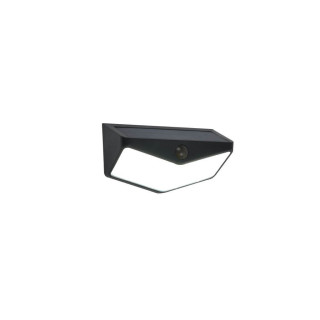
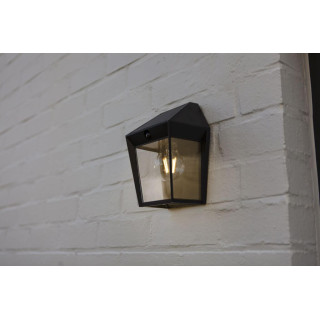
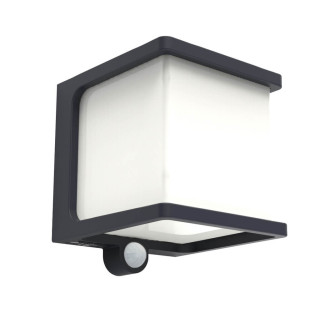
Solar wall lantern for the front entrance — a classic façade look with automatic dusk-to-night operation.
Runtime depends on the season, weather, sun exposure and the selected operating mode. The most reliable performance comes from fixtures with strong access to daylight; during transitional seasons, energy-saving modes and a motion sensor help maintain consistency. If you want the light to run “dependably” for long hours every night, don’t fight it with brightness alone—win with automation and smart placement.
50–100 lm: subtle façade glow and ambience.
100–200 lm: entrance, house number, pathway—comfortable visibility without glare.
300–600+ lm: strong motion-activated light at doors and garages.
500–2000 lm: typical range for solar floodlights/spotlights covering larger areas.
3000K (warm white): cosy—ideal for patios and relaxation zones.
4000K (neutral white): more “technical”—better for house numbers, garages and circulation routes.
For façade mounting, a solid level of outdoor protection is the baseline; in more exposed locations it’s worth choosing a higher IP rating. It’s the simplest route to longer service life.
A “maximum range” figure on paper matters less than whether the sensor actually covers the real approach path to the door, gate or garage—and whether it avoids picking up incidental movement (e.g., from the street).
The battery is the heart of the fixture. If you want years of reliable use, choose models with sensible power management and, where the manufacturer allows it, serviceability or replaceable components.
Most often, the best choice is a solar LED wall light with a motion sensor: it delivers strong light exactly when you need it, without running at full power all night.
Function comes first here. A solar LED spotlight is often the better option—or a combined setup: a wall light at the door plus a stronger light source covering the driveway zone.
Ambience usually matters more than maximum output. Warm white and a calmer standby mode can look better than “forced brightness” that feels like a security floodlight. They work exceptionally well here: solar terrace lights.

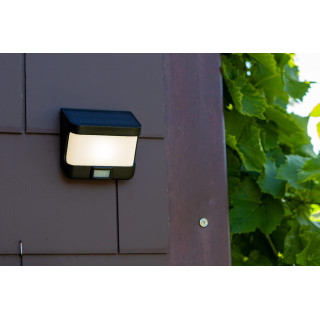
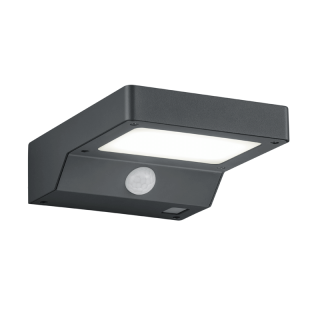
Solar house-number wall light — makes your address visible after dark and guides guests to the door.
A solar wall light is typically the best fit for entrances, patios, and façade applications where form and style matter. A solar floodlight is designed for stronger, wider coverage: driveways, gates, large yards, and utility spaces. Combining both often gives the best overall results.
Yes, but expect reduced performance due to shorter daylight and less direct sun. Motion-based modes usually help in winter.
Mount it where the solar panel gets the longest daily exposure to daylight—avoid deep shade from eaves, balconies, trees, and north-facing walls. If the spot is partially shaded, choose models with an efficient “motion-only” mode so the battery lasts longer on cloudy days.
For typical façade mounting under a roof overhang, IP44 is usually sufficient. If the fitting is more exposed to wind-driven rain, go for IP54, and for fully exposed walls or harsher conditions, IP65 offers the most robust protection.
No. Most models operate automatically once set to the desired mode.
For many homes, motion sensing is the better upgrade: it provides high brightness when you need it and helps extend run time.
Often yes for entrances and pathways, especially when easy installation and automation are priorities. For very high, constant illumination all night, a floodlight or additional fixtures may be more suitable.

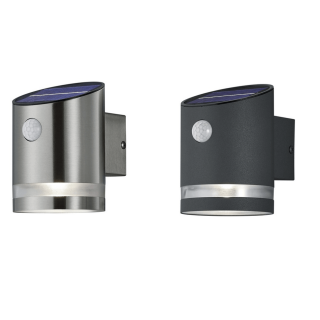
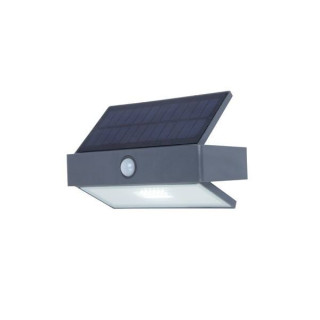
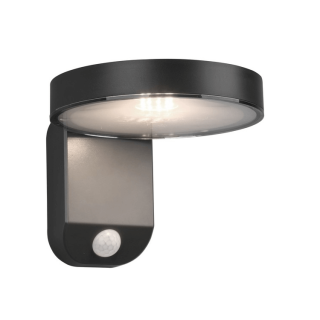
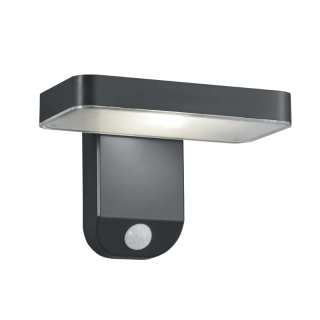
Modern solar wall sconce with motion sensor — ideal for patios and façade pathways; warm white works best for ambience.
LED solar wall lights provide convenient outdoor illumination without wiring. With dusk sensors, PIR motion options, and IP-rated housings, they add comfort, safety, and façade appeal while keeping running costs close to zero. Choose the model based on location, brightness requirements, and operating mode for the most reliable results.
Browse the available solar wall lights and choose the best match for your entrance, patio, or garage.
See also our other outdoor wall lights and solar lamps:
check_circle
check_circle