COB LED Strip 48V – Why Is It Worth Choosing?
10/14/2026 20:15:33
Filter By
Filter By
BLOG

Multiline is a 48V magnetic track lighting system in which LED luminaires attach securely via an integrated magnetic mounting. This allows you to reposition a light point in seconds, add another fixture, or redesign lighting zones—without chiselling, drilling, or modifying the ceiling.
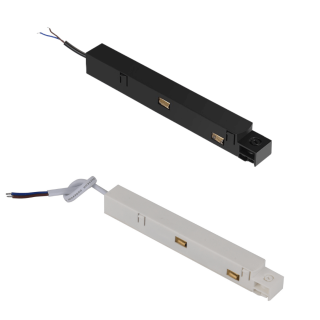
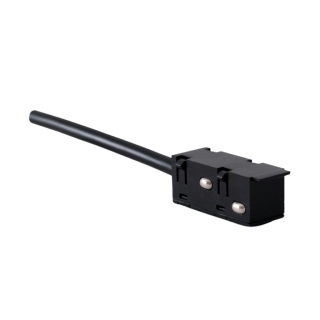
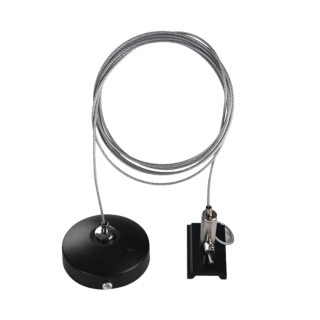
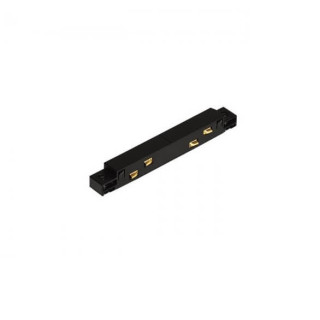
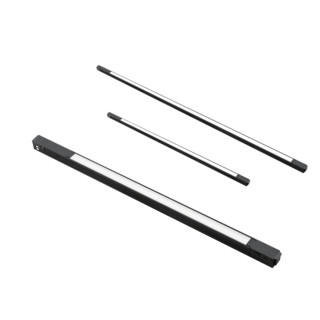
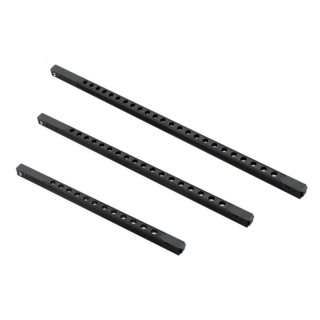
In this category you will find all the key components of the Multiline 48V system: tracks in surface-mounted, recessed, trimless and suspended versions, accessories (connectors, end caps, suspension components), and luminaires for ambient, task, and accent lighting. Configure your setup step by step: plan the track layout, connect sections with the right accessories, then choose a 48V power supply and luminaires tailored to the room’s function and the desired effect.
There are 83 products.
sortSort by:
Multiline 22mm magnetic tracks are a modern 48V track lighting system where luminaires attach magnetically and can be freely repositioned, swapped, and the layout expanded—without renovation work. In practice, it means one coherent “tool for light”: you design a line or track configuration, then select modules precisely matched to each zone’s function—from general illumination, through task lighting, to accent lighting.
This solution is designed for those who want to combine minimalist aesthetics with genuine day-to-day usability: the lighting should look refined, but above all perform flawlessly—in the kitchen, living room, hallway, office, showroom, service studio, or reception area.

Multiline 48V is a magnetic track system where luminaire modules attach magnetically and can be repositioned or swapped as needed (within one system family).
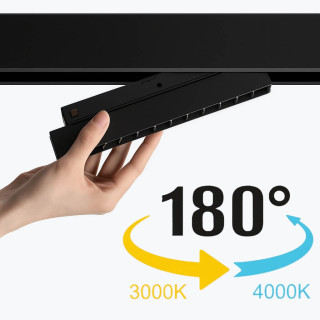
A single track allows you to create three lighting layers: ambient (linear modules), task (spots), and accent lighting (wall washer / decorative modules).
You choose the mounting method to match the ceiling and the desired visual effect: surface-mounted, recessed, trimless, or suspended.
It is a solution for interiors that evolve: when the furniture layout or zoning changes, the lighting keeps up—without renovation work.
Key parameters (lm, K, CRI, beam angles, control) are module-dependent—refer to product datasheets for details.

A magnetic system is designed to simplify both the design process and the long-term “life” of the lighting. With classic 230V tracks, changes can be more labor-intensive and less modular. With Multiline 48V, the track becomes a stable infrastructure, and the modules are interchangeable components you adapt to zones and tasks.
If you are building an installation with very high power loads, very long runs, or a typical retail space based on three-phase standards, a classic track can be practical. In apartments, high-end residences, offices, service areas, and “premium” projects, a 48V magnetic system typically wins on flexibility, aesthetics, and ease of change.
Use this section to choose the right system family before you buy accessories:
Multiline 22mm 48V (this category): “all-round” premium standard, broad module range, multiple mounting options.
11mm magnetic systems: ultra-minimal visual presence (Microtrack/Microline/Core11).
5mm magnetic systems: extreme slimline, design-first projects (FIVETRACK).
Ultra-low profile 48V tracks (FLATTRACK): when the surface track should look as “flat” as possible.
Classic 230V track (1-phase / 3-phase): simplest mains-powered approach (often used in standard retail setups).
See our track lighting systems:

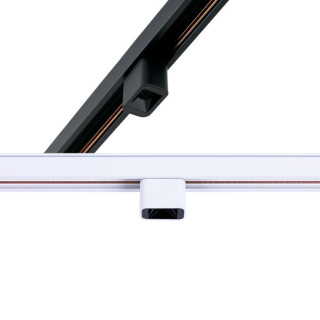
The most universal option for lower rooms and anywhere you do not plan a suspended ceiling. A surface-mounted track creates a clean line while allowing fast module rearrangement. It works well in kitchens, living rooms, hallways, and home offices.
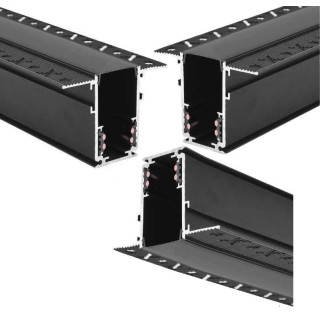
For those who want a subtle ceiling frame and the option to remove the track easily. A framed recessed track is straightforward to install and does not require extremely precise plaster finishing after installation. It does, however, require planning at the suspended-ceiling stage.
A frequent choice for refined minimalism. When finished correctly, the track reads like an architectural detail with very discreet system boundaries. This option suits interiors where clean geometry and top-tier aesthetics are essential.
Ideal for high ceilings and zones where you want to bring the light source down: above an island, table, counter, or reception desk. It improves task-lighting comfort and delivers a strong design effect.
A wall-mounted magnetic track allows you to illuminate vertical planes, circulation routes, displays, and surface textures. Ceiling-to-wall transitions help unify the interior with one consistent “drawing of light.

Recessed and trimless mounting: the most architectural look, requires early planning.
The best results come not from “one powerful fixture,” but from lighting planned in layers. A magnetic system is purpose-built for this approach, because within one continuous line you can combine multiple module types.
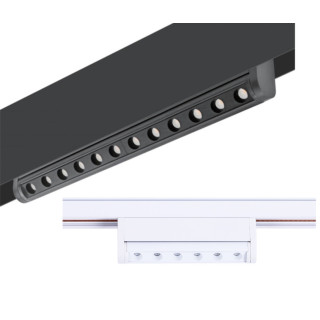
Most often delivered with linear modules—they provide an even, comfortable base layer for a living room, corridor, office, or open-plan area. This is the foundation on which you build everything else.
Spotlights and directional modules are essential above a countertop, desk, in a walk-in closet, by a mirror, and in any zone where clarity matters. Here, optics, beam angle, and glare comfort are decisive.
Wall washers and point accents reveal textures, artwork, shelving, niches and vertical planes. One well-lit wall often adds more “premium depth” than extra ceiling points.
Track-mounted pendants keep the same system language while adding a decorative feature above a table or island. Compared to a classic single ceiling point, you gain much more freedom to adjust positioning later.
Track operating voltage: 48V (low-voltage system)
Power supply/driver: matched to total module wattage with headroom
Operating mode: On/Off or dimming/control variants (gear-dependent)
Zones and scenes: dependent on the chosen control method and how the installation is divided into sections
Luminous flux (lm): the real “light output”
Correlated color temperature (K): the mood and function of the zone
CRI/Ra: color rendering quality (important in kitchens, closets, with materials and art)
Beam angle: accent precision versus softness of general light
Glare limitation: optical solutions that directly affect visual comfort
Track mounting type: surface / recessed / trimless / suspended
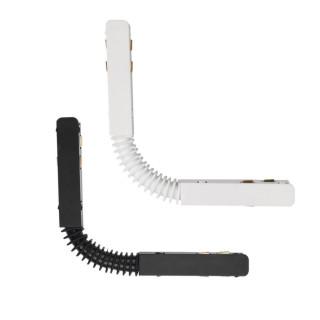
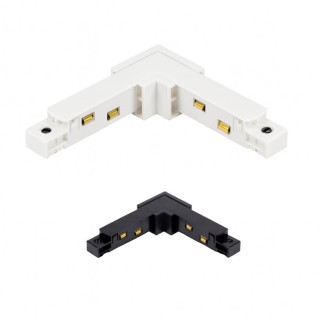
Section lengths and connection method: straight connectors, corners, power-feed elements
Profile color: matching the ceiling or creating intentional contrast
Accessories: end caps, mounting parts, ceiling-to-wall transitions (if the design requires them)
Critical practical rule: do not mix components from different system families “because they look similar.” “22mm” is sometimes used as an aesthetic descriptor, but mechanical and electrical compatibility depends on the exact system and manufacturer.
.webp)
Write down where you need ambient, task, and accent lighting.
Surface / recessed / trimless / suspended—depending on the ceiling and the intended visual effect.
A straight line or a layout with corners? Do you need a ceiling-to-wall transition? Is it better to divide the installation into sections?
Add up the module wattages in a section (ΣW) and choose a driver with at least 20% headroom:
P ≥ ΣW × 1.2
For larger layouts, split into sections and target ≤ ~80% operating load per driver (stability + room to expand).
How to choose a 48V power supply (simple rule)
On/Off or dimming and scenes? If you want automation, plan it at the control-gear selection stage.
Connectors, corners, power-feed elements, end caps, and mounting hardware—these determine a smooth installation without missing parts.

Use these as proven “building blocks.” You can scale up by adding more modules or splitting into more sections.
Want a ready-to-buy list for your floor plan?
Send dimensions + zones (kitchen/work/relax/display) and we’ll prepare a complete Multiline bill of materials: tracks, connectors, driver(s), and modules.
Tip: plan at least two scenes: “work” (brighter) and “evening” (soft).
even illumination + subtle vertical-plane accent
strong task lighting + accents for zones/displays

1. Is 48V magnetic track lighting safe for home use?
Yes. It is a low-voltage system (typically 48V DC), so the risk of electric shock is significantly lower than with 230V installations. That said, safety does not eliminate installation rules: the power supply and any 230V connections should be handled by a qualified electrician, and all components must be selected within one compatible system.
2. How do I choose a power supply for a 48V magnetic track system?
Add up the wattage (W) of all luminaires on a single circuit, then add a 20% reserve so the power supply is not operating at its limit.
For example: 6 luminaires × 12W = 72W; with a 20% reserve this is 86.4W, so the best choice is a 100W power supply.
For larger installations, it is better to split the layout into sections and use several power supplies rather than one heavily loaded unit. If you are planning dimming or smart control, make sure the luminaires are available in a DALI version.
3. Are magnetic tracks and luminaires from different manufacturers compatible?
In most cases, full compatibility is not guaranteed—even if the systems look similar. Differences may include track profile, contact spacing and geometry, power delivery, maximum load ratings, and control protocols. The safest rule for customers is: one track = one system = one family of accessories and luminaires. Mixing components can lead to poor contact, flicker, overheating, or damage.
4. Can magnetic luminaires be dimmed and integrated with a smart home?
Yes—but only if the entire control chain is consistent. Luminaires must be dimmable, and the power supply and controller must support the selected dimming/control method (system-based, bus-based, or dedicated smart solutions). A common issue is buying “dimmable” fixtures but pairing them with a power supply/controller that does not match the dimming type. If you plan Home Assistant, Zigbee, or another platform, start by deciding how you will control the lighting, then specify the hardware accordingly.
5. Can I install a magnetic track myself?
Mechanical installation (surface-mounted or suspended) can be straightforward, but connecting to the 230V mains and commissioning the power supply should be done by a licensed electrician. In practice, the user can freely reposition luminaires on the track and expand the setup within the same system. If you choose recessed installation, plan it at the ceiling construction stage—later it may be too late.
6. Can magnetic tracks be cut to size?
Yes, but it must be done in accordance with the specific track’s instructions, and the conductive runs must be properly finished/terminated.
7. How many luminaires can I run on one track, and how long can the runs be?
The limit depends on the power supply rating, the system’s maximum permissible load, and run length—because long routes can cause voltage drop and uneven brightness. If you plan many luminaires or long layouts, design the installation in sections and distribute the power feed. In practice, two stable circuits are usually better than one “at the limit”: it improves reliability and makes future expansion easier.
8. Why do magnetic lights flicker or shine unevenly?
The most common causes are: an incorrectly selected power supply (insufficient wattage or the wrong type for dimming), poor contact at connectors, an overloaded section, or incorrect coupler/connector installation. Problems can also result from mixing components from different systems or powering overly long runs from one end only. Troubleshooting should start with verifying power, load, and connections—before replacing luminaires.
9. How do I choose luminaires for the kitchen, living room, and over the table—spots or linear modules?
For kitchens and countertops, directional luminaires (better precision and shadow control) are typically combined with a linear module or wide ambient lighting. In living rooms, it’s best to layer light: a base (linear/wide distribution), accents (spots for walls, artwork, textures), and mood lighting. Over a dining table, use a layout that evenly covers the tabletop without glare—often a linear module or several appropriately angled points performs better than one very powerful spot.
10. Which should I choose: a 48V magnetic system or classic 230V track (1-circuit/3-circuit)?
Choose 48V if you want a modern aesthetic, easy repositioning of luminaires, and modular expandability for home or office. Choose 230V if your priorities are lower cost, straightforward mains powering without an additional power supply, standardised accessory availability, and a more traditional installation approach.
A magnetic system delivers its best results when it is properly specified and fully coordinated. That is why we not only carry the full range, but also actively support you in selecting:
See our track lighting systems:
check_circle
check_circle