Round Stone Wall Lights – How to Choose the Right One?
09/06/2026 12:23:09
Filter By
Filter By
BLOG

Globe floor lamps (standing lamps with spherical shades) are one of the most versatile ways to introduce pleasant, softly diffused light to a living room, bedroom, or relaxation zone. The spherical shade acts as a diffuser: it softens the glow, reduces glare, and evens out shadows—making the interior feel warmer and more considered, without any renovation.
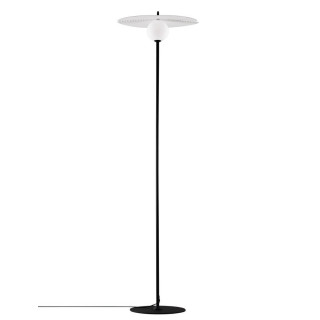
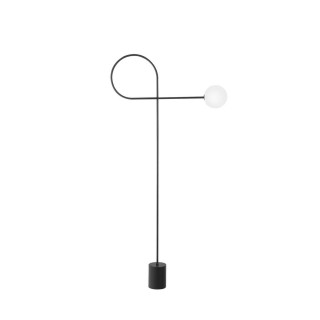
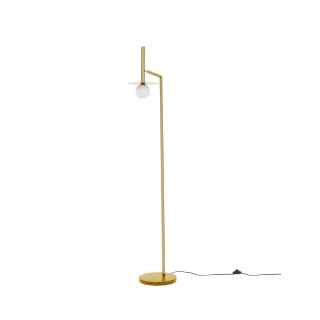
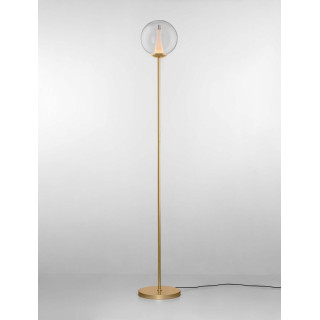
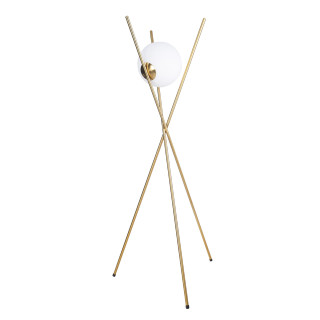
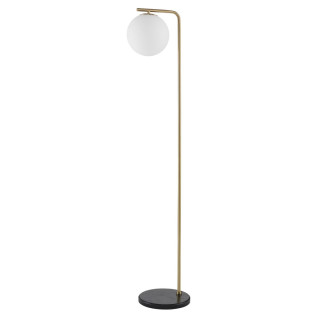
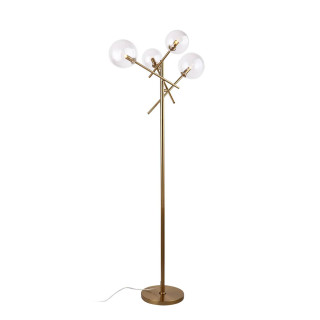
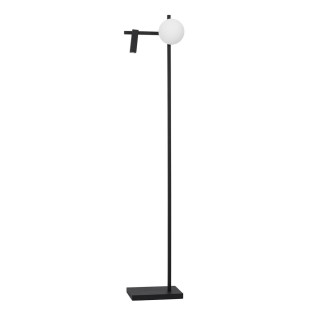
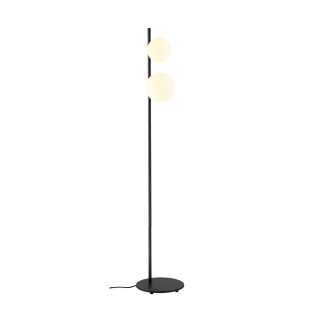
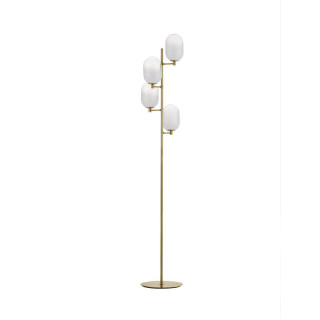
In this category you’ll find everything from minimalist floor lamps with a single opal globe to multi-globe compositions (2–6 light points) on a slim frame—available in black, white, chrome, brushed nickel, or gold/brass tones. There are also models with marble or wooden bases, options with replaceable bulbs (E27/G9) or integrated LED, as well as designer globe floor lamps featuring dimming and smart control. Choose the style, number of globes, and lighting parameters—the spherical form takes care of the rest: calm, elegant, and timeless.
There are 21 products.
sortSort by:
If you want soft, atmospheric light, choose an opal globe, 2700–3000K, and a dimming option. If the lamp is also meant for reading, aim for a higher light output (lumens) and make sure the shade height is right for your armchair. And if you’re after a strong decorative statement, go for a multi-globe design (2–6 globes) or smoked glass paired with a well-chosen bulb.
Why a globe works so well in interiors:

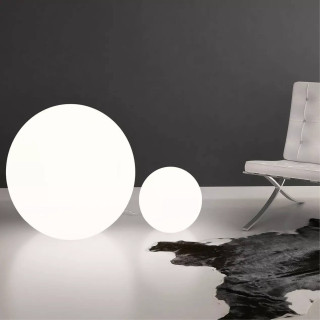
Globe floor lamps are standing lamps with a spherical shade—either a single globe or a cluster arranged as several light points. The globe can be made from opal glass, clear, coloured or smoked glass, as well as acrylic/polycarbonate.
In practice, a spherical shade works like a soft “filter” for light. Instead of a harsh point source, you get pleasant diffusion that:
A globe is geometrically neutral: it doesn’t dominate the design, but it elevates it. In modern interiors it calms the composition, in classic spaces it adds lightness, and in lofts it softens the rawness of concrete and black accents.
If you want soft light without glare, opal is the easiest option to get right at home. It hides the light source and glows evenly.
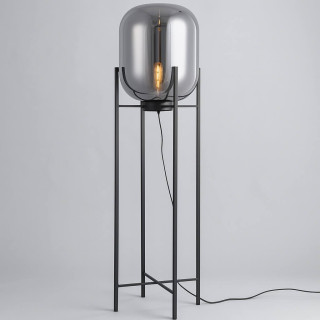
This option looks fantastic but is more demanding: the light source is often visible, so choosing the right bulb (output, colour temperature, shape) is key to avoid glare.
Tip for smoked/clear globes: lower-brightness bulbs with a warm tone and a softer finish (e.g., frosted or less “point-like”) often work best—so the lamp looks decorative without feeling harsh.

A slim frame, one or two globes, and neutral finishes. In these interiors, a globe works as a “soft accent”—it adds warmth without visually taking up space.
Opal glass + a warm colour temperature + a detail in wood or satin-finish metal. Dimming is key here: practical light during the day, deeply soothing in the evening.
Gold/brass finishes, opal or lightly smoked glass, often on a larger scale (a bigger globe or a 3–6 light arrangement). The effect is refined, yet still airy.
Black, graphite tones, smoked glass, and simple geometry. If the interior feels raw, an opal globe “softens” it beautifully and makes the space feel more homely.
Look for smoked globes, chrome, gold, and a more statement base. Here, the lamp can act like interior jewellery—best as a single, consciously chosen accent piece.
The most common scenario is soft light that “finishes” the room after dark. An opal globe with dimming works especially well. If you have a TV, place the lamp so it won’t reflect in the screen—usually diagonally from the TV.
Tip: In a large living room, layering light (ceiling + floor lamp + wall lamp) creates a better effect than one very powerful fixture.
A globe floor lamp next to the bed looks light and elegant. Choose a warm 2700–3000K and dimming so you can ease into a true “relax” mode in the evening.
Here, placement and specs matter. The shade should be high enough not to shine directly into your eyes, but close enough to provide noticeable brightness on the book. If you choose clear/smoked glass, consider a bulb with lower luminance and a warmer tone.
A globe lamp near the entrance works like a soft navigation point—especially in homes where you don’t want to switch on strong ceiling lighting in the evening.
If you want the office to feel “less office-like,” a globe lamp can be a great complement to the main lighting. In this scenario, consider 3000–4000K and a high CRI—colours on the desk and on camera will look more natural.

With LEDs, watts mostly tell you energy consumption, not brightness. Look for lumens instead:
Keep in mind that perceived brightness also depends on distance and the direction of light output—lumens tell you how much light the source emits, not how much reaches your book.
CRI indicates how accurately a light source renders colours. For home use, recommended values are:
Integrated LED
Replaceable bulb (E27/G9)
If you value flexibility, choose a lamp designed for replaceable bulbs. If you want the most refined, consistent glow, an integrated LED can be the better option.
Brightness control is the simplest way for one lamp to handle multiple roles. It’s useful for:
Smart versions can also support a daily rhythm (brighter and more neutral during the day, warmer and softer in the evening) without changing fixtures.
Opal (milky) glass is valued because it produces soft, uniform light and masks the light source. In practice, the better the shade quality, the fewer “hot spots” you’ll see when it’s switched on.
Modern materials can diffuse light very well, are lighter, and much harder to break. It’s a sensible choice for homes with children, rentals, and spaces where the lamp will be moved often.
A well-designed base means:
If you have children or pets, look for models with a heavier, wider base (often marble or steel).

The most common mistake is a globe that shines straight into your eyes. In a relaxation zone, position the shade so the light source isn’t in the direct line of sight of a seated person. If you’re unsure, choose opal glass or a model with dimming.
Proven spots:
The best interiors don’t rely on a single lamp. They work in layers:
A globe is excellent for mood lighting because it diffuses light and balances contrast. If in the evening you switch on only the globe (and, for example, a wall sconce), the living room feels calmer and more inviting.
Two lamps can look similar in photos yet behave very differently when switched on. Before buying, check:
Yes—provided you choose the right light output (lumens) and place the lamp sensibly in relation to the area you want to illuminate. For ambience, 400–800 lm is often enough; for reading, it’s usually worth going higher.
Opal is more “forgiving”: it glows softly and hides the light source. Smoked glass looks very striking, but it requires better bulb selection to avoid glare.
Most often 2700–3000K (warm and cosy). If the living room is also used for work or study, 3000–4000K can be more practical—especially with dimming.
E27/G9 gives more flexibility (replacement, smart options, choosing CRI and colour temperature). Integrated LED often delivers the most even globe illumination and day-to-day convenience.
A single globe is minimalist and easy to match. Multiple globes create a stronger decorative effect and scale better in larger spaces.
Yes. In smaller interiors, soft diffused light often looks better than harsh point sources—you just need to match the scale (globe diameter, lamp height) and avoid too many light points.

check_circle
check_circle