-
Why choose gold LED pendant lights? 12/29/2025 22:06:25Linear LED Pendant Light – Where Does It Work Best? 12/18/2025 12:19:09Voltage in LED Lighting – 230V, 12V, 24V or 48V? Comparison and Applications 12/16/2025 18:24:10
Glass Floor Lamps
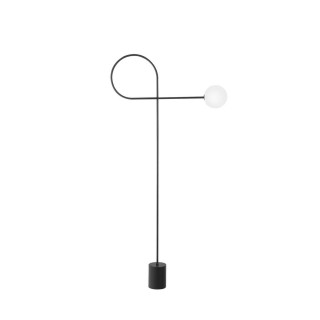
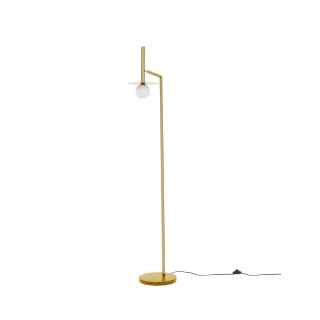
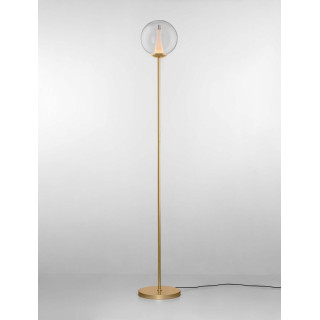
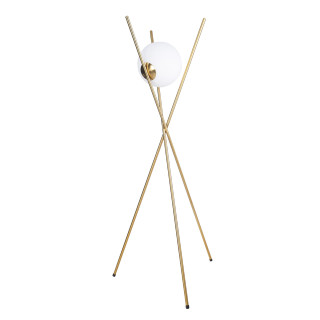
Glass floor lamps – soft light, lightweight design, and a strong impact in the interior
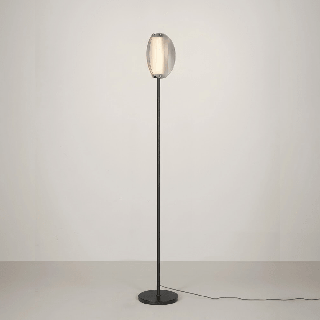
A glass floor lamp is one of the most versatile lighting elements available. It can serve as a distinctive designer feature, resembling a decorative sculpture, while at the same time genuinely enhancing comfort after dark. A shade made of glass diffuses light in a way that differs from metal or fabric. Opal or frosted glass creates a subtle, gentle glow; smoked glass introduces elegant half-tones and soft shadows; and clear glass allows for a pure, decorative display of the bulb itself.
The result is greater freedom in shaping the atmosphere of a living room, providing additional illumination for a reading corner, adding a layered lighting effect in the bedroom, and defining functional zones within an open-plan space.
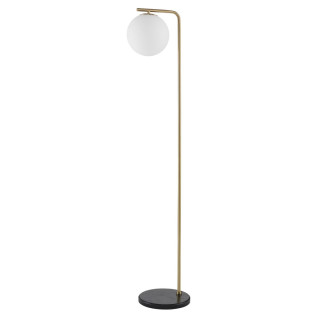
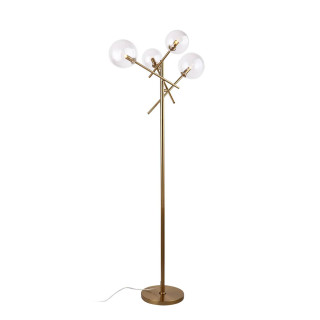
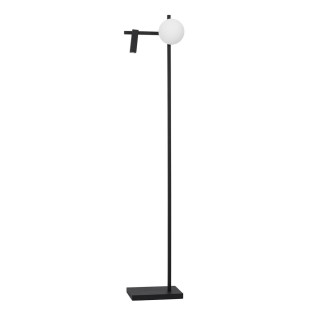
In this category, you will find floor lamps with glass shades offered in a wide range of styles and constructions—from minimalist spherical forms to glamorous models combining brass and marble, as well as loft-inspired designs featuring exposed bulbs. Below you will find a practical buying guide that leads you from identifying your needs, through understanding key lighting parameters, to selecting the most suitable type of fixture for your project.
Quick pick glass floor lamp in 60 seconds
- Want soft, cosy light without glare? Choose a floor lamp with opal or frosted (milky) glass.
- Want a premium feel and visual depth? Choose a glass floor lamp with a smoked or tinted shade.
- Want a loft/retro look where the bulb becomes the décor? Choose clear glass and invest in a quality bulb (colour temperature + dimming).
- For living rooms and bedrooms, 2700–3000K (warm white) is usually the best choice.
- If possible, choose a version with a dimmer or pair the lamp with a dimmable bulb—the fastest way to create atmosphere with light.
- Look for CRI 90+ if you care about beautiful, natural-looking colours in fabrics, wood, and finishes.

Definitions in one sentence
- Lumens (lm) tell you how much light a source produces—its practical brightness.
- Kelvins (K) describe the colour of light—the lower the value, the warmer and more “evening-like” it feels.
- CRI/Ra indicates colour rendering—the higher it is, the more natural materials and colours appear.
Why does glass work so well in a floor lamp?
A glass shade = better light optics
Glass—especially opal glass—acts as a diffuser: it spreads the light output and smooths harsh hot spots. The result is calmer, more comfortable illumination that is easy on the eyes in a living room or bedroom.
Visual lightness and timeless appeal
Glass does not visually weigh down an interior. Even a larger glass floor lamp can feel “light,” particularly when paired with a slender metal structure or a marble base.
A quick interior upgrade—no renovation required
A floor lamp is mobile. You can brighten a lounge zone, build evening ambience, highlight a corner, and even “lift” an open-plan space by zoning it with layered light.
Types of glass and the effect you get
Treat the overview below as a selection map—rather than guessing what will look good, you match the glass to your desired outcome.
Glass type | How it looks when lit | For whom | Best placement
- Opal / frosted (milky) | soft, even, reduced glare | if you value comfort and cosiness | living room, bedroom, TV zone, hallway
- Smoked / tinted | atmospheric, with depth and gentle shadows | if you like a premium mood | living room, bedroom, apartments, hotel interiors
- Clear | decorative; the bulb is visible | if you want a strong detail | loft, modern classic, study, dining area
- Textured (ribs, bubbles, relief) | interesting play of reflections | if you want “jewellery” in the interior | accent zones, sideboard, corner styling
Practical tip: if you are tired of harsh light from an exposed bulb, opal/frosted glass is the safest choice. If you want the lamp to be a decorative feature, clear or smoked glass requires a deliberate bulb choice (colour temperature, frosted vs clear bulb, dimming).
How to choose: from function to lighting specs
Step 1: Define the purpose
- Mood and background light: a soft diffuser (opal/frosted) or smoked glass.
- Reading: you need task lighting—direction and adequate brightness matter most.
- Zoning a living room: a floor lamp as a second light layer alongside ceiling lighting.
Step 2: Match colour temperature (Kelvins) to the room
- 2700K: very warm, evening-like, relaxing.
- 3000K: still warm, but more versatile (a common living room choice).
- 3500–4000K: brighter and “cleaner,” more often used for work areas, kitchens, studies (if you prefer a cooler feel).
In practice, for living rooms and bedrooms most people choose 2700–3000K, as it is associated with domestic warmth and rest.
Step 3: Choose brightness (lumens) for the scenario
There is no single “magic” number—distance to surfaces, wall colours, and whether the lamp throws light upward, downward, or through a diffuser all matter. The ranges below are a reliable starting point.
Use case | Typical range (lm) | What works best
- Mood / evening: 200–400 lm | warm light + dimming
- Everyday lamp by the sofa: 400–800 lm | opal/frosted glass and a stable base
- Reading by an armchair: 400–800 lm (directional) | shade positioned so it doesn’t shine into your eyes
- Work support (home office): 600–1000 lm (or more, depending on layout) | better beam control and higher CRI
Tip: for reading, it matters less how powerful the lamp is and more whether the light lands on the page and your hands—not in your eyes. That is why arc lamps and adjustable models can outperform “stronger” lamps that emit light in all directions.
Step 4: CRI—when it’s worth paying for quality
- CRI 80+ is a solid everyday standard.
- Choose CRI 90+ if you care about colour quality: textiles, rugs, wood, art, stone, décor.
Interiors with refined materials (wood, veneer, textiles, art) look notably better in the evening when the light source has a higher CRI.
Dimming: the feature that changes everything
If there is one feature that most improves comfort, it is dimming. The same glass floor lamp can be a gentle background glow in the evening, then provide stronger light for conversation or reading.
How to look for it:
- A glass floor lamp with a dimmer (foot switch, inline cord dimmer, touch dimmer).
- A lamp without a dimmer + a dimmable bulb (check bulb/dimmer compatibility).
- If you like a “warmer when dimmed” effect, consider dim-to-warm sources (if available for your bulb base).

Light source: E27/E14, G9, or integrated LED?
Fixtures with replaceable bulbs (e.g., E27/E14)
The easiest way to tailor the light: you choose colour temperature, CRI and brightness, and you can replace the bulb without replacing the lamp. With clear shades, bulb aesthetics matter—shape, frosted vs filament, and ideally dimmability.
G9 and compact solutions
Common in smaller globe shades and compact designer forms. Check the available bulb options carefully—choice can be narrower than with E27.
Integrated LED
Convenience and a cohesive lighting effect (often with excellent diffusers). Pay attention to the specs: lumens, Kelvins, CRI and dimming. A good choice if you want a “ready-made” result without selecting a bulb.
Stability and safety—especially important with glass
A glass shade requires a solid structure. When buying, pay attention to:
- Base weight and diameter (marble and metal are particularly effective).
- Overall height and centre of gravity—especially if you have children or pets.
- Cable routing to avoid trip hazards.
- Indoor use: most floor lamps are intended for dry spaces; for unusual placements, check the required ingress protection rating.
In the EU market, electrical safety and compliance with product requirements for equipment used within specific voltage ranges are essential—particularly when purchasing for use in Poland and Europe on standard mains voltage.
Energy label: what matters when you buy
In practice, the key point is simple: energy efficiency depends primarily on the light source (bulb or LED module). Look for luminous flux (lm) and wattage (W), and ideally also CRI and lifetime. If the fixture uses replaceable bulbs, overall efficiency depends largely on the bulb you choose.
Where to place a glass floor lamp for best results
Living room
- Next to a sofa or armchair: creates a relaxation/reading zone.
- In a corner: gives a soft glow that visually enlarges the room.
- By a sideboard or shelving: adds an accent and highlights décor.
Bedroom
- Next to the bed instead of a bedside lamp: calmer, more diffused light.
- In a wardrobe/dressing area: consider higher CRI for more accurate clothing colours.
Study and home office
- As support to the main lighting: prioritise beam control and glare-free optics.
- If you work in the evening, you may prefer 3000–4000K, but keep the overall room lighting consistent.
Style and interior pairings that work best
Modern minimalism
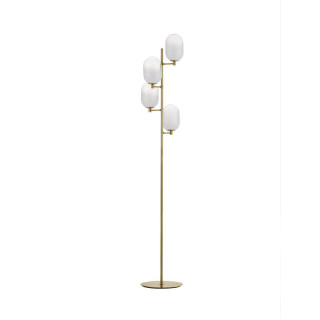
Opal/frosted glass and a simple metal frame (black, white or chrome). Result: clean, light, and distinctly design-led.
Glamour and modern classic
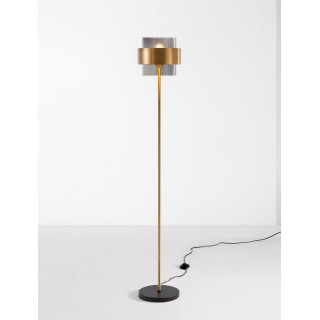
Smoked glass, brass or gold accents, often a marble base—a lamp that reads like interior jewellery.
Industrial and loft
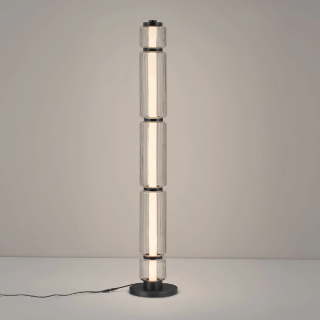
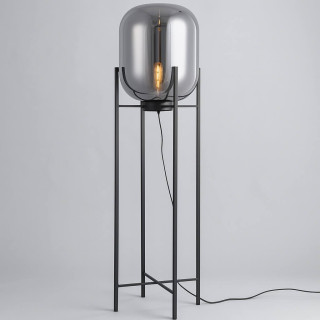
Clear glass + metal. The bulb is crucial here: decorative, aesthetically pleasing, and ideally dimmable.
Scandinavian and Japandi
Frosted/milky glass + light wood or white finishes. Plenty of soft glow and a calm silhouette.
How to use filters to find the right model faster
To narrow the selection to a shortlist, start with:
- Glass type: opal/frosted, smoked, clear, tinted, textured
- Function: living room, bedroom, reading, study
- Dimming: with dimmer / suitable for dimmable bulb
- Light source: E27/E14/G9 or integrated LED
- Materials & style: metal, marble, wood; black, gold/brass, chrome, white
- Dimensions: height and shade diameter matched to the room scale
Our experience: 7 common mistakes and simple fixes
- Clear shade with no bulb plan: choose a frosted bulb, warmer colour temperature, and dimming.
- Not enough light for reading: increase lumens or choose a model that directs light onto the page.
- No dimming: evenings can feel too bright—dimming solves it instantly.
- Low CRI in a refined interior: choose CRI 90+ for colour quality and material depth.
- Wrong scale for the room: a small globe disappears in a large living room; an oversized shade can feel heavy.
- Unstable base: with glass, stability is non-negotiable.
- Poor cable placement: a small detail that can undermine everyday comfort.
Glass care: how to keep it looking “like new”
- Clean the shade with a soft microfibre cloth, ideally when the lamp is cool.
- For streaks, use a gentle glass cleaner and polish dry.
- Avoid abrasive sponges and aggressive agents, especially on tinted and textured glass.

FAQ: short answers to the most common questions
Which glass should I choose to avoid glare?
Opal or frosted (milky) glass is the most comfortable, as it diffuses light and reduces glare.How many lumens should a glass floor lamp have for reading?
Typically 400–800 lm, positioned so the light falls on the book rather than into your eyes. With dimming, you can fine-tune brightness more easily.2700K or 3000K for the living room?
2700K feels warmer and more evening-like; 3000K is more universal and appears slightly brighter. Many people treat 2700–3000K as the safest range for relaxation.Does CRI 90+ make sense at home?
Yes—especially if you have a lot of wood, textiles or art, or you want colours to look natural in the evening. CRI 80+ is sufficient for basic use, but CRI 90+ provides a noticeably better visual result.Should a floor lamp have a dimmer?
If you want one lamp for different scenes (movie, conversation, reading), a dimmer is one of the most cost-effective features—improving comfort and making it easier to build mood.What does IP mean on a lamp?
It indicates the housing’s resistance to dust and water ingress. In a living room it is rarely critical, but in atypical conditions it is worth checking.Summary: how to choose the best glass floor lamp
If you want cosiness and comfort, choose an opal/frosted glass floor lamp—ideally with dimming. For a premium mood, go for smoked glass. If you are aiming for a loft-inspired look, choose clear glass and refine the bulb choice (colour temperature, CRI, dimming). A well-selected glass floor lamp can transform an interior faster than a new piece of furniture: it adds light, defines zones, and creates an atmosphere you want to return to.
See also:
Menu
- +Outdoor lighting
- +Indoor lighting
- +Wall LED lamps
- Line light LED
- LED profiles ALU
- +Track system
- +LED ceiling lamps, hanging and surface-mounted
- +Ceiling covers
- +LED plafonds
- LED recessed downlights
- +Hanging lamps LED
- Ceiling spotlights and spots
- Ceiling fans LED
- LED lights for paintings
- Starry Sky
- +LED floor lamps
- LED table and desk lamps
- Living room
- Bedroom
- Dining room
- LED bathroom lighting
- LED kitchen lighting
- LED stairs lighting
- +LED bulbs
- All manufacturers
- Prices drop
- New Products
- Bestseller
- LED Lamps
-
- Indoor lighting
- Wall LED lamps
- Line light LED
- LED profiles ALU
- Track system
- LED ceiling lamps, hanging and surface-mounted
- Ceiling covers
- LED plafonds
- LED recessed downlights
- Hanging lamps LED
- Ceiling spotlights and spots
- Ceiling fans LED
- LED lights for paintings
- Starry Sky
- LED floor lamps
- LED table and desk lamps
- Sources of light
- LED Strip Lights
- Outdoor lighting
- LED profiles
- LED stairs lighting
- LED accessories
- Equipping interiors
- Sale
- The FIBARO system
- Bestsellers
- LED bathroom lighting
- Decorative LED lighting
- LED lighting furniture
- LED kitchen lighting
- Technical and information LED lighting
- Lighting with LED for children
- Other lamps
- Living room
- Bedroom
- Dining room
- Indoor lighting