LED Lighting for a bedroom: Reading and Dimming
09/23/2026 15:13:43
Filter By
Filter By
BLOG

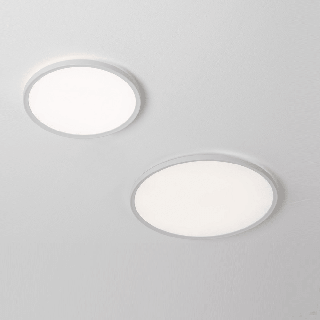
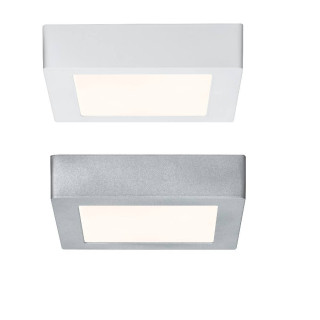
Bedroom ceiling flush mounts (also known as flush-mount ceiling lights) are a practical choice that provides evenly distributed ambient light without reducing the perceived ceiling height—making them ideal for small bedrooms, low ceilings, and rooms with sloped ceilings. A modern LED bedroom ceiling flush mount combines energy efficiency with aesthetics, ranging from slim, minimalist designs to fabric, wood, and elegant glamour-inspired options.
The most common safe, no-regrets choice: a 2700–3000K LED ceiling light with an opal diffuser and a dimming option (remote / smart control / wall dimmer).
There are 429 products.
sortSort by:
A bedroom has unique requirements: you need general lighting that is gentle on the eyes, doesn’t “flatten” colours, and allows a smooth transition from activity (cleaning, getting dressed, morning routines) to calm and relaxation. That is exactly why a bedroom ceiling light is one of the most practical choices. Mounted close to the ceiling, it delivers even, comfortable illumination, doesn’t visually reduce the space, and works equally well in small bedrooms and spacious sleeping areas.
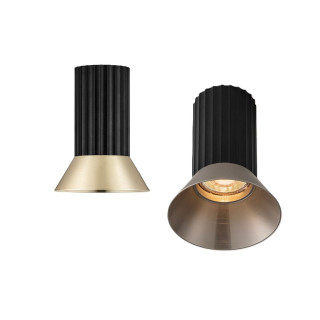
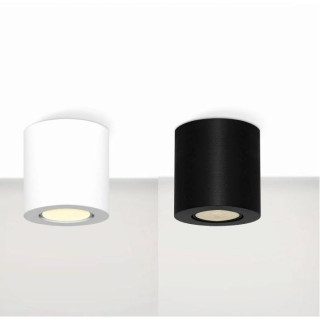
In this category you’ll find LED bedroom ceiling lights as well as surface-mounted (ceiling-mounted) fixtures designed for replaceable light sources—making it easy to match output, colour temperature, and functionality to your needs. These are solutions that combine design, engineering, and everyday convenience—without compromise.

If you want to narrow the selection quickly, follow this logic: need → parameters → form → functions.
In product descriptions you’ll see lumens (lm)—a more practical indicator than “watts”. As a guideline, for general bedroom lighting, a room-wide level of roughly 150–200 lux is often comfortable for everyday tasks. How to estimate quickly?
Rule of thumb: bedroom area (m²) × 100–200 = required lumens (lm) for general lighting.
Example: 12 m² × 150 ≈ 1800 lm (an averaged value; lighter interiors may need less, darker finishes more).
Expert tip: if your bedroom also has additional sources (wall lights, bedside lamps, LED strips), the ceiling light does not have to do everything on its own. In that case you can intentionally choose a lower-output ceiling light and prioritise ambience and comfort.
Safest choice with minimal risk: an LED bedroom ceiling light at 2700–3000K or a model with CCT adjustment.
CRI (Ra) indicates how accurately light renders colours. In the bedroom this matters: skin tones, textiles, and wall colours can look “flat” with low CRI.
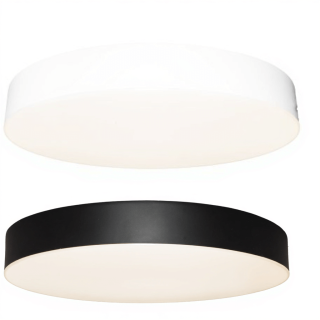
Integrated LED ceiling lights are modern, energy-efficient fixtures with excellent uniformity. They often offer dimming, CCT adjustment, remote control, or smart features. This is the ideal choice if you want a “buy once and forget” solution—without selecting bulbs.
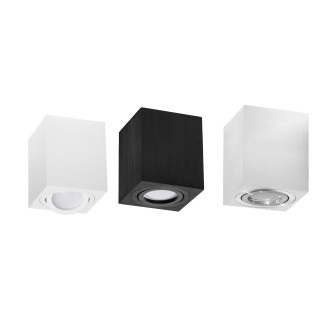
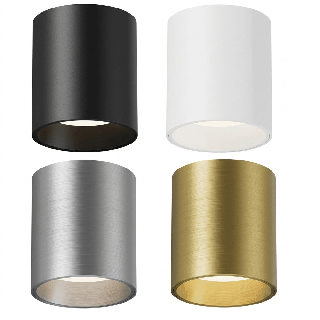
Fixtures for replaceable light sources (e.g., GU10, E27 and other common bases) offer flexibility: you decide the colour temperature, output, beam angle, and CRI class, and you can easily replace the source when needed. This is a strong option for anyone who likes tailoring parameters precisely—or upgrading lighting in stages.

If you were to choose only one “premium” feature, make it dimming. It allows you to transition from bright ambient light to a gentle, atmospheric glow without changing fixtures. Note that dimming can work in different ways:
See how to dim LED lights:
How to Dim LED Lamps? An Expert's Guide
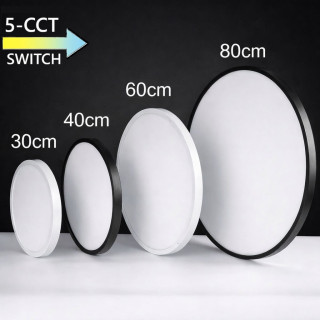
Models with colour temperature adjustment let you shape the atmosphere precisely: warmer in the evening, neutral in the morning, brighter during cleaning. For many people, this is the simplest way to implement wellbeing in practice—without redesigning the room or multiplying fixtures.
In the bedroom, softness matters. Pay attention to:
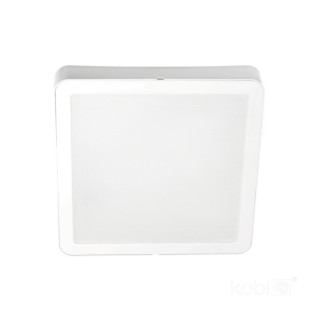
Flat LED ceiling lights and panels are architecturally “clean”: minimal form, maximum light. They suit modern bedrooms, japandi interiors, modern classic schemes, and apartments where you want to visually calm the ceiling.
If you want a “hotel” feel, fabric is hard to beat: it warms up the interior, softens the light, and complements bedrooms where textiles take centre stage (curtains, bedspreads, upholstered headboards).
Wood and natural materials pair beautifully with Scandinavian, boho, and eco interiors. They create a calm, home-like mood and—paired with the right diffuser—deliver soft light without harsh contrast.
Glass, glossy surfaces, metallic details, and decorative forms create a “ceiling jewellery” effect. In a glamour bedroom, it’s not just about quantity of light, but impression—reflections, elegant finishes, and refined detailing.

A large fixture in a small bedroom can feel heavy, while a too-small one in a large space can look accidental. Best practice is to treat the ceiling light as part of the ceiling composition: it should be proportional to the bed, furniture layout, and room height.
The best bedrooms use layered lighting. The ceiling light is the base (ambient lighting), but comfort increases when you add:
That way, the ceiling light doesn’t need to do everything—it can do the right things intelligently.
These are the issues that most often make a ceiling light feel fatiguing, glaring, or simply too dim—even when the specs look fine on paper.
Cool whites can feel stimulating and quickly kill the evening mood.
How to avoid it: aim for a warm 2700–3000K, or choose a fixture with CCT (adjustable colour temperature) and set a warm evening mode.
In a bedroom you often look up at the ceiling from a lying position—if the light is too “hard,” it becomes irritating fast.
How to avoid it: choose flush mounts with an opal/milky diffuser and an even, soft light distribution.
Darker colours and fabrics “eat” light. The result: the fixture is there, but the room still feels gloomy.
How to avoid it: it’s better to choose a stronger output and use dimming than to buy “just enough” and regret the lack of brightness.
Without control, it’s hard to move smoothly from relaxing to reading—and at night the ceiling light can be simply too intense.
How to avoid it: go for a dimmable flush mount (remote / smart / compatible with a wall dimmer)—it’s the single biggest comfort upgrade in a bedroom.
A fixture that’s too small disappears on the ceiling; too large can feel heavy. Poor placement can also shine straight into your eyes.
How to avoid it: match the size to the room scale and position the light so it’s comfortable from a lying viewpoint. For reading, add directional task lighting instead of forcing a powerful ceiling light.

Most often, a general lighting level of about 150–200 lux across the room works well. In practice: bedroom area (m²) × 100–200 = ceiling light lumens. If you have dark walls, lots of dark wood, or matte finishes, add a buffer (often 20–30%). If you have additional bedside lighting and accents, you can go lower—because the ceiling light should be the base, not the only source.
For the bedroom, the safest choice is 2700–3000K, because warm white supports relaxation and a softer perception of the interior. 2700K is the most cosy; 3000K is more universal if the bedroom includes a wardrobe area or morning grooming. Consider 4000K only if the bedroom truly functions as a utilitarian space (e.g., a heavily used wardrobe) and you accept a more neutral, “technical” feel.
For bedrooms, an integrated LED ceiling light is often better: it’s easier to achieve uniform illumination, a slim profile, and functions such as dimming, CCT adjustment, night mode, or remote control. Choose a fixture with replaceable bulbs if you want full replaceability and independent control of CRI, colour temperature, and “smart” features via the bulbs themselves—also a good option if you like upgrading lighting in stages.
Usually three factors are responsible: colour temperature that’s too cool (e.g., 4000K+), excessive brightness without dimming, and glare from visible light sources. The fix is straightforward: choose 2700–3000K (or CCT), add dimming, and opt for an opal diffuser and a fixture where the source is shielded or recessed so it doesn’t glare when viewed from bed.
Yes. Dimming is one of the most cost-effective bedroom upgrades because one light can cover two worlds: bright mornings/cleaning and calm evenings. To avoid compatibility issues, the simplest option is a fixture with built-in control (remote/app). If you prefer a wall dimmer, confirm the fixture and LED driver are designed for dimming.
Most commonly, it’s a compatibility issue: the fixture or LED source isn’t dimmable, or the dimmer isn’t suitable for LEDs (or for very low loads). Start by checking for clear “dimmable” marking. Then choose a dimmer dedicated to LED loads and appropriate wattage range. If issues occur mainly at low levels, switching the dimmer, driver, or choosing a fixture with built-in dimming (remote/smart) usually solves it.
A simple, effective starter rule is proportional to room dimensions: fixture diameter (cm) ≈ (bedroom length + width in metres) × 8. Then refine: in small bedrooms and with low ceilings, a slimmer form and slightly smaller diameter typically looks better; in larger rooms, increase diameter or use two points for better uniformity.
If the bedroom is small and compact, one central ceiling light is usually sufficient as a base. If the room is larger, elongated, or zoned (bed + wardrobe), two ceiling lights or multiple points provide better uniformity and fewer shadows. The most comfortable approach is layering: a ceiling light for ambient lighting, plus dedicated reading light by the bed so you don’t need strong overhead light in the evening.
Yes—bedroom control “from the bed” genuinely improves comfort: you can adjust brightness, colour temperature, and scenes without getting up, and a timer or night mode supports sleep and safe night-time movement. If you value simplicity, choose a remote; if you prefer automations, choose smart control and set schedules (e.g., gentle brightening in the morning and dimming in the evening).
A ceiling light is still worth having as convenient ambient lighting—bedside lamps won’t replace even illumination for cleaning, packing, or managing a wardrobe. The best layout is: a dimmable ceiling light as the base plus dedicated bedside reading light. That way, in the evening you don’t have to flood the entire room with overhead light, and during the day you get full functionality with one click.

A well-chosen bedroom ceiling light organises the interior and improves everyday comfort: in the morning it provides energy and clear visibility; in the evening it creates a calm atmosphere. Choose a model that fits your lifestyle and your scheme—whether it’s a minimalist LED ceiling light, an elegant decorative form, fabric-led cosiness, or a fixture for replaceable sources if you value full control over parameters. If you want the bedroom to feel truly yours, start with light—it’s the fastest change with the biggest impact.
See also:
check_circle
check_circle