COB LED Strip 48V – Why Is It Worth Choosing?
10/14/2026 20:15:33
Filter By
Filter By
BLOG

White pendant lights are among the most versatile ceiling fixtures. They work like “clean” light in interior architecture: they visually open up the space, organize functional zones (countertop, kitchen island, dining table), and highlight materials without heavy contrast. White is neutral, yet highly practical—it promotes bright, even light reflection, making it easier to create a comfortable atmosphere in the kitchen, dining room, and living room.
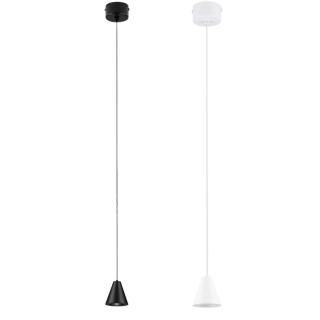
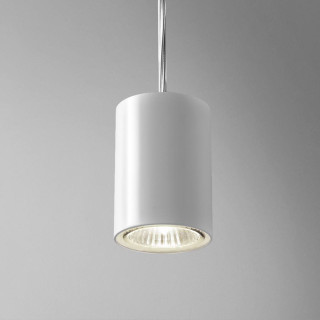
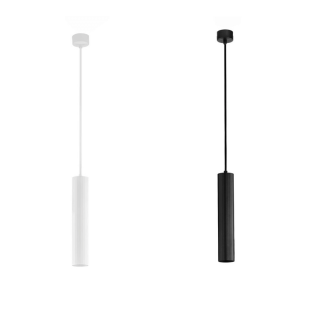
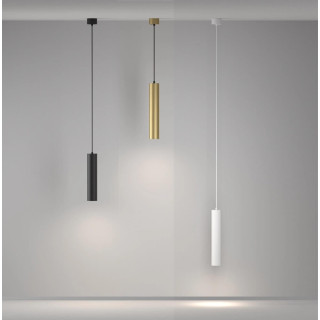
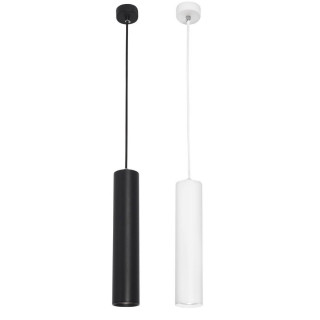
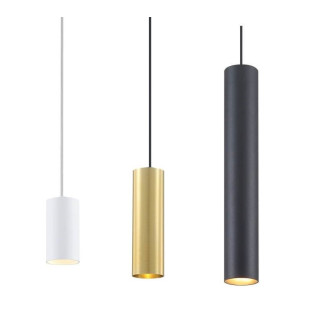
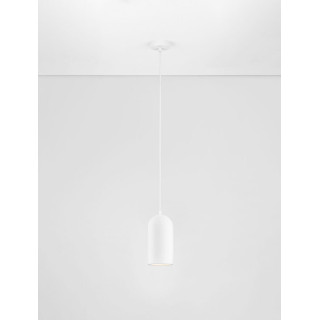
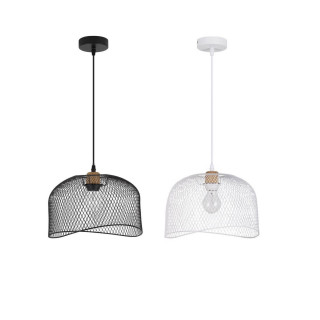
In this category you’ll find: white pendant lights over the table, white pendants over the island and countertop, white lighting for the kitchen, living room, and bedroom, white loft-style pendants, modern white chandeliers, white LED pendant lights, fixtures in opal glass, metal, ceramic, and fabric, plus models with wood or gold accents. From minimalist tubes, linear pendants, and rings to decorative shades and multi-light compositions—choose the right lamp for you from our wide selection.
There are 406 products.
sortSort by:
White pendant lights (suspension fixtures) are among the most versatile lighting solutions for both residential and commercial spaces. White visually “lightens” the ceiling, brightens the overall arrangement, and pairs effortlessly with almost any style—from Scandinavian and Japandi, through modern minimalism, to modern classic or soft loft. The key advantage of white fixtures is practical: in many designs, white supports more even light distribution and reduces any sense of visual heaviness—especially in smaller rooms or spaces with lower ceilings.
In this category, you will find white pendant ceiling lights for kitchens, dining rooms, living rooms, bedrooms, and hallways: single pendants, 2–3 light sets for kitchen islands, linear fixtures for dining tables, opal glass shades, directional metal forms, and contemporary LED constructions. Our range includes lights selected to match both function and application, with high-performance parameters—so that once installed, the light feels comfortable, looks refined, and aligns with the way you live.

A reliable starting point is 75–90 cm (30–35 in) from the countertop/tabletop to the bottom edge of the fixture. This range typically provides effective task illumination while maintaining comfortable sightlines across the space.
For living rooms, bedrooms, and dining areas, the most common choice is 2700–3000K (warm and inviting). For kitchens and multi-purpose zones, 3000–4000K is preferred (crisper, yet still “residential” in feel). In open-plan interiors, many opt for 3000K as a safe, cohesive compromise.
If the island is used for food prep, a practical target is approximately 2000–4000 lm total from the entire pendant set (depending on island size, countertop colour, and supplementary lighting). As a starting benchmark, individual pendants often fall around 450–800 lm per fixture.
CRI (Colour Rendering Index, max. 100) indicates how naturally colours appear under a light source. The higher the CRI, the more accurate and vivid materials look. For kitchens, dining spaces, and mirror zones, choose high-CRI sources (often CRI 90)—the difference is genuinely noticeable on food, wood, textiles, and skin tones.
Often yes—particularly when the fixture includes a diffuser (opal glass, frosted cover, fabric). Softer light means less glare and gentler shadows, delivering noticeably better comfort in the evening.
A white fixture avoids heavy contrast against the ceiling, so the room reads lighter and more open. This is especially beneficial in apartments where the kitchen and living room share one visual field: white pendants don’t “slice” the space, yet still allow you to zone it functionally through light.
Changing chairs, textiles, wall colours, or accessories rarely forces a lighting replacement—white remains a neutral, elegant backdrop. It is a choice that ages well and rarely looks dated.
A common misconception is that white pendants are “too delicate” to perform. In reality, performance is determined by technical parameters: lumens, optics, beam angle, diffuser, colour temperature, and CRI. White supports the aesthetics; the technology delivers the function.

Ask one question: is the fixture meant primarily to illuminate work (kitchen), set atmosphere (dining/living), or do both (open-plan zones)?
Practical rule of thumb:
This is the stage that most strongly impacts satisfaction after purchase:
A fixture that is too small disappears; too large overwhelms. Incorrect suspension height can undermine even a great design. If you are uncertain, choose a model with an adjustable cable length and set the final height after the table/island is positioned.
Precision matters in the kitchen. Choose pendants that direct light onto the work surface and minimise glare. White fixtures look excellent with light cabinetry, but they also “clean up” the visual field when paired with wood, stone, or porcelain tiles.
Choose these features when performance is the priority:
This depends on island length and shade diameter. Two larger pendants can feel more premium and minimalist; three slimmer ones create a more even rhythm on longer islands.
Quick guide:
Keep equal intervals, leave margins at the island ends, and avoid placing fixtures too close to the edge (to prevent light spilling onto the floor). In practice, combining pendants with under-cabinet lighting often wins—reducing shadows and improving task clarity.
How to size lumens without ending up “too dim” or “too office-like”
In kitchens, readability and uniformity matter more than a single ultra-bright source. Aim for the right total output across the zone (pendants + other sources). Light surfaces typically require fewer lumens than dark countertops and cabinetry.
Dining lighting should flatter food and faces without glare. The most common choices are 2700–3000K and dimming, because dinner and working at the table require different scenes.
Check whether the light source is visible from a seated angle. A diffuser (opal/frosted glass) and correct suspension height typically solve the issue. In practice, opal white shades are among the safest, most comfortable dining choices.
It can be, but it does not have to be. The most comfortable setup is layered: general + task + accent. This prevents harsh “overhead-only” lighting at night and gives you flexibility throughout the day.
White pendants support this approach well—light and clean by day, and scene-friendly at night:
Consistency of colour temperature is essential when both zones are in the same line of sight. Many interiors benefit from a unified 3000K, then create evening ambience via dimming and additional layers of light.
Comfort is the priority. Choose shades that diffuse light and avoid sharp “hot spots” on ceilings or walls. For a hotel-like effect, consider pendants on either side of the bed—cleaner bedside tables and light positioned closer to reading height.
Most people prefer 2700–3000K to support evening wind-down. For reading, good optics and glare control matter more than moving to a colder colour temperature.

Matte, satin, or gloss?
Lacquered metal, opal glass, ceramics, fabric
White pendants by interior style
Lumens describe total light output. Two similar shades can feel completely different if one uses a diffuser (more ambient spread) and the other is downlight-focused. Always interpret lumens with the fixture’s optics and the zone’s function.
Practical interpretation:
If you want consistency in open-plan spaces, select one temperature and build scenes through dimming and secondary layers.
CRI describes colour fidelity. Higher CRI delivers richer wood tones, more appetising food presentation, and more natural skin appearance. For a premium feel in kitchens and dining areas, treat CRI as a priority parameter.
Whether light is a soft glow or a defined beam depends on:
Choose if you value flexibility:
Choose if you want:
In both cases, focus on: stable dimming, low flicker, consistent colour, and strong CRI.

Above a kitchen island: 75-90cm from countertop to the bottom of the fixture. For higher ceilings, raise slightly to maintain proportion.
Above a dining table: 75-90cm from tabletop to the bottom of the fixture. Large, heavy shades typically hang higher; slim fixtures can sit lower without blocking sightlines.
In circulation areas (hallway, walkways, bedside routes): maintain safe clearance—commonly around 213 cm from floor to the lowest point of the fixture.
Spacing multiple pendants over an island: avoid crowding. Typical centre-to-centre spacing is often 60–75 cm, adjusted for shade diameter and island length.
Does dimming matter for white pendants?
Yes. White fixtures often act as a clean architectural form used across multiple situations. Dimming lets you transition from functional to atmospheric without changing the fixture—especially valuable in open-plan kitchen/living spaces.
1. Choosing purely for looks—ignoring optics and specs
Check lumens, Kelvin, CRI, dimming, and shielding.
2. Glare above the table or island
Choose a diffuser or deeper shade, set proper height, and use dimming.
3. One pendant as the only living-room light
Use layering: at least general + task + accent.
4. Too cool a colour temperature in relaxation zones
Use 2700–3000K in living/bedroom; if you standardise one value in open-plan, choose 3000K and rely on dimming.
5. Incorrect scale and proportions
Match diameter/length to the table and room volume; when in doubt, choose adjustable suspension.

1. What height should white pendant lights be hung above a kitchen island?
In most interiors, the sweet spot is 75–90cm from the countertop to the bottom edge of the fixture. If you have higher ceilings or taller household members, hang them slightly higher to preserve sightlines and avoid glare—especially when seated on bar stools.
2. What spacing should you keep between white pendants over an island?
A solid starting point is 60–75cm centre-to-centre between fixtures. Also keep a visual and functional margin: 25–38cm from the island edge to the centre of the outer pendants. This creates a balanced, safe, and symmetrical layout.
3. How many white pendants over an island: two or three?
Most commonly, two larger pendants work best over short-to-medium islands, while three smaller pendants suit longer islands. A simple method: set side margins (25–38cm) first, then “fill” the centre using an even spacing of 60–75cm.
4. What height should a white pendant be hung above a dining table?
Typically 75-90cm from the tabletop to the bottom of the fixture. If the shade is large and wide, hang it slightly higher; if it is slim and does not block sightlines, it can sit lower—provided it does not create direct glare.
5. How do you choose the right size of a white pendant for a table or island?
For a rectangular table, a linear pendant usually looks best at around 2/3 of the tabletop length. For a round table, a safe guideline is a fixture diameter clearly smaller than the table diameter—often at least ~30 cm less—to keep the composition visually light.
6. How many lumens should white pendants provide above an island and above a table?
For an island used for food prep, aim for roughly 2000–4000 lm total from the full pendant set. As a starting point, a single pendant often falls in the 450–800 lm range (more if you do not have additional task lighting). Over a dining table you usually need less—especially with dimming—because comfort and low glare matter more than maximum brightness.
7. Which LED bulb works best for a white pendant (E27/GU10)?
Focus on lumens and colour temperature, not wattage. For most residential pendants, 450–800lm is a common working range; for stronger kitchen task light, you can go higher. Choose a bulb clearly labelled 2700K/3000K and, if you plan to dim, ensure it is explicitly dimmable.
8. 2700K, 3000K or 4000K—which colour temperature is best for white pendants?
For most homes, 3000K is the most universal: still warm, yet crisp enough for kitchens. For living rooms, dining rooms, and bedrooms, many prefer 2700–3000K for a softer atmosphere. 4000K is typically reserved for strictly task-oriented zones where maximum visual clarity is the priority.
9. What CRI (Ra) should you choose for white pendant lights?
For kitchens and dining spaces, CRI 80 is a practical minimum. If you want a more premium result, choose CRI 90—the improvement is especially visible on food, wood, textiles, and skin tones.
10. How can you avoid glare and flicker, and choose the right dimming for white pendants?
To reduce glare, choose a shade with a milky/opal diffuser or a design that shields the light source (the bulb should not be directly visible in your seated line of sight). Flicker during dimming most often comes from incompatibility between the bulb/driver and the dimmer—or from insufficient load. Use an LED-compatible dimmer and dimmable LED sources, and if needed set a minimum dimming level so output remains stable.

White pendant lights combine visual lightness with high functionality. They are neutral, timeless, and exceptionally practical for lighting design: elegant by day, and capable of creating calm, atmospheric scenes at night. The best choice is the one that balances form with performance—appropriate lumens, consistent colour temperature, high CRI, comfortable diffusion, and (where it makes sense) dimming.
If you want to buy once and enjoy peace of mind for years, select white pendants for function first, and style second. This approach ensures the light performs from day one—during cooking, at the table, while relaxing, and throughout everyday routines.
See also:
check_circle
check_circle