Recent Articles

Solar LED Wall Lights

Solar LED Wall Lights – Modern Outdoor Lighting Without Cables

Solar LED wall lights are one of the most practical outdoor lighting categories for customers who want to combine easy installation, modern design, and independence from mains power. These fittings charge during the day using solar energy and automatically use the stored power after dark to illuminate the entrance, terrace, fence line, garage wall, garden structure, or facade of the house. In practical terms, this means simpler installation, no wiring, and far greater flexibility in planning light around the property.

Today, customers are no longer shopping for “just a solar lamp.” They are looking for a solution that works in a specific location and solves a specific problem. Sometimes the goal is to brighten the entrance area after dark. Sometimes it is about safer movement along the driveway. In other cases, it is about adding a subtle architectural lighting effect to the exterior without increasing electricity use. That is exactly why solar LED wall lights have become such a popular choice for modern homes, terraces, pergolas, pathways, fences, and other outdoor living areas.

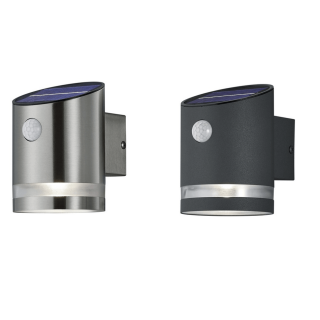
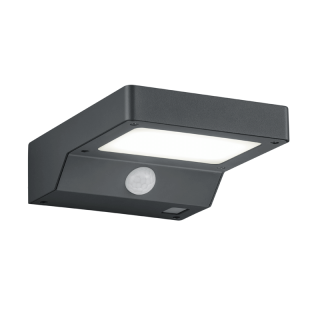
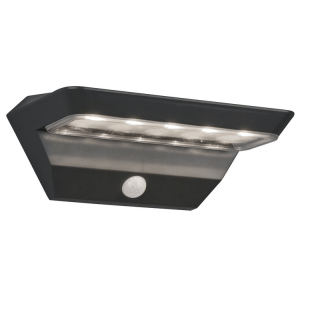
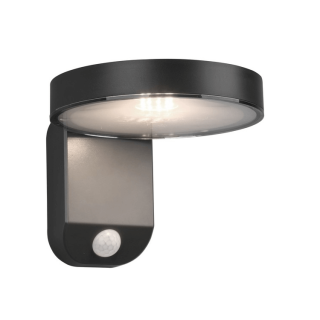
There are 5 products.

Showing 1-5 of 5 item(s)

Why Choose Solar LED Wall Lights

The biggest advantage of solar LED wall lights is complete freedom from mains wiring. There is no need to chase walls, run cables, or add a dedicated electrical point exactly where the fitting needs to go. This makes them especially attractive for finished buildings, facade upgrades, terraces, garden walls, and any area where conventional wiring would be expensive, inconvenient, or simply unnecessary.

A second major benefit is low operating cost. Because a solar wall light uses energy collected from sunlight, it does not rely on daily power consumption from the home’s electrical system for normal operation. For the customer, that means practical outdoor lighting without the usual running costs associated with conventional wall lights.

The third key strength is ease of use. A well-designed solar LED wall light charges during the day and activates automatically after dark. Many models also include a motion sensor, allowing the fitting to boost brightness only when someone approaches. This means a single product can deliver decorative light, orientation lighting, and practical task lighting in one compact solution.

A fourth reason to choose this category is application flexibility. Solar wall lights work well not only at the main entrance, but also on terraces, garden walls, side passages, fence sections, garage elevations, pergolas, and other exterior zones where quick installation and independent operation are a clear advantage.

How Solar LED Wall Lights Work

The operating principle is straightforward, and that simplicity is part of the appeal. During daylight hours, the solar panel captures energy from the sun and transfers it to a rechargeable battery. Once ambient daylight drops in the evening, the fitting uses that stored power to run the integrated LED light source. That is why a solar wall light can function without a fixed electrical connection.

In more advanced models, the system also works with a dusk sensor and a PIR motion sensor. The dusk sensor ensures the light activates only when natural light levels are low enough. The motion sensor helps manage energy more efficiently by increasing brightness only when movement is detected nearby. In practical use, that means the light can provide a gentle night-time glow and then switch to a stronger output when someone walks up to the door, gate, or garage area.

This is an important distinction from older, low-performance solar products. Modern solar LED wall lights are no longer limited to purely decorative use. Depending on the model, they can provide ambient light, accent lighting, pathway guidance, or functional entrance illumination.

What Really Determines the Quality of a Solar LED Wall Light

In this category, it is not enough to judge a product by appearance alone. Two fittings may look similar in a product photo yet perform very differently in daily use. Quality is defined by the way the full system works together.

Solar Panel

The panel is responsible for charging performance. A better panel captures daylight more efficiently and helps the fitting build up a more reliable energy reserve during the day. In real terms, that translates into more dependable evening performance and better results in less-than-perfect weather conditions.

Rechargeable Battery

The battery stores the collected energy and determines how consistently the light can perform after sunset. For the customer, what matters most is not just the number printed in the specification, but whether the fitting has been properly engineered as a balanced system where the panel, battery, LED, and control logic work together effectively.

Integrated LED

Integrated LED is the natural choice for solar lighting because it uses energy efficiently, reaches full brightness quickly, and works particularly well with motion detection and automated operating modes. It is also one of the key reasons why solar wall lights have moved far beyond being simple decorative accessories.

Motion Sensor and Operating Modes

Many customers now actively look for models with PIR motion detection because they offer greater convenience and more efficient energy management. It is also worth paying attention to operating modes. Some products switch on only after dark, some activate only when movement is detected, and others combine a low-level background light with a temporary full-output boost.

Housing Quality and IP Protection

An outdoor fitting must withstand rain, dust, and changing weather conditions. That makes housing material, finish quality, and IP rating especially important. In the solar wall light category, IP44 is very common, while some more technical or performance-led models offer higher protection levels for more exposed locations.

Where Solar LED Wall Lights Work Best

One of the biggest strengths of this category is how versatile it is. Solar LED wall lights can be used in many areas around the home, but they perform best where light is needed on or near a wall surface and wiring would be inconvenient or unnecessary.

At the Main Entrance

This is one of the most popular applications. A solar wall light can improve visibility around the doorway, make access easier after dark, and create a more welcoming entrance zone.

On Terraces and Outdoor Living Areas

Solar wall lights work especially well on terraces, pergolas, and walls around outdoor seating areas. They can create a pleasant evening atmosphere without the need for a dedicated power connection.

By Gates, Fence Sections, and Pathways

This is an excellent use case for orientation lighting or sensor-based illumination. Motion-sensor models are especially practical because they light the area only when someone is actually moving through it.

Near Garages and Side Entrances

More compact, technical-style fittings work particularly well in these areas. Here the focus is less on decorative effect and more on everyday practicality, visibility, and ease of access.

Around House Numbers and Facade Features

Solar LED wall lights are increasingly selected for their architectural value as well. The right fitting can enhance the exterior of the building while also improving visibility around the house number or key access points.

How to Choose the Right Solar LED Wall Light

A good buying decision should not begin with price or finish alone. It should start with a few practical questions that help define the right type of fitting for the intended use.

1. Do You Need Decorative or Functional Light?

This is the first and most important decision. If the goal is to create atmosphere or gently highlight a wall surface, a softer-output fitting may be enough. If the light needs to illuminate an entrance, gate, or garage area properly, a stronger model with motion detection is usually the better choice.

2. What Are the Sunlight Conditions Like?

Solar technology performs best where the panel receives regular daylight exposure. If the fitting is being installed under a deep overhang or on a heavily shaded side of the building, charging performance will naturally be lower. This is one of the most important factors to assess before purchase.

3. What Level of Protection Do You Need?

For sheltered exterior positions, IP44 is often sufficient. If the fitting will be installed on a more exposed wall or in an area subject to heavier rain and dirt, a more robust protection level is the safer option.

4. Do You Need Motion Detection?

If the fitting is meant to serve a practical purpose and activate only when somebody approaches, a PIR-equipped model is worth choosing. If the light is mainly intended for ambient background use, a simpler dusk-operated fitting may be enough.

5. What Style Suits the Building?

Contemporary homes usually work well with clean-lined geometric fittings in black, graphite, or anthracite. More traditional settings may benefit from softer shapes or more decorative forms. In this category, style matters because the fitting becomes a visible part of the exterior architecture.

The Most Popular Types of Solar LED Wall Lights

This category is broader than many customers initially expect. In practice, it can be divided into several key buying groups.

Solar Entrance Wall Lights

These are designed primarily for doorway and access areas. They usually provide downward or softly diffused light to improve visibility around the entrance.

Solar Wall Lights with Motion Sensor

This is one of the strongest subcategories because it combines cordless solar convenience with automatic response to movement. These fittings are especially popular at entrances, gates, garage walls, and transitional outdoor spaces.

Solar Facade and Up-and-Down Wall Lights

These are ideal for customers who want to combine practical light with a stronger architectural effect on the wall surface. Up-and-down beam patterns work particularly well on modern exteriors.

Compact Technical Solar Wall Lights

These are more practical, performance-driven fittings intended for side zones, service areas, garages, and utility spaces. Here the priority is straightforward function, durability, and easy installation.

The Most Common Buying Mistakes

One of the most common mistakes is assuming that every solar light will work equally well in any location. In reality, sunlight exposure plays a crucial role. Even a strong product will not perform at its best if the panel remains shaded for most of the day.

Another mistake is choosing a model based only on its appearance. A visually attractive fitting may still be the wrong choice if the light output is too low, the battery is too small, or the operating mode does not match the intended application.

A third issue is mismatching the product to the actual use case. A customer who needs proper entrance lighting should not choose a purely decorative accent fitting. On the other hand, someone creating atmosphere on a terrace does not necessarily need a highly technical security-oriented model with aggressive motion-trigger behaviour.

Solar LED Wall Lights and Energy Efficiency

Solar LED wall lights genuinely help reduce day-to-day operating costs, but it is important to understand why. Their value is not only that they are “eco-friendly.” Their real strength is that they use free solar energy, do not require continuous mains power, and work efficiently with LED technology and automatic controls. That makes them a practical solution wherever conventional wired lighting would be less convenient or less economical.

This is especially relevant in detached housing, terraced homes, terraces, entrance zones, and all those places where light is needed regularly but does not necessarily need to be tied into a permanent electrical installation.

What to Know Before Buying – Practical and Honest

A solar LED wall light is not a direct replacement for every wired exterior fitting. If the application requires very strong light output for long periods in all weather conditions, a mains-powered product may still be the better solution. Solar lighting has natural limitations linked to daylight availability, battery capacity, and operating mode.

At the same time, modern solar wall lights are far more advanced than they were a few years ago. Better panels, more efficient LEDs, improved battery performance, smarter operating modes, and cleaner design language have turned this into a genuinely usable lighting category rather than a purely seasonal add-on. That is why it makes sense to view these products as complete lighting systems rather than simple decorative gadgets.

FAQ – Frequently Asked Questions

Does a solar LED wall light need to be connected to electricity?

No. A standard solar wall light operates without a fixed mains connection and uses energy collected during the day.

Do solar LED wall lights stay on all night?

That depends on the model, the battery capacity, the amount of sunlight received during the day, and the selected operating mode. Some provide low-level light for longer periods, while others switch to full brightness only when motion is detected.

Are solar wall lights suitable for facades?

Yes. This is one of the most common uses for the category, especially where running cables would be impractical or unnecessary.

What IP rating is best for outdoor use?

For sheltered positions, IP44 is often sufficient. In more exposed conditions, a higher level of protection is usually the better choice.

Is a motion sensor worth having?

Yes, if convenience, functionality, and more efficient night-time energy use are priorities. Motion detection is one of the most requested features in this category.

Do solar LED wall lights work in winter?

They can, but they usually operate for shorter periods than in summer because winter days are shorter and daylight levels are lower.

Are these lights suitable for terraces?

Yes. They are a very practical option for terraces, pergolas, and outdoor seating areas, especially where cable-free installation is a benefit.

Are solar wall lights only for modern homes?

No. While modern designs dominate the market, there are also more neutral and decorative options that work with a wider range of architectural styles.