Top 7 Stone Wall Lights – 2026 Ranking
10/17/2026 18:33:51
Filter By
Filter By
BLOG

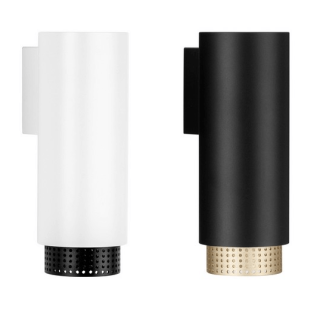
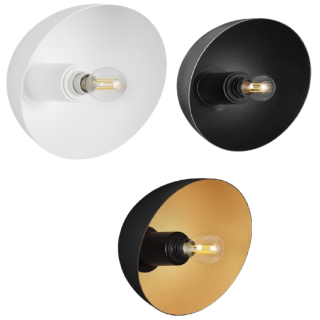
White LED wall sconces are the most versatile wall lights: they suit modern interiors, Scandinavian schemes, japandi, and classic spaces. They deliver light exactly where it’s needed — by the bed for reading, next to a bathroom mirror, on an accent wall in the living room, or in a hallway as subtle “evening” lighting.
In this category, you’ll find both wall sconces with an integrated LED module and fixtures designed for LED bulbs—and that distinction matters, as it affects how easily you can replace the light source and how precisely you can tailor the brightness, colour temperature, and overall lighting effect.
There are 467 products.
sortSort by:
If you’re looking for a white LED wall light, a wall sconce is usually the most convenient option: it provides functional or decorative illumination without taking up any floor space.
White wall lighting has an immediate advantage: it never feels heavy, pairs effortlessly with wood, black accents, gold details, beiges, and concrete, and in smaller rooms it helps the space feel lighter and more open. A white LED wall sconce can be both discreet and highly practical—making it ideal as:
If you value a clean, uncluttered look, an LED wall sconce is a streamlined solution: it takes up less space than floor lamps, and the effect is often more architectural.

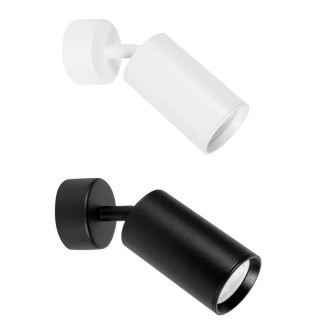
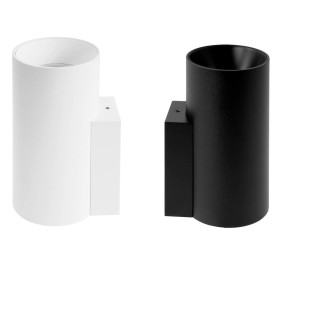
If you love crisp, “architectural” accents, choose white wall lights with a narrower beam (often directional GU10 styles). They work beautifully on textured finishes such as concrete, brick, microcement, slatted panels, or decorative plaster—because the light creates sharper highlights and shadows, bringing the surface to life.
Tip: use them as a repeated rhythm along a corridor, or as accent points on a feature wall (TV wall, artwork wall, stair wall).
If you want to make the right choice without scrolling through hundreds of models, go through these five points:
Note on terminology: in everyday shopping, wall lights, wall lamps, and wall sconces are often used interchangeably. On this page, we use wall sconce to mean a wall-mounted fixture that complements ceiling lighting, helps light key zones (bed, mirror, hallway), and creates a calmer, more premium evening mood.
Bedroom / for reading → directional or adjustable sconces (comfortable, glare-controlled light)
Bathroom / mirror → linear forms and diffused light, with an IP rating matched to the zone
Living room → Up & down beams, indirect glow, feature wall accents
Hallway / stairs → repeated rhythm for safe, comfortable wayfinding
Integrated LED → ready-to-go parameters, slim design
Fixture for LED bulbs (e.g., GU10 / G9 / E14 / E27) → easier to change colour temperature/brightness and “dial in” the desired effect
This is one of the most common use cases: a bedside sconce keeps the space tidy (no table lamp needed) and directs light exactly onto your book. Look for models that are:

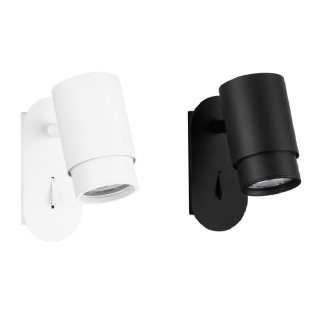
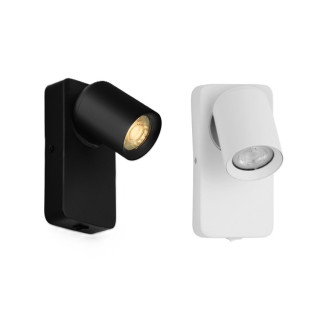
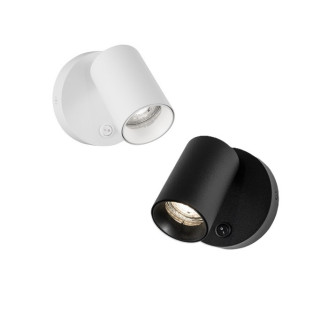
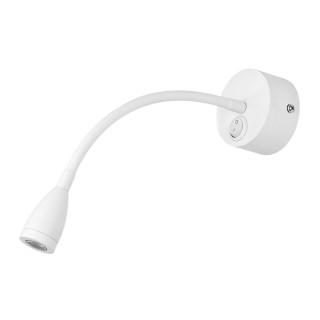
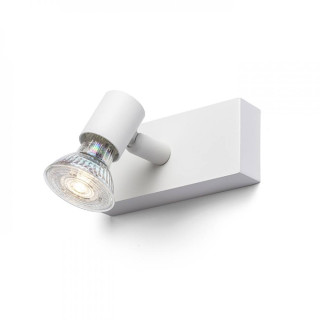
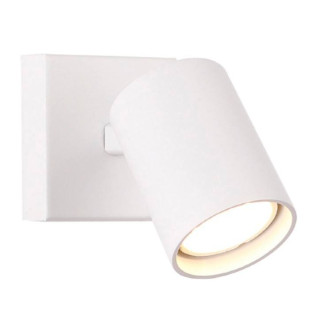
An adjustable reading wall sconce — directional light and comfort without illuminating the whole bedroom.
When it comes to mirror lighting, one thing matters most: the light should be even and comfortable, without harsh shadows on the face. That’s why the best options are typically:
If the fixture is installed in an area exposed to moisture and splashes, it’s worth choosing IP44 or higher—especially in the washbasin and mirror zone. The protection rating should always be selected based on the exact placement of the fixture and the real conditions in the bathroom.
The mounting height above a mirror is often given as a guideline of around 170–180 cm from the floor, but it’s best to adjust it to the users’ height and eye level.

White LED wall light above the mirror – even illumination and the right IP rating for the bathroom.
Up & down is a simple trick for a “designer” wall: two beams (upwards and downwards) emphasise plaster texture, slats, or an accent wall. It’s a great choice for:
In this category you’ll find both integrated-LED up & down models and versions for LED bulbs (e.g., 2×GU10) — choosing the bulbs gives you extra control over the effect and the beam pattern.

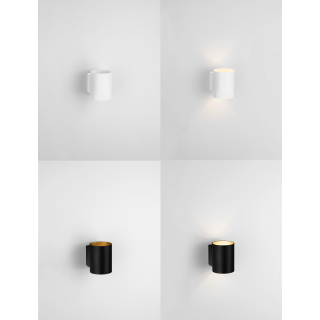
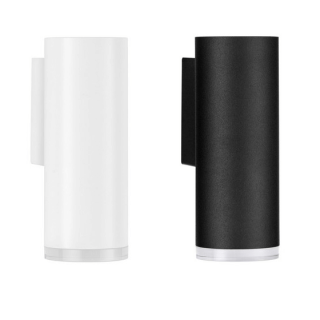
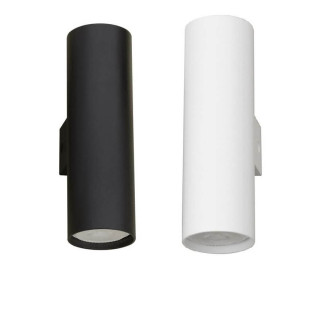
An Up & down wall sconce creates a premium effect — light beams structure the wall and add depth.
If you want a more “architectural” effect rather than a single point of light, elongated wall sconces work particularly well:
If a wall sconce is meant to replace a bedside lamp or the light is meant to “work” (reading, working, relaxing), adjustability is a real advantage: you can aim the light exactly where you need it instead of illuminating the entire room.
This category includes both solutions, so it’s worth making the distinction clear rather than assuming every model features an integrated light source.
Choose this option if you want:
ready-set lighting parameters selected by the manufacturer,
a slim, minimal design,
a quick, hassle-free purchase: “install and you’re done.”
Choose this option if you want to:
replace the light source easily (brightness, colour temperature, beam angle),
fine-tune the lighting effect (e.g., with up & down designs),
change the character of the light without replacing the entire fixture.
Popular bulb types for wall sconces include: GU10 LED bulbs, G9 LED bulbs, E14 LED bulbs, and E27 LED bulbs.
For reading: most people aim for 300–450 lm (comfortable, “everyday” range).
For ambience / accent lighting: less is often enough—the effect matters more than raw output.
By a mirror: even distribution is more important than “lots of lumens” (to avoid harsh facial shadows).
In practice, the choice is straightforward:
warmer light for relaxing and bedrooms,
neutral light for bathrooms and everyday tasks,
cooler light for task-focused areas (if you prefer a more “crisp” light).
If the sconce is installed in an area exposed to splashes, IP44 (or higher) is a common reference point—especially when mounted near a mirror.

Wall sconces guide with light — a few fixtures arranged in a rhythm deliver both function and aesthetics.
Too much glare: choose a diffuser, indirect light, or aimable heads that don’t shine into eye level.
Mirror shadows on the face: prioritise even diffusion (linear fixtures / diffusers) rather than chasing maximum lumens.
Wrong mood in the evening: for bedrooms and living rooms, warm white is usually more comfortable than cool white.
Bathroom placement without the right protection: always match the IP rating to the real splash zone.
Directional or adjustable wall sconces (with a movable head or arm) are the best choice, as they let you aim the light directly at the book while reducing glare for the person next to you. As a practical reference point for reading, around 300–450 lm is often a good target—though the distance from the light to the page and your personal preferences matter just as much.
For mirror lighting, even, diffused illumination performs best—this is why linear/elongated designs or models with a diffuser are commonly chosen. If the sconce is intended for an area exposed to moisture and splashes, pay close attention to the seal and select an IP rating appropriate for the installation zone.
It depends on the bathroom zone and whether the fixture may be exposed to water splashes. Around the washbasin and mirror, IP44 or higher is commonly selected, while areas further from water sources may allow lower ratings. The safest approach is to choose the IP rating based on the actual installation conditions.
Up & down wall sconces are ideal when you want a premium wall effect: light beams create atmosphere, emphasise texture, and visually organise long hallways or accent walls in a living room. If you mainly need task lighting, a downward-facing or directional sconce is often more practical.
White wall sconces are popular because they suit most interior styles and don’t visually dominate the space. A light-coloured finish reflects light, making a room feel brighter and more spacious. Customers value them for their versatility and how easily they pair with other décor elements, regardless of the design style.
White wall lights work well in living rooms, bedrooms, hallways, kitchens, and bathrooms. They’re a safe choice wherever you want bright, neutral lighting. In kitchens and bathrooms, simply ensure the fixture has an appropriate IP rating for the environment.
An integrated LED offers “ready-to-go” parameters and often a slimmer design. A fixture designed for LED bulbs gives you more flexibility: you can more easily change the colour temperature, brightness, and beam angle—and with Up & down designs, tailor the “light pattern” by selecting the right bulb.
That depends on the construction. A sconce with an integrated LED module is dimmable only if the manufacturer has designed it for dimming. For sconces that use LED bulbs, dimming mainly depends on whether the bulb is dimmable and whether you use a compatible dimmer.
Think in terms of rhythm and spacing. In a short hallway, two sconces placed symmetrically are often enough. In a longer corridor, several evenly spaced fixtures tend to look best—guiding the user and avoiding dark “gaps.” Start by defining the goal (orientation vs ambience), then match the number and spacing to the wall length.
In living rooms and bedrooms, a warm colour temperature is most commonly chosen to enhance a cosy atmosphere. In kitchens, bathrooms, and functional zones, a neutral colour temperature usually works better, offering clearer visibility and more natural colour rendering.
The number depends on the room size and layout. In smaller living rooms, two sconces placed symmetrically are often sufficient. In larger spaces, you can use several light points to evenly illuminate different zones.
They can partially replace ceiling lighting, especially when installed in multiple positions around the room. However, the best result usually comes from combining wall sconces with other light sources to create layered lighting that is both functional and comfortable.
The most popular styles are minimalist white sconces with clean lines, which work well in modern and Scandinavian interiors. Models with subtle detailing or a lightly satin finish are also frequently chosen, adding elegance without feeling visually heavy.
To maintain a clean appearance, dust the fixtures regularly with a soft cloth. For marks or stains, use gentle cleaning products and avoid harsh chemicals that could damage the surface finish.
See also:
check_circle
check_circle