- remove_red_eye 5 views

Why does a stone wall light work so well in a modern interior?
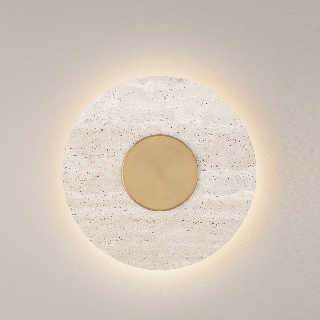
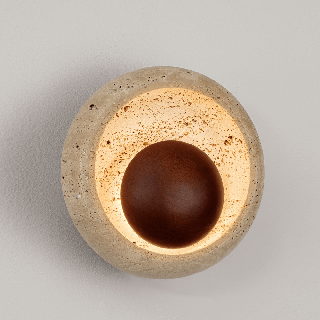
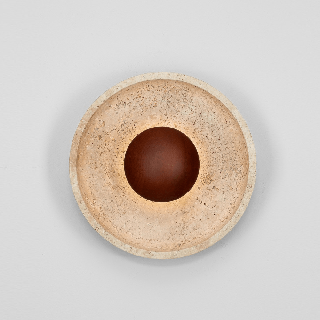
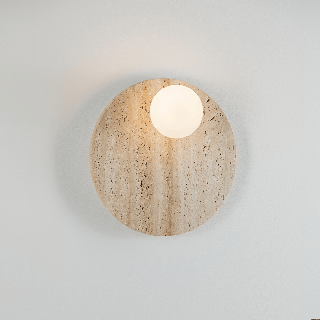
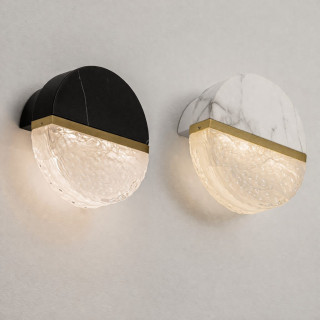
A circular shape softens the geometry of rectangular furniture, doors and architectural wall divisions. Stone adds natural irregularity through its unique veining and texture, eliminating the need for additional decorative ornament.
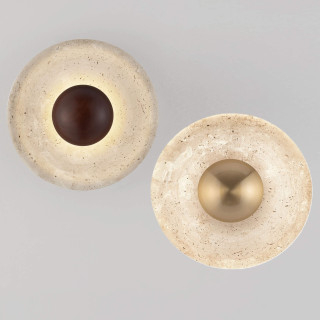
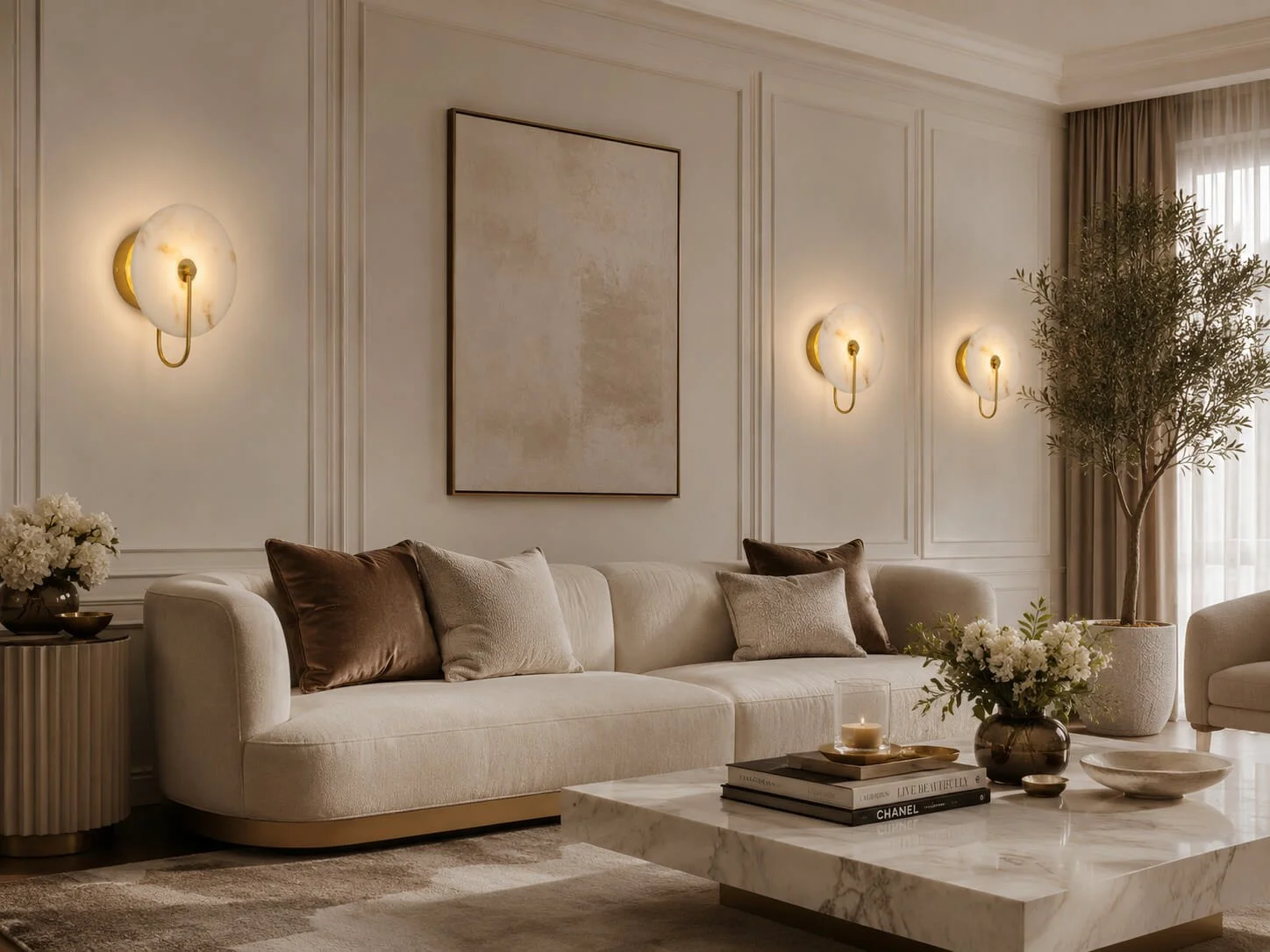
In a Japandi interior, pair a stone disc wall light with oak and linen. In a modern classic living room, choose light-toned stone combined with gold-finished metal. If the wall already features strongly veined stone cladding, opt for a lamp with a calmer pattern. This allows the natural material to stand out without making the composition feel excessive.
Alabaster, travertine or marble – which should you choose?
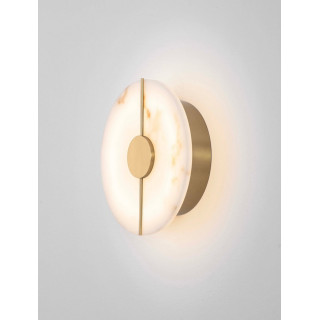
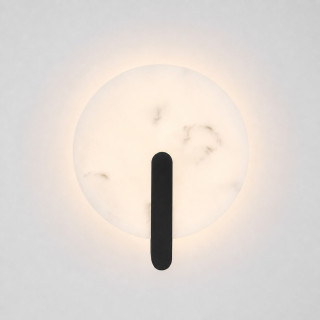
Round alabaster wall light: stone that lets light pass through
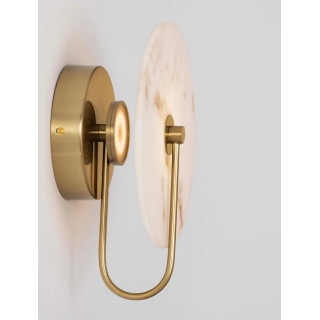
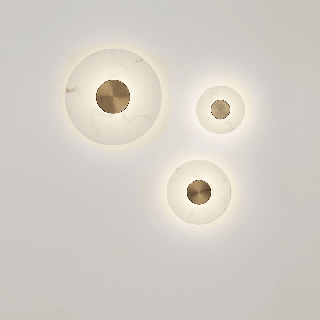
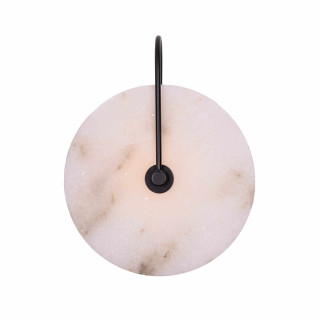
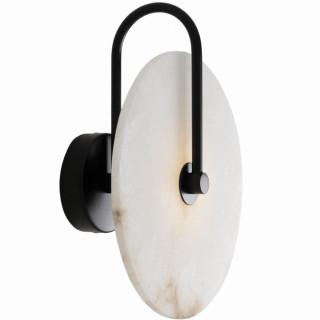
Alabaster is valued for its natural translucency. When used as an illuminated diffuser, it allows light to pass through and softly disperse across its surface, revealing the mineral structure of the stone. It is particularly well suited to bedrooms and relaxation areas. The final effect depends on the shade, thickness of the stone and the construction of the light fixture.
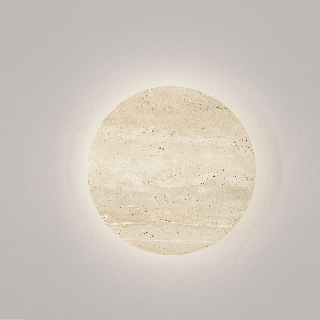
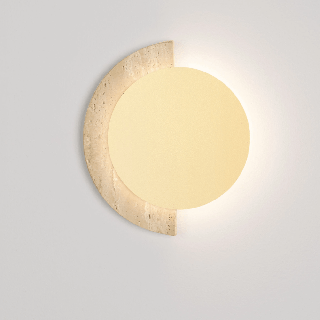
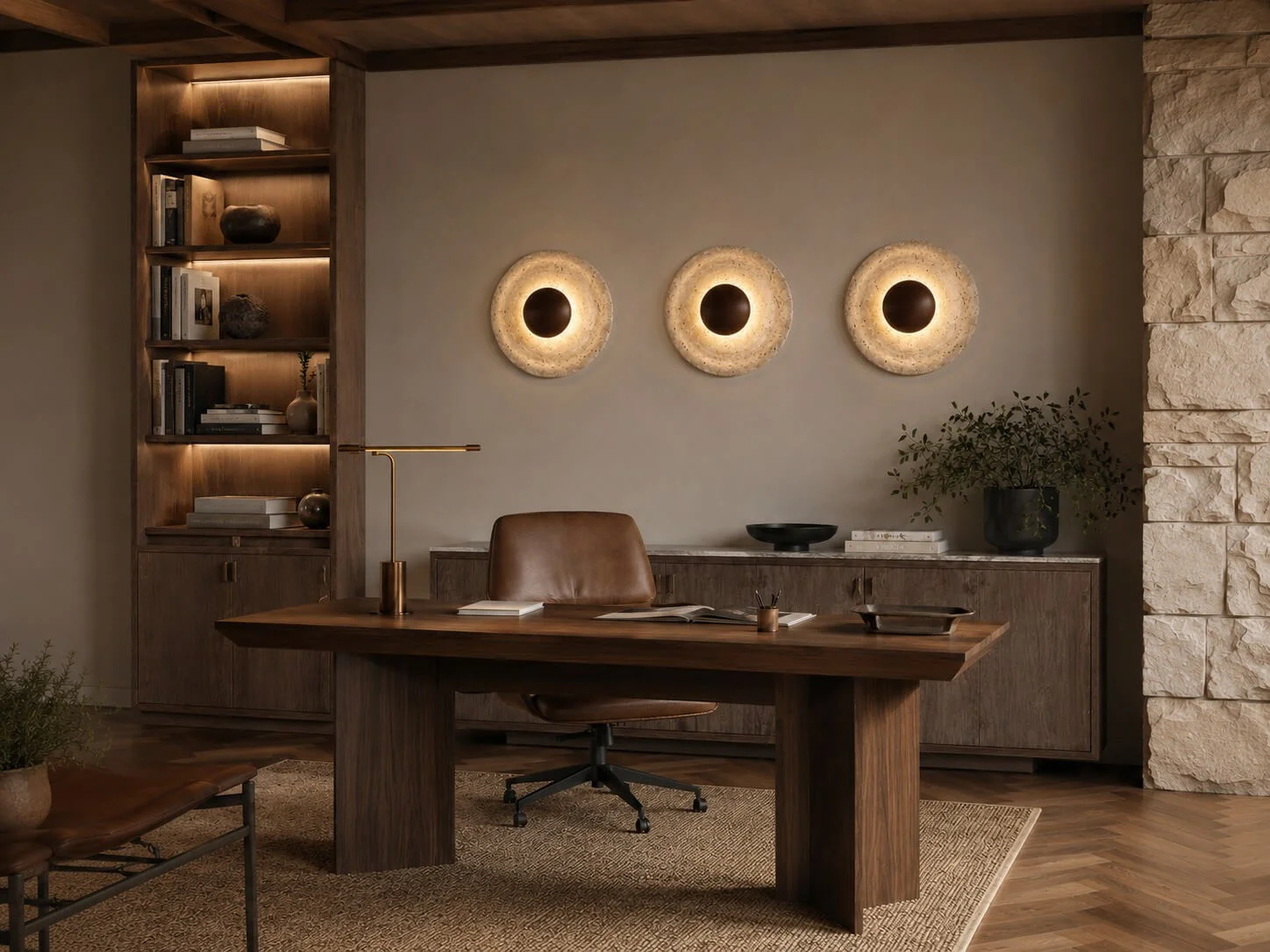
Round travertine wall light: texture and warm beige tones
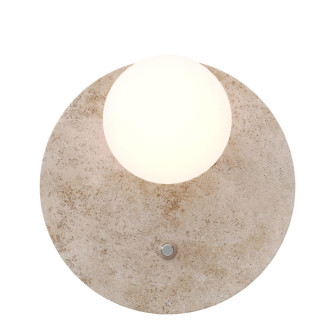
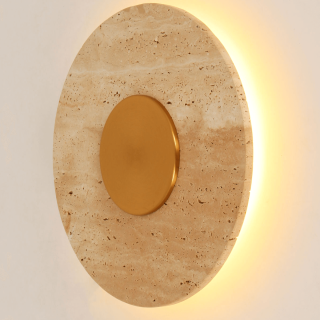
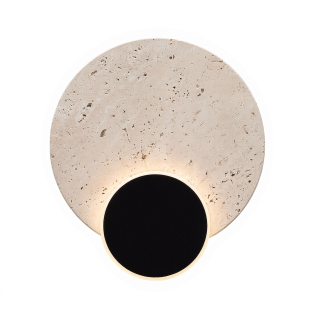
Travertine stands out because of its pores and irregular surface, while its appearance also depends on the type of finish used. Sand, cream and beige varieties combine beautifully with plaster, wood and ceramics. Choose this type of wall light if you want to introduce a clearly visible natural texture into the interior. Evaluate the lighting effect separately, as the stone disc may serve mainly as a decorative background for light emitted by other elements of the fixture.
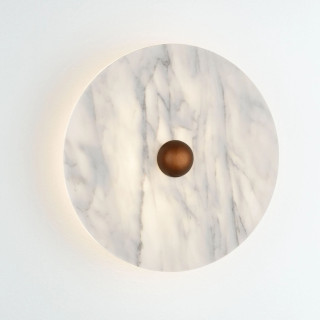
Round marble wall light: distinctive veining
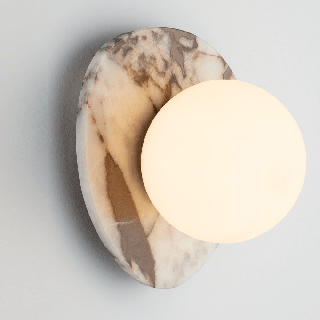
Marble works particularly well where the wall light is intended to complement a stone coffee table, fireplace or worktop. In a smaller interior, a single strongly veined element may be enough to create a striking focal point. However, do not assume that every wall light described as marble is made from natural stone. Check whether the manufacturer specifies natural marble, synthetic marble or a stone-effect finish.
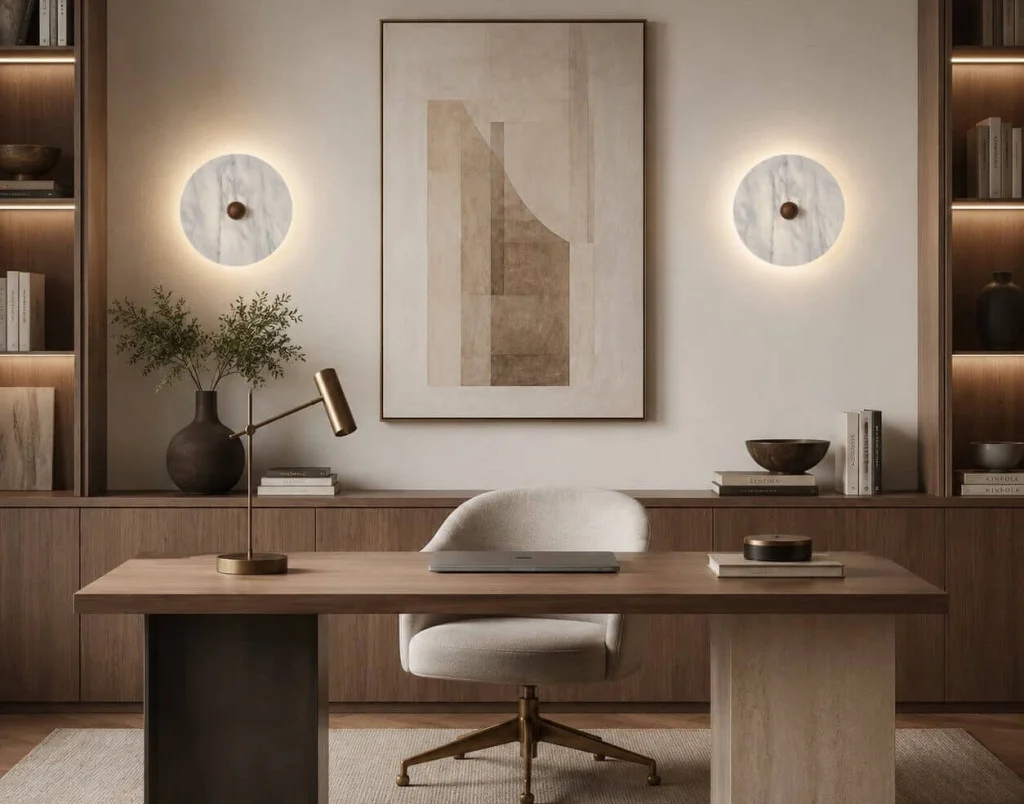
The Salon LED collection of alabaster, marble and travertine wall lights includes a wide range of material solutions. When choosing a specific model, always refer to its technical specification. Natural variations in colour and pattern may mean that two pieces of the same lamp look slightly different.
Illuminated stone or indirect glow? Check the lighting effect before buying
A photo of a switched-off lamp does not tell the whole story. An illuminated diffuser allows light to pass through its surface, while indirect light is directed towards the surrounding surfaces and reaches the room after being reflected. Depending on the design, the glow may appear behind the stone disc or around a central decorative element.
Ask for a photo of the lamp while it is switched on and compare it with the technical drawing. It is also worth checking the side view. An LED light source visible from a bed or sofa may cause discomfort even if the fixture looks impressive from the front. Visual comfort is just as important as the decorative effect.
Where should you install round stone wall lights?
In the living room, consider one larger stone disc above a console table or create a composition of two different diameters on an empty wall. Leave enough free space around the lamps so that the stone pattern remains clearly visible. If the lights are positioned near a television, check whether they may create distracting reflections on the screen.
In the bedroom, a pair of wall lights installed on both sides of the bed creates a balanced composition and frees up space on bedside tables. Adjust their position to the height of the headboard and your usual sitting position. A decorative glow may not provide enough light for reading, so if you enjoy reading in bed, consider adding a directional reading light as well.

In a hallway or entrance area, repeating circular wall lights can create a strong visual rhythm along the wall. Make sure to consider the width of the passage and how far the fixture projects from the wall.
How to choose the diameter, colour temperature and LED parameters?
Before ordering a lamp, cut out a paper circle matching its actual diameter and place it on the wall in the intended position. View the composition from the entrance and from your main seating area. This simple method helps you assess the proportions in the real space. There is no single installation height suitable for every wall light – the correct position depends on its function, surrounding furniture and the direction in which the light is emitted.
- Colour temperature: for relaxation areas, consider 2700–3000 K. A 2700 K light produces a warmer, more golden appearance, while 3000 K still provides a warm white effect. Match the colour temperature with the other light sources in the room.
- Luminous flux: compare the lumen output of different fixtures and then consider how the light is distributed. Wattage alone does not tell you how much usable light the lamp will provide.
- Colour rendering: if you want wood, fabrics and other materials to retain their natural appearance, look for a CRI of at least 90 whenever such a version is available.
- Dimming: check whether the lamp supports dimming and what type of control system it requires. An integrated LED module does not automatically mean that brightness can be adjusted.
- Installation: verify the weight of the fixture, the type of wall surface, the mounting method and the location of the electrical connection.
FAQ – frequently asked questions about stone wall lights
Can a round stone wall light illuminate an entire living room?
It can contribute to the general lighting scheme, but the final result depends on the luminous flux, light distribution, room size and interior finishes. Models designed primarily to create a soft glow should be treated mainly as decorative or ambient lighting.
Can an alabaster or travertine wall light be installed in a bathroom?
Only if the manufacturer approves the fixture for this type of use and its level of protection is suitable for the exact installation area. The type of stone alone, or even an IP44 rating, is not sufficient to determine whether a lamp is suitable for every location within a bathroom.
How should you clean a natural stone wall light?
Disconnect the power supply and allow the fixture to cool down before cleaning. Remove dust with a soft, dry cloth and follow the manufacturer's care instructions. Avoid abrasive cleaners and acidic products, including vinegar, as they may damage materials such as marble and travertine. Do not apply stone sealers or impregnating products unless specifically recommended by the manufacturer.
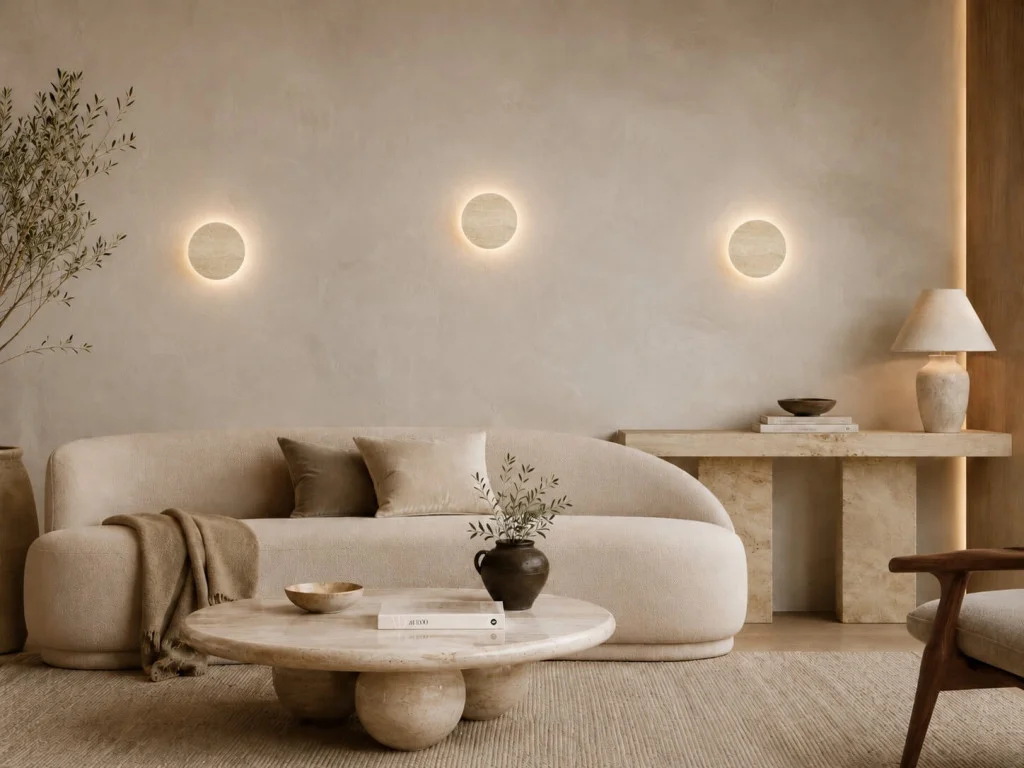
A well-chosen wall light enhances the materials used in the interior, creates atmosphere and illuminates a selected area. Explore round stone wall lights at Salon LED and compare available finishes, materials and lighting effects. If you are choosing between different sizes, prepare a photo of the wall together with its dimensions – this will make it easier to select the right fixture.