- remove_red_eye 26 views

How do wall lights create narrow lines of light?
The effect comes from the optical system: lenses, reflectors or beam-shaping screens. A narrow beam angle, such as 7° or 8°, produces a focused, elongated pattern. Mounted close to the surface, the wall light directs its output along the facade, allowing even a compact fixture to highlight a distinct architectural feature.
The term “line of light” describes the visual effect. The band may widen with distance from the fixture, while its definition depends on the optics and surface. Smooth render makes a regular outline easier to see; stone, brick and textured render reveal surface details and small shadows. Check photographs of the light in use alongside its light distribution data.
Facade wall lights shining in one, two or four directions
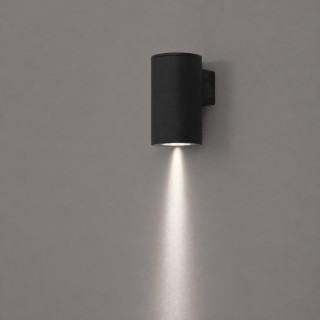
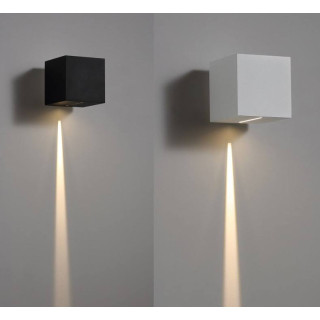
One direction – a single lighting accent
A single-direction wall light creates one slim band. It can highlight a pillar, a section beside the front door or a vertical facade feature. Choose the mounting orientation according to the fixture's instructions. Several matching lights at regular intervals create an ordered lighting pattern.
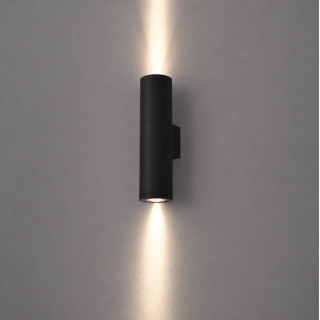
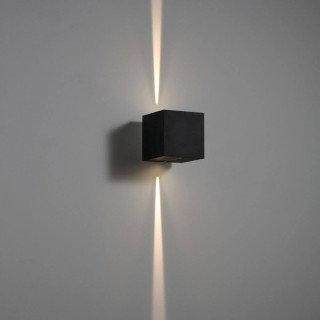
Two directions – outdoor up and down wall lights
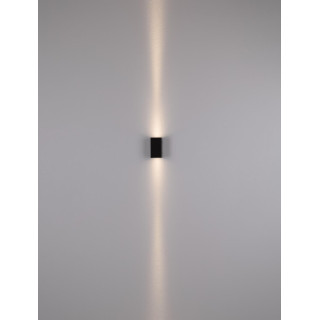
Outdoor LED up and down wall lights emit light from opposite sides of the housing. Two narrow beams create a visually elongated arrangement that complements tall windows and vertical architectural details. They suit spaces between windows, columns and entrances. “Up and down” describes the directions of light; check the beam angle separately to establish its width.

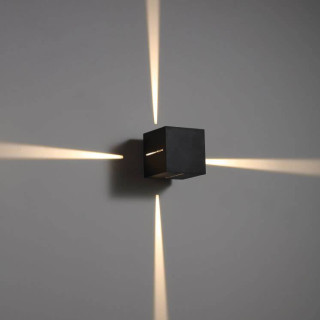
Four directions – a geometric facade pattern
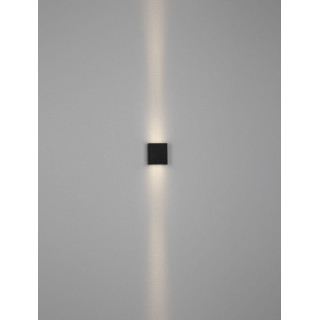
A four-direction wall light shines upwards, downwards and to both sides, creating a cross-shaped pattern. It makes a striking feature on a larger wall. When using several fixtures, plan where the bands will intersect and how close they will pass to windows. The effect works best when the geometry of the light follows the facade's architectural lines.
QUATRO, QUINTANA and TORENZA – examples from Salon LED
ELKIM QUATRO – a choice of lighting directions
The QUATRO range includes lights shining in one, two or four directions. Standard optics provide an 8° angle for each beam, while the aluminium fixtures offer warm white 3000 K light and an IP65 rating. The ELKIM QUATRO four-beam wall light creates geometric arrangements. Selected 45° and 90° beam-shaping accessories are available by individual agreement for project orders; this is not continuous beam adjustment.

LUCES QUINTANA – a slim design and focused light
The single-direction QUINTANA outdoor wall light has a 7° beam angle, a 10 W power rating and a 3000 K colour temperature. This compact model combines a black aluminium and glass body with an IP67 rating. The range also includes an up and down version for highlighting the wall in opposite directions.
LUCES TORENZA – narrow beams and three finishes
The TORENZA 12 W facade wall light combines up and down illumination with a 7° beam angle, warm white 3000 K light and IP65 protection. White, anthracite and rust-coloured finishes make it easy to coordinate with pale render, dark window frames or warm-toned facades.
How to choose outdoor wall lights for your facade
Start with the feature you want to highlight. A single band or an up and down arrangement suits a narrow pillar. A large, uncluttered wall provides more space for four-direction lighting. Position fixtures in relation to doors, windows and the building's edges, checking that cornices or window sills will not interrupt the intended lines of light.
When choosing exterior wall lights, compare beam angle, colour temperature, luminous flux and IP rating. IP65 means dust-tight protection and resistance to water jets; suitability for a particular location also depends on the manufacturer's instructions. Warm white 3000 K complements timber and beige render. Using a consistent colour temperature helps maintain a coherent appearance across the facade.

What should you check before installing narrow beam wall lights?
How high should a facade wall light be mounted?
Choose the mounting height to suit the wall's proportions and the intended length of the light pattern. Before fixing the final positions, test the effect after dark on the actual surface. This reveals the beam's reach, shadows cast by the texture and whether light enters windows or causes glare for people on the terrace.
Is a narrow line of light enough for an entrance?
A focused beam primarily highlights architecture. Around doors, steps and walkways, also provide light for the surfaces people walk on. Decorative wall lights can be combined with a fixture beneath a canopy or lights with a wider distribution.
Explore outdoor LED wall lights at Salon LED and choose the number of directions and beam width to suit your facade. Carefully planned lines of light will emphasise your home's architecture and give it character after dark.