
- remove_red_eye 18 views

How Should You Plan Lighting for a 12 m² Bedroom?
The most practical arrangement includes two independently controlled layers: ambient lighting and local lighting beside the bed. An optional third layer of indirect light can add depth to the interior and create a relaxing atmosphere.
- Ambient lighting — diffused light for dressing, tidying and everyday use of the room.
- Reading lighting — light directed onto the book, with an adjustable position and a switch within easy reach.
- Evening lighting — gentle light, preferably reflected off a wall or ceiling, with the light source concealed from view when lying down.
If you prefer fewer fittings, suitably dimmed ambient lighting can also provide evening illumination. A separate bedside light still offers greater control over the light falling on your book. For a double bed, plan independent controls on each side.
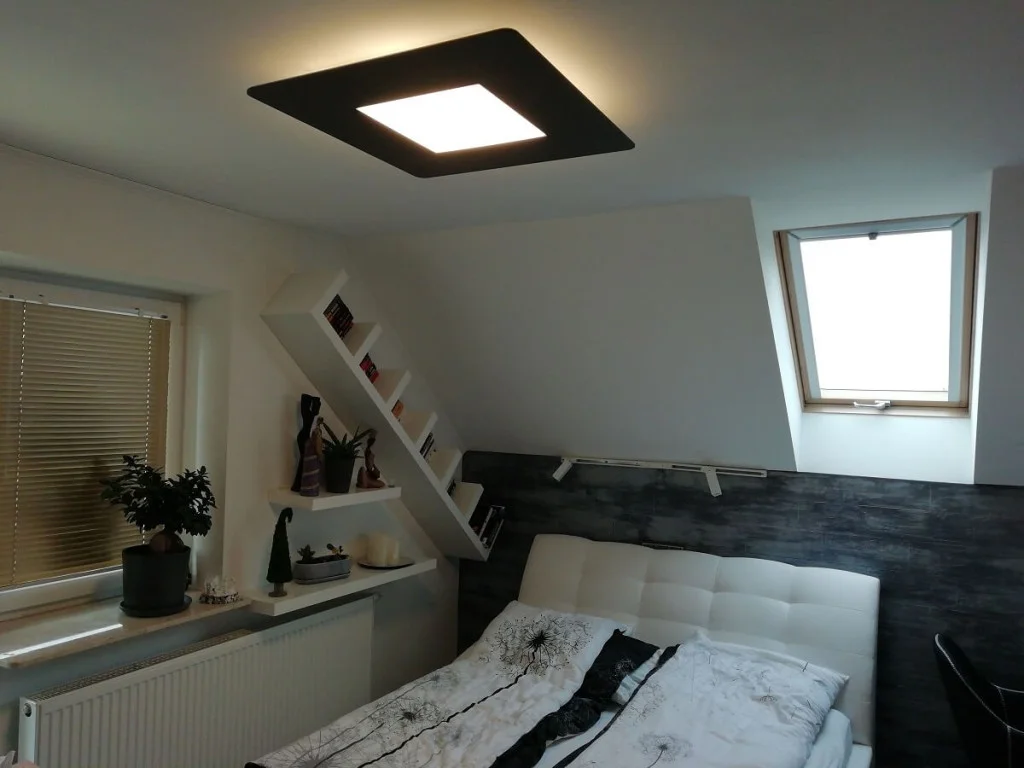
How Many Lumens Does a 12 m² Bedroom Need?
Around 1,500–2,500 lumens is a useful starting range for ambient lighting. This is an initial selection guide, not a universal requirement. The final result depends on ceiling height, wall colours, the shade or diffuser, and how the fitting distributes its light.
Light-coloured surfaces reflect more light than dark walls and furniture. Indirect lighting may also require a higher light output. Rather than adding a fixed percentage, consider the actual finishes and the positions of the fittings.
When comparing specifications, check the light output of the complete fitting, rather than just the LED module inside it. Shades, diffusers and optical components affect how much light leaves the fitting.
Lumens and Lux: What Is the Difference?
Lumens (lm) measure the amount of light emitted by a source or fitting. Lux (lx) measures the illuminance on a particular surface, such as the pages of a book.
Dividing a fitting’s lumen output by the bedroom’s floor area does not reliably tell you how much light will reach your book. Some light falls elsewhere, and some is absorbed by surfaces. Distance and beam direction also matter.
How Much Light Do You Need for Reading in Bed?
For reading, approximately 300–500 lx on the pages is a useful guide, adjusted to suit your eyesight, print size and comfort. This does not automatically mean you need a reading light rated at 300–500 lumens.
Fittings with similar lumen ratings can illuminate a book very differently. A manufacturer’s illuminance figure at a specified distance can help you assess suitability. Once the light is installed, a lux meter can be used to check the result.
Do not choose a light by wattage alone. Watts indicate electrical power consumption, rather than the brightness on the page.

Which Colour Temperature Is Better for a Bedroom: 2700 K or 3000 K?
2700 K creates a warmer, cosier effect, while 3000 K is still warm white and also works well for reading. Both are suitable for a bedroom. The choice depends on your preferences and the colours used in the interior.
For relaxing in the evening, you may prefer an even warmer colour temperature of around 2200–2700 K. However, colour temperature does not replace brightness control. Even very warm light can feel uncomfortable if it is too bright or shines directly into your eyes.
Cool white light is not essential for reading. Sufficient illumination on the page, even coverage, and reduced shadows and reflections are more important.
Does Dimming an LED Change Its Colour Temperature?
Standard dimming reduces brightness but does not necessarily change the colour temperature. If you want the light to become warmer as it dims, check whether the fitting has a dim-to-warm function.
Independent adjustment of colour temperature and brightness is a separate feature. A switch offering several colour temperatures does not mean the light is dimmable. Check both functions individually.
What CRI Should You Choose for a Bedroom?
CRI, commonly specified as Ra, describes colour rendering. Ra ≥ 90 is a good choice if you want fabrics, wood and interior colours to look natural. A high CRI does not, however, indicate light output or dimming quality.
How Do You Choose an LED Light for Evening Dimming?
First, check whether the manufacturer specifies that the light is dimmable and which control method it requires. For an integrated LED fitting, the driver is important. For a fitting with a replaceable bulb, you need a dimmable LED bulb and a compatible dimmer.
Before buying, check:
- Component compatibility — the fitting, light source, driver and controller must work together in the intended configuration.
- Minimum brightness — check how low the light can dim and whether it switches on reliably at that setting.
- Smooth operation — dimming should not produce distracting brightness jumps, flicker or buzzing.
- Convenient controls — you should be able to adjust and switch off the light from bed.
Do You Need Dimming Down to 1%?
Dimming down to 1–5% can be useful, but it does not guarantee a gentle evening effect on its own. The fitting’s maximum output, beam direction and visibility also matter. A percentage shown on a controller does not always represent the same percentage of light output.
A DALI label or wireless control feature does not automatically guarantee dimming down to 1% or flicker-free operation. Phase-cut dimming can also perform well when the components are correctly matched. Check the performance of the specific combination, including at low brightness.
Where Should You Position a Bedside Reading Light?
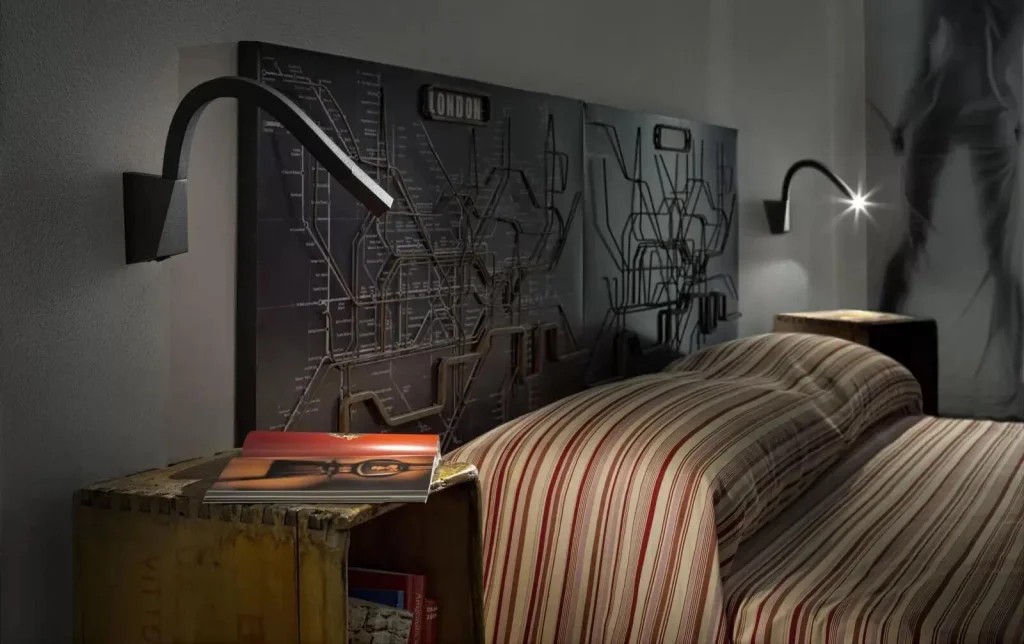
The light should cover both pages of your book, while the bright source stays out of your direct line of sight. An adjustable head makes it easier to adapt the beam to your reading position and limit light spilling onto the other side of the bed.
There is no single mounting height that works for every bedroom. The right position depends on mattress height, the user’s height, reading posture and the reach of the fitting. Before marking a mounting point, sit in bed with a book and test the planned position.
- Make sure your head and arm do not cast a shadow across the text.
- Check that the light source does not cause glare when you lie down.
- Assess whether the beam will disturb the person on the other side of the bed.
- Place the switch and dimming control within comfortable reach.
A little background light can soften the perceived contrast between a bright page and dark surroundings. It should not create reflections on glossy paper or shine into anyone’s eyes.

Common Mistakes When Choosing Bedroom Lighting
- Using one bright source for every activity — this makes it harder to light a book separately or create a relaxed atmosphere.
- Choosing by wattage or appearance alone — this overlooks light output, beam direction and shielding.
- Confusing colour adjustment with dimming — these functions are not always available together.
- Choosing a dimmer without checking compatibility — this can lead to unstable operation.
- Installing a fitting without testing it from the bed — this increases the risk of glare, shadows on the book and awkward controls.
Frequently Asked Questions About LED Lighting for a 12 m² Bedroom
Is One Ceiling Light Enough for Reading in Bed?
It may provide enough brightness, but directing its light only onto your book is more difficult. A separate reading light gives you greater control and lets you read without brightly illuminating the whole room.
Are 2,000 Lumens Enough for a 12 m² Bedroom?
This is a reasonable starting point for ambient lighting in a light-coloured room with a standard ceiling height. It does not guarantee sufficient light on a book or inside a wardrobe. These areas may need additional lighting.
Do You Need Cool White Light for Reading?
No. Warm white light at 2700–3000 K can illuminate text effectively when the illuminance and direction are suitable. A higher colour temperature does not replace correct positioning.
Can Every LED Light Be Connected to a Dimmer?
No. The manufacturer must specify that the light is dimmable and identify a compatible control method. A standard wall dimmer is not suitable for every LED fitting.
What Should You Do if an LED Flickers When Dimmed?
Check dimmer and driver compatibility, the permitted load and the minimum brightness setting. Flicker can result from mismatched components. An electrician should assess any changes to the installation.
How Can You Create Soft Evening Lighting?
Reduce the brightness, choose a warm colour temperature and direct the light towards a wall or another surface rather than into your eyes. Independently controlled bedside lighting makes this easier.
Start with two needs: a clearly lit book and gentle lighting once you finish reading. In a 12 m² bedroom, separate lighting zones, a warm colour temperature and reliable dimming help achieve both. Salon LED can help you choose suitable lighting specifications and controls for your planned installation.
-1024w.webp)