- remove_red_eye 1531 views

Why Are Travertine Wall Lights So Popular?
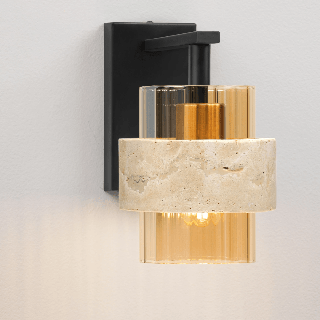
The main advantage of travertine wall lights is their ability to combine timeless natural stone with the clean form of contemporary lighting. Travertine is no longer used only for floors, walls and worktops. Designers increasingly introduce it into furniture, accessories and decorative light fixtures. Lighting manufacturers combine the stone with brass, bronze, wood, glass and LED technology, creating wall lamps suitable for organic interiors as well as elegant premium spaces.
- Every fixture is unique – pores, veining and slight colour variations are natural characteristics of the stone.
- Travertine warms the interior – its beige shades soften the appearance of white, concrete, glass and black metal.
- It complements many design styles – from Japandi and wabi-sabi to modern classic, modern organic and quiet luxury.
- It remains decorative when switched off – the stone body continues to enhance the wall even without illumination
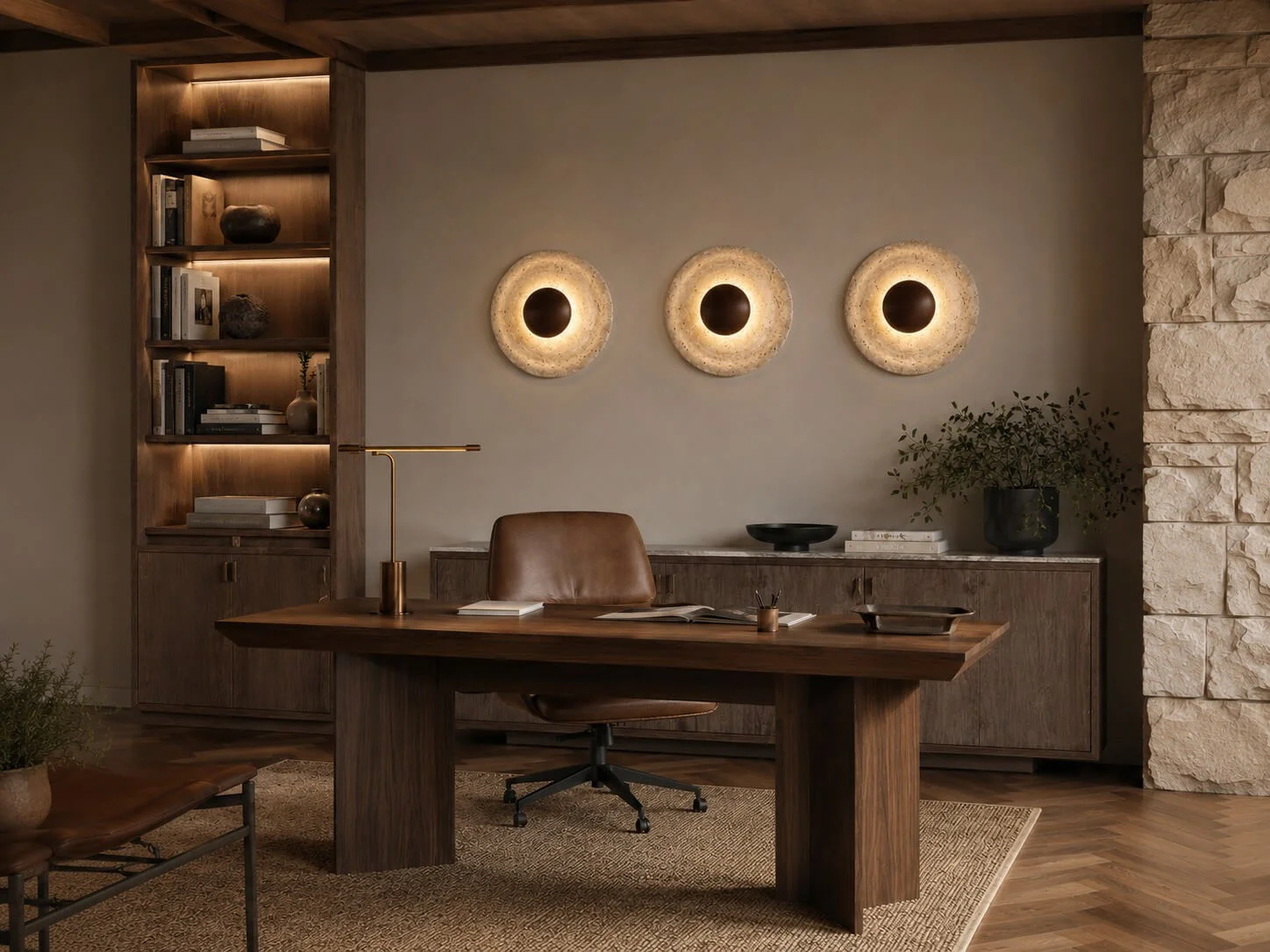
What Lighting Effect Does a Travertine Wall Sconce Create?
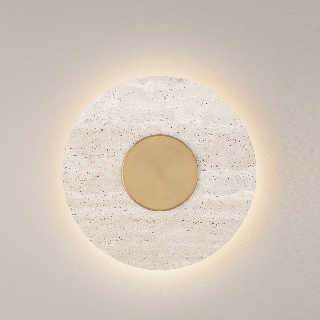
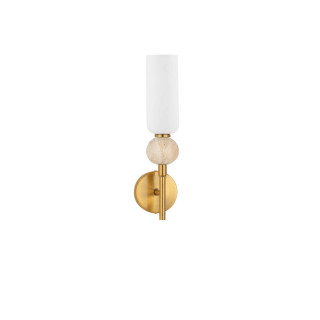
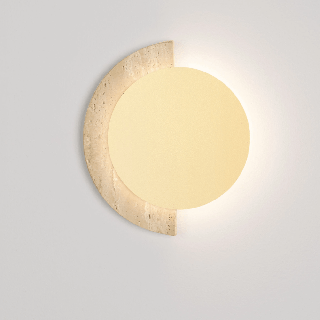
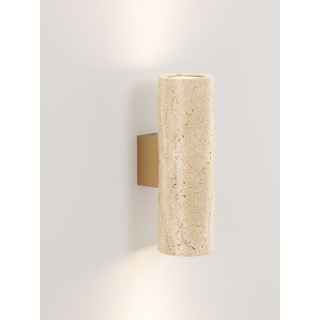
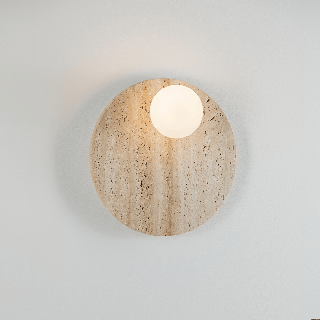
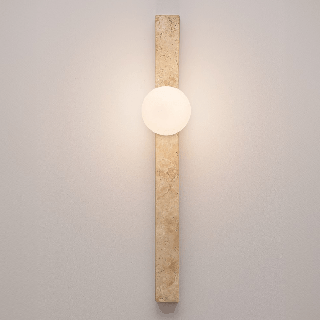
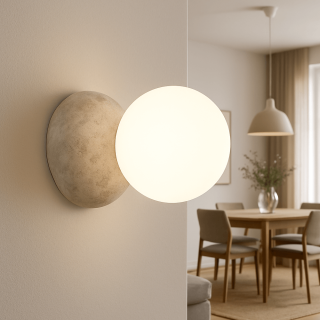
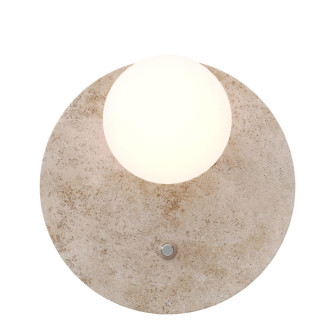
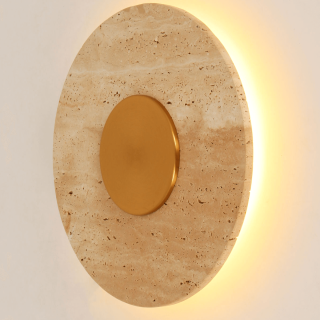
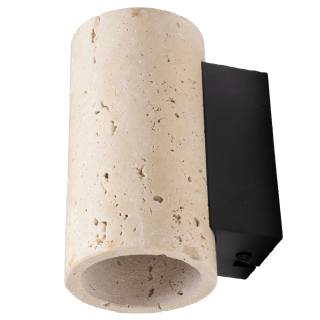
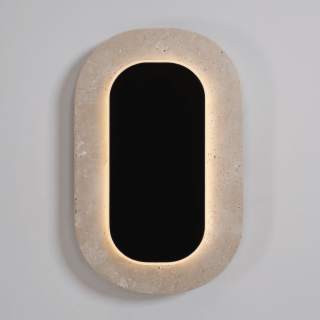
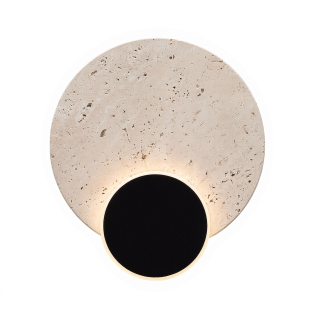
The final effect depends mainly on the construction of the fixture and the direction in which it emits light. A round travertine wall light with a concealed LED module may create a delicate halo around the stone disc. A tubular model with two GU10 bulbs can produce an up-and-down lighting effect, while a fixture combined with an opal glass globe provides a softer, more diffused glow.
Designers also use stone discs to conceal the light source and direct illumination towards the wall. This produces comfortable indirect light, reduces glare and highlights the natural texture of the surrounding surface.
Integrated LED or a Travertine Wall Light with Replaceable Bulbs?
An integrated LED model is the better choice when a slim form and precisely designed lighting effect are important. Before purchasing, check the luminous flux, CRI, dimming compatibility and whether the driver can be accessed for servicing. A fixture designed for GU10, G9 or E27 bulbs makes it easier to replace the light source and change its wattage, colour temperature or beam angle.
Warm white light at 2700–3000K usually works best with travertine. It emphasises the creamy and sandy shades of the material, enhances its pores and creates a welcoming atmosphere. Neutral white light may be suitable for more functional areas, but it gives the stone a cooler, more technical appearance.
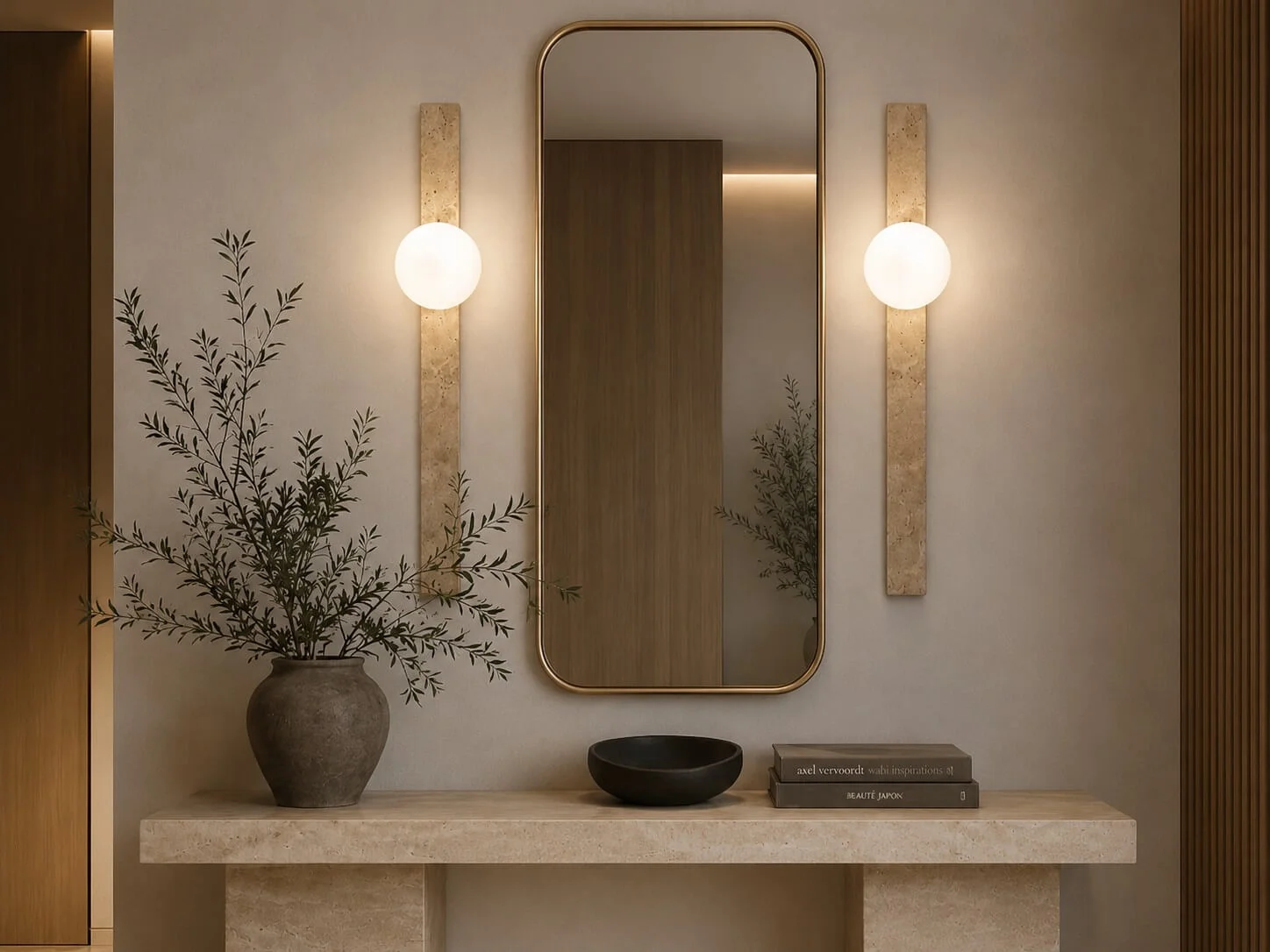
Where Should You Install a Natural Travertine Wall Light?
A stone wall lamp looks most effective where its surface can be seen clearly and where the emitted light can interact with the wall. Travertine sconces can provide ambient, accent or supplementary illumination, depending on their size, output and beam direction.
Travertine Wall Lights for Living Rooms and Bedrooms
In a living room, travertine wall lights can be installed on both sides of a sofa, sideboard, artwork or television area. A pair of matching fixtures creates symmetry, while one large round wall light can act as a decorative focal point. Light directed towards the wall adds visual depth and produces a calmer atmosphere than ceiling lighting alone.
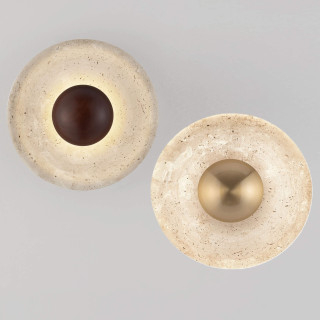
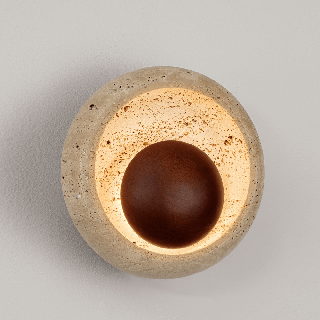
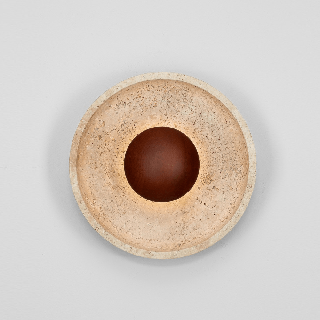
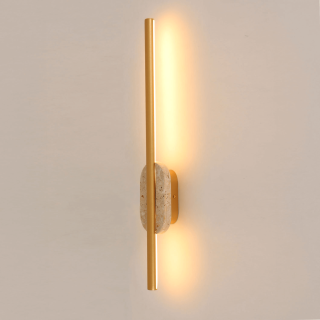
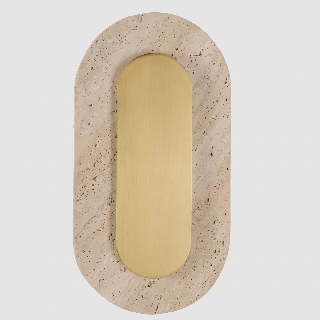
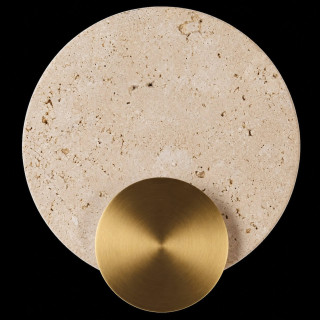
In a bedroom, wall sconces can replace traditional bedside lamps and free up space on the nightstands. An adjustable fixture is more practical for reading, while an indirect LED model is ideal for relaxation. A travertine and gold wall light enhances an elegant interior, while a combination of travertine and wood works naturally in Japandi and modern organic bedrooms.
Hallways, Staircases and Entrance Areas
In an entrance hall, several stone wall lights arranged at regular intervals create a clear rhythm and guide users through the space. Up-and-down fixtures form decorative cones of light while improving visibility along staircases and circulation routes. In a narrow hallway, the projection depth of the lamp should be checked carefully so that it does not obstruct movement.
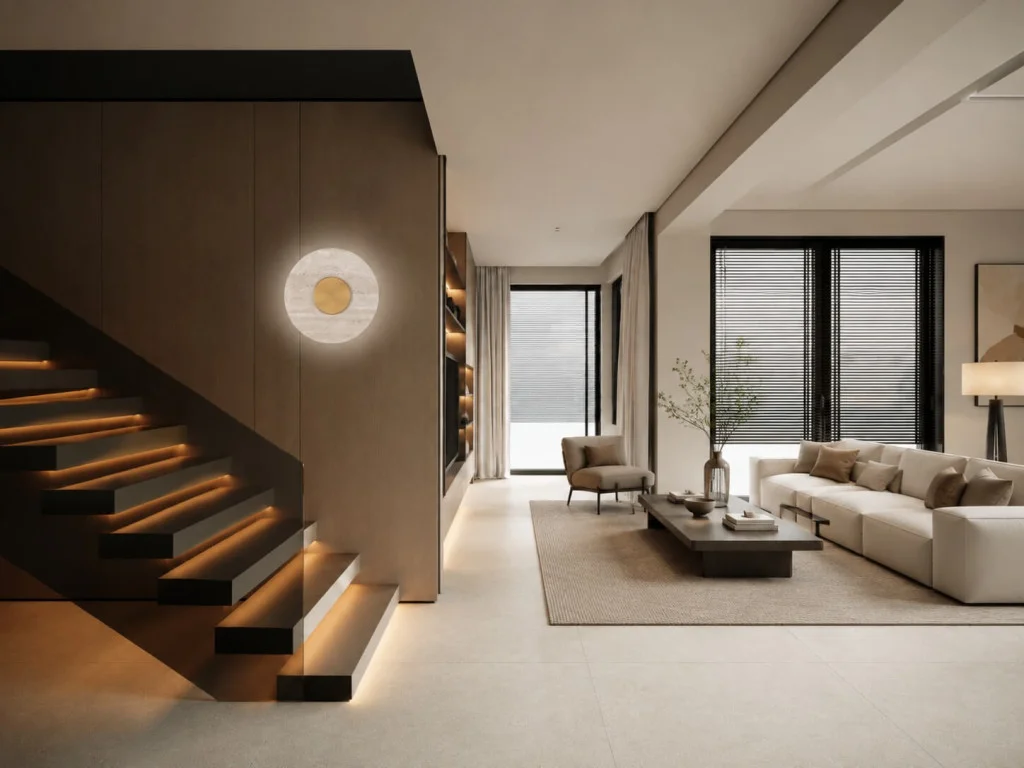
Can Travertine Wall Lights Be Installed in a Bathroom?
Yes, but only when the selected fixture has an IP rating suitable for the intended bathroom zone. The use of natural stone does not automatically make the complete lamp resistant to moisture. The construction, electrical components, seals and manufacturer’s instructions must all be considered.
IP44 travertine wall lights may be suitable for selected bathroom areas, but the required rating depends on the distance from the bath, shower and washbasin. IP20 fixtures should be used only in dry interiors.
Which Interior Styles Work with Travertine Wall Lighting?
The most coherent result is achieved when one of the colours or materials used in the lamp is repeated elsewhere in the room.
- Japandi and wabi-sabi: combine travertine with light wood, linen, handmade ceramics and warm matt illumination.
- Modern organic: use rounded forms, textured plaster, stone surfaces and calm shades of beige.
- Modern classic: pair travertine with gold, brass, wall mouldings and light-coloured fabrics.
- Minimalist and soft loft interiors: choose a simple stone disc or tube and combine it with white, black, glass or concrete.
Travertine does not need to cover a large surface to influence the character of the room. A single natural stone wall light may be enough to introduce texture, depth and a warmer colour palette. This makes travertine particularly useful in interiors where materials are carefully selected but decoration is kept to a minimum.
How to Choose a Good Travertine Wall Light
Begin by checking the type of material and technical lighting parameters, rather than choosing the fixture only by its appearance.
- confirm whether the decorative element is made from natural travertine, a composite material or a stone-effect finish;
- check the dimensions, projection depth, weight and mounting method;
- compare the luminous flux, CRI, colour temperature, beam angle and dimming compatibility;
- choose between a replaceable bulb and an integrated LED module;
- match the IP rating to the room and exact installation position;
- decide whether the wall light should provide decorative, task or supplementary illumination.
A small travertine wall sconce works well beside a bed, mirror or in a narrow corridor. A larger round LED travertine wall light can decorate an empty wall on its own, while a tubular up-and-down model highlights the texture of the wall and strengthens the architectural character of the room.
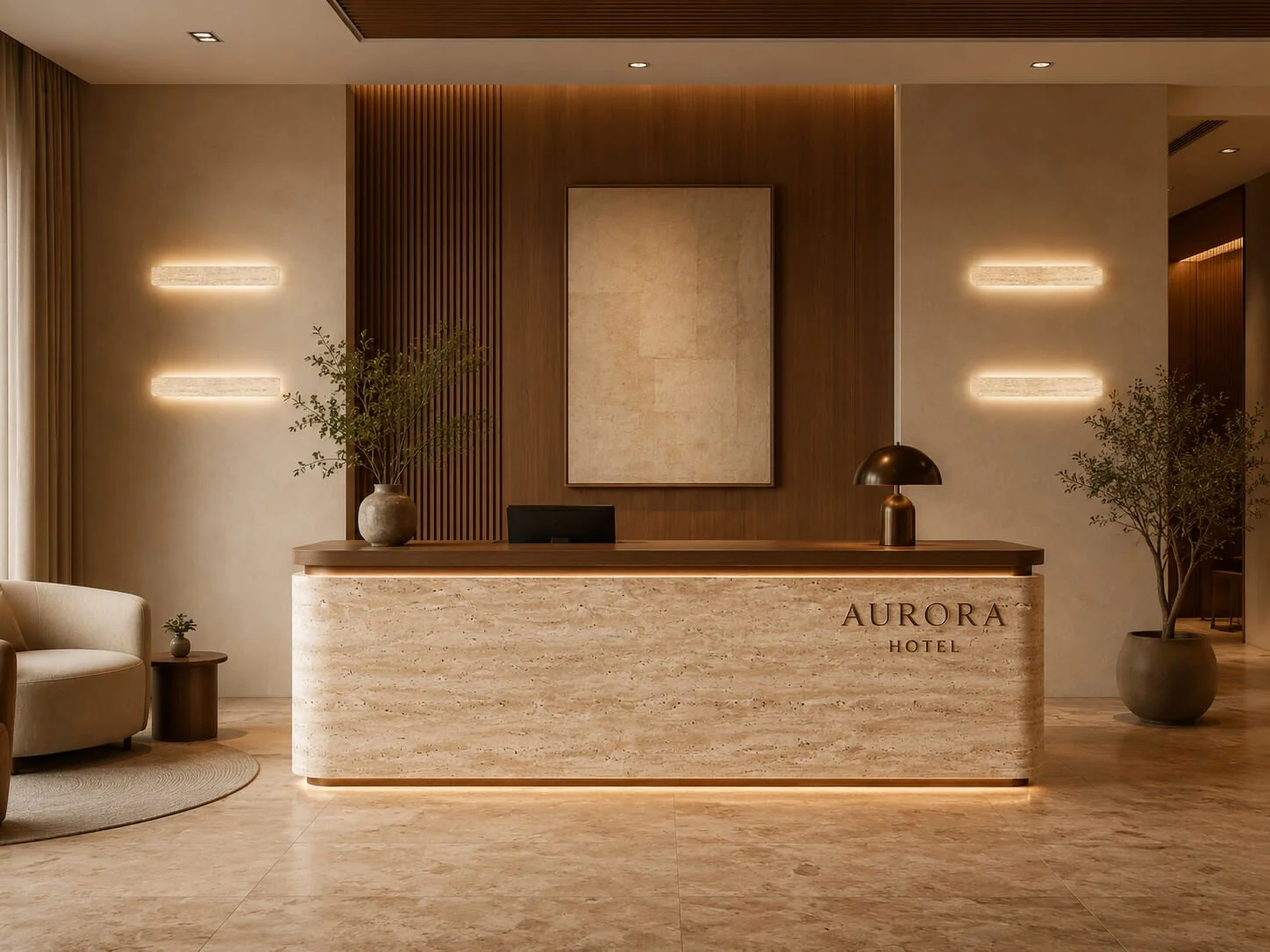
How Should Travertine Wall Lights Be Cleaned?
Travertine requires gentle care because it is a calcium-carbonate-based stone and may react with acidic substances. After disconnecting the power supply, wipe the stone with a soft, slightly damp cloth and then dry it carefully.
Do not use vinegar, descaling products, abrasive cleaners or aggressive detergents. Neutral products intended for natural stone are the safest option when deeper cleaning is required. The need for impregnation should be assessed individually, because it depends on the type of travertine, its finish and the recommendations of the lamp manufacturer.
Frequently Asked Questions About Travertine Wall Lights
Does Every Travertine Wall Light Look the Same?
No. Natural stone varies in pore distribution, veining and shade. Product photographs show the general appearance of the material, but the exact pattern of each fixture may be different. These variations are a natural feature rather than a manufacturing defect.
Do Travertine Wall Lights Provide a Large Amount of Light?
It depends on the luminous flux and fixture design. Models that create a halo behind a stone disc are usually decorative, while up-and-down wall lights or fixtures with several light sources can illuminate a larger area more effectively.
Which Colour Temperature Is Best for Travertine?
Warm white light at 2700–3000K is usually the most suitable choice. It enhances the beige colour, pores and natural structure of the stone while creating a calm and welcoming effect.
Is Natural Travertine Durable?
Yes, when used and maintained correctly. The stone itself is durable, but its surface should be protected from acidic cleaning products, impacts and excessive moisture. The reliability of the complete lamp also depends on the quality of its metal components, electrical system and mounting method.
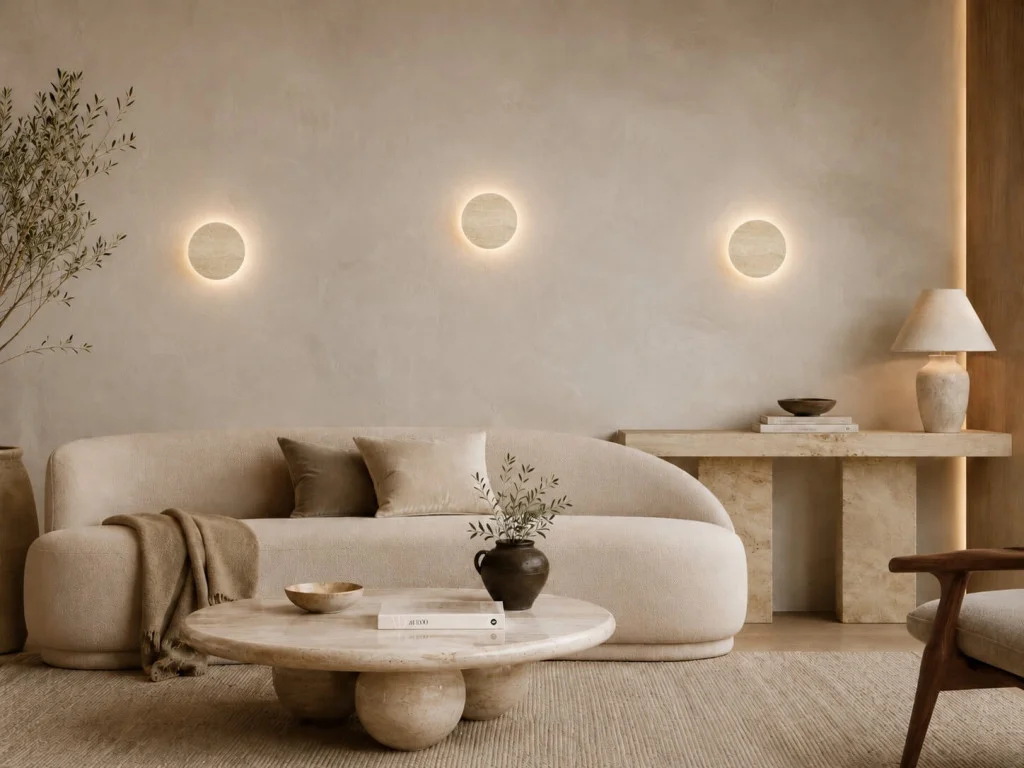
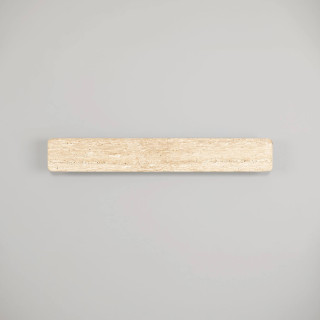
At Salon LED, you can discover travertine wall lights in the form of round stone discs, elongated panels, up-and-down tubes and models combining natural stone with gold, wood or glass. Compare the design, dimensions, technical parameters and direction of light to select a fixture that will serve as both a functional source of illumination and an elegant decorative feature.
See our offer:
Stone, Alabaster, Marble and Travertine Wall Lights | Salon LED