- remove_red_eye 1039 views

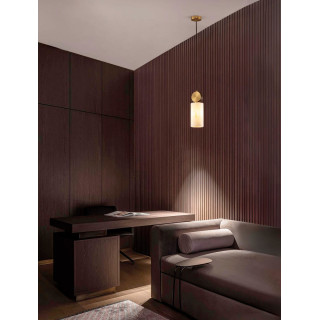
Alabaster looks particularly impressive in lights suspended above a dining table, kitchen island, coffee table or in a tall entrance hall. Its milky colour palette works well in bright, natural interiors as well as in more luxurious arrangements featuring brass, gold, black metal, wood or stone. Alabaster pendant lamps are often selected for living rooms, dining areas, bedrooms, hotels, restaurants and prestigious commercial interiors.

Why Does Alabaster Work So Well in Lighting?
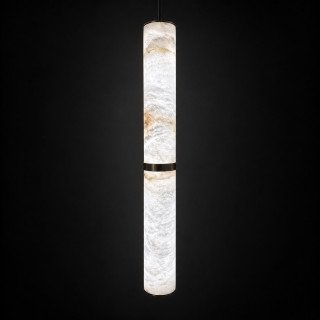
The most important property of alabaster is its partial translucency. The material is not completely transparent, so it conceals the light source and helps reduce direct glare. At the same time, it allows light to pass through its structure, creating a gentle and evenly diffused effect.
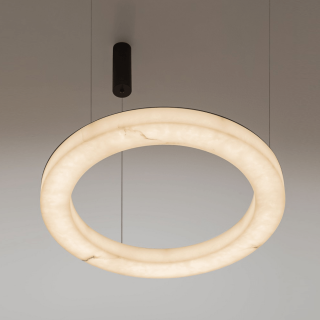
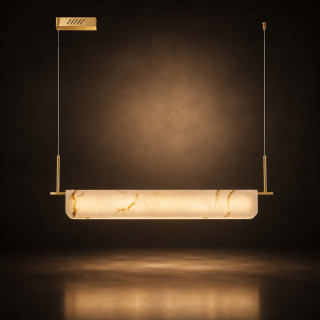
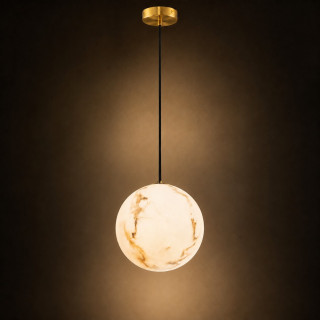
Natural streaks, lighter areas and veining mean that the surface of the shade looks different during the day and after the lamp is switched on. When unlit, the fixture resembles a sculptural object made from pale stone. Once illuminated, it gains depth and the individual pattern of the alabaster becomes subtly highlighted.
Every shade made from natural alabaster may differ slightly in colour, veining and level of translucency. These differences are a natural characteristic of the stone rather than a product defect. They are also what give each lamp its own individual appearance.
Natural Alabaster or an Alabaster-Effect Material?
The market includes both pendant lights made from natural alabaster and models using glass, resin, acrylic or composite materials designed to imitate its appearance. Before purchasing, it is important to check the material description carefully, because terms such as “alabaster shade”, “alabaster effect” or “alabaster look” do not always mean that natural stone has been used.
Pendant Lights Made from Natural Alabaster
Natural alabaster is most often chosen for premium interiors where authentic materials, craftsmanship and a unique finish are especially important. Its veining is never completely identical, so several lamps installed in one arrangement may differ subtly from one another.
The stone requires careful transport, secure installation and gentle maintenance. With larger fixtures, the weight of the lamp and the construction of the ceiling must also be taken into account.
Alabaster-Effect Pendant Lights
Alabaster-effect materials can create a similar milky surface and decorative veining, but they are usually more consistent in appearance. Depending on the material used, they may also be lighter and available in a wider variety of shapes and sizes.
This is a practical option for projects requiring several visually similar shades, for example above a long kitchen island, conference table or restaurant counter. A high-quality alabaster imitation can look very attractive, but it should be clearly described as glass, resin, acrylic or composite rather than natural stone.

The Main Benefits of Alabaster Pendant Lights
Soft Light Without Harsh Glare
Alabaster diffuses the light and reduces the direct visibility of LED diodes or a bulb. As a result, the lamp creates a calm atmosphere and works well in areas intended for relaxation, conversation or dining.
Decorative Appearance Even When Switched Off
Many traditional lampshades look their best only after the light is switched on. An alabaster pendant light remains decorative throughout the day. Its natural texture, pale colour and sculptural form allow it to become a focal point within the interior.
Timeless Colours
The cream, white and subtle beige tones of alabaster are easy to combine with other materials. They look particularly effective alongside brass, brushed gold, bronze, black metal, wood, travertine and marble.
Suitable for Individual Fixtures and Larger Compositions
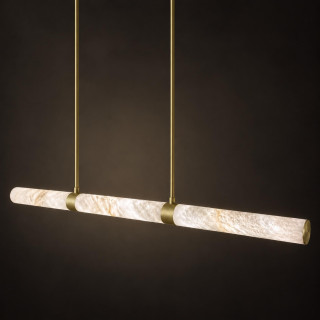
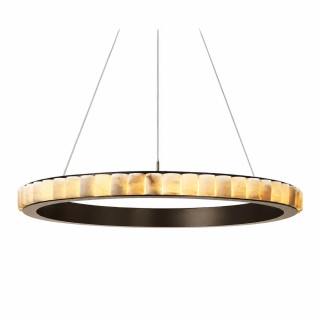
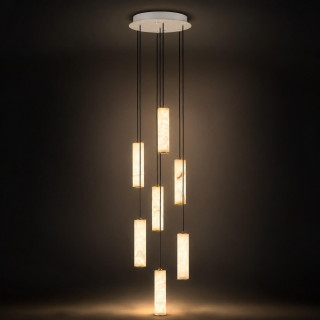
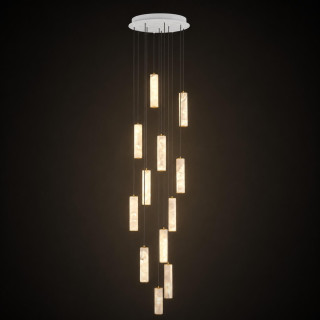
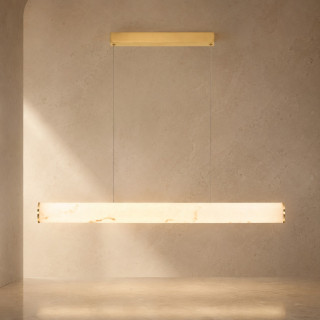
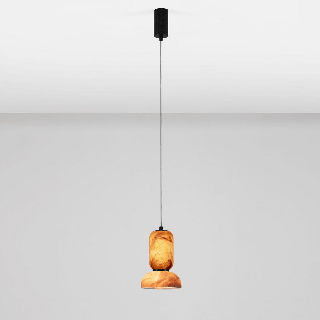
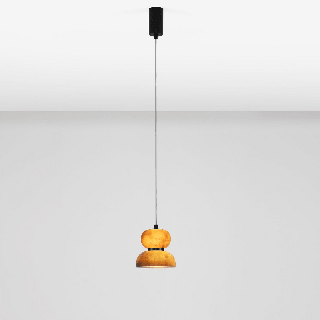
Alabaster pendant lights can be installed individually, arranged in a straight line or grouped in an irregular composition. Several small fixtures suspended at different heights create a light, three-dimensional installation. A long linear lamp incorporating alabaster elements can emphasise the proportions of a dining table or kitchen island.
Where Should an Alabaster Pendant Light Be Installed?
An Alabaster Pendant Light Above the Dining Table
The dining table is one of the best locations for an alabaster pendant lamp. Soft light helps create a pleasant atmosphere during meals, while the decorative shade defines the visual centre of the dining area. A large single fixture or a group of spherical lamps works well above a round table. Above a rectangular table, a linear model or several smaller lamps arranged in a row may be a better choice.
The light should illuminate the tabletop without causing discomfort to people sitting opposite each other. It is therefore important to check not only the cable length, but also the beam direction, shade height and suspension adjustment range.
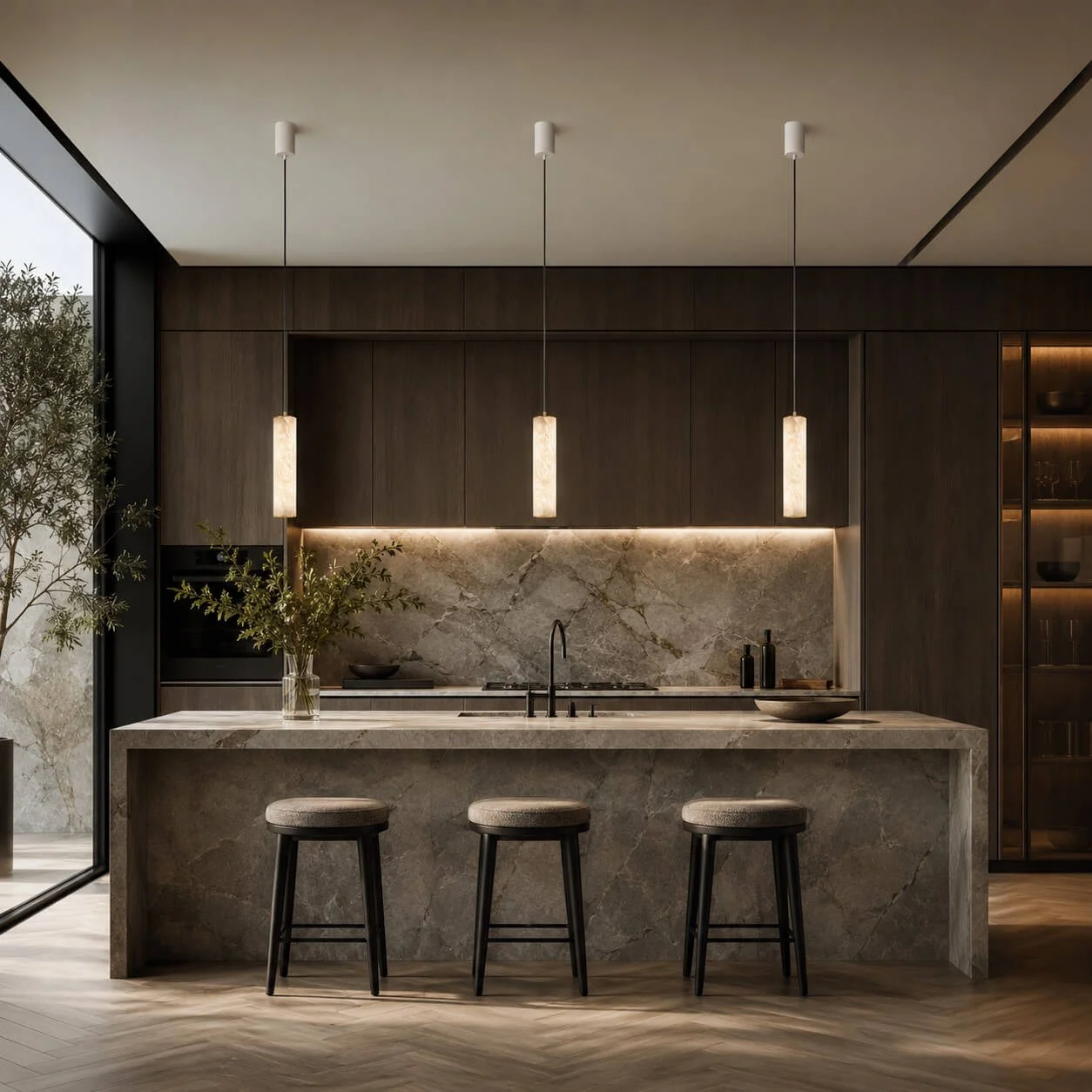
Alabaster Pendant Lights Above a Kitchen Island
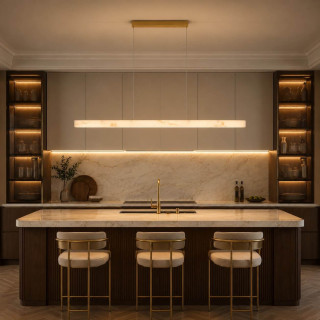
Two or three identical lamps look particularly effective above a kitchen island. Their regular arrangement creates visual order and emphasises the length of the worktop. When the island is also used as a preparation area, decorative alabaster lighting should be supplemented with technical fixtures that provide sufficient task lighting.

An Alabaster Pendant Light for the Living Room
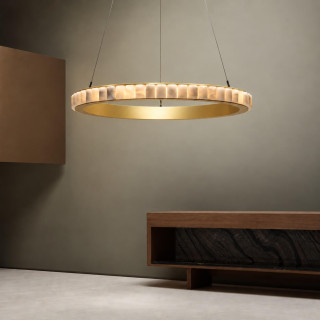
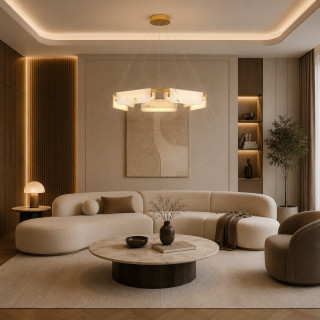
In a living room, the lamp can be positioned above a coffee table, within the seating area or in a reading corner. A large fixture with an alabaster shade can replace a traditional chandelier, while a group of smaller pendant lamps creates a more contemporary and artistic effect.
Alabaster Pendant Lights for the Bedroom
In a bedroom, alabaster can be used in a central ceiling fixture or in two smaller pendant lights suspended on either side of the bed. Lamps replacing bedside table lighting should have an appropriately selected cable length and a compact diameter so that they do not obstruct the space around the bed.
Entrance Halls, Staircases and High-Ceilinged Interiors
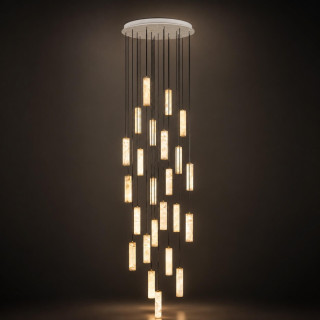
Alabaster looks particularly impressive in tall spaces. Several pendant lights suspended at different heights can emphasise the scale of a staircase, mezzanine or entrance hall. Such an arrangement serves not only as lighting, but also as a sculptural installation visible from several levels.
Which Interior Styles Suit Alabaster Pendant Lights?
Alabaster pendant lamps are versatile because they combine a natural-looking surface with a simple and elegant colour palette. They work well in modern classic, Art Deco, glamour, Japandi, minimalist and contemporary interiors.
In quiet luxury arrangements, simple forms combined with brass or dark bronze are especially effective. In Japandi interiors, alabaster can be paired with pale wood, matt plaster and natural textiles. In modern spaces, an attractive contrast can be created by combining alabaster shades with black cables or geometric metal structures.
Which Light Colour Is Best for Alabaster?
For most interiors, warm white light with a colour temperature of 2700K or 3000K is the best choice. These tones enhance the cream, honey and beige shades of the stone and emphasise its natural character.
A colour temperature of 2700K creates a very warm and relaxing evening atmosphere, making it suitable for bedrooms, living rooms and lounge areas. A 3000K light source is more versatile and works well above dining tables and kitchen islands. It is also worth checking the Colour Rendering Index. A high CRI helps reproduce the colours of stone, wood, textiles and food more naturally.

How to Choose the Right Alabaster Pendant Light
Before purchasing, compare not only the design of the fixture, but also its technical specification. The most important factors include:
- confirmation of whether the shade is made from natural alabaster or an imitation;
- the dimensions and weight of the lamp;
- the minimum and maximum suspension height;
- the power and luminous flux expressed in lumens;
- the colour temperature and CRI value;
- the direction of light emission;
- dimming compatibility;
- the type of light source: replaceable or integrated LED;
- the dimensions of the ceiling canopy and the installation method;
- the IP protection rating if the lamp is intended for use in a bathroom.
A large and powerful lamp is not always the best solution. With alabaster lighting, the balance between practical illumination and decorative effect is particularly important. If the shade significantly reduces the amount of light passing through it, the pendant should form part of a layered lighting scheme that also includes ceiling lights, spotlights, wall lamps or concealed illumination.
How to Clean a Natural Alabaster Pendant Light
Natural alabaster should be cleaned carefully, preferably with a soft, dry cloth. Water, alcohol, glass cleaners and aggressive detergents should not be used, as they may stain or damage the surface.
Before cleaning, disconnect the lamp from the power supply and allow it to cool. For alabaster-effect models, always follow the manufacturer’s instructions, as glass, resin and acrylic may require different cleaning methods.
Alabaster Pendant Lights – Functional Lighting and Interior Decoration
A well-chosen alabaster pendant light can become the most important decorative element in a living room, dining area or kitchen. It provides soft illumination, enhances natural materials and introduces a calm, elegant atmosphere into the interior.
The Salon LED range includes lamps made from natural alabaster as well as models using high-quality stone-effect materials. When choosing a fixture, compare the material, size, lighting effect, colour temperature and suspension adjustment. This makes it possible to match the lamp both to the style of the interior and to its actual lighting requirements.

FAQ – Frequently Asked Questions About Alabaster Pendant Lights
Is Every Alabaster Pendant Light Made from Natural Stone?
No. Some lamps are made from natural alabaster, while others use glass, resin, acrylic or composite materials designed to imitate its appearance. The exact material should always be listed in the product specification.
Do Natural Alabaster Lamps Look Identical?
No. Natural veining, colour and translucency can vary between individual pieces. This is a normal characteristic of the stone.
Do Alabaster Pendant Lights Produce a Lot of Light?
This depends on the construction of the fixture, its power and luminous flux. Alabaster softens and diffuses the light, so some models are primarily decorative and should be supported by additional light sources.
Which Light Colour Best Enhances Alabaster?
Warm white light at 2700K or 3000K is usually the best option. It highlights the cream tones, veining and natural visual depth of the material.
Can an Alabaster Pendant Light Be Installed Above a Kitchen Island?
Yes. A linear fixture or two or three smaller pendant lights can work very well above an island. When the island is used as a work surface, make sure the lighting also provides sufficient practical illumination.
Are Alabaster Pendant Lights Suitable for Small Interiors?
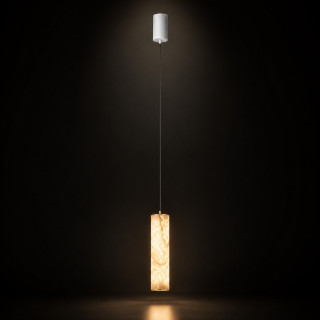
Yes, provided that the scale of the fixture is appropriate. A single slim shade or a compact lamp with an adjustable suspension height is usually the best option for a smaller room.