- remove_red_eye 892 views

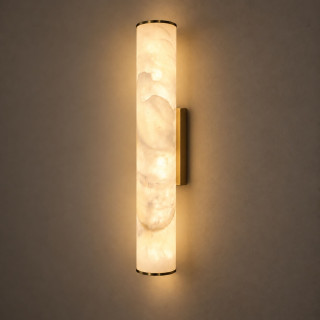
An alabaster wall lamp can provide atmospheric lighting while also acting as a decorative feature. When switched off, it resembles a stone ornament or a small wall sculpture. Once illuminated, the veining gains depth and the surface begins to glow subtly. The semi-translucent structure of alabaster helps reduce harsh glare and creates a warm, enveloping lighting effect.

What Makes Alabaster Wall Lights Unique?
The most important characteristic of alabaster is its ability to transmit and diffuse light. The stone is not completely transparent, so the LED module or bulb remains concealed and does not create a harsh point of light on the surface. Instead, the lamp produces an even, delicate glow with illuminated veins, streaks and subtle tonal variations.
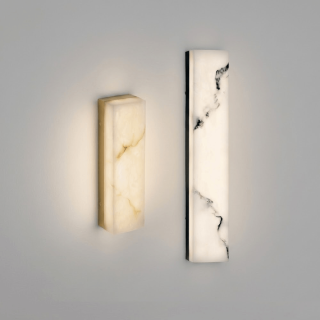
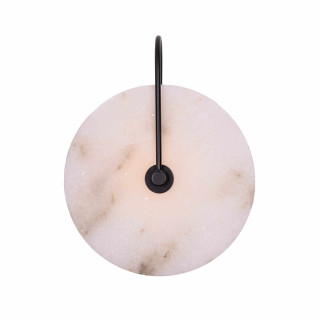
Every component made from natural alabaster has its own veining pattern, colour intensity and level of translucency. Two lamps from the same collection may therefore differ slightly in appearance. This is not a manufacturing defect, but a natural feature of the material that makes every fixture unique.
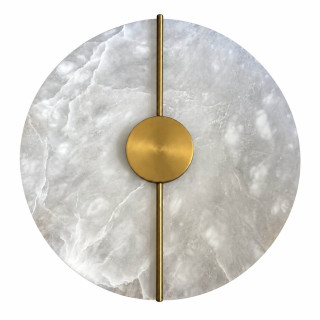
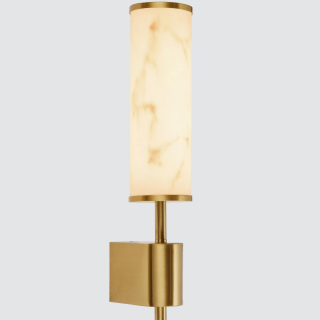
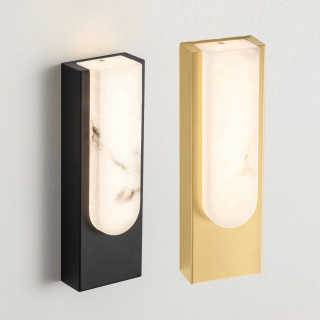
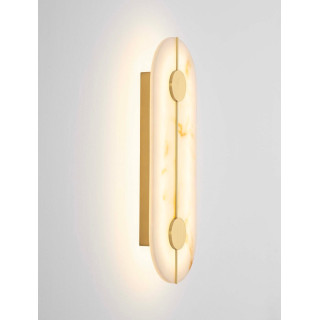
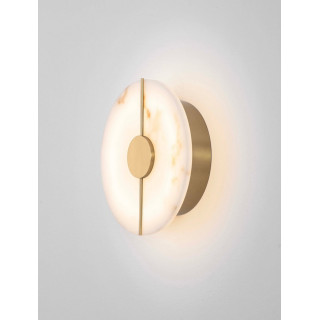
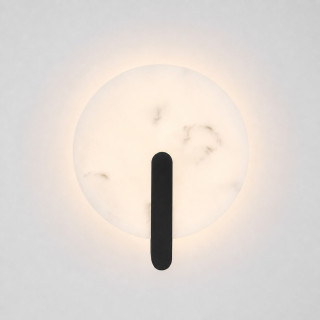
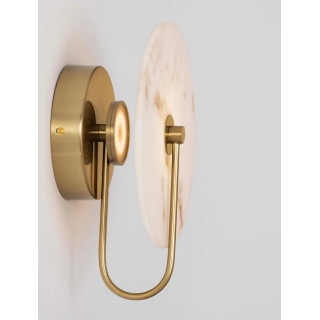
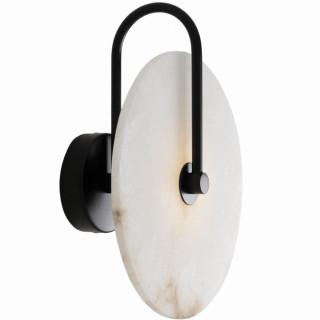
Contemporary alabaster wall lights are available in many different forms. They may resemble a flat disc, vertical panel, semicircle, sphere, geometric tile or irregular sculptural object. Alabaster is often combined with brass, brushed gold, bronze, black metal, nickel or marble. These combinations enhance the luxurious character of the fixture without making it appear visually heavy.
Natural Alabaster or an Alabaster-Effect Material?
The term “alabaster wall light” may refer both to lamps made from natural stone and to models manufactured from resin, acrylic, glass or composite materials with an alabaster-like appearance. Both solutions can create an attractive decorative effect, but they differ in terms of properties, weight, repeatability and price.
Wall Lights Made from Natural Alabaster
Natural alabaster is distinguished by its irregular veining, varied colour depth and unique way of transmitting light. It is most often selected for premium interiors and projects where authentic materials, craftsmanship and the individual character of each fixture are particularly important.
However, alabaster is a relatively soft stone and requires careful handling. Its greater weight may also affect the construction of the lamp, the type of wall fixing required and the installation method.
Alabaster-Effect Wall Lights
Alabaster-effect materials made from resin, acrylic or specially formed glass are usually lighter and more consistent in colour and pattern. They can create a similar milky, diffused lighting effect while giving manufacturers greater freedom to produce large, slim or complex lampshade forms.
An alabaster-effect wall light can be a good solution when a project requires several nearly identical lamps, a lower fixture weight or a more accessible price. However, the product specification should always be checked carefully. Terms such as “alabaster effect”, “alabaster look” or “alabaster lampshade” do not necessarily mean that the lamp is made from natural stone.

What Are the Benefits of Alabaster Wall Lights?
Soft and Diffused Light
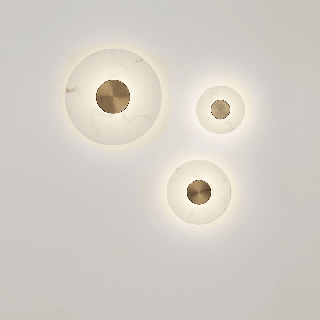
Alabaster acts as a natural diffuser. It softens the intensity of the light and reduces the direct visibility of LED diodes or a bulb. As a result, the wall light creates a calm atmosphere and works particularly well as evening, decorative or supplementary lighting.
A Unique Appearance
Natural veining makes the fixture look like an illuminated piece of stone. When switched off, the lamp remains an attractive wall decoration. Once illuminated, it reveals additional layers, streaks and variations in translucency that are not always visible in daylight.
Timeless Aesthetics
Alabaster wall lights are not limited to one interior style. They suit modern classic, Art Deco, Japandi, minimalist, traditional and glamour interiors. They are also particularly well suited to quiet luxury arrangements, where the quality of the space is defined by natural materials, subtle textures and refined details rather than excessive decoration.
The Possibility of Creating Lighting Compositions
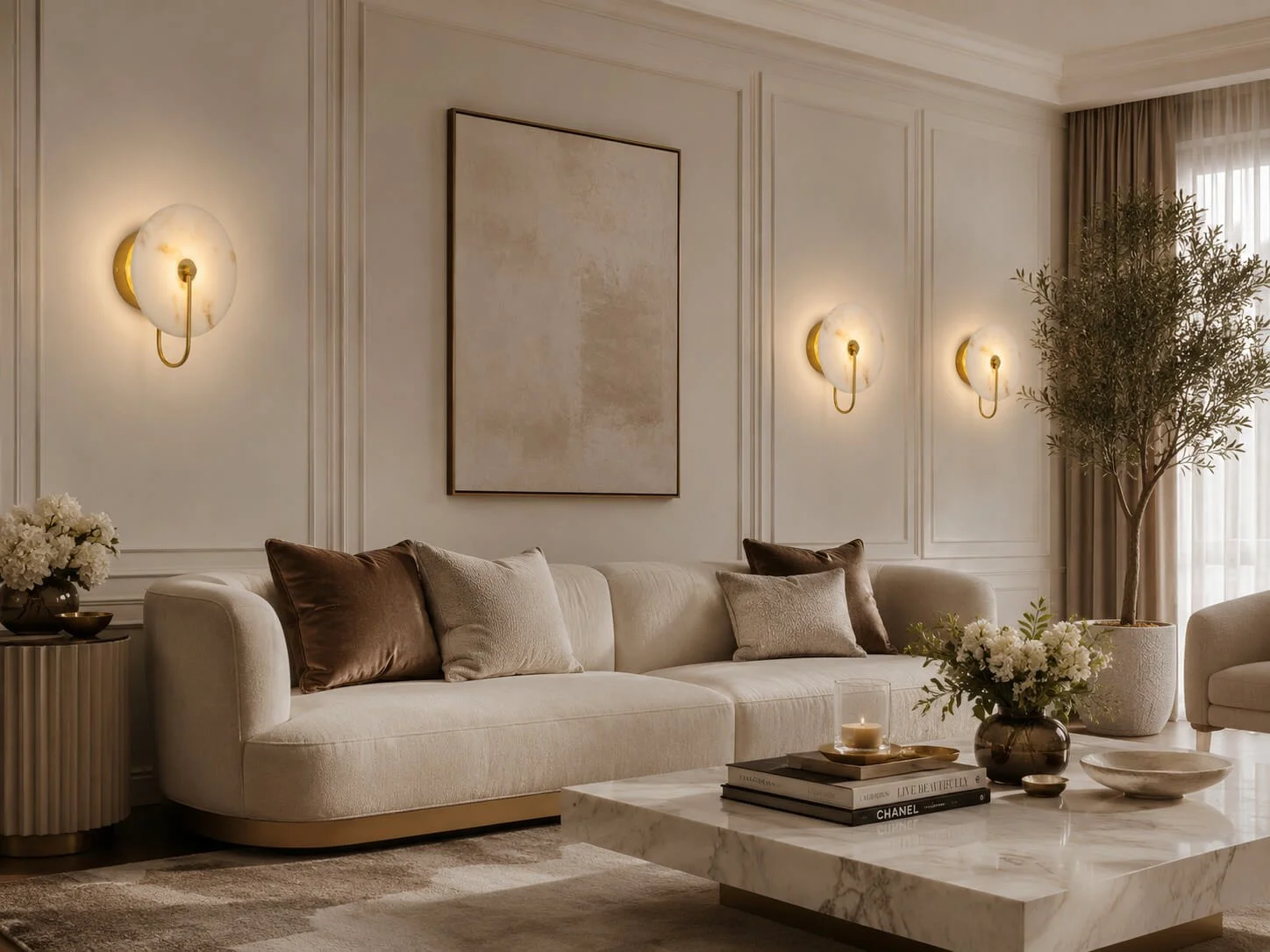
A single alabaster wall lamp can become a decorative focal point, but these fixtures also work very well in pairs or larger arrangements. They can be installed symmetrically beside a mirror, bed, painting or console table. Several wall lights positioned rhythmically along a large wall can create an effect similar to an artistic light installation.
Where Should Alabaster Wall Lights Be Installed?
Alabaster Wall Lights for the Living Room
In a living room, an alabaster wall light can illuminate a seating area, sideboard, bookcase or the wall behind a sofa. Large disc-shaped models or illuminated stone panels can serve as the main wall decoration.
Wall lights can also be combined with a pendant lamp or ceiling light to create several independent layers of illumination. In the evening, the main ceiling light can be switched off, leaving only the soft glow reflected from the walls.
Alabaster Wall Lights for the Bedroom
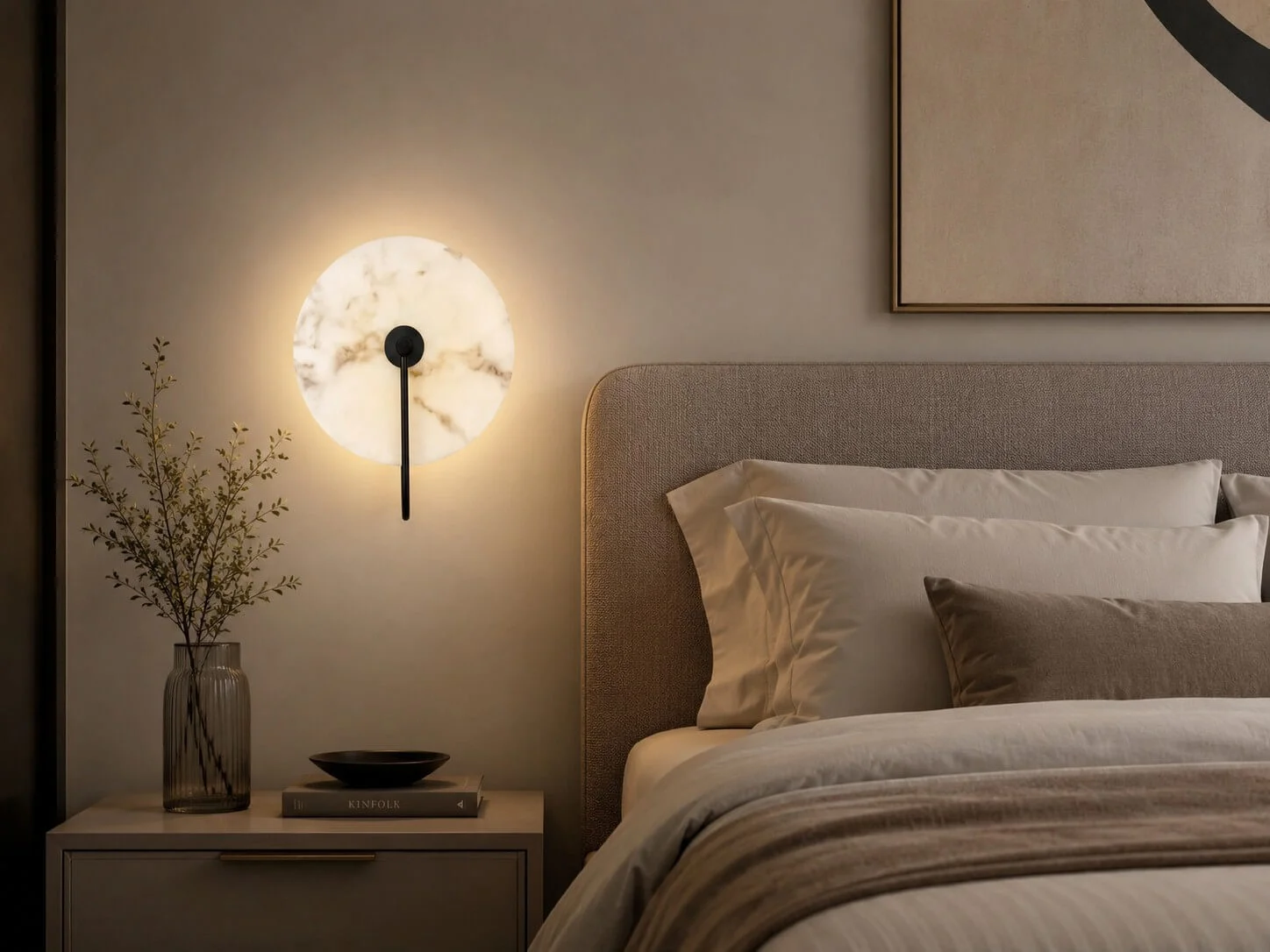
Two fixtures installed on either side of the bed free up space on bedside tables and create a calm, symmetrical arrangement. However, not every alabaster wall light is suitable for reading.
Models producing very soft, diffused light are primarily decorative. When a wall lamp is also intended to provide reading light, its luminous flux, beam direction and the position of the light source should be checked before purchase.
Hallways, Corridors and Staircases
Alabaster wall lights work well in circulation areas because they do not take up floor or ceiling space. Installed at regular intervals, they guide the light along the wall and help create a visually ordered interior.
In a narrow corridor, it is advisable to choose models with a shallow projection from the wall. On staircases, the installation height and the risk of accidental impact should also be considered.

Alabaster Wall Lights for the Bathroom
Alabaster can look particularly impressive beside a mirror or washbasin, but only a fixture designed for the relevant bathroom zone should be installed. Safety is determined by the IP rating of the complete lamp, not by the lampshade material alone.
Some alabaster and alabaster-effect wall lights are available with an IP44 rating and may be suitable for installation near a mirror or washbasin. However, the IP rating should always be verified in the technical specification of the selected model.
How to Choose the Right Alabaster Wall Light
Before choosing a lamp, determine whether it is mainly intended to decorate the wall, create atmospheric light or provide practical illumination for a particular area. The following parameters should then be checked:
- the lampshade material and confirmation of whether it is natural alabaster;
- the power and luminous flux expressed in lumens;
- the colour temperature of the light;
- the Colour Rendering Index, or CRI;
- dimming compatibility;
- the dimensions and projection from the wall;
- the IP protection rating;
- the method of replacing or servicing the LED light source.
For most residential interiors, alabaster wall lights with a colour temperature of 2700K or 3000K are the most suitable option. Warm light enhances the cream, beige and honey-coloured tones of the stone and coordinates well with wood, textiles, brass and gold finishes.
A colour temperature of 3000K is particularly versatile. It creates a warm and welcoming effect without producing an excessively yellow glow. Neutral white light may be considered for more technical or minimalist interiors, although it may not emphasise the natural character of alabaster as effectively as warm white light.
How to Clean Natural Alabaster Lamps
Natural alabaster requires careful maintenance. Manufacturers generally recommend cleaning it with a soft, dry cloth. Water, alcohol, glass cleaners and universal detergents should be avoided because they may stain, dull or damage the surface of the stone.
Before cleaning, the lamp should be switched off and allowed to cool. For alabaster-effect fixtures, always follow the manufacturer’s recommendations, as resin, glass and acrylic may require different cleaning methods.
Alabaster Wall Lights – Lighting, Material and Decoration in One
A well-chosen alabaster wall light is more than an additional source of illumination. It combines the functions of a lamp, wall decoration and sculptural object. It can add warmth to a minimalist living room, create a calm atmosphere in a bedroom or form an elegant composition in a hallway, hotel or restaurant.
The Salon LED range includes both wall lights made from natural alabaster and modern LED fixtures produced from high-quality alabaster-effect materials. A natural stone model reveals the unique veining of the material when illuminated, while contemporary imitations combine a decorative surface with efficient, warm LED light.
The most important step is to compare the material, technical parameters, dimensions and lighting effect carefully. This ensures that the wall light will look impressive not only in product photographs, but also after installation and illumination in the finished interior.
FAQ – Frequently Asked Questions About Alabaster Wall Lights
Is Every Alabaster Wall Light Made from Natural Stone?
No. Some lamps are made from natural alabaster, while others use resin, acrylic, glass or composite materials designed to imitate its appearance. The exact material should always be checked in the product specification.
Do Alabaster Wall Lights Produce a Lot of Light?
This depends on the power, luminous flux and construction of the fixture. Alabaster primarily softens and diffuses light, so many lamps of this type are designed mainly for decorative or atmospheric illumination.
Which Light Colour Is Best for Alabaster?
Colour temperatures of 2700K and 3000K are the most common choices. Warm white light enhances the natural veining and cream-coloured appearance of the stone.
Are Alabaster Wall Lights Suitable for Modern Interiors?
Yes. Simple discs, vertical panels and geometric forms work well in minimalist, modern classic, Japandi, Art Deco and quiet luxury interiors.
Can an Alabaster Wall Light Be Installed in a Bathroom?
Yes, but only when the selected fixture has an IP rating suitable for its installation zone. An alabaster lampshade alone does not mean that the lamp is designed for use in a humid environment.
Will Two Natural Alabaster Lamps Look Identical?
Not necessarily. Natural veining, colour and translucency may vary slightly between individual pieces. This is a normal characteristic of the stone rather than a product defect.
See more in our store:
Stone, Alabaster, Marble and Travertine Wall Lights | Salon LED