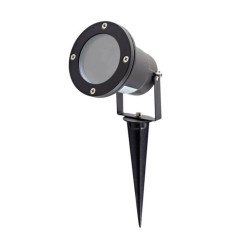
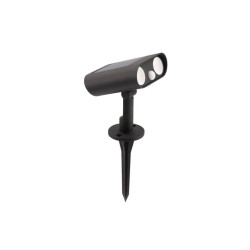
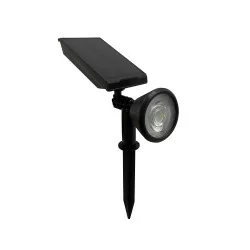
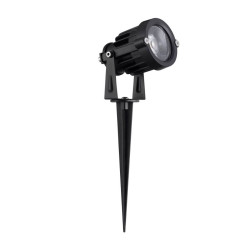
-
Gold LED Pendant Light as a Premium Accent — How Lighting Creates Elegance in High-End Interiors 01/30/2026 13:38:51Modern floor lamps: lighting scenes and a mistake-free choice 01/28/2026 22:15:27LED Recessed Spotlights — the Invisible Heroes of Harmonious Lighting Architecture 01/16/2026 09:05:44
Ground spike lights
Garden Spike Lights – modern lighting for paths and gardens
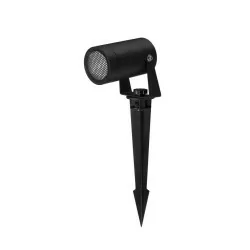
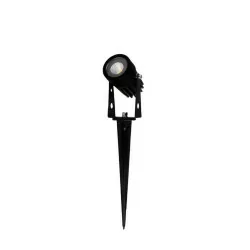
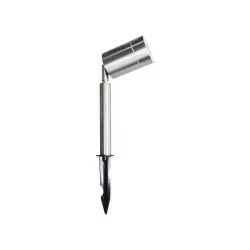
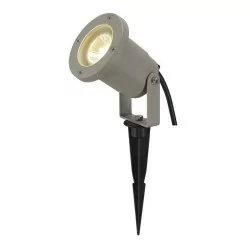
A garden design comes to life after dusk with the right lighting, letting you enjoy your outdoor space well into the evening. Garden spike lights (also called earth spike lights or stake lights) are outdoor luminaires installed straight into the soil with a ground spike—ideal for lighting paths and creating precise accents on plants and architectural features. In this category you’ll find a wide range of options: from minimalist LED fittings, through stylish bollards with a warm light tone, to decorative designs for highlighting flower beds and borders. It’s the go-to solution for anyone who wants to combine safety, aesthetics, and easy installation.
Quick pick (10 seconds)
- Want full control over beam angle and colour temperature? Choose a GU10 spike spotlight (replaceable bulb).
- Prefer a consistent look with minimal upkeep? Choose an integrated LED spike light.
- Want a cable-free upgrade? Choose solar spike lights (automatic dusk operation).
- Need convenience at an entrance or walkway? Choose spike lights with a PIR motion sensor.
- -10%
- -10%
What garden spike lights are — and why they perform better than you’d expect
Garden spike lights are outdoor luminaires that are stabilised in the ground using a spike, stake, or ground peg. Their advantages are purely practical:
- No foundations and minimal disruption to the garden
- Full flexibility — you can reposition them as planting and layouts change
- Light exactly where it’s needed — on a feature or on the ground, rather than washing the entire garden
In a well-planned lighting scheme, spike lights do the heavy lifting: they guide pathways, sculpt the form of plants, and add depth after dark.
Most buyers choose one of three routes: GU10 (replaceable bulb), integrated LED (consistent output and simplicity), or solar (no cabling and automatic dusk-to-dawn operation).
The keys to long-term satisfaction are: a sensible IP rating (IP65 is a common choice in the near-ground zone), the right colour temperature, glare-free aiming, and smart spacing.
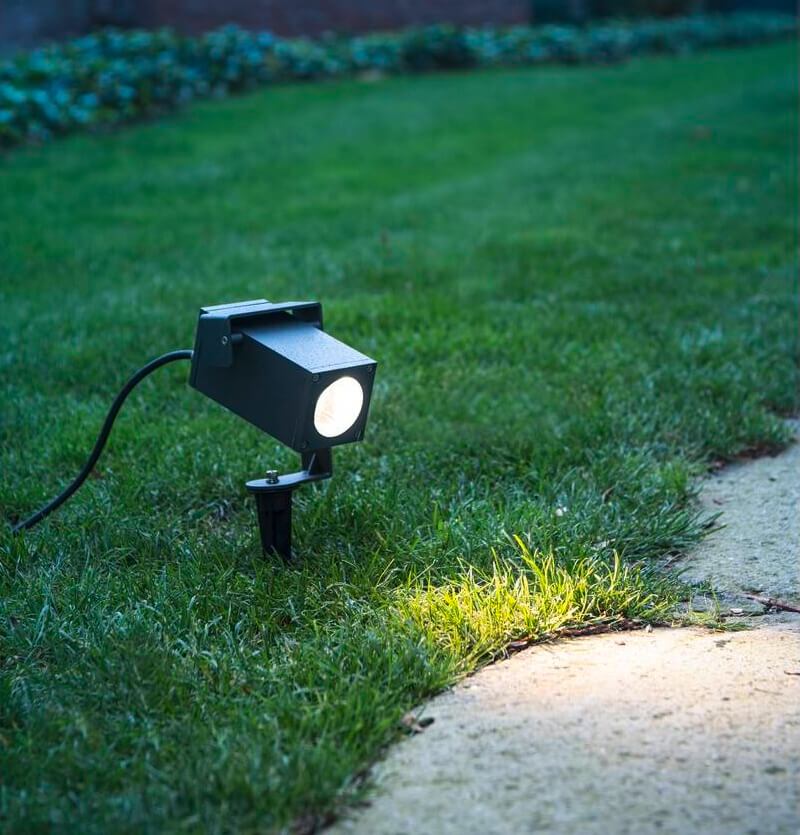
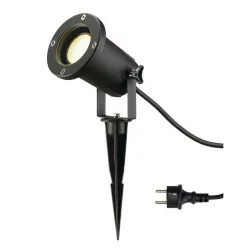
Garden spike spotlights – simply push the stake into the lawn for easy installation and a stunning lighting effect.
What the “garden spike lights” category typically includes
In this category, customers most often look for four types:
1) GU10 garden spike spotlights (replaceable light source)
Best if you want to fine-tune the final effect: pick the bulb (colour temperature, brightness, beam angle) and swap it later without replacing the fixture. A popular choice for accents: plants, trees, façades, and garden walls.
2) LED garden spike lights (integrated module)
A fit once, enjoy for years’ option: a consistent look, simple operation, and typically robust sealing. Ideal for fixed points: feature flowerbeds, paths, and entrance zones.
3) Solar spike lights (often with a dusk sensor)
The easiest option: no wiring and no digging. Great for guiding paths, lighting beds, and decorative accents, especially where you don’t want to run wiring.
4) Solar spike lights with a PIR motion sensor
When convenience and security at your entrance or gate are the priority, take a look at our motion-sensor garden lights — you can easily compare LED and solar models in one place.
Solar vs wired — when each option wins
Solar garden spike lights are the best choice when you want a fast, cable-free result: flowerbeds, lawn edges, decorative pathways, and areas you want to brighten up “on the spot.” They perform best in locations with good daylight exposure—deep shade (e.g., under a dense canopy) means shorter, less predictable run time. They’re an excellent option for ambience and wayfinding, especially if you want automatic dusk operation.
Wired garden spike lights (GU10 or integrated LED) are the better option when you want stable brightness, repeatable results, and stronger accents—uplighting trees, larger shrubs, walls, or façade details. With a wired system, it’s also easier to build a cohesive lighting “scene”: multiple points can work as one consistent layout and look equally good throughout the entire season. In practice, the strongest outcome is often a hybrid approach: solar for decorative accents and fillers, and wired lights for key areas that need to look great every time.
Glossary – quick definitions (for fast decisions)
IP (e.g., IP44, IP65)
IP is the ingress protection rating for dust and water. It matters outdoors because fixtures operate in moisture, dirt, and often in sprinkler zones.
IP44
Protection against water splashes. It can be sufficient in milder conditions, but near the ground and irrigation you’ll often want a higher rating.
IP65
High resistance to dust and water jets. A common choice for gardens when a fixture sits close to the ground.
GU10
A standard bulb base—meaning the light source is replaceable. It gives flexibility: you can change colour temperature, beam angle and brightness by swapping the bulb.
Integrated LED
An LED module built into the fixture. It usually delivers a consistent look and simplicity, but after many years any replacement typically involves the fixture rather than a bulb.
PIR (motion sensor)
A sensor that switches the light on when it detects movement. Most useful at entrances and passageways.
Dusk sensor
Automatically turns the light on at dusk and off at dawn.
Lumen (lm)
A measure of light output. Lumens describe real brightness, independent of wattage.
Kelvin (K)
The colour temperature of white light: warm (cosier), neutral (universal), cool (more technical).
Beam angle
Determines whether the beam is narrow (accent) or wide (covers a larger area).
Glare
Light that shines into your eyes. In gardens, you want light “on the feature/ground,” not “in your face.”
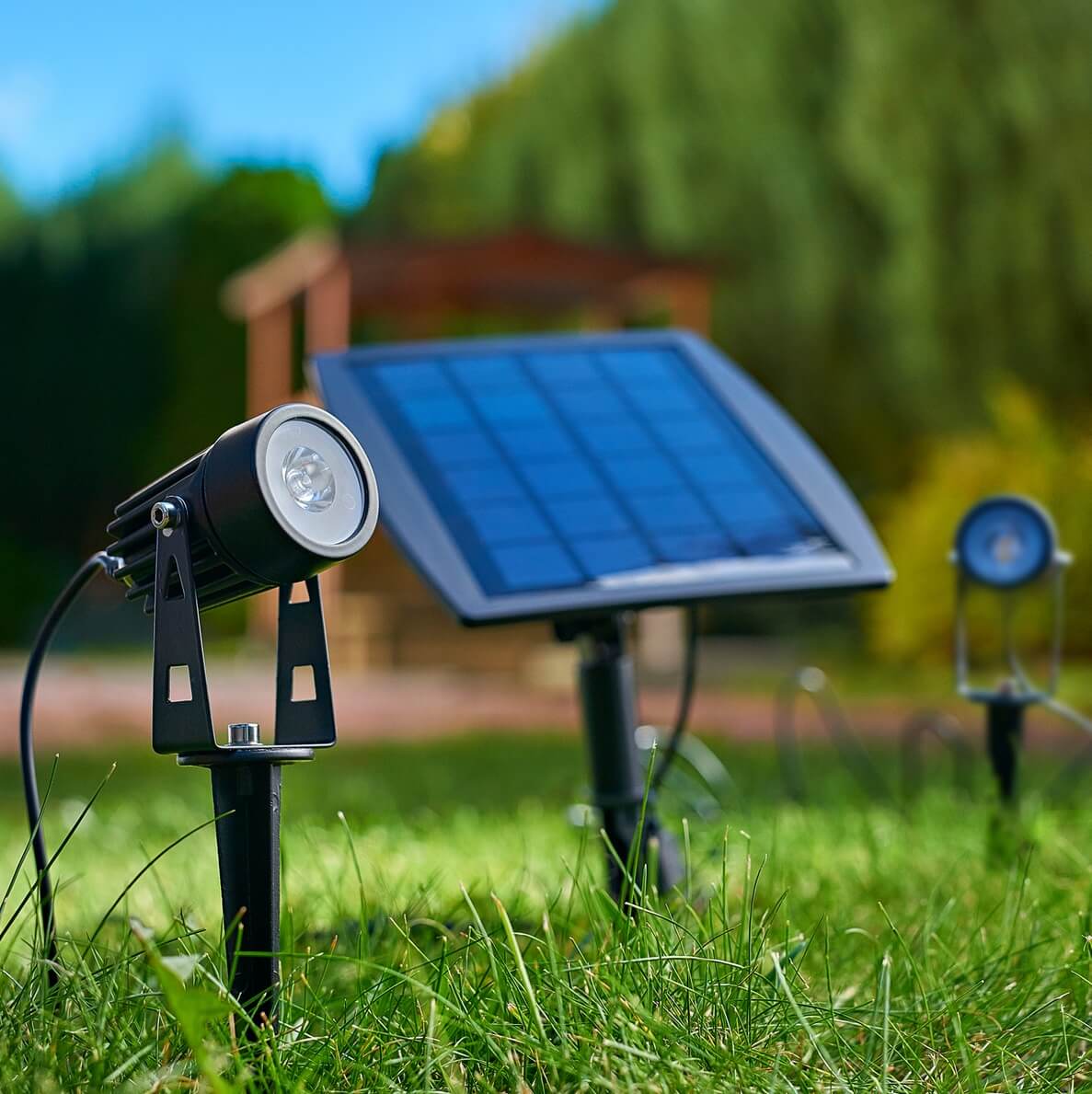
Solar placement: performance drops sharply in deep shade—choose a spot with strong daylight exposure.
How to choose garden spike lights – a 7-step decision
- Define the goal: path (safety), plants (ambience), entrance/driveway (function).
- Choose power: solar (convenience) or wired (consistent output).
- Pick the type: GU10 (flexibility) or integrated LED (a consistent look).
- Check sealing and materials: gardens mean moisture, dirt, frost and sprinklers.
- Choose light colour: warm for relaxation, neutral for most uses, cool for technical areas.
- Prevent glare: aim the beam at the feature or the ground.
- Add genuinely useful functions: dusk sensor, PIR, directional adjustment.
Parameters that truly change the effect
Sealing and durability
In European climates, resistance to moisture, mud, frost and sprinklers is key—and near driveways also to grime and dust. If a light sits close to the ground, choose fixtures built for demanding outdoor conditions, not only for looks.
Light colour: a practical choice without chaos
- Warm white – terrace, gazebo, plants, ambience
- Neutral white – paths, entrance, mixed uses
- Cool white – more technical character (e.g., driveway)
Beam angle and aiming: the recipe for a premium-looking garden
The best results come from guiding and accent lighting without glare. To avoid an ‘airport runway’ effect, choose adjustable fixtures and designs that reduce glare.
Brightness and spacing (safe guidelines + a simple method)
Treat the tips below as a starting point—final results depend on fixture height, beam angle, surface colour, and whether you want ambience or maximum function.
How many lumens should you choose for garden spike lights?
- Decorative flower beds and soft ambience: low brightness is usually enough (the light should “sparkle” in the composition, not dominate).
- Paths and guidance lighting: moderate brightness is most common—showing edges and texture without glare.
- Accent spotlights for plants/facades: typically higher than for paths, as the light must reach the target.
- Tree lighting: you’ll need more output as the canopy height and distance from the trunk increase.
Tip: if you’re unsure, choose a setup that lets you fine-tune the effect (GU10 or adjustable brightness), rather than guessing once and living with it.
How far apart should you place spike lights along a path?
- For an even effect, a calm spacing in metres usually looks better than placing lights at every step.
- The most “professional” look often comes from alternating lights on both sides so the light “crosses” the path, rather than a single line on one side.
Tip: after a first placement, test after dark and adjust—this is the quickest route to a premium finish.
Buying scenarios (ready ideas for a quick decision)
1) Path from the gate to the front door: clear and elegant
Choose fixtures that light the surface without glare. For a consistent effect, consider integrated LED. If you want the option to change the character later, choose GU10.
2) Flower bed by the terrace: ambience and “soft” light
Warm colour and focused accents on plants (ornamental grasses, shrubs, shaped forms). Here, beam angle, aiming and glare control matter most.
3) A feature tree: the “wow” effect
Place a spike spotlight near the trunk and aim upward into the canopy. Choose a stable build and good sealing—this area collects moisture and leaves.
4) Entrance, gate, side passage: convenience + safety
Choose a light with PIR motion sensing, or combine a gentle constant glow with PIR as a “boost” when someone approaches.
5) A no-wiring garden: a fast transformation
Solar spike lights work best when they have access to daylight. It’s a great starting point—and later you can expand with wired solutions in key areas.
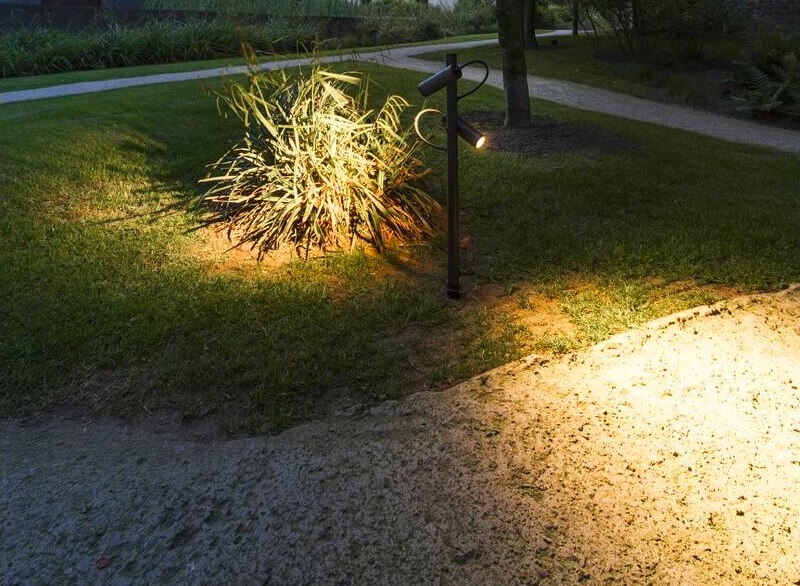
Garden spike spotlights lining the pathway with a plant accent — a simple way to guide the eye and create depth.
Most common mistakes (and how to avoid them)
- Too bright or aimed at eye level: garden lighting should guide movement and build ambience.
- Too low an IP rating near sprinklers/ground: better to pick fixtures designed for outdoor conditions.
- Solar lights in deep shade: performance will be inconsistent.
- No night-time test: daytime setup often causes glare after dark.
- Inconsistent light colour: mixing extreme colour temperatures undermines the overall look.
FAQ – Garden spike lights
1) What IP rating should garden spike lights have?
Choose higher water/dust protection if lights operate close to the ground in damp conditions. The more sprinklers, mud and dust, the more a higher IP rating pays off.
2) GU10 or integrated LED—what should I choose?
Choose GU10 for flexibility and integrated LED for simplicity and a consistent look. GU10 lets you change the lighting character by swapping the bulb; integrated LED is more low-maintenance.
3) Are solar spike lights suitable for paths?
Yes—if the goal is guidance and ambience rather than maximum functional brightness. For high-traffic routes, wired power is usually more consistent.
4) Do solar lights work in winter?
Yes, but they typically shine for a shorter time and less brightly than in summer. Winter days are shorter and cloudier.
5) How do I avoid glare?
Aim the beam at the feature or the surface, not into the line of sight. The best effect is achieved when the light is “hidden” within the planting composition.
6) Does a PIR sensor make sense in a spike light?
Yes—especially at entrances, gates and passages. In ambience zones it can be less desirable because the light switches on abruptly.
7) What should I choose for trees?
A directional spike spotlight is best. It highlights the trunk and canopy and helps build depth.
8) How should I arrange lights along a path?
Light the critical points first, then fill in the rest. Start with bends, steps and entrances.
9) Are spike lights OK near sprinklers?
Yes—if they have suitable sealing and aren’t hit continuously by sprinkler jets. In irrigation zones, choose fixtures built for outdoor exposure.
10) What light colour is best for a garden?
Warm white creates ambience; neutral white is the most universal. Cool white suits modern, more technical zones.
11) Solar or wired—what’s better?
Choose solar for installation convenience and wired for consistent brightness. Many gardens work best with a mix: solar for decorative accents, wired for key functional points.
12) Can I expand the system in stages?
Yes—spike lights are ideal for gradual expansion. Start with safety (paths, entrance) and then add accents for plants.
13) How many lumens for a path?
Pick moderate brightness that shows edges without glare. For a narrow, ambience-focused path choose less; for a key route choose more.
14) How many metres apart should path lights be placed?
Spacing lights every few metres and alternating sides usually looks the most professional.
15) Is GU10 a good choice for the garden?
Yes—because it lets you change the effect without replacing the fixture. It’s practical when you want to match colour temperature or beam angle to plants and seasons.
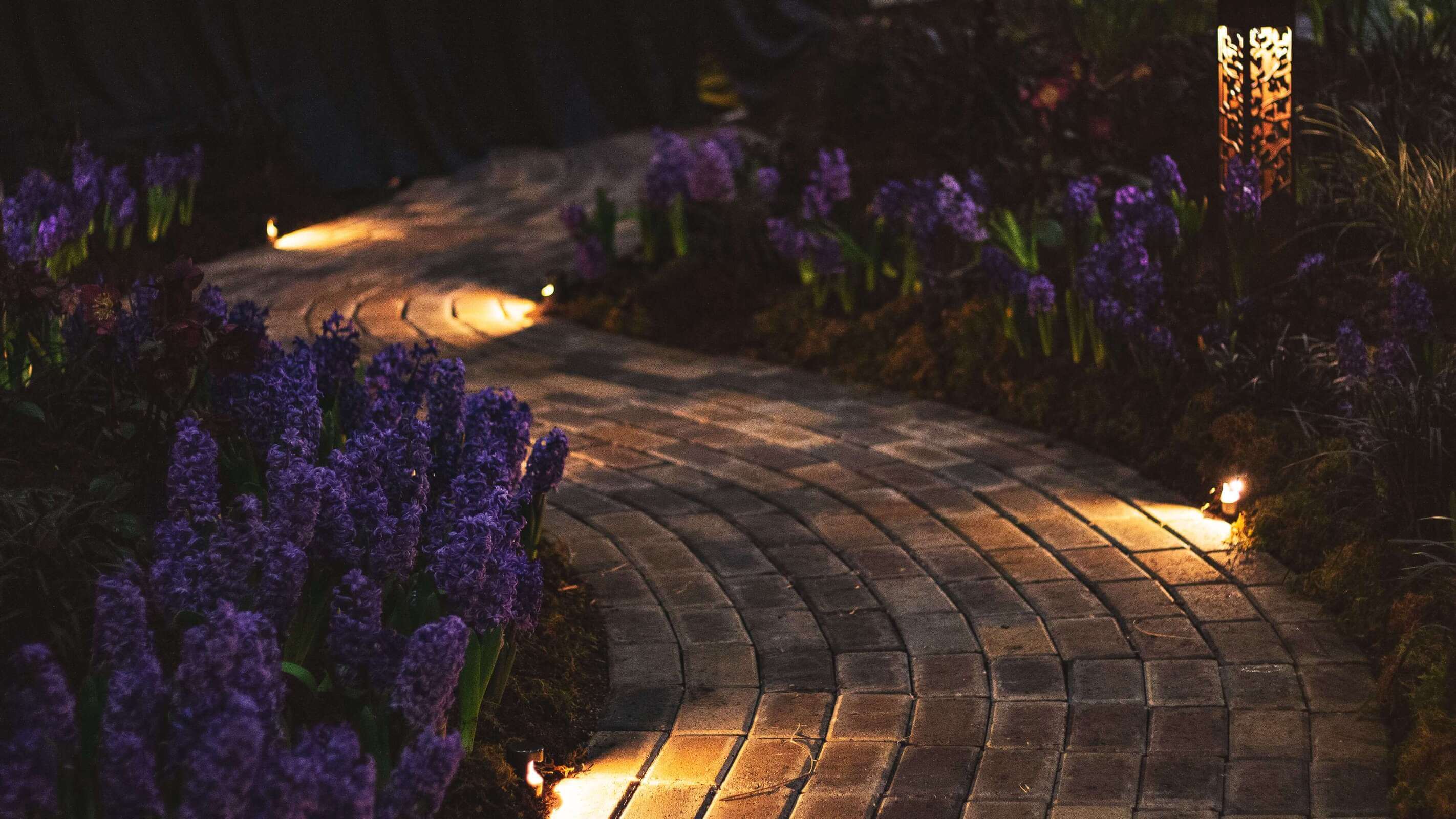
Path lighting tip: alternating sides creates a calmer, premium look without an ‘airport runway’ line.
See also our other outdoor and garden lights:
- Outdoor LED lamps
- Outdoor LED Spotlights – Secure Your Home, Light Your Garden
- LED Outdoor Wall Lamp | Salon LED
- Exterior lighting - ground lights
- Modern solar LED lamps for lighting the house and garden
- Garden Bollard Lights – LED & Solar, IP44+ | Salon LED
- Garden pendant lights
- Retro garden lamps
- Garden lamps ball

shopping_cart
0
Menu
- +Outdoor lighting
- +Indoor lighting
- +LED wall lights
- Line light LED
- LED profiles ALU
- +Track system
- Multiline - magnetic track system 22mm 48V
- FIVETRACK 5 mm 48V Magnetic Tracks & Luminaires
- AQFORM Multitrack 48V - Premium magnetic Stucchi track
- 3-phase track systems
- 1-Phase Track Systems
- MINILINE magnetic track lighting
- AQFORM FLATTRACK magnetic track 48V
- +Magnetic system 11mm Micro, Core11
- Black track lighting
- White track lighting
- +LED ceiling lamps, hanging and surface-mounted
- +Ceiling covers
- +LED plafonds
- LED recessed downlights
- +Hanging lamps LED
- Ceiling spotlights and spots
- Ceiling fans LED
- LED lights for paintings
- Starry Sky
- +LED floor lamps
- LED table and desk lamps
- Living room
- Bedroom
- Dining room
- LED bathroom lighting
- LED kitchen lighting
- LED stairs lighting
- +LED bulbs
- All manufacturers
- Prices drop
- New Products
- Bestseller
- LED Lamps
-
- Indoor lighting
- LED wall lights
- Line light LED
- LED profiles ALU
- Track system
- Multiline - magnetic track system 22mm 48V
- FIVETRACK 5 mm 48V Magnetic Tracks & Luminaires
- AQFORM Multitrack 48V - Premium magnetic Stucchi track
- 3-phase track systems
- 1-Phase Track Systems
- MINILINE magnetic track lighting
- AQFORM FLATTRACK magnetic track 48V
- Magnetic system 11mm Micro, Core11
- Black track lighting
- White track lighting
- LED ceiling lamps, hanging and surface-mounted
- Ceiling covers
- LED plafonds
- LED recessed downlights
- Hanging lamps LED
- Ceiling spotlights and spots
- Ceiling fans LED
- LED lights for paintings
- Starry Sky
- LED floor lamps
- LED table and desk lamps
- Sources of light
- LED Strip Lights
- Outdoor lighting
- LED profiles
- LED stairs lighting
- LED accessories
- Equipping interiors
- Sale
- The FIBARO system
- Bestsellers
- LED bathroom lighting
- Decorative LED lighting
- LED lighting furniture
- LED kitchen lighting
- Technical and information LED lighting
- Lighting with LED for children
- Other lamps
- Living room
- Bedroom
- Dining room
- Indoor lighting