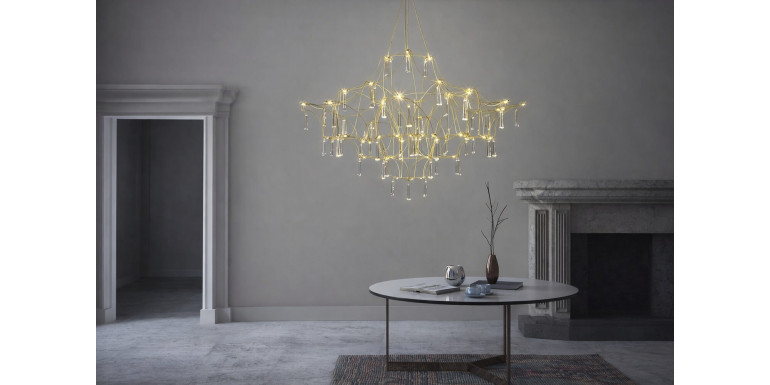
Gold LED pendant lights are one of the most striking ways to elevate an interior without an expensive renovation. A gold finish adds an immediate sense of elegance and a “well-considered” detail, while LED technology delivers energy savings, long service life, and everyday visual comfort. This combination makes a gold LED pendant light an excellent choice for both residential interiors and commercial spaces.
Below you will find practical guidance: the real benefits of gold-toned LED lighting, what to look for when choosing a fixture, and where this type of pendant looks best.
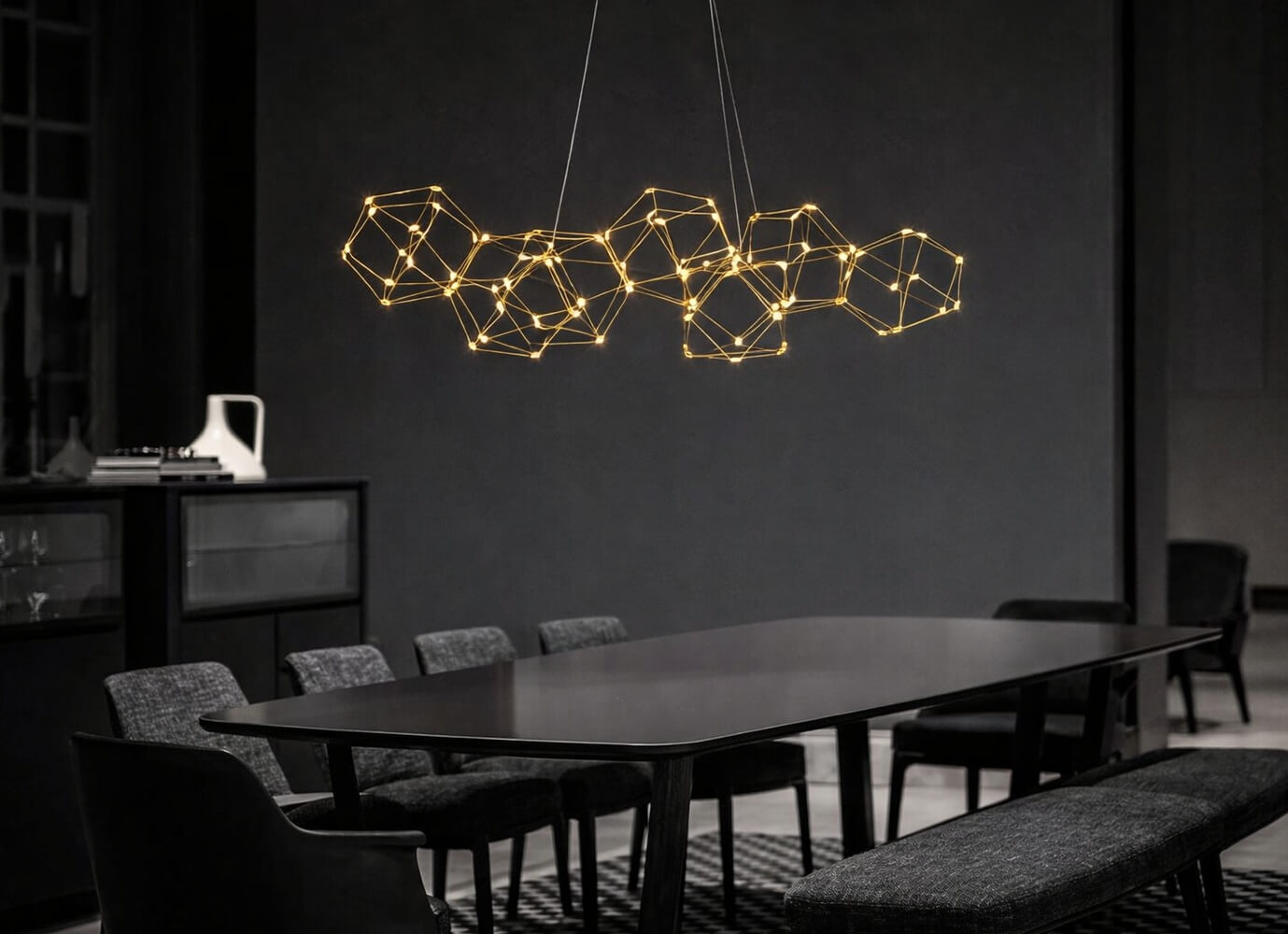
Why Are Gold LED Pendant Lights Such a Good Choice?
A Premium Effect and Timeless Elegance
Gold in interiors works like jewelry: it warms the space, adds depth, and creates an impression of quality. Importantly, today’s “gold” is rarely loud or flashy. The most common options are brushed, satin, champagne, or brass tones, which pair easily with white, beige, wood, black, and stone.
Energy Savings and LED Durability
LED pendant lights use less energy than traditional light sources and typically last significantly longer. For the user, this means lower operating costs and fewer inconvenient bulb changes over time.
A Central Feature in the Design
A gold LED pendant light can serve as the main decorative accent in the living room, dining room, or bedroom. A well-chosen fixture brings order to the composition, defines zones (such as a table or island), and draws attention without the need for excessive accessories.
Style Versatility
Gold LED pendant lights work across many interior styles:
- modern minimalism (simple form + brushed gold)
- modern classic (gold + opal/milky glass)
- art déco (geometry + elegant shine)
- japandi (warm-toned gold + natural wood)
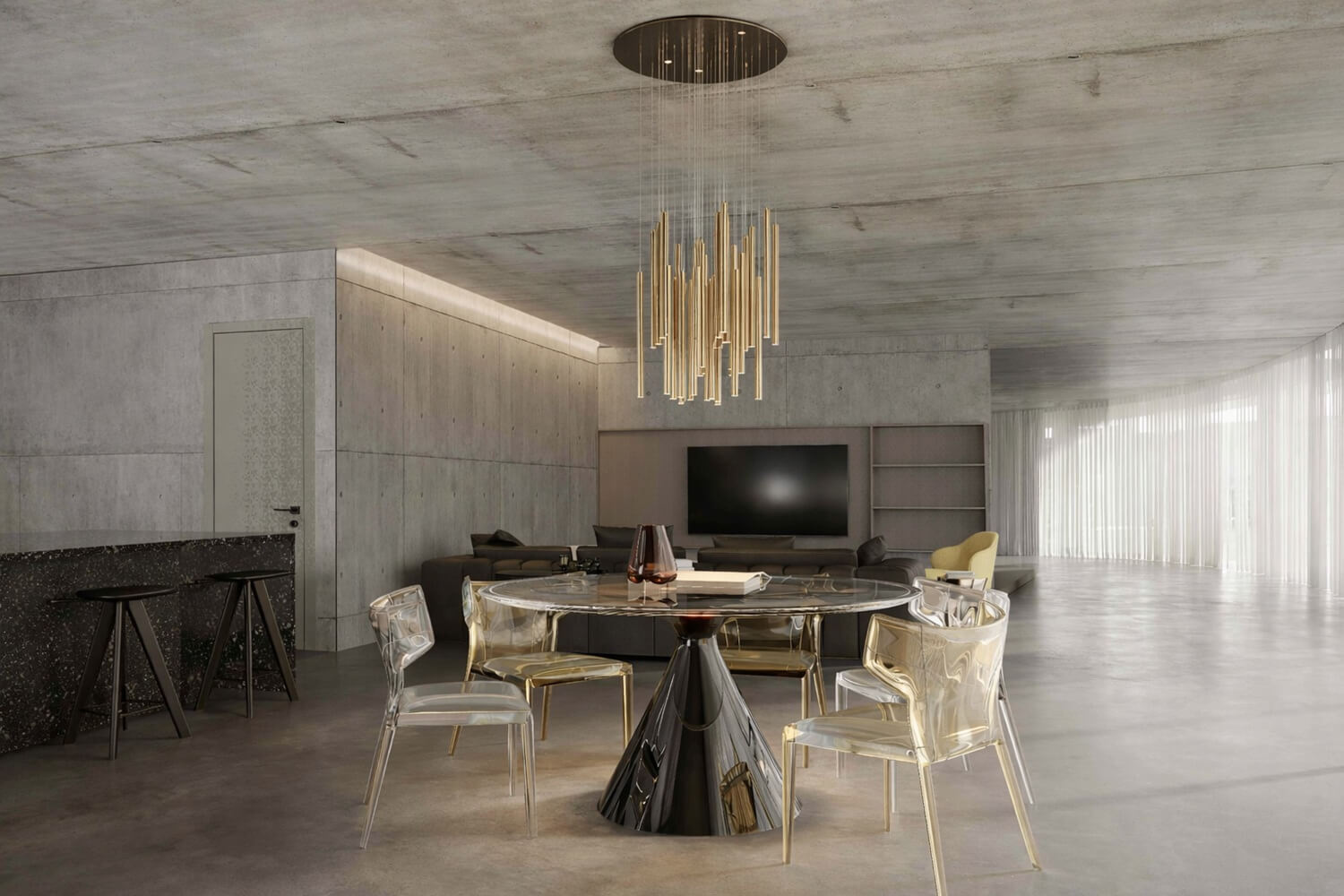
- loft (gold as a bold contrast to concrete, brick, and black)
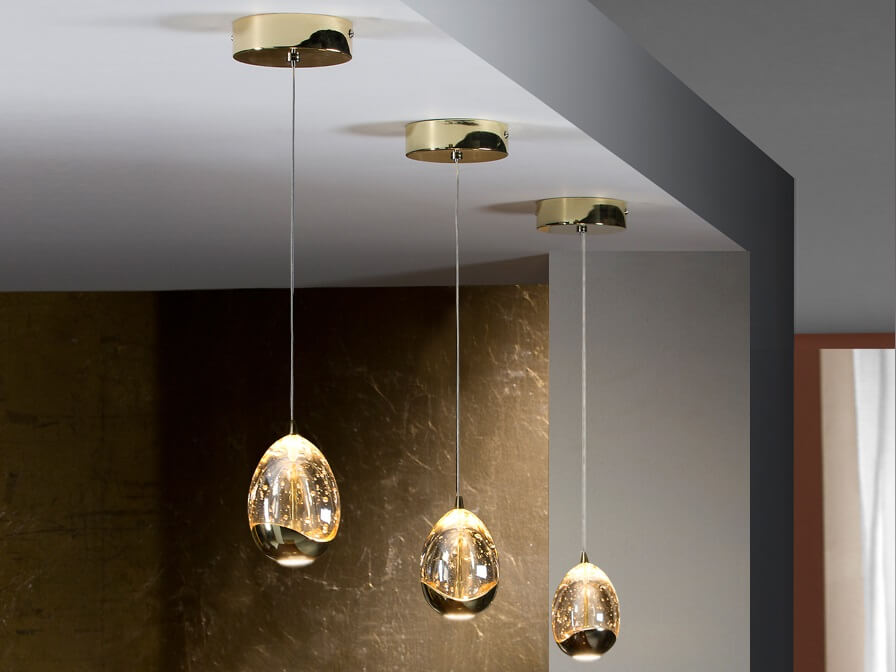
Gold LED Pendant Light – How to Choose the Perfect Model?
1) Brightness: Look at Lumens, Not Just “Wattage”
With LED, the key metric is luminous flux (lm). The rule is simple: the larger the area and the more task-oriented the function (table, island, countertop), the higher brightness you will typically need. If the pendant is intended to be the main light in the room, plan adequate output or use layered lighting (for example, additional wall sconces or floor lamps).
2) Light Color: Match Kelvin to the Room’s Function
Light color has a major impact on how the gold finish is perceived:
- warm light builds coziness and highlights the nobility of the metal
- white warm light supports work and activities in the kitchen or home office
In practice, warm or warm white tones are most often chosen for the living room, bedroom, and dining room, while more neutral light works better in task zones.
3) CRI: How Natural Colors Look Indoors
CRI (Ra) indicates how faithfully lighting renders the colors of materials, wood, textiles, and food. If you want a “soft,” natural effect and high visual quality, choose fixtures with higher CRI. This is particularly important in the living room, bedroom, dining room, and wardrobe/dressing area.
4) Shade and Glare Control: Comfort Matters
Gold fixtures can be highly decorative, but the light should not be harsh or dazzling. For comfort, choose designs that:
- diffuse light with a diffuser
- use milky or opal glass
- direct light onto the table/countertop, limiting a direct view of the light source
5) Dimming and Control: One Light, Multiple Scenes
If a gold LED pendant light is meant to create atmosphere (living room, dining room, bedroom), consider a dimmable version. You gain flexibility: stronger light for everyday tasks and softer light for evening relaxation. The key is compatibility—LED dimming requires the right pairing of the fixture and dimmer to avoid flicker or reduced lifespan.
6) Mounting Height: Adjust to the Zone and Proportions
Over a dining table or island, the priority is that the pendant lights the surface well, does not interfere with conversation, and does not block sightlines. Treat height as a starting point and adjust it to:
- ceiling height
- fixture size and visual weight
- household members’ height
- the width of the table or island
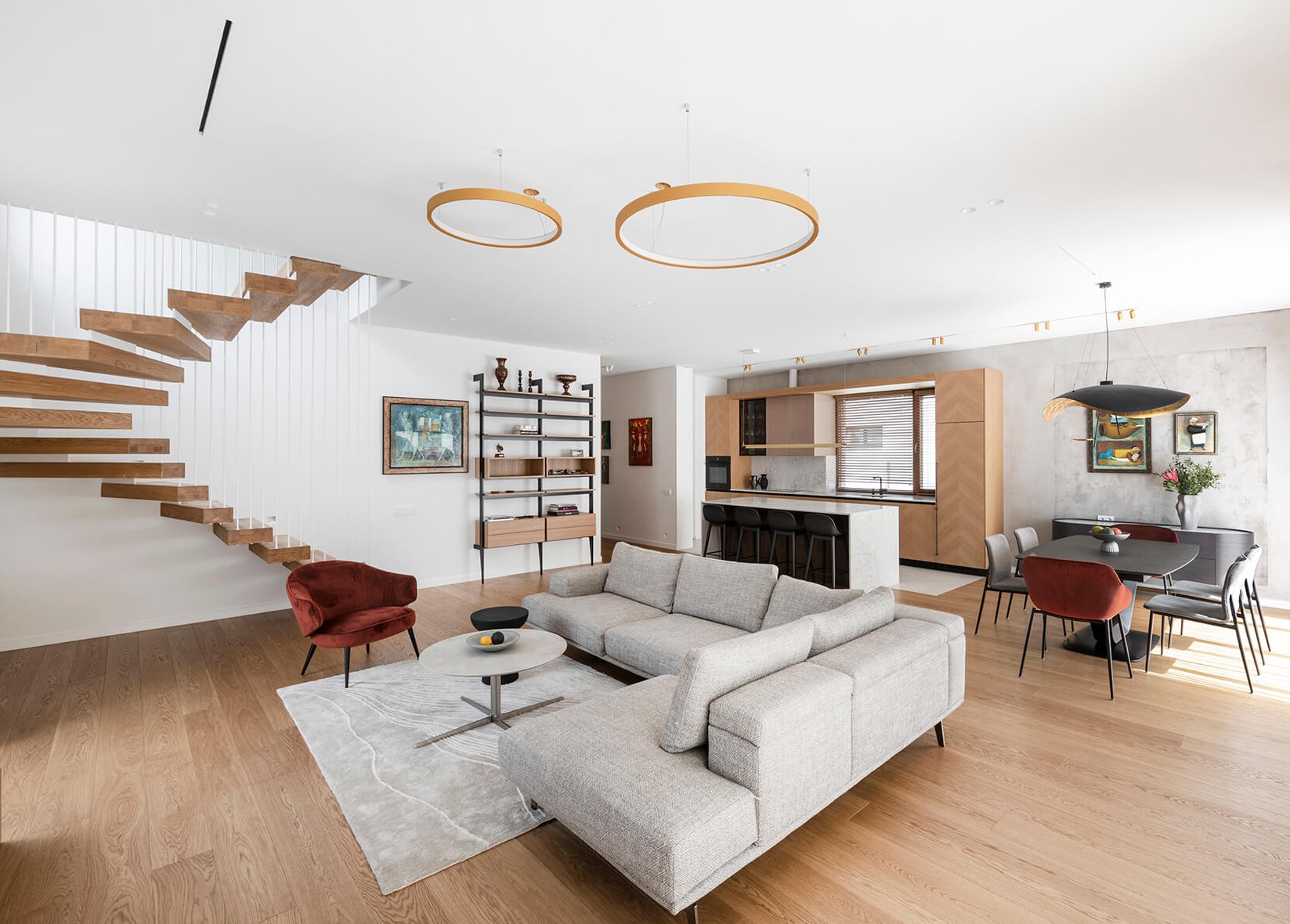
Where Does a Gold LED Pendant Light Look Best?
Living Room
In the living room, a gold LED pendant light most often functions as the decorative focal point. It looks great when hung centrally or above a coffee table. In this zone, you will especially appreciate dimming and a warm, inviting light color.
Dining Room
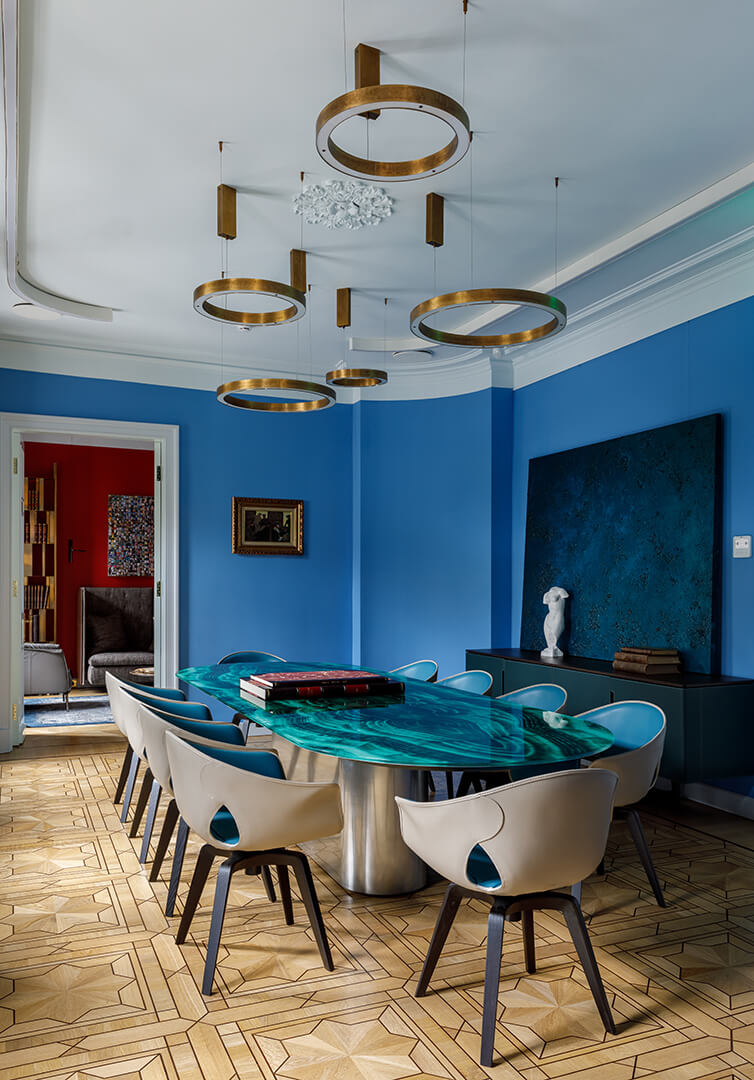
This is the most natural setting for gold LED pendant lights. Hung above the table, they add elegance and highlight the importance of shared meals. Comfort is crucial here: even illumination, minimal glare, and the right fixture-to-table proportions.
Bedroom
Gold in the bedroom creates a sense of cozy luxury. Pendants on either side of the bed can replace classic bedside lamps, and a fixture on the room’s axis becomes a statement feature of the entire arrangement. Warm light and glare-reducing construction work best in this space.
Kitchen and Island
Above an island or peninsula, a gold LED pendant light should be functional first. Ensure sufficient brightness, task-focused light onto the worktop, and convenient control. A gold finish also breaks up the coolness of stone, steel, and minimalist cabinetry.
Commercial Spaces
Reception areas, beauty studios, restaurants, and boutiques often choose gold LED lights because they create an atmosphere of quality and a cohesive brand experience. Consistent light color and high-quality workmanship are particularly important in these interiors.
Materials and Craftsmanship: What to Check Before You Buy
The most common materials are metal (steel, aluminum, brass) and glass (clear or opal). In practice, durability and appearance are determined by the surface finish: coating quality, resistance to micro-scratches, and ease of cleaning. If you want the fixture to look new for longer, choose satin or brushed finishes, which better conceal everyday marks.
The Most Common Mistakes When Choosing a Gold LED Pendant Light
1. Choosing light that is too cool in relaxation zones, making the interior feel less cozy.
2. Not enough brightness and trying to light the entire room with a single fixture.
3. No dimming where the light is meant to create atmosphere.
4. Hanging the fixture too low above the table or island, causing glare and discomfort.
5. Randomly mixing different metal tones (for example, cool silver with warm gold) without a coherent concept.
FAQ: Gold LED Pendant Lights
Do Gold LED Pendant Lights Work in Modern Interiors?
Yes. The easiest options to integrate are models with simple forms and brushed or satin finishes.
What Light Color Should You Choose for the Living Room and Bedroom?
Warm or warm-white light is most often selected, as it enhances the gold finish and creates a cozy atmosphere.
Is Every LED Light Suitable for Dimming?
No. The fixture must be designed for dimming, and the control gear should be compatible with the specific LED type.
What Should You Consider When the Light Will Hang Over a Table?
Conversation comfort (no visual obstruction), minimal glare, appropriate brightness, and proper fixture-to-table proportions.
What Does a Higher CRI Give You?
Colors of materials, fabrics, and food look more natural, and the interior appears more cohesive and better lit.
Summary
Gold LED pendant lights combine aesthetics with technology: a striking interior detail and practical, energy-efficient lighting. If you choose the right light color, comfortable brightness, an appropriate shade design, and a mounting height tailored to the zone, a gold LED pendant light becomes an investment that enhances both the look of your interior and everyday comfort—and it will beautifully complement gold LED wall sconces.