-
Why choose gold LED pendant lights? 12/29/2025 22:06:25Linear LED Pendant Light – Where Does It Work Best? 12/18/2025 12:19:09Voltage in LED Lighting – 230V, 12V, 24V or 48V? Comparison and Applications 12/16/2025 18:24:10
Outdoor wall LED lamps
Outdoor LED Wall Light – a Modern Solution for Your Home
An outdoor LED wall light (outdoor LED wall sconce) is a façade lighting fixture designed to be installed by the front door, on a terrace or balcony, near the garage, or along walkways and access routes. It delivers an immediate impact: it improves safety after dark, makes key areas easier to navigate (doors, steps, house number), and highlights the building’s architecture with light. LED technology offers high efficiency and long service life, making it a practical, long-term choice in Polish and European weather conditions—rain, frost, wind, and UV exposure.
How to choose the right exterior wall light without mistakes?
• IP rating: for fully exposed façades, aim for IP65; under a canopy or sheltered area, IP44 is usually sufficient.
• Colour temperature (K): 2700–3000K for a warm, welcoming feel; 3500–4000K for a neutral, versatile white.
• Brightness (lm): lumens indicate how bright the fixture is—match the output to the zone (entrance, terrace, driveway).
• Style and features: up & down light effect, PIR motion sensor and dusk sensor, and a dimming option.In this category, you’ll find outdoor LED wall lights in a wide range of shapes and finishes—from minimalist fixtures to decorative designs—tailored to different installation locations. A broad selection makes it easy to match the right wall light to your façade and everyday needs, without compromising on looks.
Explore our range of outdoor LED wall lights and choose a model that suits your home’s style and installation conditions.
- -10%
- -10%
- -10%
Why Outdoor LED Wall Lights Have Become the Standard Choice for the Facade
Modern outdoor lighting has two core roles: it provides functional illumination after dark and enhances the overall look of the home. Outdoor LED wall lights deliver on both, because they:
- use less energy than traditional light sources (delivering savings month after month, year after year),
- offer long service life, so you deal with maintenance and replacements far less often,
- are easy to match to any architectural style, from minimalist to classic,
- can improve safety with motion and dusk sensors,
- help shape the facade’s “night-time look” by creating light beams and highlighting the texture of plaster, stone, brick, or wood.
In practice, this is one of the simplest upgrades that produces an immediate result: more comfort after dark, better visibility, and a noticeably more premium look for your home.
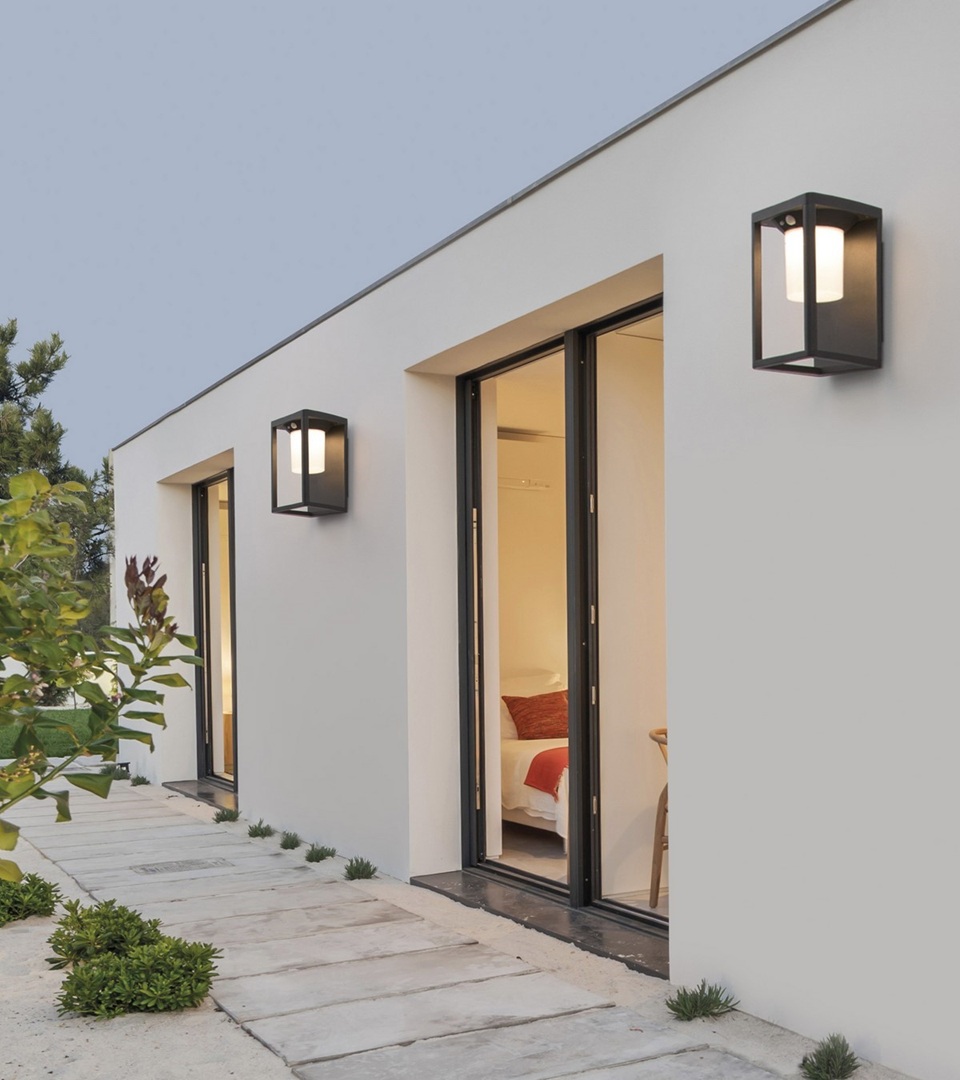
Where Outdoor LED Wall Lights Work Best?
A well-chosen outdoor LED wall light performs best where light is genuinely needed—or where you want to deliberately create atmosphere.
Most common installation locations
- Home entrance: lighting the handle, lock, steps, and landing.
- Garage and driveway: easier manoeuvring, better safety, and improved visibility.
- Terrace, balcony, relaxation area: ambient light that is comfortable for the eyes.
- Facade and side walls: decorative accenting of the building’s form—architectural lighting.
- Gate, driveway gate, fencing: easier orientation after dark and a greater sense of security.
- Access routes: paths to a gazebo, storage area, or utility outbuildings.
Explore outdoor LED wall lights and choose a model for a specific zone: the entrance, terrace, garage, or facade.
How to choose an outdoor LED wall light: the parameters that matter
Below are the factors that genuinely affect light quality, durability, and everyday comfort.
IP rating (protection against dust and water)
This is one of the most important criteria for outdoor lighting—especially in Poland and across Europe, where fixtures are exposed to rain, frost, wind, significant temperature swings, and UV radiation.
- IP44: the minimum for outdoor use in sheltered areas (e.g., under a canopy).
- IP54: solid protection for many standard residential applications.
- IP65 and above: recommended when the fixture is exposed to heavy rain, splashing, open conditions, or harsher environments.
In short: the more exposed the location, the higher the IP rating you should choose.
Brightness: lumens instead of “watts”
With LED, wattage does not directly indicate how bright the light will be. For the user, the key figure is luminous flux (lm), which reflects real light output.
As a rule of thumb:
- entrance / porch: medium output is often sufficient—stable, comfortable, and non-glare,
- garage / driveway: you’ll typically need brighter, more task-oriented light,
- facade accent (up & down): the beam effect matters more than maximum brightness.
If you don’t want to analyse specifications in depth, choose fixtures that clearly state lumens and recommended use cases.
Colour temperature (Kelvin): mood and function
Colour temperature determines whether the space feels warm and inviting, neutral, or more technical.
- 2700–3000K (warm white): terrace, entrance, relaxation zones, a “hotel-like” ambience.
- 3500–4000K (neutral white): a versatile choice for most residential exterior uses.
- 5000K and above (cool white): when maximum clarity is the priority and a more technical look is acceptable.
In practice, warm or neutral white is most commonly chosen for single-family homes.
Light direction and beam angle: the effect on the facade
This often determines whether the wall light delivers the intended visual impact.
- up & down: elegant light beams on the wall, emphasising the building’s form.
- downlight: practical for doors, house numbers, and pathways.
- diffused light: even illumination for a zone (e.g., a terrace).
If you have textured plaster, brick, stone, or wood, directional light can beautifully reveal the surface structure.
Motion and dusk sensors: convenience and security
A wall light with a PIR motion sensor switches on automatically when movement is detected. It’s convenient at the entrance, garage, and gate, and it genuinely saves energy because the light runs only when needed.
A dusk sensor prevents the fixture from operating during daylight. Combined with motion detection, it is one of the most practical feature sets for outdoor use.
Materials and corrosion resistance
Outdoors, it’s not only the look that matters, but also how the fixture performs after two or three seasons.
Highly rated in practice:
- aluminium (often powder-coated),
- stainless steel,
- high-quality UV-resistant plastics.
If the light will be installed near a driveway or in areas prone to dirt (mud, dust, road salt), choose designs that are easy to clean and consider darker finishes.
Integrated LED vs replaceable light source
There are two approaches:
- integrated LED module: cohesive design, often a slimmer form factor, fewer parts to replace—install it and forget it.
- fixture with a replaceable light source: greater flexibility (you can change to a different colour temperature or output), and simpler replacement in the future.
The choice depends on whether you prefer maximum low-maintenance convenience (integrated LED) or the freedom to change and upgrade (replaceable source).
Dimming and smart control
If you want atmospheric light on the terrace or the ability to adjust brightness to the time of day, look for wall lights that support dimming. For smart home use, pay attention to control compatibility and whether functions are built-in or require additional modules.
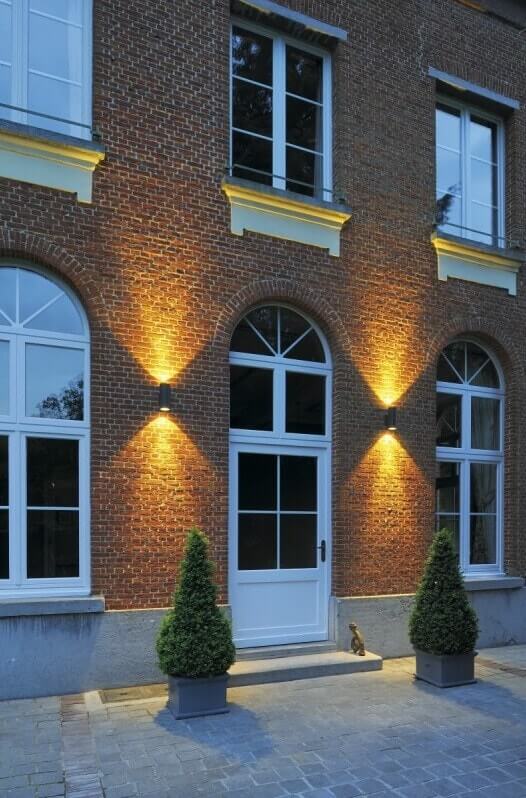
Most Popular Types of Outdoor LED Wall Lights – How to Choose Style and Function
Facade up & down wall lights
The best choice if you want a premium effect on the facade. Light beams cast both upward and downward add depth to the building’s form, and a single fixture can visually “organise” and elevate a wall.
Downlights and task lighting wall lights
Ideal for doors, house numbers, steps, and access routes. They provide practical illumination without flooding the entire area with harsh light.
Corner wall lights
Designed specifically for building corners: they illuminate two planes at once. They’re typically chosen where you need light on facade “breaks” and want to avoid installing two separate fixtures.
Adjustable (directional) wall lights
A good option when you want to aim light at a specific element: a signplate, plants, a section of wall, or the entrance to a gazebo. This is a flexible solution, especially in outdoor spaces that change with the seasons.
Solar LED wall lights
No wiring and no electricity costs from the grid. They perform best in locations with strong daylight exposure. In practice, they work particularly well at gates, on fencing, and in areas farther from the building.
Motion-sensor wall lights
The most “everyday practical” choice for the entrance, garage, and driveway gate. They improve comfort, reduce energy use, and enhance the sense of security.
Quick Buying Checklist – Choose Your Wall Light in 60 Seconds
- Where will it be installed: sheltered or fully exposed to rain?
- Choose the IP rating: minimum for covered areas, higher for full exposure.
- Define the goal: facade accent lighting or practical illumination?
- Select the colour temperature: warm for ambience, neutral for versatility.
- Check brightness in lumens (and the recommended use case).
- Decide: integrated LED or a fixture with a replaceable light source.
- Consider motion and dusk sensors for the entrance and garage.
- Match the style (finish and shape) to your doors/windows, facade, and fencing.
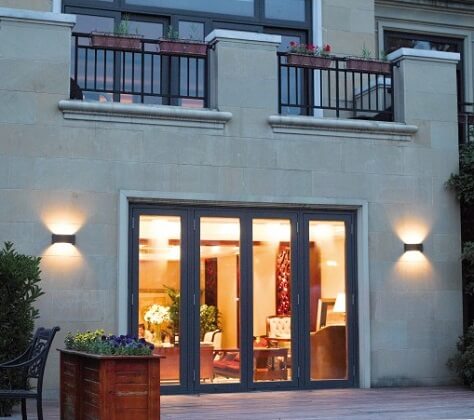
FAQ: 10 Most Common Customer Questions About Outdoor LED Wall Lights
1. IP44 or IP65—what IP rating should I choose for an outdoor wall light?
Choose the IP rating based on how much water and dust the fixture will actually face. IP44 is usually sufficient if the wall light is installed under an eave, canopy, or in a sheltered spot away from direct rain. IP65 (or higher) is the safer choice for a fully exposed facade where the fixture will be hit by rain, wind, and splashing. If you’re unsure and the light will be in an open location, choose the higher rating—this is one of the most common causes of complaints and returns.
2. How many lumens do I need for an outdoor wall light at the entrance, terrace, and driveway?
Lumens tell you how bright the fixture is—and that’s the number you should prioritise. At the entrance, moderate light often works best: comfortable, clear, and non-glare rather than “as bright as possible.” For a driveway and near the garage, you typically need more output because visibility and safety matter most. On a terrace, the priority is ambience and avoiding glare, so a lower brightness or a dimmable option is often the better choice.
3. 2700K, 3000K, or 4000K—which colour temperature is best outdoors?
For homes and relaxation zones, warm or neutral white is the most popular choice because it feels pleasant and looks natural on the facade. 2700–3000K creates a welcoming, cosy effect—ideal for terraces, balconies, and entrances. 3500–4000K is more neutral and practical if you want a balance between atmosphere and clarity. 5000K and above is cool, more technical light—useful for strictly functional areas, but it can look harsh and tiring on a residential facade.
4. Will a motion-sensor wall light turn on because of a cat, rain, or wind?
Yes—this is one of the most common concerns, and false activations are a common real-world issue. A PIR sensor reacts to changes in heat patterns within its field of view, so moving plants in the wind, small animals, and sometimes heavy weather can trigger it. The fix is straightforward: lower the sensitivity, reduce the range, adjust the angle so it doesn’t “see” shrubs or the street, and set a sensible on-time. If you want to minimise accidental switching, choose a model with adjustable sensitivity, range, and timer settings.
5. Why does my motion-sensor wall light stay on all the time or not switch off?
Most often it’s down to settings (on-time set too long), poor sensor positioning, or a dusk sensor issue that “thinks” it’s always dark. Another common cause is constant motion in the sensor’s view—branches moving in the wind, street traffic, or people passing by—so the light keeps being retriggered. Start with a quick reset: set the minimum on-time, reduce sensitivity, clean the sensor window, and point it only at the area you want to monitor. If the problem persists, the cause may be a wiring issue or a faulty sensor—at that point it’s worth checking with a qualified electrician.
6. I see fogging or water droplets inside the fixture—does that mean the light is leaking?
Not always. Condensation inside outdoor fixtures is common, especially with large temperature and humidity changes, and it can happen even in high-IP products. The key difference is this: temporary fogging that disappears can be normal, while standing water, persistent moisture, or water “sloshing” inside requires action. Correct installation, proper gasket seating, keeping any drainage/vent features unobstructed (if present), and choosing the right IP rating for the location all help. If moisture remains, switch off the power and check installation and connections to prevent damage.
7. Integrated LED or a fixture with a replaceable light source—what should I choose?
Choose integrated LED when you want a clean, modern design and maximum low-maintenance use for many years. Choose a fixture with a replaceable light source if you want flexibility: easy changes to colour temperature, output, beam angle, and simple replacement in the future. In practice, integrated LEDs often win for decorative facade lighting (slim, refined forms), while replaceable-source fixtures are popular for utility zones because they make future adjustments easy.
8. At what height should I install an outdoor wall light, and how do I space multiple fixtures?
At entrances, wall lights are typically installed around eye level so they light the face and lock area without causing glare. On stairs, the goal is even illumination of the steps—light should “guide” the route rather than shine into your eyes. Along longer facades, two or more lower-output fixtures often look better than one very powerful light, because the distribution feels more natural. If you want an architectural effect (for example, up & down beams), spacing should follow the facade rhythm—window axes, recesses, columns, and the building’s natural divisions.
9. Do solar LED wall lights make sense—will they work in winter or on an east-facing wall / in shade?
Yes, but only if they receive enough daylight to charge properly. In winter, reduced performance is normal: shorter days and cloudy weather often mean the battery won’t fully charge, so the light may be dimmer or run for fewer hours. On an east-facing wall or in partial shade, results can still be acceptable, but you may need an energy-saving mode, shorter run time, or a model with a stronger panel and battery. If you need consistent, reliable output in all conditions, wired power is the safer option; if you want fast installation without cables, solar is convenient—just place it where it gets the best possible sun exposure.
10. How do I avoid glare and shining into neighbours’ windows while still keeping the area safe?
Most often the issue isn’t “too little light,” but poor direction and lack of shielding. Choose fixtures with controlled optics (for example, downlights), use models with diffusers or glare shields, and aim light downward onto your own property—not toward the street or windows. Automation also helps: a motion sensor and sensible on-time instead of all-night operation. Warm or neutral white is usually perceived as less aggressive than cool white, which can reduce complaints. For safety without nuisance, use targeted light designed for the task—not simply the brightest option available.
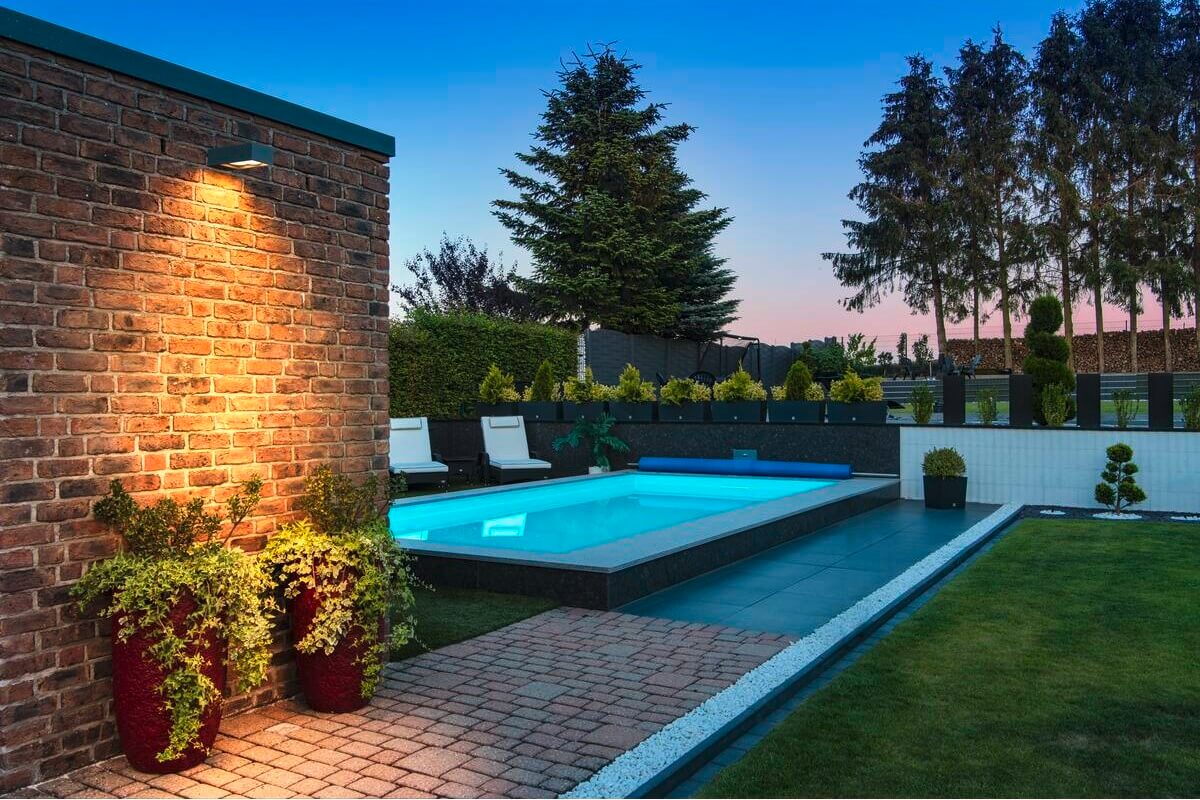
Summary: Choose Lighting That Works for You
Outdoor LED wall lights combine technology, safety, and design. The right model improves visibility after dark, creates the perfect atmosphere at the terrace or entrance, and highlights your home’s architecture with light. Choose wisely: pay attention to the IP rating, colour temperature, lumen output, light distribution, and automatic features.
Explore our range of outdoor LED wall lights and choose a fixture that matches your facade and everyday needs.
See also our other outdoor lighting options:

shopping_cart
0
Menu
- +Outdoor lighting
- +Indoor lighting
- +Wall LED lamps
- Line light LED
- LED profiles ALU
- +Track system
- +LED ceiling lamps, hanging and surface-mounted
- +Ceiling covers
- +LED plafonds
- LED recessed downlights
- +Hanging lamps LED
- Ceiling spotlights and spots
- Ceiling fans LED
- LED lights for paintings
- Starry Sky
- +LED floor lamps
- LED table and desk lamps
- Living room
- Bedroom
- Dining room
- LED bathroom lighting
- LED kitchen lighting
- LED stairs lighting
- +LED bulbs
- All manufacturers
- Prices drop
- New Products
- Bestseller
- LED Lamps
-
- Indoor lighting
- Wall LED lamps
- Line light LED
- LED profiles ALU
- Track system
- LED ceiling lamps, hanging and surface-mounted
- Ceiling covers
- LED plafonds
- LED recessed downlights
- Hanging lamps LED
- Ceiling spotlights and spots
- Ceiling fans LED
- LED lights for paintings
- Starry Sky
- LED floor lamps
- LED table and desk lamps
- Sources of light
- LED Strip Lights
- Outdoor lighting
- LED profiles
- LED stairs lighting
- LED accessories
- Equipping interiors
- Sale
- The FIBARO system
- Bestsellers
- LED bathroom lighting
- Decorative LED lighting
- LED lighting furniture
- LED kitchen lighting
- Technical and information LED lighting
- Lighting with LED for children
- Other lamps
- Living room
- Bedroom
- Dining room
- Indoor lighting