-
Gold LED Pendant Light as a Premium Accent — How Lighting Creates Elegance in High-End Interiors 01/30/2026 13:38:51Modern floor lamps: lighting scenes and a mistake-free choice 01/28/2026 22:15:27LED Recessed Spotlights — the Invisible Heroes of Harmonious Lighting Architecture 01/16/2026 09:05:44
LED garden lamps
LED Garden Lights
LED garden lights turn an outdoor space into something you can actually use after dark: safer paths, a welcoming entrance, a more inviting patio, and a garden that still looks designed at night. The goal is not to make everything bright everywhere. The goal is controlled, comfortable light where you need it—plus accents that bring depth to planting, textures, and architecture.
In this category you will typically find a full mix of outdoor-ready formats: garden bollards and post lights for paths, wall lights for facades and terraces, spike and spot lights for planting, in-ground and deck lights for clean modern lines, decorative globe lights, and solutions with solar power or built-in dusk/motion sensors for hands-off convenience.
- -10%
Why LED is the default for modern outdoor lighting
1. Lower energy use without sacrificing brightness
LED technology delivers useful brightness with a fraction of the power draw of older sources. That makes it realistic to light key outdoor zones daily—not only for special occasions.
2. Long service life and stable performance outdoors
Outdoor lighting works in rain, frost, heat, and dust. LED fixtures built for exterior use are designed to keep output stable over time, while reducing the need for frequent replacements.
3. Better control of the beam, less glare
A good outdoor fixture is as much about optics as it is about wattage. LEDs make it easier to shape the beam (path lighting, wall washing, narrow accenting), which helps you avoid harsh glare and “light spill” into bedrooms or neighboring gardens.
4. Design flexibility
From minimal in-ground dots to classic lantern silhouettes, LED allows modern and retro aesthetics while keeping performance predictable.
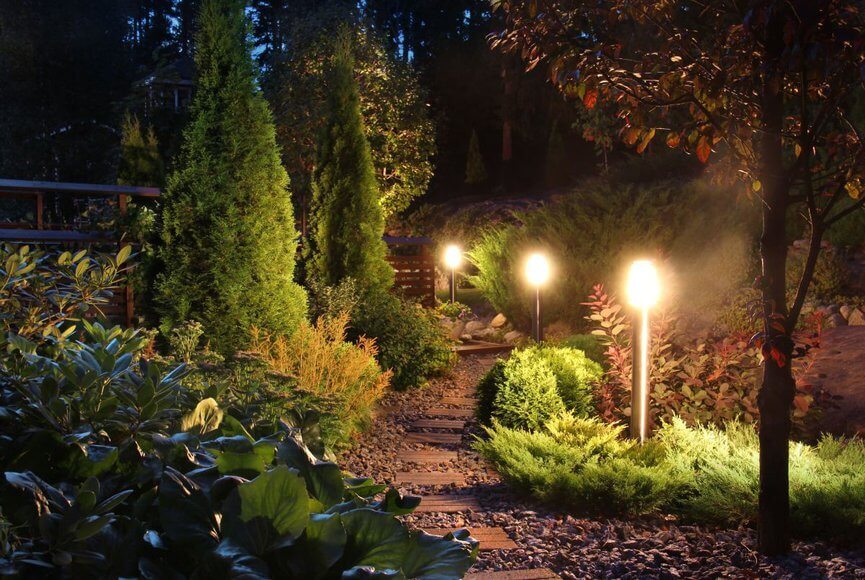
Types of LED garden lights and what they are best for
Bollard and post lights (paths, driveways, edges)
Use these for visual guidance and safety. The best results come from even spacing and a soft, downward-controlled beam that illuminates the walking surface without shining into your eyes.
Wall lights (facades, entrances, patios)
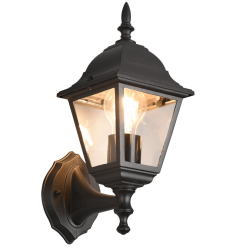
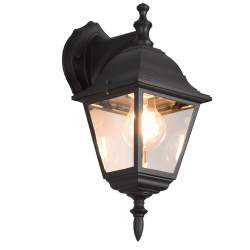
Wall fixtures bring structure to outdoor zones: doors, terraces, stair edges, and garden walls. Up-down effects can make a facade look taller and more architectural, while downlights are practical for entrances and passageways.
Spike lights and spotlights (plants, trees, features)
These are the “accent tools” of garden lighting. They highlight a tree canopy, a sculpture, grasses, stone textures, or a feature wall. A narrow beam creates drama; a wider beam creates softer emphasis.
In-ground and deck lights (modern, discreet lines)
If you want a clean, premium look, in-ground lights and deck lights are a go-to choice. They outline surfaces and edges with minimal visual clutter and work well in contemporary gardens.
Floodlights and security-style outdoor lights (functional brightness)
When safety and visibility are the priority—gates, parking zones, work areas—choose fixtures designed for wider coverage and higher output, ideally with optics that reduce glare.
Decorative outdoor lights (globe, retro forms, ambient pieces)
These are for mood and atmosphere: a soft glow along planting borders, a gentle orb on the lawn, or a warm retro lantern look. Decorative lighting works best when it complements, not replaces, functional path and entry lighting.
Solar LED garden lights
Solar garden lights are popular because they are simple: daylight charges the battery, and the light runs after dusk. The practical way to think about solar is this: it is excellent for convenience and quick upgrades, and especially strong for paths, borders, and decorative zones—provided the panel gets enough sun.
To get predictable results, treat solar lights as part of a layered plan:
-
Use more points of softer light rather than expecting one small solar lamp to flood a large area.
-
Prefer models with sensible modes (reduced brightness, motion boost, dusk-to-dawn control), because always-on full output drains batteries fastest.
-
Expect seasonal variation: less sun in winter generally means shorter runtime.
Outdoor LED lights with sensors: dusk-to-dawn and motion
Dusk sensor (photocell)
A dusk sensor turns the light on automatically at sunset and off at sunrise. This is ideal for entrances, paths, and any area you want consistently lit without daily switching.
Motion sensor (PIR)
Motion sensors add safety and reduce wasted light. They are best at gates, driveways, steps, and side passages—places you want illuminated only when someone approaches.
The best real-world setup
For many homes, the most practical combination is dusk + motion logic: the fixture is “armed” at night but only goes bright when motion is detected. This improves comfort, can deter unwanted visitors, and keeps the garden from being fully lit all night.
Specs that actually matter (and how to read them)
Lumens (lm): the real measure of brightness
Watts tell you power consumption. Lumens tell you how much visible light you get. For outdoor planning, lumens plus beam pattern is the winning combination.
Colour temperature (K): the mood of your garden
-
Warm white (around 2700–3000K) is the most popular for residential gardens because it looks inviting and natural on greenery and materials.
-
Neutral white (around 4000K) can feel cleaner and more functional for entrances or driveways.
A common “premium” approach is warm for patio and planting, neutral for purely functional circulation zones.
CRI (colour rendering): how real materials and plants look
Higher CRI generally means colours look more natural—greens, wood, stone, and brick read better and the garden feels less “flat” at night.
Beam angle and optics: what the light actually does
A narrow beam highlights. A wide beam fills. Two fixtures with the same lumens can look completely different if their optics are different. If you want a polished result, prioritize optics over raw output.
IP and IK ratings: weather and impact resistance
IP tells you how well the fixture is protected against dust and water exposure. For open, exposed locations, higher IP ratings are typically the safer choice. IK (when provided) indicates resistance to impact—useful for lights near walkways, driveways, or areas where accidental bumps can happen.
Materials and finish
Outdoor fixtures should be built for corrosion resistance and temperature swings. Powder-coated metals, quality aluminium bodies, stainless components, and durable diffusers usually translate into better long-term appearance and fewer issues with fading or deterioration.
.jpg)
How to choose LED garden lights in 5 practical steps
1) Define zones, not products
Split the garden into: entrance and gate, paths and steps, patio, driveway, planting accents, and “feature moments” (a tree, a wall, water, sculpture).
2) Decide what each zone needs
- Safety and wayfinding (paths, steps, entrances)
- Comfortable ambient light (patio)
- Accent and depth (trees, planting, textures)
3) Choose fixture types that match the job
Bollards for paths, wall lights for structures, spots for accents, in-ground for minimalist outlines, decorative pieces for ambience.
4) Pick the light quality (K, CRI) and optics
Warm vs neutral, softer vs crisper, narrow accent vs wide wash. This is where the garden starts looking “designed” rather than simply lit.
5) Add automation where it helps most
Dusk sensors for consistency, motion sensors for security and efficiency, and solar where convenience or location makes it the smartest choice.
Common mistakes (and how to avoid them)
Over-lighting the garden
More brightness is not the same as a better garden. Layered lighting and controlled beams look higher-end and feel more comfortable.
Choosing by watts instead of lumens and optics
Watts do not tell you how bright the fixture will look in the space. Lumens and beam pattern do.
Mixing colour temperatures randomly
If every zone has a different “white,” the garden looks chaotic. Keep it consistent or use a deliberate rule (warm for ambience, neutral for function).
Ignoring weather exposure
Exterior lighting lives outdoors. Prioritize suitable IP ratings and durable materials, especially near ground level and in fully exposed areas.
.jpg)
FAQ: LED Garden Lights
1. How many lumens do I need for garden path lights, a patio, and a driveway?
Match brightness to purpose. Paths typically need comfortable guidance without glare, patios need stronger usable light, and driveways need clear, wider coverage. If the result feels harsh, add more low-output points instead of pushing one fixture to extreme brightness.
2. Is 2700K or 3000K better for outdoor garden lighting?
Both work well. 2700K feels warmer and more “premium cozy,” especially on greenery and wood. 3000K is still warm but looks a touch cleaner and can make architectural details feel sharper while staying inviting.
3. When should I choose 4000K outdoor lights?
Choose 4000K when function and visibility are the priority—entrances, side passages, and driveways. It reads as brighter and more neutral, but it can feel less atmospheric for patios or planting.
4. What IP rating should outdoor garden lights have?
Use higher IP ratings for exposed locations and near-ground areas where rain splash and dust are real. For sheltered spots, you can often go lower, but if you want fewer headaches long-term, higher IP is usually the safer decision.
5. Why are my solar garden lights dim or only running for a short time?
The most common causes are insufficient sunlight during the day (shade, winter, cloudy weather), a dirty solar panel, and aging batteries with reduced capacity. Always-on modes also drain batteries faster than sensor or reduced-output modes.
6. Why do solar lights sometimes not turn on at night?
Often the panel is seeing ambient light from windows, streetlights, or other fixtures and “thinks” it is still daytime. Another common issue is a depleted or worn battery. Make sure the panel is truly dark at night and gets direct daylight exposure during the day.
7. My motion sensor light turns on for no reason—what causes false triggers?
Common triggers include moving branches, small animals, insects close to the sensor, and sudden temperature changes in the sensor’s field of view. Models with adjustable sensitivity and careful positioning toward the actual walking route reduce nuisance activations.
8. Integrated LED fixtures vs fixtures with replaceable LED bulbs—what should I buy?
Integrated LED fixtures are often better sealed and optimized as a system, which can be an advantage outdoors. Fixtures with replaceable bulbs give you flexibility to change brightness or colour temperature later and can be easier to refresh without replacing the entire fixture.
9. Do LED garden lights attract insects?
They can, but warm light and shielded, downward-facing fixtures are usually less problematic than very cool, intense, exposed sources. Using motion activation also helps because the lights are not on all night.
10. How do I stop outdoor lighting from glaring into my eyes or bothering neighbours?
Choose fixtures with controlled optics that push light downward and avoid visible “bare” sources at eye level. Build brightness through placement and layering, not one overpowering light. A well-designed garden at night is clear and atmospheric, not uniformly bright.
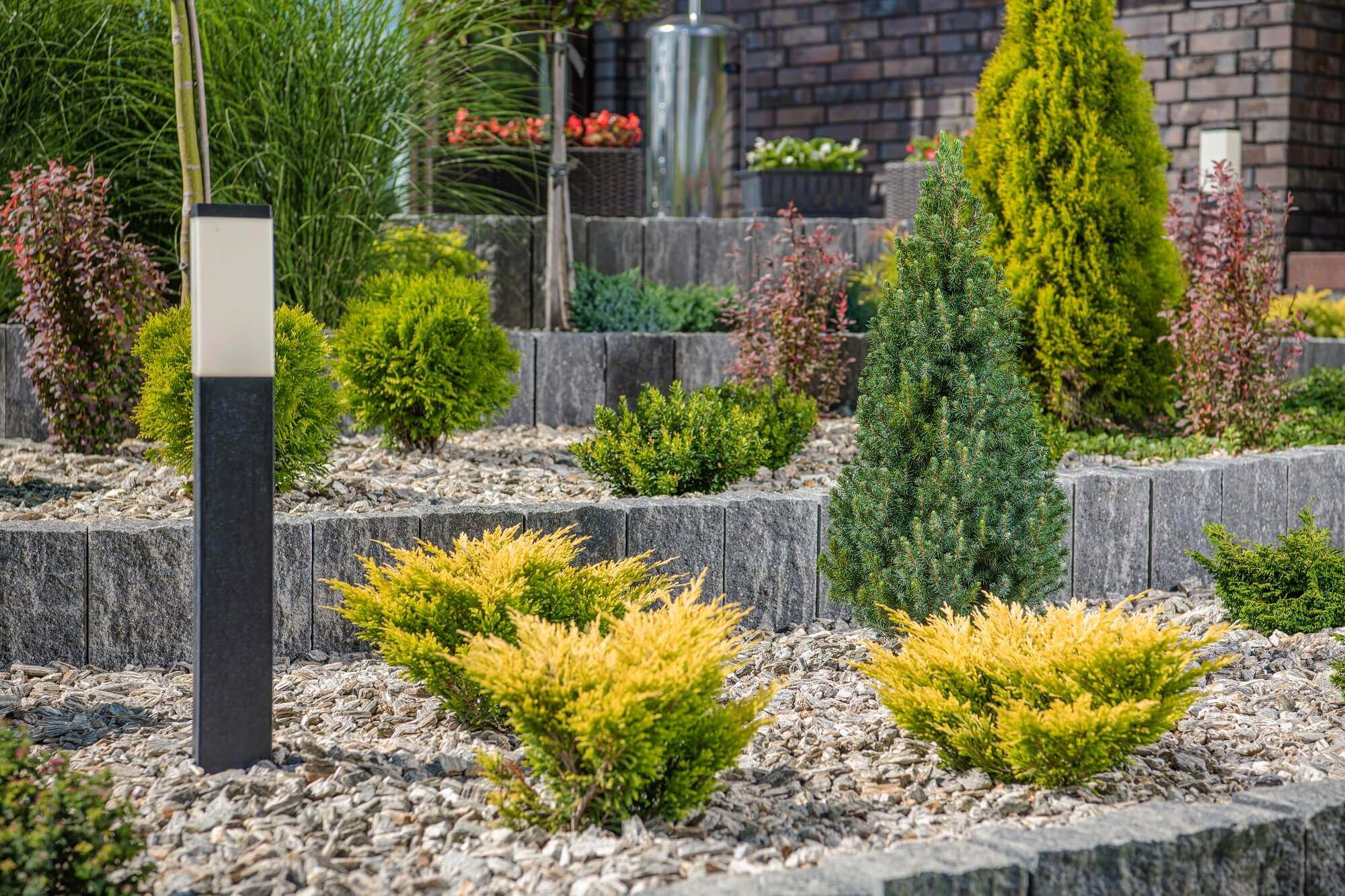
Ready to shop? Choose LED garden lights matched to your zone
Browse products in this category by use case: paths and entrance, patio and facade, planting accents—and by features: solar, motion sensor, dusk-to-dawn (twilight) sensor. This makes it easy to build a coherent set that looks great and works reliably throughout the season.
See also:

shopping_cart
0
Menu
- +Outdoor lighting
- +Indoor lighting
- +LED wall lights
- Line light LED
- LED profiles ALU
- +Track system
- Multiline - magnetic track system 22mm 48V
- FIVETRACK 5 mm 48V Magnetic Tracks & Luminaires
- AQFORM Multitrack 48V - Premium magnetic Stucchi track
- 3-phase track systems
- 1-Phase Track Systems
- MINILINE magnetic track lighting
- AQFORM FLATTRACK magnetic track 48V
- +Magnetic system 11mm Micro, Core11
- Black track lighting
- White track lighting
- +LED ceiling lamps, hanging and surface-mounted
- +Ceiling covers
- +LED plafonds
- LED recessed downlights
- +Hanging lamps LED
- Ceiling spotlights and spots
- Ceiling fans LED
- LED lights for paintings
- Starry Sky
- +LED floor lamps
- LED table and desk lamps
- Living room
- Bedroom
- Dining room
- LED bathroom lighting
- LED kitchen lighting
- LED stairs lighting
- +LED bulbs
- All manufacturers
- Prices drop
- New Products
- Bestseller
- LED Lamps
-
- Indoor lighting
- LED wall lights
- Line light LED
- LED profiles ALU
- Track system
- Multiline - magnetic track system 22mm 48V
- FIVETRACK 5 mm 48V Magnetic Tracks & Luminaires
- AQFORM Multitrack 48V - Premium magnetic Stucchi track
- 3-phase track systems
- 1-Phase Track Systems
- MINILINE magnetic track lighting
- AQFORM FLATTRACK magnetic track 48V
- Magnetic system 11mm Micro, Core11
- Black track lighting
- White track lighting
- LED ceiling lamps, hanging and surface-mounted
- Ceiling covers
- LED plafonds
- LED recessed downlights
- Hanging lamps LED
- Ceiling spotlights and spots
- Ceiling fans LED
- LED lights for paintings
- Starry Sky
- LED floor lamps
- LED table and desk lamps
- Sources of light
- LED Strip Lights
- Outdoor lighting
- LED profiles
- LED stairs lighting
- LED accessories
- Equipping interiors
- Sale
- The FIBARO system
- Bestsellers
- LED bathroom lighting
- Decorative LED lighting
- LED lighting furniture
- LED kitchen lighting
- Technical and information LED lighting
- Lighting with LED for children
- Other lamps
- Living room
- Bedroom
- Dining room
- Indoor lighting